

Individuals wishing to build mini-apartment buildings for sale or rent must meet the conditions for being the investor of a housing construction project, according to the draft amended Housing Law.
On the afternoon of November 16, the Standing Committee of the National Assembly gave its opinion on a number of issues related to the explanation and acceptance of the draft Law on Housing (amended).
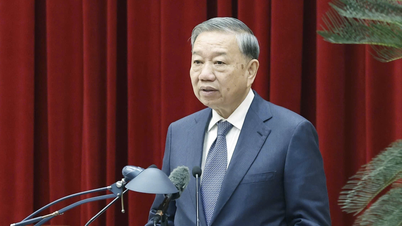
Housing development, including the management of mini-apartments, was a topic of discussion among National Assembly deputies in the parliamentary session on November 1st. Presenting the report on the feedback and explanations this afternoon, the Chairman of the Legal Committee, Hoang Thanh Tung, stated that the regulations on multi-story, multi-apartment buildings owned by individuals (mini-apartments) have been revised to be more appropriate and feasible.

Mr. Hoang Thanh Tung - Chairman of the National Assembly's Law Committee. Photo: National Assembly Media
Accordingly, Article 57 of the draft law has been revised to stipulate that individuals wishing to build mini-apartment buildings (residential buildings with two or more floors, each floor containing apartments, or buildings with two or more floors and 20 or more apartments) for sale or rent must meet the conditions for being the investor of a housing construction project. Apartments that meet the conditions for obtaining a land use certificate under land law will be sold, rented, or leased in accordance with the Housing Law and the Real Estate Business Law.
The construction of mini-apartment buildings for rent must meet the construction requirements issued by the Minister of Construction. The building complex must be designed and approved for fire safety and implement fire safety management measures as prescribed. The Provincial People's Committee is delegated the authority to regulate traffic routes and ensure that firefighting vehicles can access the location of the mini-apartment building.
The management and operation of mini-apartment buildings must comply with the regulations on the management and use of apartment buildings issued by the Minister of Construction .
"This is to address the shortcomings and limitations of the past, and to improve the management of this type of housing, while still ensuring the needs of a segment of the population are met," Mr. Tung said.
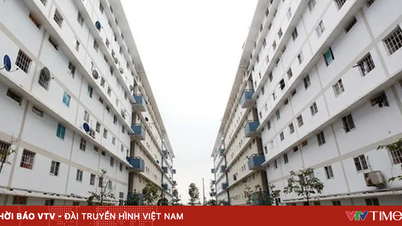
The "mini-apartment" type of housing has flourished in major cities like Hanoi and Ho Chi Minh City, but it has not been officially mentioned in laws on housing and real estate business. The current Housing Law also lacks a definition of mini-apartments, only referring to individual houses, apartment buildings, and social housing. Therefore, there is still a legal gap in the management of mini-apartments. However, according to many industry experts, given that mini-apartments are addressing the housing needs of millions of people, management should be sought instead of prohibition.
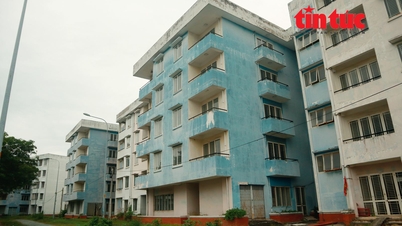
Regarding social housing, Mr. Hoang Thanh Tung stated that the draft, after incorporating feedback, includes the Vietnam General Confederation of Labor as the governing body for investment and construction of social housing. These projects will be rented out to workers and laborers.
Incentives for investors in social housing projects are also inherited from current legal regulations. Accordingly, investors are allowed to allocate 20% of the land in social housing projects for commercial housing. Investors pay land use fees for this area according to land regulations.
This aims to attract investment and tightly manage budget revenue, according to the Chairman of the Law Committee.
Deputy Prime Minister Tran Hong Ha suggested that further research and consideration are needed regarding the regulation that 20% of land allocated for social housing projects should be used for commercial housing. He argued that while the draft regulation aims to attract socialized investment, it also carries the risk of creating some inconsistencies in its implementation.
Regarding the effective date of regulations on social housing, according to Chairman Hoang Thanh Tung, the Standing Committee of the Law Committee proposed that the National Assembly Standing Committee consider and agree on the effective date of the Housing Law as January 1, 2025. Determining the effective date in this way is also consistent with the Land Law (expected to be passed by the National Assembly no later than the 7th session in May 2024).
Speaking afterward, Minister of Construction Nguyen Thanh Nghi expressed his desire for regulations related to social housing to take effect sooner, in order to accelerate the development of this type of housing given the severe shortage of supply.
According to the schedule, the National Assembly will vote to pass the amended Housing Law on November 27th.
Source link



![[Photo] Closing Ceremony of the 10th Session of the 15th National Assembly](/_next/image?url=https%3A%2F%2Fvphoto.vietnam.vn%2Fthumb%2F1200x675%2Fvietnam%2Fresource%2FIMAGE%2F2025%2F12%2F11%2F1765448959967_image-1437-jpg.webp&w=3840&q=75)
![[Photo] Prime Minister Pham Minh Chinh holds a phone call with the CEO of Russia's Rosatom Corporation.](/_next/image?url=https%3A%2F%2Fvphoto.vietnam.vn%2Fthumb%2F1200x675%2Fvietnam%2Fresource%2FIMAGE%2F2025%2F12%2F11%2F1765464552365_dsc-5295-jpg.webp&w=3840&q=75)










































![[OFFICIAL] MISA GROUP ANNOUNCES ITS PIONEERING BRAND POSITIONING IN BUILDING AGENTIC AI FOR BUSINESSES, HOUSEHOLDS, AND THE GOVERNMENT](https://vphoto.vietnam.vn/thumb/402x226/vietnam/resource/IMAGE/2025/12/11/1765444754256_agentic-ai_postfb-scaled.png)
















































Comment (0)