

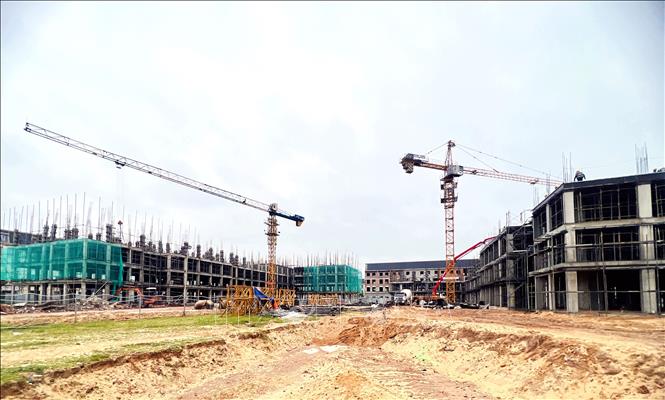
With a series of new policies and large-scale projects being implemented, the national infrastructure landscape has changed significantly, laying the foundation for the country's modernization goals in the next decade. At the same time, social housing projects have for the first time exceeded expectations.
Institutional perfection at the highest level
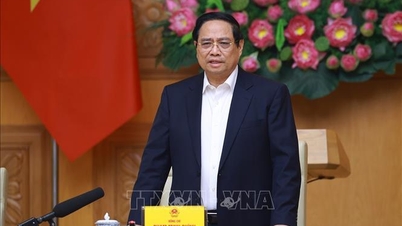
One of the most outstanding achievements of the Ministry during its term is the speed of law completion. Prime Minister Pham Minh Chinh assessed that the institutional completion of the Ministry of Construction has undergone drastic, transparent and substantial reforms. Decentralization, delegation of power, and assignment of responsibilities to each level of government are among the key solutions to improve the effectiveness of state management.
Minister of Construction Tran Hong Minh said that the construction and improvement of institutions has always been carried out vigorously and effectively; including many innovative contents, contributing to creating motivation for the country to develop construction investment infrastructure, strengthen decentralization, decentralization, and division of authority in accordance with the 2-level local government model, reform and simplify administrative procedures and investment and business conditions.
The reorganization of the apparatus was implemented promptly, ensuring streamlining, effectiveness, efficiency, and continuous operation, without affecting the process of handling work and resolving administrative procedures for people and businesses. According to the assessment results published on the National Public Service Portal, the Ministry of Construction ranked first among ministries and branches in terms of quality of public service provision.
The Ministry has submitted and received approval from the Prime Minister for a plan to reduce 181 business investment conditions (reaching 40.5%) and simplify an additional 12 business investment conditions, exceeding the target set in Resolution No. 66/NQ-CP.
The strong decentralization to the local level has been completed; of which 95 tasks were assigned from the district level to the commune level, 27 tasks were upgraded from the district level to the province level... This work is considered a big change compared to previous stages, helping local authorities to be more proactive in handling procedures, shortening the process of handling documents and increasing transparency.
Simultaneously, the Ministry organized numerous training courses nationwide, guiding localities in implementing tasks according to the two-tiered government model. Specialized departments and divisions also established working groups to support nine key areas to ensure the efficient operation of the system.
Notably, important resolutions of the Politburo have been quickly materialized into actions. For example, implementing Resolution 57, the Ministry of Construction has promoted digital transformation in state management. Specialized databases, from planning to housing and infrastructure, have been standardized towards unified connection. Some procedures have been completely digitized, helping to significantly reduce implementation time and costs.
The Ministry of Construction has clearly identified that scientific research and innovation must create substantial breakthroughs in research work. Previously, the research activities of the system of 9 universities and academies under the Ministry were fragmented and lacked focus; now it is moving towards the model of a Center for Innovation and Digital Transformation, closely following the 9 main industry groups that the Ministry is managing. This move is expected to create a solid scientific and technological foundation for the construction and infrastructure industry in the next 10-20 years.
Breakthrough in transport infrastructure
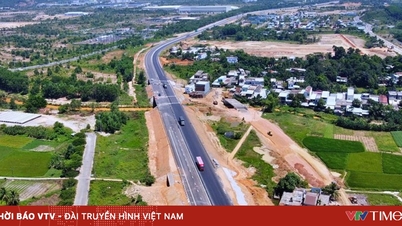
One of the areas that has made the most significant impact over the past five years is the development of transportation infrastructure. From 2021 to 2025, the Ministry of Construction completed 59 national highway projects with a total length of 1,586.5 km, with 21 projects totaling 456 km completed in 2025 alone.
Prime Minister Pham Minh Chinh stated that transportation infrastructure is the backbone of socio-economic development. The achievements of the Ministry of Construction in recent years are an important prerequisite for the country to move forward quickly and steadily, and to integrate deeply into the international community.
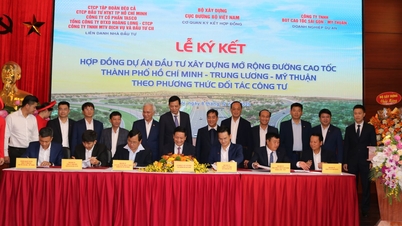
Regarding the target of completing 3,000 km of expressways by 2025, the Ministry of Construction stated that by the end of 2025, it is expected to complete 3,803 km, including 3,345 km of main expressway routes and 458 km of access roads.
“The development of transport infrastructure does not only focus on quantity but also on quality, safety and inter-regional connectivity. The projects are continuously constructed with the spirit of “eating quickly, sleeping urgently”, “3 shifts – 4 shifts”, “overcoming the sun – overcoming the rain” to ensure progress, while applying modern technology to increase the life of the projects” - Minister Tran Hong Minh emphasized.
Notably, in 2025, the weather was unusual, with many storms and tropical depressions causing heavy rain and flooding in many places, causing a lot of damage to life and property, but ministries, branches, agencies, localities, project management boards, contractors, consultants, officers, workers and laborers worked actively, regardless of difficulties, putting quality and progress above all.
In addition to road infrastructure, in recent times, the Ministry of Construction has advised on completing investment policies for major projects in the railway sector such as: high-speed railway on the North-South axis, Lao Cai - Hanoi - Hai Phong railway, international railway routes. Among them, the high-speed railway on the North-South axis is an unprecedented project, implemented for the first time in Vietnam, with a particularly large scale and investment resources, and complex technical and technological standards. Construction is expected to start in December 2026.
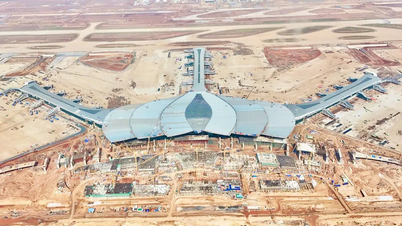
In the aviation sector, Vietnam currently has 21 airports, but only Noi Bai, Tan Son Nhat and Da Nang meet international standards for large aircraft. By December 19, the component projects to deploy technical flights at Long Thanh International Airport will be completed, thereby building Long Thanh into an important international airport of the country, aiming to become an international aviation transit center of the region.
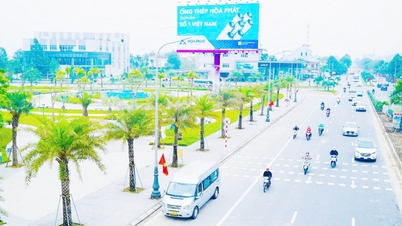
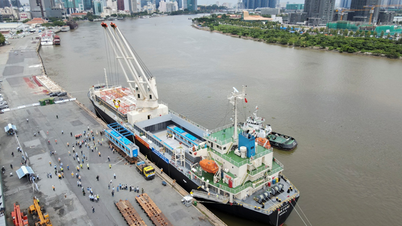
In the period of 2020 - 2025, the national infrastructure framework has basically taken shape, from roads, railways, aviation, maritime and inland waterways. Since then, transport infrastructure has gradually become an important pillar in the process of industrialization and modernization of the country, creating a premise for Vietnam to join the group of countries with developed infrastructure systems in the region.
Social housing exceeded targets for the first time
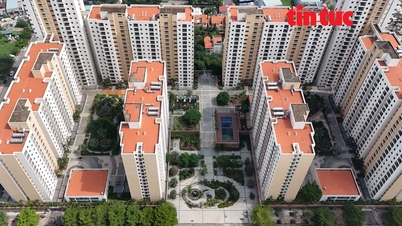
Immediately after merging functions with the Ministry of Transport, the Ministry of Construction has made social housing a key task. If the results of previous terms often did not meet expectations, the 2020-2025 period witnessed the fastest speed of social housing development ever. Minister Tran Hong Minh informed that by the end of December, the whole country is expected to have 102,146 social housing units, reaching 102% of the plan assigned by the Prime Minister for 2025.
Thus, the number of completed social housing units in 2025 far exceeds the total number completed in the entire period of 2021-2024 (only 57,652 units out of 644 implemented projects). This is the result of the efforts of the Government and the Prime Minister to remove difficulties and promote breakthrough development in social housing and the real estate market.
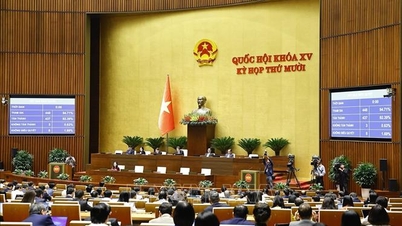
Typically, the issuance of Decree No. 261/2025/ND-CP and Decree No. 192/2025/ND-CP dated July 1, 2025, aims to improve social housing development policies, increase supply, stabilize the market and ensure social security. Along with that is Resolution No. 201/2025/QH15 of the National Assembly piloting a number of specific mechanisms and policies for social housing development.
The actual progress shows many positive signs. At this rate, the implementation of the Project "Investing in the construction of at least 1 million social housing units for low-income earners and industrial zone workers in the period 2021 - 2030" can absolutely be completed ahead of schedule by 2028.
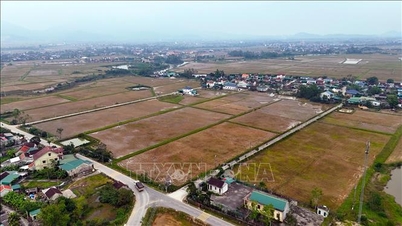
At the same time, after more than 1 year of implementing the emulation movement "The whole country joins hands to eliminate temporary and dilapidated houses nationwide" which was first launched in April 2024 (On October 5, 2024, in the Program "Warm home for my compatriots", Prime Minister Pham Minh Chinh launched 450 peak days and nights to eliminate temporary and dilapidated houses nationwide), by the end of August 2025, the whole country had joined hands to eliminate more than 334,200 temporary and dilapidated houses, this is a "Special National Project", "Project of the Party's will, the people's heart" and has reached the finish line 5 years and 4 months ahead of the target set in Resolution 42-NQ/TW of the 13th Party Central Committee on continuing to innovate and improve the quality of social policies, meeting the requirements of the cause of building and defending the Fatherland in the new period, aiming to strive to basically eliminate temporary and dilapidated houses by 2030. temporarily, basically no more poor households.
Minister Tran Hong Minh affirmed that the Ministry of Construction is always clearly aware that perfecting institutions, developing infrastructure and social housing is not only a professional task, but also an important factor in promoting economic growth, improving people's lives and international integration.
Over the past 5 years, the Ministry of Construction has correctly identified the bottlenecks, advantages and key breakthroughs of the industry. The synchronous implementation of resolutions of the Central, National Assembly and Government has brought about substantial results. The legal system is more complete, decentralization and delegation of power are clearer. Transport infrastructure has achieved a breakthrough development in a decade. Social housing has for the first time achieved progress beyond expectations. Innovation has become the focus, not just a slogan.
Source: https://baotintuc.vn/bat-dong-san/tu-tang-toc-ha-tang-den-ve-dich-nha-o-xa-hoi-20251210081003488.htm

























![[Photo] Urgently help people soon have a place to live and stabilize their lives](/_next/image?url=https%3A%2F%2Fvphoto.vietnam.vn%2Fthumb%2F1200x675%2Fvietnam%2Fresource%2FIMAGE%2F2025%2F12%2F09%2F1765248230297_c-jpg.webp&w=3840&q=75)





































































Comment (0)