

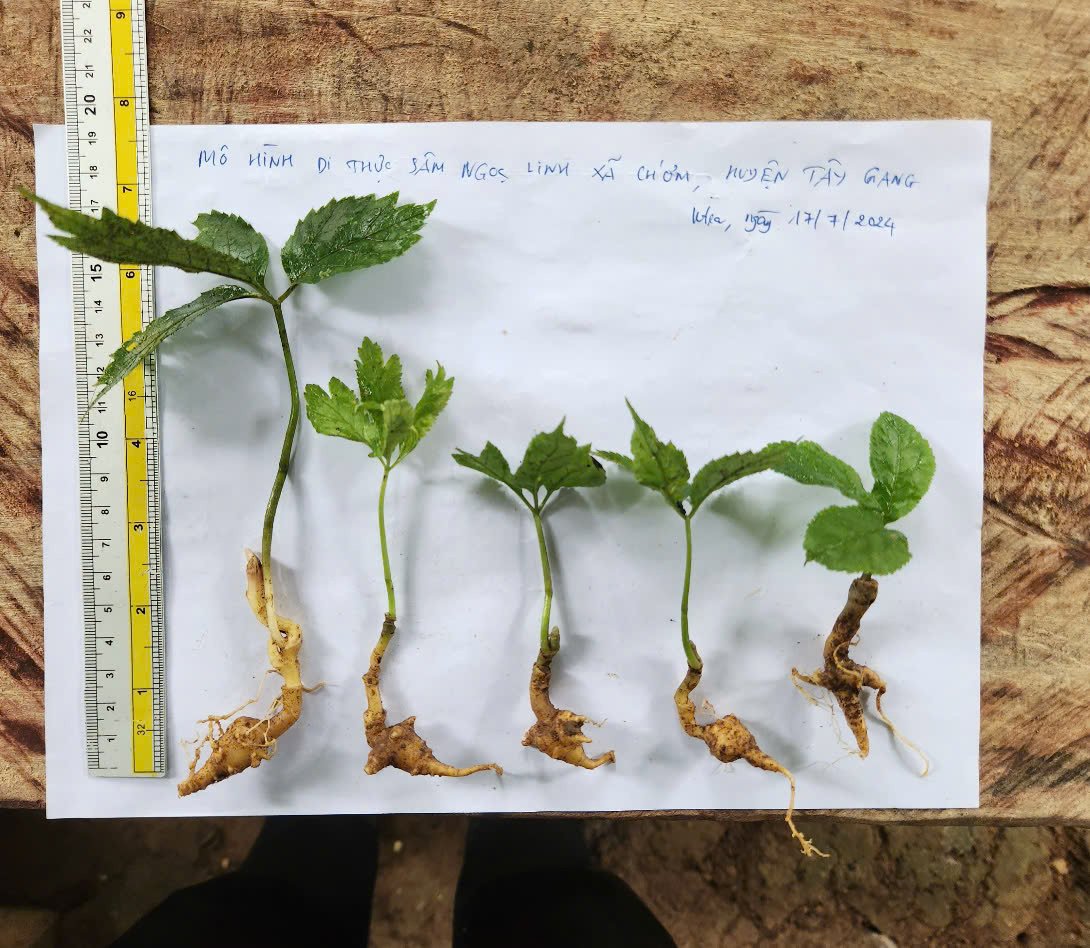
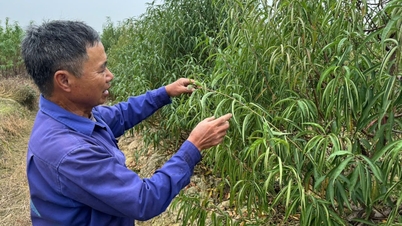
Ngoc Linh ginseng plants hardly grow in the transplanted area of Tay Giang district – Photo: CONG QUANG
Speaking to Tuoi Tre Online on January 20th, Mr. Truong Cong Quang, director of the Ngoc Linh Ginseng and Medicinal Herbs Development Center of Quang Nam , said that they have just agreed to propose ending the experimental models of transplanting Ngoc Linh ginseng due to poor ginseng growth.
All seven experimental ginseng cultivation models have failed to achieve the desired results.
According to the Quang Nam Department of Agriculture and Rural Development, many localities in the province began experimenting with transplanting Ngoc Linh ginseng at the end of 2021.
Ginseng seedlings are brought from nurseries in Nam Tra My to areas with similar soil conditions for testing.
From August to November 2021, seven experimental models for transplanting Ngoc Linh ginseng were conducted in four districts: Bac Tra My, Tay Giang, Nam Giang, and Phuoc Son.
By September 2022, two more model farms had been established in Nui Thanh and Tien Phuoc. Each farm planted a maximum of 1,000 trees. private Phuoc Son district planted two model trees with a total of 1,000 trees.
To ensure the ginseng grows well, the transplanted ginseng plants are cared for according to strict procedures. Every year, a task force established by the Department of Agriculture and Rural Development also visits the gardens to inspect and evaluate the actual conditions.
The inspection and evaluation period is from June to August each year. This is the stage when the Ngoc Linh ginseng plant grows and develops its stem and leaves fully after its winter dormancy.
Ngoc Linh ginseng grows well in the first year, but struggles in subsequent years.
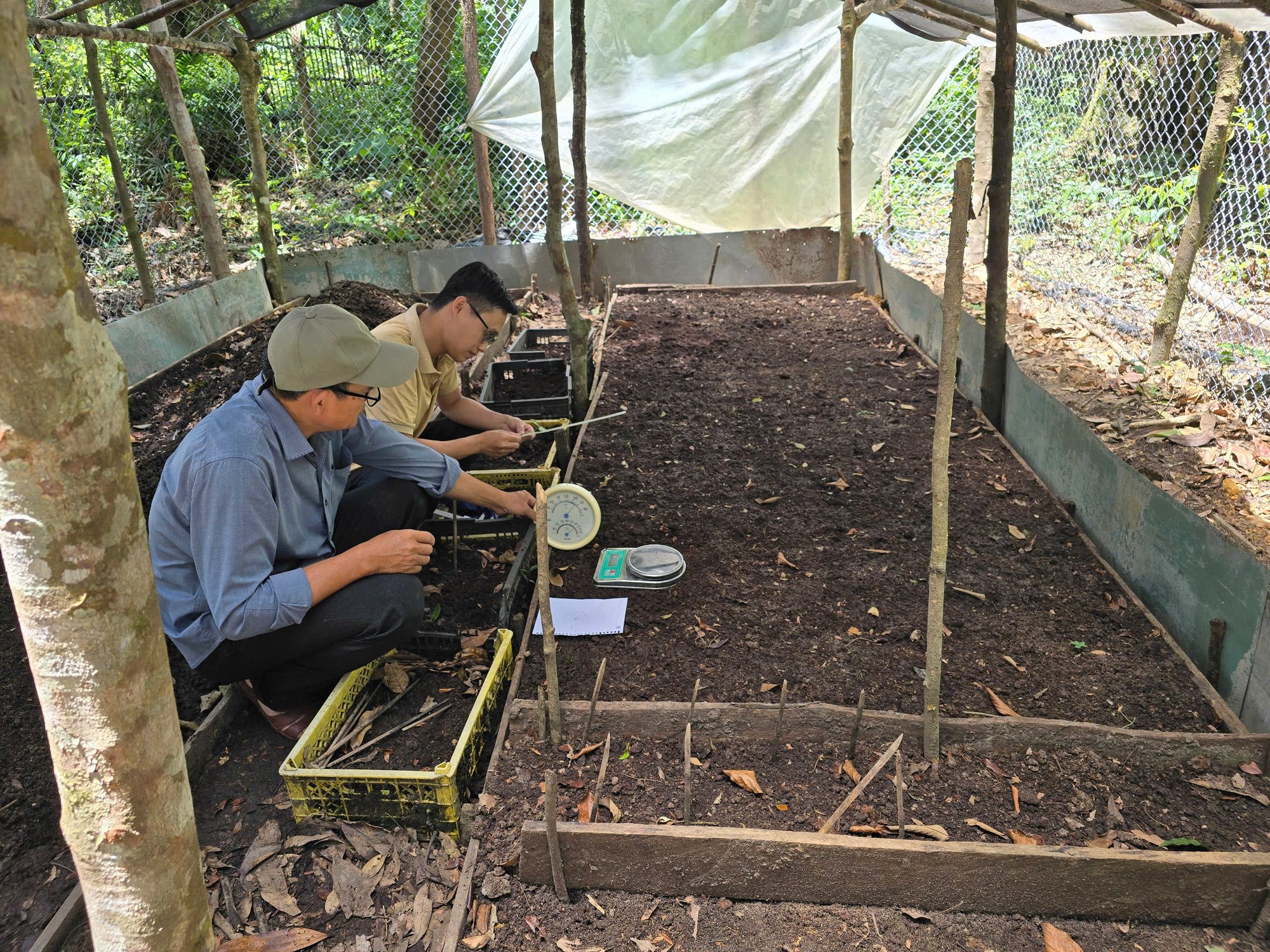
Experimental transplanting of Ngoc Linh ginseng in Quang Nam – Photo: BD
According to the Quang Nam Ngoc Linh Ginseng and Medicinal Herbs Development Center, three years of monitoring (from 2022-2024) showed that the parameters of the transplanted ginseng plants did not meet expectations. The ginseng is vastly different from that grown in the Ngoc Linh mountain forest area (Nam Tra My).
Rate of sprout regeneration The rate of shoot regeneration increased in the second year after transplanting, averaging 35%. However, by the third year, the rate of shoot regeneration began to decline. In some places, such as Tien Phuoc district, the ginseng plants hardly regenerated any shoots at all.
Assessments of the growth indicators of transplanted ginseng plants also revealed a similar situation.
In the first two years, Ngoc Linh ginseng plants maintain stable growth in stem height and canopy diameter. However, by the third year, their growth rate begins to decline sharply and is significantly lower than that of ginseng plants grown in specialized cultivation areas.
Regarding the indicators related to the root, the Ngoc Linh ginseng roots in the development models showed average growth during the first two years.
However, like other indicators, growth is very weak by the third year. The diameter and length of the tubers are significantly lower than those of Ngoc Linh ginseng plants of the same age grown in Nam Tra My district.
The weight of the tubers in the models ranged from 1.3 to 3.4 grams/tuber, which is 15-25% compared to ginseng tubers grown in the Ngoc Linh ginseng growing area in Nam Tra My.
Based on an overall assessment of experimental transplant models, the Ngoc Linh Ginseng and Medicinal Plant Development Center of Quang Nam Province concluded that the adaptability of ginseng plants to natural environments and ecological conditions outside the Ngoc Linh mountain range is very low, and their growth and development potential is weak.
Based on that reality, the Quang Nam Ngoc Linh Ginseng and Medicinal Herbs Development Center stated that it agrees with the proposals to end the experimental cultivation model of transplanted Ngoc Linh ginseng.
According to Mr. Truong Cong Quang, it is regrettable that the experimental transplant models have not met expectations. However, this is only an assessment at a specific stage and in a particular soil and environmental region.
Ngoc Linh ginseng plants have long thrived in high mountainous regions with a cool climate year-round and a thick layer of humus beneath the old-growth forests.
The transplanting of this plant is expected to expand opportunities for other localities to share in the benefits of this national treasure of Vietnam. However, Ngoc Linh ginseng is a very difficult species to adapt to.
Mr. Quang said he has proposed continuing the experiment of transplanting Ngoc Linh ginseng, focusing on selecting transplanted gardens at an altitude of 1,500 meters or more above sea level.
Specifically, when transplanting ginseng, only plants that are at least two years old are selected to increase their adaptability.
Ngoc Linh ginseng (also known as K5 ginseng) is considered a national treasure and is concentrated around the Ngoc Linh mountain range in the border region between Kon Tum and Quang Nam.
From a wild plant, ginseng has now helped thousands of farmers and gardeners change their lives. Currently, each quantity of ginseng on the market ranges from 6 to 15 million VND.
In particular, many ginseng roots that are very old and heavy are worth hundreds of millions of dong, and some are even traded for billions of dong.



![[Photo] Closing Ceremony of the 10th Session of the 15th National Assembly](/_next/image?url=https%3A%2F%2Fvphoto.vietnam.vn%2Fthumb%2F1200x675%2Fvietnam%2Fresource%2FIMAGE%2F2025%2F12%2F11%2F1765448959967_image-1437-jpg.webp&w=3840&q=75)







































![[OFFICIAL] MISA GROUP ANNOUNCES ITS PIONEERING BRAND POSITIONING IN BUILDING AGENTIC AI FOR BUSINESSES, HOUSEHOLDS, AND THE GOVERNMENT](https://vphoto.vietnam.vn/thumb/402x226/vietnam/resource/IMAGE/2025/12/11/1765444754256_agentic-ai_postfb-scaled.png)












































Comment (0)