

Ahead of the Vietnam Business Forum (VBF 2024), taking place tomorrow (March 19th), business associations and working groups continue to raise persistent concerns about difficulties and obstacles in administrative procedures related to investment and business activities.
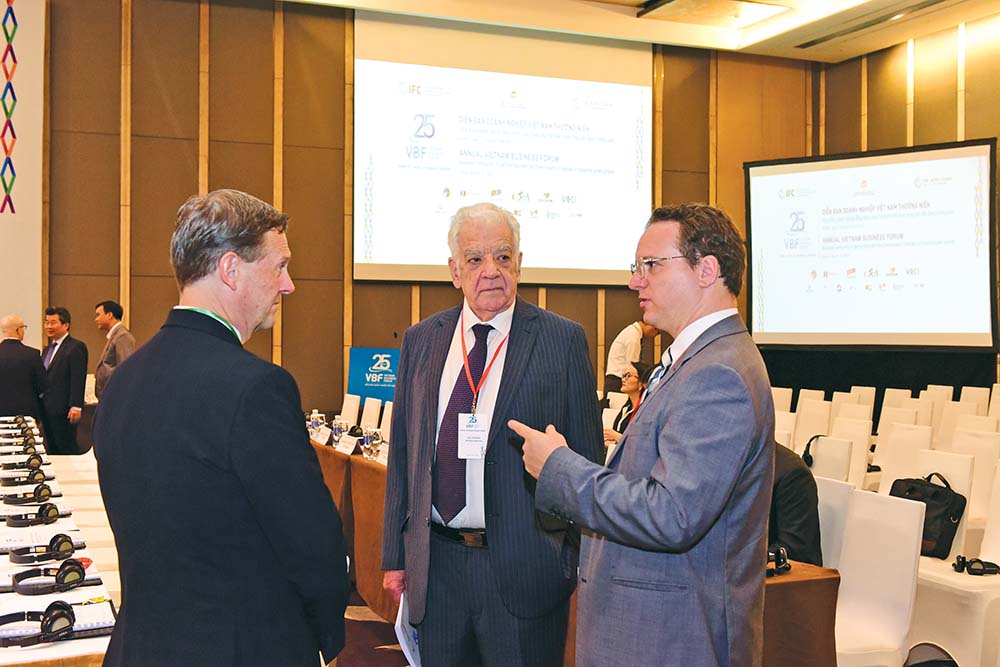 |
| Businesses are still complaining about some administrative procedures related to investment and business. (Photo: Duc Thanh) |
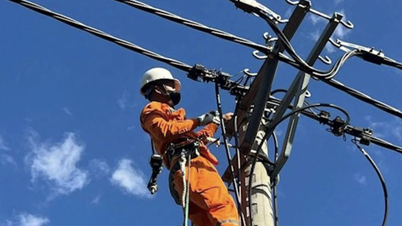
Electricity shortages are already a concern even before summer arrives.
"We request that the Vietnamese government develop a plan to ensure uninterrupted electricity supply in industrial zones so that foreign-invested enterprises, including Korean businesses, can maintain stable production operations."
The Korean Business Association submitted this proposal to VBF 2024. The power outages caused by electricity shortages in some industrial zones in northern Vietnam last summer remain a major concern for many businesses.
Sharing this concern, the Korean Business Association stated that Korean businesses are eager to invest in Vietnam, especially high-tech companies such as semiconductor companies. However, they also expressed the view that power shortages are a major factor causing them to hesitate in making investment decisions.
This is also a recommendation from the Japan Chamber of Commerce and Industry (JCCI) to VBF 2024, after gathering feedback from member businesses. JCCI stated that the severe power shortage in the northern region is making it difficult for businesses to plan production and forecast delivery dates.
“This situation has seriously impacted the just-in-time model – a core element of the supply chain. Several JCCI member companies have indicated they are considering reviewing their global production systems,” JCCI explained the reason for submitting the proposal early.
In this proposal, JCCI submitted three recommendations to the Vietnamese government, aiming to ensure the smooth operation of manufacturing businesses. These are: stabilizing the power supply to industrial zones; providing advance notice of power outages and energy saving requirements to allow sufficient time for adjustments; and introducing incentive mechanisms to encourage companies to save and increase electricity production.
Concerns about administrative procedures
In the long list of recommendations submitted to VBF 2024 by foreign business associations and working groups, concerns about the burden of administrative procedures still account for a significant proportion.
In a very concise and straightforward manner, the American Chamber of Commerce wrote: “Our members, like many businesses here, are facing delays in approval procedures. The burden of time-consuming bureaucracy hinders or stalls business projects and affects Vietnam’s competitiveness.”
This sentiment is not unique to American businesses.
The Human Resources Working Group has submitted a report to the Ministry of Labour, Invalids and Social Affairs regarding the inconsistency in the procedures for renewing work permits for foreign workers, calling it an unnecessary administrative burden. Specifically, the Working Group noted that some provincial Departments of Labour, Invalids and Social Affairs require the resubmission of applications for approval of foreign labor needs before applying for work permit renewal; while others require a complete re-application process, including posting job advertisements and submitting applications for approval of foreign labor needs.
Currently, according to businesses' calculations, the process of granting work permits to foreigners takes about 4-5 months, involving numerous paperwork procedures, notarization requirements, and consular legalization. “We propose developing and implementing short-term work permits; clarifying and standardizing the necessary documentation requirements for applying for or being exempt from work permits, ensuring that regulations are applied consistently across local labor management agencies,” the Human Resources Working Group proposed.
The tax and customs working group has submitted to the Ministry of Industry and Trade a report on the issues faced by businesses producing supporting industrial products. Specifically, the working group stated that many businesses producing products that are components or parts of products listed in the List of Priority Supporting Industrial Products under Decree 11/2015/ND-CP have applied for preferential treatment but have not been approved for this product group. Businesses reported that the process of obtaining preferential treatment takes a very long time, with many having to submit supplementary documents multiple times as requested by the licensing authority. Many past compliance issues have been rectified and supplemented by the businesses with relevant authorities, but the licensing authority still uses these issues to reject the applications.
"These difficulties have caused complications, increased costs and time for businesses, and have not truly maximized the effectiveness of the incentive policy," the Working Group wrote in its proposal to VBF 2024, along with a recommendation to add details, parts, and components that are part of the products listed in the List of Priority Supporting Industrial Products for Development.
Businesses belonging to the British Business Association submitted four specific recommendations to the VBF this year to continue efforts to reform administrative procedures. Firstly, strengthen e-government in managing promotional activities. Secondly, simplify procedures and reduce the time for issuing business licenses. Thirdly, unify regulations between central and local governments. Fourthly, abolish the requirement for pre-approval of advertising, shifting to post-market control.
"Vietnam should leverage international agreements to simplify and eliminate the requirement for legalization of foreign documents before use, as more than 100 other countries have already done," the British Business Association further suggested.
- Tax and Customs Working Group
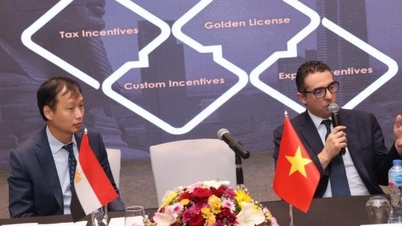
To encourage companies to make significant investments that generate substantial economic activity, on February 16, 2024, Singapore's Finance Minister proposed an investment exemption policy to provide support to eligible entities, including all businesses with investment projects in key economic sectors and emerging economic growth areas. The US government also recently allocated hundreds of billions of dollars to sustainability and climate financing programs, in addition to semiconductor manufacturing, through the enactment of three new laws.
To be able to compete with countries around the world and in the region, Vietnam needs to improve its investment support policies to make them more comprehensive and effective in retaining and attracting strategic investment corporations.
Regarding the investment support targets outlined in the Draft Decree on the establishment, management, and use of the Investment Support Fund, we find that the scope of eligible entities remains narrow. The requirements of investment capital exceeding VND 12,000 billion or annual revenue exceeding VND 20,000 billion are met by only a very small number of businesses, failing to represent the majority of investors in the high-tech sector.
How is the social insurance agreement between Vietnam and South Korea applied?
- Korean Business Association
The social insurance agreement between Vietnam and South Korea was signed in December 2023 and came into effect in January 2024. However, there are currently no precise regulations or guidelines regarding how the agreement applies to South Korean citizens in Vietnam; therefore, South Korean citizens are not yet covered by it.
We request that the relevant authorities issue specific regulations and guidelines on the application of the Agreement, and take measures to enable Korean citizens in Vietnam to implement this agreement.
Continue the dialogue between the Ministry of Industry and Trade, Vietnam Electricity Group, and relevant parties.
- American Business Association
We recommend continued dialogue between the Ministry of Industry and Trade, Vietnam Electricity Corporation, and relevant private sector stakeholders to find viable short-term and long-term solutions for Vietnam to meet its energy security needs, including promoting the approval of large-scale liquefied natural gas (LNG) projects to support energy security and transition goals.
We need to eliminate regulatory uncertainties and focus on innovation in approving short-term, practical, and bank-financing projects to ensure electricity supply meets growing demand.
We recommend that the Government consider adjusting power purchase agreements (PPAs) to international standards, facilitating multilateral organizations and development finance institutions to lend to large-scale energy transition and renewable energy projects.
Source

![[Photo] General Secretary and President To Lam presides over the meeting to approve the draft report on the results of the second inspection by the Politburo of the Standing Committee of the Hanoi City Party Committee.](https://vphoto.vietnam.vn/thumb/1200x675/vietnam/resource/IMAGE/2026/05/26/1779789811432_a2-bnd-4430-9620-jpg.webp)
































































Comment (0)