

Canada increases rice imports from Vietnam
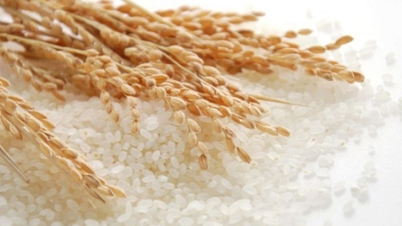
According to Statistics Canada, Canada's total rice imports from around the world in 2023 reached $508 million, a 2% increase compared to 2022.
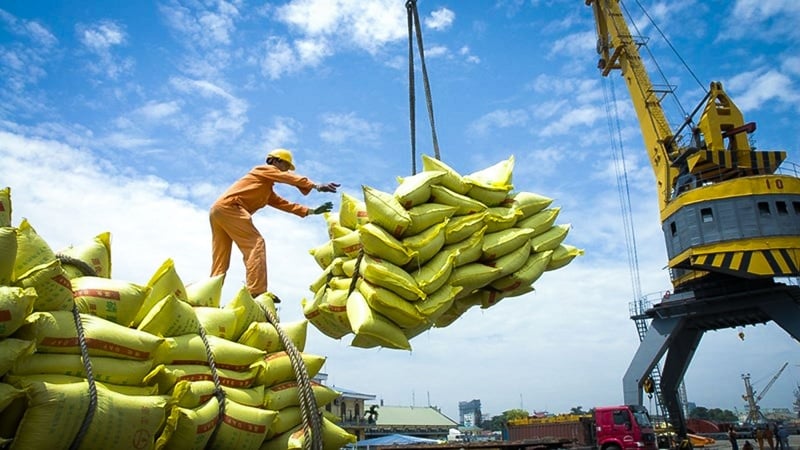 |
| Canadian market demand for rice has been steadily increasing over the years and is expected to remain stable at around $500 million per year. |
In 2023, Vietnam recorded a 56.4% growth rate in rice exports to the Canadian market, ranking among the top 3 in terms of export value growth, contributing to Vietnam expanding its market share to nearly 2.9% (higher than the 1.6% before the CPTPP Agreement).
In 2023, Vietnam's rice exports mainly consisted of milled white rice, an increase of 58% compared to 2022. The export volume of brown rice and broken rice was negligible, increasing by 73% and 126.5% respectively compared to the same period in 2022.
In 2023, the province/state importing the most milled white rice was still British Columbia, followed by Ontario and Alberta; Quebec and Manitoba imported negligible amounts of rice from Vietnam. The average price of white rice imported into British Columbia was relatively low, at only 750 CAD/ton; in Alberta it rose slightly to 808 CAD/ton and 856 CAD/ton in Ontario. The highest price for rice imported into Quebec reached 1442 CAD/ton.
Regarding brown rice and broken rice, the province/state importing the most is Ontario, followed by British Columbia. Quebec imports more brown rice than Manitoba and Alberta but less broken rice than these two provinces. The price of broken rice delivered in Ontario reached 824 CAD/ton, while it rose to 1365 CAD/ton in British Columbia. The price of imported brown rice in British Columbia even reached 2884 CAD/ton.
Vietnamese rice has recently been highly appreciated by importers for its quality; however, some importers are dissatisfied with the broken rice content (still around 5%), while other countries like Thailand have better milling quality and a broken rice percentage of almost 0%.
In addition to jasmine white rice, currently, round Japanese rice grown in Vietnam is being imported quite strongly by Canada, which is one of the reasons for the growth in rice turnover to the market in 2023. However, like jasmine white rice, round sushi rice is packaged under the packaging and brand of foreign corporations.
There is still plenty of room for export.
The Canadian market's demand for rice has been steadily increasing over the years and is expected to remain stable at around US$500 million per year. Overall, Vietnamese rice still has significant potential to enter the Canadian market, as it is one of the world's largest rice consumers.
“ Canada is a rice importer serving approximately 7 million people of Asian descent. The Vietnamese community in Canada currently numbers around 300,000, making it the fourth largest Asian community in Canada. Therefore, Canada has a fairly stable demand for rice , ” according to the Vietnamese Trade Office in Canada.
Vietnam is one of the top 10 rice exporting countries to Canada, after the United States, Thailand, India, and Pakistan. Vietnamese rice exports to the Canadian market still have significant potential for rapid growth, as Vietnam's market share remains relatively small, while Canadian importers are beginning to recognize that Vietnamese rice is of comparable quality to Thai rice.
Vietnam's rice export figures to the market may be much lower than the actual number because Vietnamese rice is currently exported to the United States, packaged there, and then transshipped to Canada.
However, the steady increase in rice exports to the market over the years shows that Canadian importers are beginning to consider importing directly from Vietnam to replace/reduce their dependence on the white rice markets of Thailand and the United States.
For many years, Canada has provided significant technical assistance to enhance the institutional capacity of agencies, associations, cooperatives, and businesses operating in the agricultural sector.
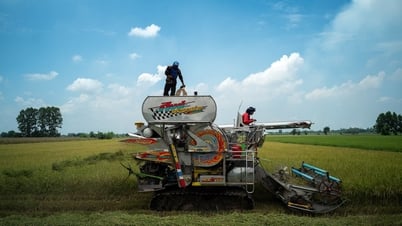
In particular, Canada has had a practical support project in the rice sector since 2011, which is through the Soc Trang province's Small and Medium-sized Enterprise Development Project to support the ST25 rice product from the research phase to the commercialization phase.
Canadian experts have not only supported the improvement of management and operational capacity, brand building, market research and promotion, and enhanced competitiveness, but have also helped agricultural production facilities in Soc Trang apply environmentally friendly and sustainable production techniques.
As a result, farmers and cooperatives benefiting from these projects have become increasingly proactive in production, meeting standards and moving towards a circular economy, ensuring a closed-loop production process that does not pollute the environment.
Vietnam's rice export prospects to the market in the coming period remain very positive thanks to its price advantage compared to similar products from competitors. The network of overseas Vietnamese entrepreneurs is actively supporting the increase of Vietnam's rice market share in Canada, especially in introducing high-quality ST 25 rice to the market.
However, according to Ms. Tran Thu Quynh, Commercial Counselor of Vietnam in Canada, a significant difficulty for Vietnamese rice exports remains the lack of branding, making it difficult for consumers to identify and choose Vietnamese rice. Consumers' decisions to purchase Vietnamese rice are still primarily based on price rather than brand loyalty.
Furthermore, geographical distance puts Vietnam's rice exports at a significant disadvantage in terms of transportation costs and delivery time compared to competitors. In a context where some countries offer export subsidies, transportation subsidies, or exchange rate support, Vietnamese rice products face even greater difficulties due to excessively high domestic logistics costs and time, which negatively impacts quality.
Source

![[Photo] Prime Minister Pham Minh Chinh holds a phone call with the CEO of Russia's Rosatom Corporation.](/_next/image?url=https%3A%2F%2Fvphoto.vietnam.vn%2Fthumb%2F1200x675%2Fvietnam%2Fresource%2FIMAGE%2F2025%2F12%2F11%2F1765464552365_dsc-5295-jpg.webp&w=3840&q=75)


![[Photo] Closing Ceremony of the 10th Session of the 15th National Assembly](/_next/image?url=https%3A%2F%2Fvphoto.vietnam.vn%2Fthumb%2F1200x675%2Fvietnam%2Fresource%2FIMAGE%2F2025%2F12%2F11%2F1765448959967_image-1437-jpg.webp&w=3840&q=75)





































![[OFFICIAL] MISA GROUP ANNOUNCES ITS PIONEERING BRAND POSITIONING IN BUILDING AGENTIC AI FOR BUSINESSES, HOUSEHOLDS, AND THE GOVERNMENT](https://vphoto.vietnam.vn/thumb/402x226/vietnam/resource/IMAGE/2025/12/11/1765444754256_agentic-ai_postfb-scaled.png)















































Comment (0)