

Gold prices today, October 29, 2024: Gold prices are trending downwards, pressured by a stronger US dollar. Gold ring prices are also slightly lower. Russia is increasing its reserves. Demand for precious metals is flowing from East to West.
Gold price update for today, October 29, 2024
Domestic gold prices remained stable on the morning of October 28th.
Accordingly, Saigon Jewelry Company (SJC) and DOJI Gold and Jewelry Group announced the price of SJC gold bars at 87 - 89 million VND/ounce (buying price - selling price), maintaining the same listed price in both buying and selling directions compared to the previous closing session.
Regarding the price of gold rings, DOJI Gold and Gemstone Group listed the price of gold rings at 87.9 - 88.9 million VND/ounce (buying price - selling price), maintaining the same listed price in both buying and selling directions compared to the previous closing session.
Meanwhile, Phu Nhuan Jewelry Joint Stock Company announced the price of gold rings at 87.6 - 88.9 million VND/ounce (buying price - selling price), maintaining the same listed price in both buying and selling directions compared to the previous closing session.
Thus, the price of gold rings remains close to that of gold bars at 88.9 million VND/ounce. Previously, gold rings increased continuously for 10 consecutive days, and compared to the beginning of the year, gold rings have increased by 25 million VND/ounce, equivalent to a 40% return.
Historically, the price of SJC gold bars has always been higher than the price of gold rings, sometimes reaching a difference of nearly 20 million VND per tael. However, since June, the price of SJC gold bars has remained stable, while the price of gold rings has repeatedly reached new highs. This has led to a situation where, for the first time in history, the buying price of gold rings is 1 million VND per tael higher than the buying price of SJC gold bars.
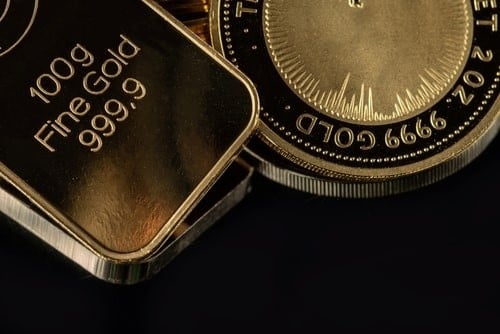 |
| Gold prices today, October 29, 2024: Gold ring prices make history amidst a 'fever', demand flows from East to West, explaining why 'gold is never expensive or cheap'. (Source: shutterstock) |
Summary of gold prices at major domestic gold trading brands at the close of trading on the afternoon of October 28:
Saigon Jewelry Company (SJC): SJC gold bars 87 – 89 million VND/ounce; SJC gold rings 87 – 88.5 million VND/ounce.
Doji Group: SJC gold bars 87 – 89 million VND/ounce; 9999 gold rings (Hung Thinh Vuong brand) 87.7 – 88.7 million VND/ounce.
PNJ system: SJC gold bars: 87 – 89 million VND/ounce; PNJ 999.9 plain gold rings: 87.6 – 88.89 million VND/ounce.
Phu Quy Gold and Silver Group: SJC gold bars: 87.3 - 89 million VND/ounce; Phu Quy 999.9 round gold rings: 87.7 - 88.9 million VND/ounce.
The price of SJC gold at Bao Tin Minh Chau is listed at 87-89 million VND/ounce. The price of plain round gold rings from Thang Long Gold Dragon is listed at 87.88-88.88 million VND/ounce.
Thus, compared to the morning session of October 28th, the price of gold rings at businesses tended to decrease in the afternoon session of the same day. Specifically, Doji Group listed a decrease of 200,000 VND/ounce in both buying and selling prices.
According to information from Kitco News , as of 6:01 PM Vietnam time on October 28th, the world gold price was listed at 2,732.6 USD/ounce, a decrease of 16.3 USD/ounce compared to the previous trading session.
Based on the USD exchange rate at Vietcombank on October 28th, 1 USD = 25,464 VND, the world gold price is equivalent to 83.83 million VND per tael.
Global gold prices fell on October 28, pressured by a stronger US dollar and higher Treasury yields as traders awaited a series of US economic data for guidance on the Federal Reserve's interest rate stance.
Spot gold fell 0.6% to $2,731.79 an ounce at 10:27 GMT. Gold bullion hit a record high of $2,758.37 an ounce on October 23, driven by safe-haven demand amid market risks from ongoing conflicts in the Middle East and Ukraine.
The US dollar index (.DXY) is on track for its best month since April 2022, with the currency's strength making gold less attractive to buyers holding other currencies. Meanwhile, benchmark 10-year Treasury yields have risen to a three-month high.
"The prospect of lower US interest rates could further support investment demand and boost gold prices. We expect gold to reach $2,900 per ounce in the next 12 months," said Giovanni Staunovo , an analyst at UBS.
Key data releases this week include ADP employment figures on Wednesday, US Personal Consumption Expenditures (PCE) data on Thursday, and the payroll report expected on Friday.
Traders see nearly a 95% chance that the Fed will cut interest rates by 25 basis points in November, which would further support the already non-yielding gold market.
In physical terms, China's gold consumption decreased by 11.2% year-on-year in the first three quarters of 2024 due to high prices reducing demand for jewelry.
"Although demand for physical gold in Asia, particularly in China, has been weak recently, I believe the focus when it comes to gold demand is shifting from East to West," analyst Staunovo added.
Meanwhile, in Asian markets, gold prices also fell in afternoon trading on October 28 due to a strong US dollar.
The value of gold is increasing.
In an article published in Good Returns on October 28th, Amit Modak, CEO of PN Gadgil & Sons, stated that gold is currently reacting to geopolitical instability in the Gulf region, the Russia-Ukraine conflict, and other factors.
When these conflicts unfold, their impact extends beyond borders, affecting global markets and energy supplies. Furthermore, the interplay of economic factors, such as a weakening US dollar and increased demand for precious metals, further complicates the situation.
Furthermore, the Indian economy is also struggling, leading to increased demand for gold and silver. On the other hand, Japan faces challenges surrounding interest rate adjustments and declining production output. Meanwhile, China is also experiencing economic difficulties, resulting in increased demand for gold and silver. Russia has begun stockpiling gold to ensure financial security.
Conversely, gold-mining nations have required relevant institutions to sell 20% of their gold to domestic central banks, further impacting the supply and availability of the precious metal. Taken together, these factors are affecting the supply and availability of gold. The cumulative effect of all these impacts has led to an increase in the value of gold.
Although the upward trend in gold prices appears to be driven by negative economic conditions, the sudden price surge should not be viewed as isolated events. Since the beginning of this uptrend, gold prices have risen from $2,180 per ounce to $2,220 per ounce and eventually reached $2,680 per ounce, marking a 15% increase from $2,200 per ounce to $2,680 per ounce in just 45 days. However, such rapid growth may be unsustainable, as corrections often follow previous gold price increases.
Over the past two years, many central banks around the world have significantly increased their gold purchases. This increased demand has contributed to a rise in the value of the precious metal. Many Indians believe that as the value of gold increases, the asset will become more expensive.
However, it's important to understand that gold is never truly expensive or cheap. If the price of gold rises, the value of 100 or 500 grams purchased previously will also be affected. Therefore, it's a mistake to view gold solely in terms of whether it's expensive or cheap. Investors, especially in India, hope for higher gold prices in the future for their own benefit.
The continuous rise in gold prices is a positive development for those who have bought gold over the years, as it increases their returns. By 2025, the US money supply is projected to increase by 24% compared to 2020, with national debt reaching nearly $36 trillion – a 15% increase since June 2023. This trend is reflected globally, where public debt has reached $315 trillion, with $210 trillion of that debt held by developing and developed governments. This scenario suggests that governments are spending significantly more than they are generating revenue, having to print money to cover expenses.
Printing more money reduces purchasing power, causing the public to invest in gold as a safeguard. Gold is considered a safe investment during times of economic instability and rising public debt, as it tends to retain its value even when currency values fluctuate. Therefore, the increasing demand for gold as a safe investment is driving up its price, and it is unlikely to fall anytime soon.
With governments increasingly resorting to printing money to manage rising debt, the demand for gold as a safe-haven investment is likely to continue. Therefore, investors should remain vigilant and consider the interconnected nature of geopolitical events and economic conditions within this complex context. Understanding this interplay is crucial for making informed investment decisions, as both gold and silver are poised for further growth in the coming years.
Source: https://baoquocte.vn/gia-vang-hom-nay-29102024-gia-vang-nhan-lam-nen-lich-su-giua-con-sot-nhu-cau-chay-tu-dong-sang-tay-ly-do-noi-vang-khong-bao-gio-dat-hay-re-291672.html






























































































Comment (0)