

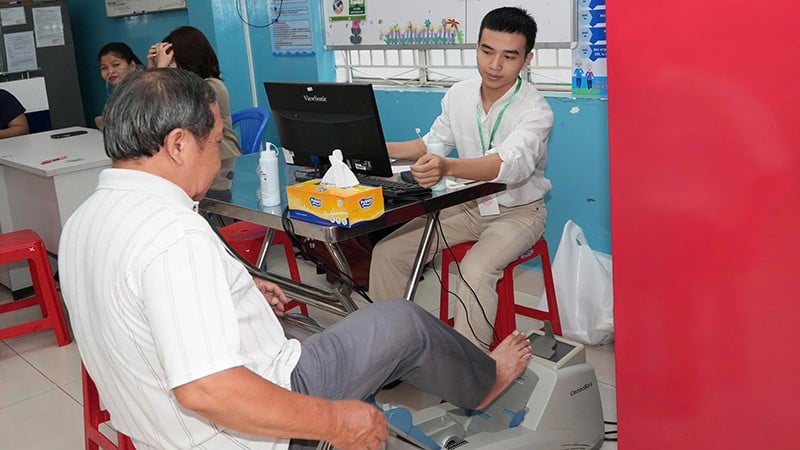
According to recent statistics, by 2024, the proportion of elderly people (over 60 years old) in Vietnam accounts for about 14.5% of the total population. It is forecasted that by 2035, this proportion will increase to nearly 20% and by 2049 it may reach 24.88% (equivalent to about 28.6 million people).
Vietnam is one of the countries with the fastest population aging rate in the world , with the transition time from "aging" to "aged population" stage being only about 26 years, much shorter than developed countries like France (115 years) or Australia (73 years).
Population aging requires Vietnam to have comprehensive and sustainable policies to care for the health and improve the quality of life of the elderly, while taking advantage of the experience, knowledge and contributions of this population group to the overall development of the country. However, the policy on health care for the elderly in Vietnam in recent years has still had some problems.
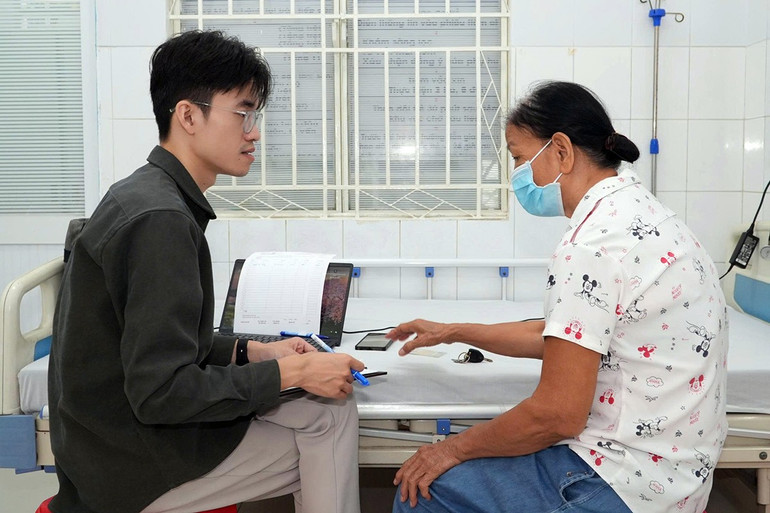
Burden on nutrition and health of the elderly
Currently, there has been no statistical survey on the nutritional and health status of the entire elderly population in general nationwide. In 2025, the Vietnam Union of Science and Technology Associations (VUSTA) chaired and coordinated with the Vietnam Medical Association and the Vietnam Institute of Applied Medicine to implement a social consultation project on "The nutritional and health status of the elderly in some major cities in Vietnam in 2025".
Conducted on more than 400 elderly people in 5 wards in Hanoi and Ho Chi Minh City, the study shows that: elderly people in the two largest urban areas in Vietnam are suffering a significant burden of nutrition and health, including overweight, obesity and chronic diseases.
Specifically, the obesity rate among the elderly participating in the study was up to 33.2%. In addition, 87.7% of the elderly surveyed had at least one chronic disease, the most common being high blood pressure and bone and joint diseases.
Regarding nutrition, the study also showed that only 25% of the elderly surveyed ate all five food groups in their meals. Of which, the percentage of elderly people consuming milk and dairy products was low (20%). More worryingly, the habit of consuming foods containing many health risk factors (high in salt, fried, rich in simple sugars) was quite common, with the rate fluctuating between 40-60%.
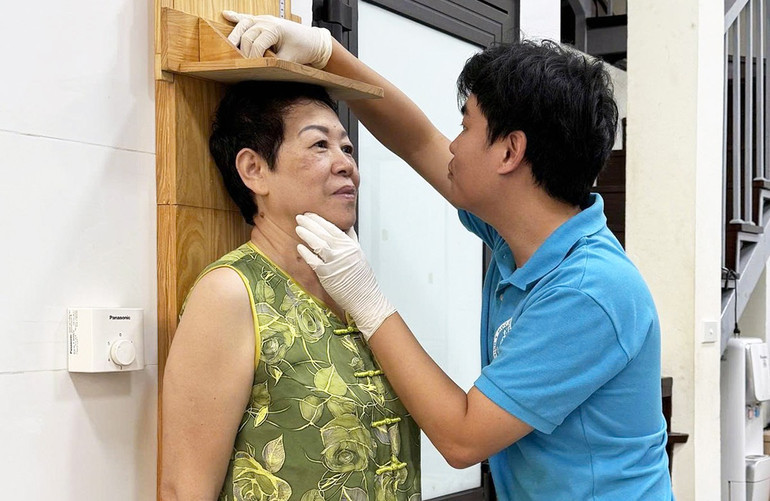
A survey by the Vietnam Institute of Applied Medicine from local health workers and representatives of the Association of the Elderly shows that in recent years, the health sector has implemented many activities to improve the quality of health care for the elderly, typically periodic health check-ups at health stations (implemented at all 5 health stations that conducted the survey).
In addition, many health education and communication programs are also held regularly, helping the elderly raise awareness of disease prevention, maintain a healthy lifestyle and be more proactive in taking care of their health. Some localities also implement health club models and physical exercise activities for the elderly.
However, the above health care activities in some places and at some times have not met the health care needs of the elderly. Many activities are formal and have not been implemented in an in-depth manner. Communication activities are also gradually shifting to online form, causing limitations for many elderly people who are not proficient in technology, or are limited in space and facilities, and must be integrated with many other contents, making the communication effectiveness not as expected.
Need a synchronous solution system
From the above research results, the Vietnam Institute of Applied Medicine and the Vietnam Medical Association have proposed a number of solutions to enhance and improve the quality of health care for the elderly, especially the elderly in some large urban areas such as Hanoi and Ho Chi Minh City.
Accordingly, it is necessary to focus on building a multi-layered health network, from the grassroots to the central level, with a focus on enhancing geriatric expertise; forming a national strategy on developing human resources for elderly care.
First, medical, nursing and social work training institutions need to include elderly care in their regular training programs. Next, there needs to be appropriate treatment, honor and incentive mechanisms for those working in elderly care.
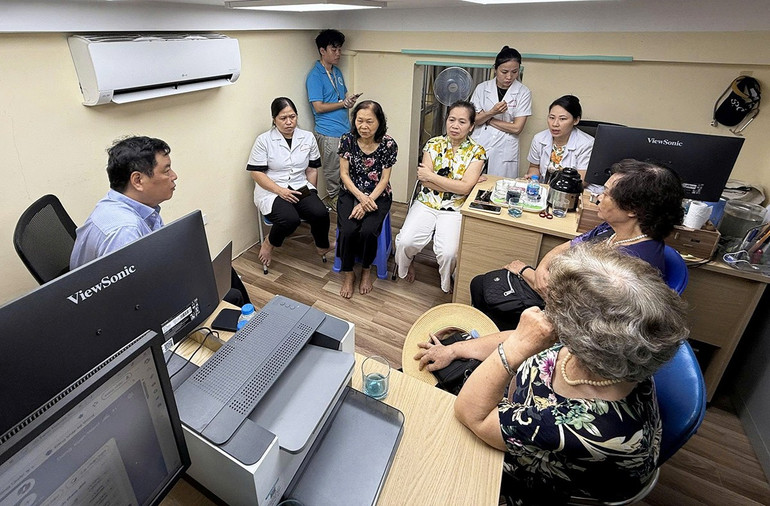
In addition, a long-term strategy is needed to synchronously develop care, nurturing and social protection facilities for the elderly, including both the public and private sectors.
These care facilities should be diversified, segmented from basic care to intensive care, end-of-life care, from day care models to full-day care models to facilitate access for older people with different health care needs.
At the strategic level, the state needs to develop a comprehensive policy framework on population aging and elderly care, linking health care, social security and scientific research.
"The establishment of a system of national research institutes and geriatric centers will create a scientific foundation for policy making, human resource training, geriatric research and the development of advanced care models. In the context of increasingly evident population aging, learning and utilizing international experiences to develop policies and models for elderly care is essential," shared Dr. Truong Hong Son, Director of the Vietnam Institute of Applied Medicine.
Source: https://nhandan.vn/giam-thieu-ganh-nang-suc-khoe-o-nguoi-cao-tuoi-trong-boi-canh-gia-hoa-dan-so-post928289.html

![[Photo] 60th Anniversary of the Founding of the Vietnam Association of Photographic Artists](/_next/image?url=https%3A%2F%2Fvphoto.vietnam.vn%2Fthumb%2F1200x675%2Fvietnam%2Fresource%2FIMAGE%2F2025%2F12%2F05%2F1764935864512_a1-bnd-0841-9740-jpg.webp&w=3840&q=75)
![[Photo] Cat Ba - Green island paradise](/_next/image?url=https%3A%2F%2Fvphoto.vietnam.vn%2Fthumb%2F1200x675%2Fvietnam%2Fresource%2FIMAGE%2F2025%2F12%2F04%2F1764821844074_ndo_br_1-dcbthienduongxanh638-jpg.webp&w=3840&q=75)






















































































Comment (0)