

In its latest bulletin, the MDM (Mekong Hydropower Monitoring Project) warned that the early stages of the 2023 rainy season will be significantly drier than usual in the lower Mekong River basin. Looking at temperature and humidity maps, it's clear that much of the lower Mekong basin is much drier than it has been in the past 30 years.
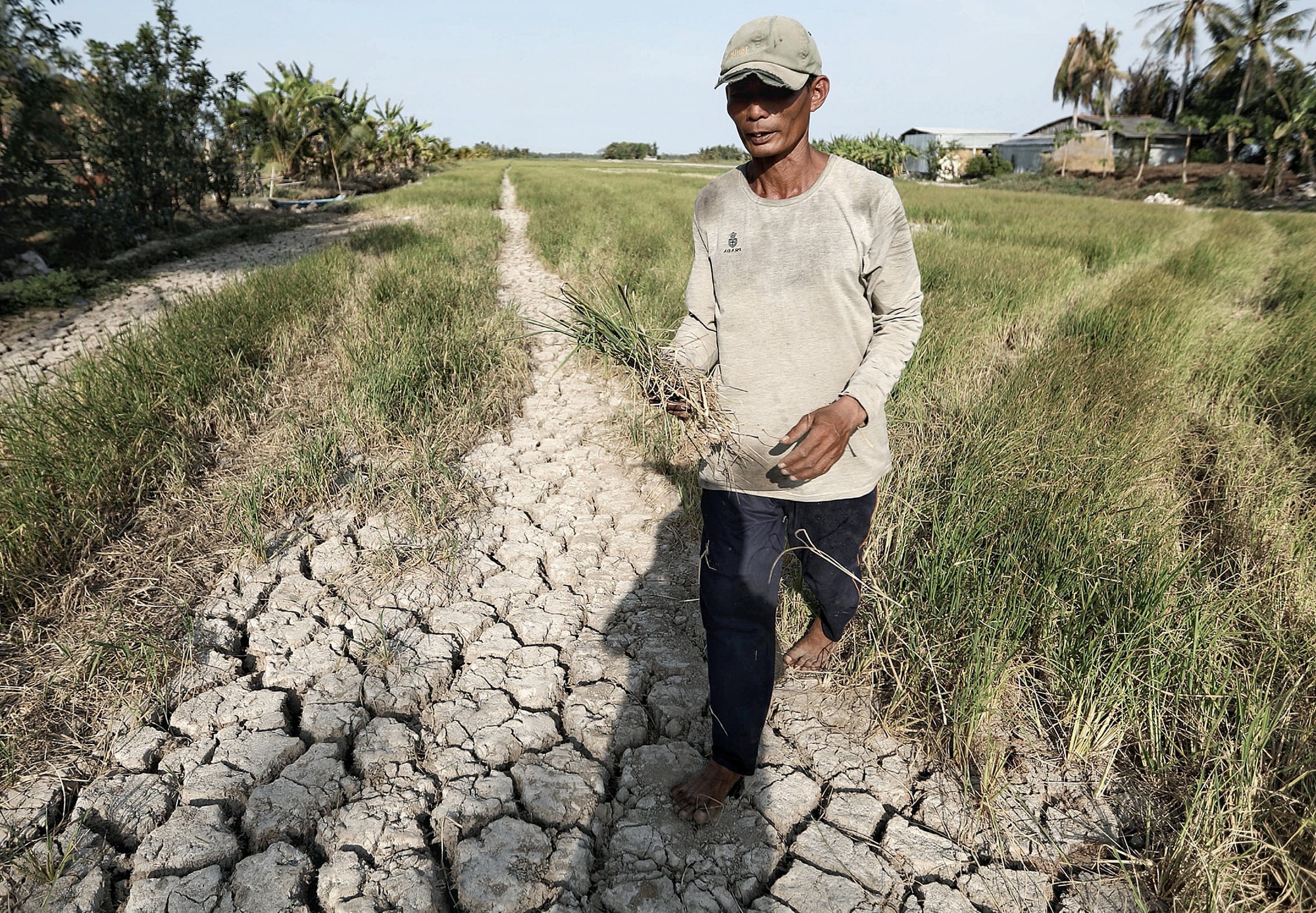
Mekong River dry, low flood forecast.
Normally, around this time of year (late June), monsoon rains would have begun to fall throughout the basin, and the Mekong River's flood rhythm would have started to form, but currently, there are no signs that this will happen.
According to MDM, the natural flow model shows a water deficit of up to 30% in Chiang Saen (Thailand) due to water storage by upstream Chinese dams. Further downstream, river levels are about 1 meter lower than normal for this time of year due to storage at Chinese dams and low rainfall across the basin.
In the coming weeks, many dams will store water due to concerns about El Nino causing rainfall shortages. This will further affect the natural flow and reduce the flood frequency of the Mekong River. This will subsequently have impacts on fisheries and agricultural production throughout the basin.
Meanwhile, the forecast from the Southern Irrigation Planning Institute (Siwrp) indicates that: Early-season floods will be lower than the multi-year average. Main-season floods in the upstream areas of the Mekong River will only be approximately at or below alarm level 1. Conversely, in the middle and downstream areas of the Mekong River, due to the influence of high tides, water levels in many places will reach and exceed alarm level 3. High tides will be particularly strong in October and November. Furthermore, rainfall will be lower than the multi-year average in October and November, posing a risk of freshwater shortages for rice production in coastal provinces.
Source link


































































































Comment (0)