

The Hanoi People's Committee has issued Decision No. 5316/QD-UBND approving the ticket control process at automatic ticket gates - applying electronic identification, authentication, and biometric recognition for train passengers at urban railway stations.
Accordingly, the process will initially be applied to two lines: Line 2A Cat Linh - Ha Dong and Line 3.1 Nho Son - Hanoi Station.
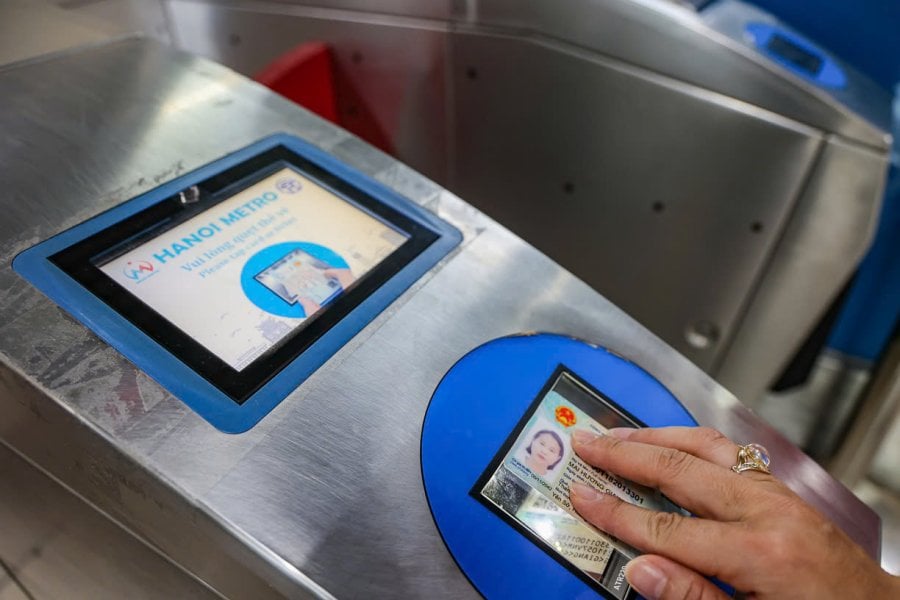
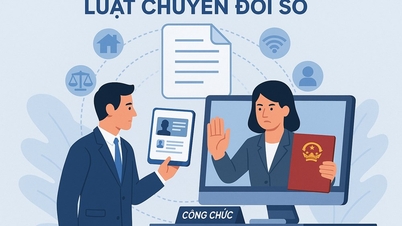
(Illustrative image)
Meanwhile, non-identified single-trip tickets or EMV (tap-and-go) card payments will be processed first without requiring biometric verification.
The process is implemented in three phases. Phase 1 focuses on time-based tickets and the use of biometric identification. Phase 2 expands to encourage single-trip tickets with identification and facial authentication. Phase 3 aims to temporarily discontinue the use of non-identified single-trip tickets and extend biometric identification to all passengers.
The units assigned to the task include: Hanoi Railway Company Limited (HMC), Hanoi City Traffic Management and Operation Center (TRAMOC), and related agencies such as the Department of Construction, the Department of Finance, the Department of Science and Technology, and the Hanoi City Police.
According to observations during the trial phase, the Cat Linh - Ha Dong Line 2A has implemented a pilot program for electronic authentication and biometric identification at 12 stations with over 65 ticket gates. Passengers using chip-embedded ID cards or QR codes via the Hanoi Metro app may receive free tickets to encourage usage.
The application of facial biometrics in public transport – specifically urban rail – raises several considerations. First is the protection of personal data: facial information and user identification need to be encrypted and strictly managed in accordance with legal regulations. Second is the convenience and acceptance level of passengers, especially the elderly or those with limited exposure to technology. Finally, there are the technical compatibility and costs of deploying a biometric identification system on a large scale.
In addition, the Hanoi People's Committee has assigned the Department of Construction to take the lead in coordinating with relevant units to review and adjust the implementation process if any inconsistencies arise.
The application of electronic identification, authentication, and biometric recognition technologies promises to improve ticket management efficiency, minimize ticket fraud, and increase passenger convenience. However, this transition also places significant demands on legal , security , and privacy aspects. Users should be prepared to update their registration information, use identified tickets, and undergo authentication upon entering the station.
Source: https://doanhnghiepvn.vn/chuyen-doi-so/ha-noi-so-hoa-ve-di-metro-bang-sinh-trac-hoc-khuon-mat/20251028053126788

























































































Comment (0)