

The National Center for Meteorological and Hydrological Forecasting has just released its assessment of the meteorological situation nationwide for the next 7 days (September 20-26). In particular, during this period, the weather will be affected by two consecutive typhoons in the East Sea, one of which will impact the mainland of Vietnam.

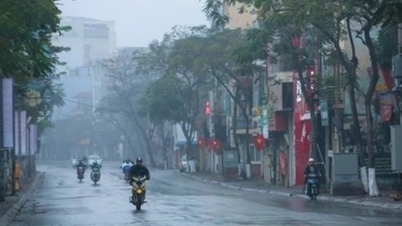
Northern Vietnam is likely to experience two periods of heavy rain next week. (Illustrative image: Thach Thao)
Specifically, around late afternoon and evening of September 19th, Typhoon Mitag (Typhoon No. 8) made landfall in southern Guangdong province (China). Afterwards, the typhoon rapidly weakened into a tropical depression, then a low-pressure area on September 20th. However, the remnants of this typhoon will cause heavy rain in northern Vietnam around September 22nd-23rd.
Notably, a storm with the international name Ragasa is currently active in the Northwest Pacific Ocean, approximately 800km east of Luzon Island (Philippines).
The forecast indicates the storm will move northwest, then change direction to west-northwest, gradually increasing in speed and intensity.
Around September 23rd, Typhoon Ragasa is likely to enter the eastern part of the North East Sea, with an intensity of level 14-16, gusting above level 17 (super typhoon). This is the 9th typhoon of 2025, predicted to affect the mainland of Vietnam.
Therefore, during the period from September 20-26, 2025, the weather across the country will experience significant fluctuations. Specifically:
Northern region
From September 20-21 and September 24: Sunny days, with scattered showers and thunderstorms at night in some areas.
From September 22-23: there will be rain, moderate rain, with some areas experiencing heavy to very heavy rain.
From September 25-26: there is a possibility of widespread heavy rain.
Water levels on small streams and main rivers in the Red River-Thai Binh system are likely to experience flooding in the last 1-2 days.
Central Vietnam
From Thanh Hoa to Hue City :
From September 20-21 and 24: there will be scattered showers and thunderstorms in some areas, especially in the South in the late afternoon and evening.
From September 22-23: scattered showers and thunderstorms in the late afternoon and evening.
From around September 25-26, there is a possibility of widespread heavy rain.
South Central Coastal Region :
From September 20-23: scattered showers and thunderstorms are expected in the late afternoon and evening, with some areas experiencing heavy rain.
From September 24-26: sunny days, with scattered showers and thunderstorms in the evening and at night.
Central and Southern Highlands regions
There will be scattered showers and thunderstorms; specifically from September 22-25, there will be showers and scattered thunderstorms, with locally heavy to very heavy rain. The rain will be concentrated in the afternoon and evening.
Hanoi area
From September 20-21 and September 24: Sunny days, with scattered showers and thunderstorms at night in some areas.
From September 22-23: scattered showers and thunderstorms, with heavy rain in some areas.
From September 25-26: there is a possibility of widespread heavy rain.
Sea wave forecast
From September 20-21, wave heights will fluctuate around 2 meters across the sea.
From September 22-27, due to the influence of Typhoon Ragasa, wave heights in sea areas tended to increase. In the northern South China Sea (including the Hoang Sa Special Economic Zone), wave heights ranged from 9-11m; in the central and southern South China Sea (including the Truong Sa Special Economic Zone), and the Gulf of Tonkin, wave heights ranged from 3-6m; in the area from Quang Tri to Ca Mau, wave heights were generally 2-4m.
The meteorological agency notes that the aforementioned areas are likely to experience tornadoes, lightning, hail, and strong gusts of wind during thunderstorms. Localized heavy rainfall could cause flash floods on small rivers and streams, landslides on slopes, and flooding in low-lying areas.
Authorities and citizens need to regularly monitor meteorological and hydrological bulletins, especially short-term warnings, in order to respond promptly and ensure the safety of people and property.
Source: https://vietnamnet.vn/hai-con-bao-lien-tiep-thoi-tiet-ca-nuoc-nhieu-noi-bien-dong-di-thuong-2444395.html


















![[Photo] Prime Minister Pham Minh Chinh holds a phone call with the CEO of Russia's Rosatom Corporation.](/_next/image?url=https%3A%2F%2Fvphoto.vietnam.vn%2Fthumb%2F1200x675%2Fvietnam%2Fresource%2FIMAGE%2F2025%2F12%2F11%2F1765464552365_dsc-5295-jpg.webp&w=3840&q=75)











































Comment (0)