

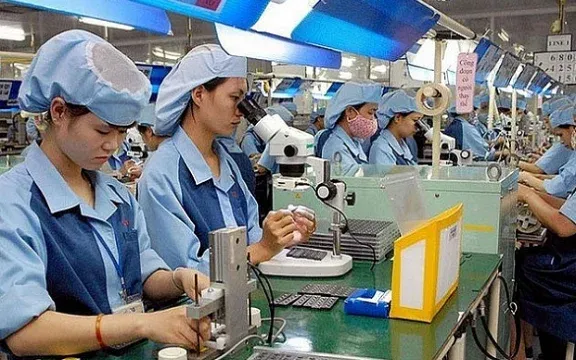
The "miracle" duo leads Vietnam's trade to record highs
The year 2025 will mark a strong milestone in Vietnam's trade history when, according to the latest statistics from the Customs Department as of the end of October, the country has two provinces and cities with import-export turnover of 100 billion USD or more, namely Ho Chi Minh City and Bac Ninh. This achievement is not only a clear demonstration of Vietnam's resilience and attractiveness in the global supply chain, surpassing even the most optimistic forecasts, but also affirms the pivotal role of these two regions for the entire national economy .
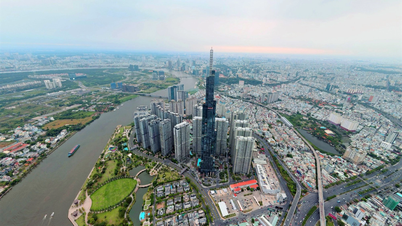
Ho Chi Minh City, as a center of logistics, services, finance and traditional trade gateway, reaching a record level is understandable. Its strategic position, diverse business ecosystem and modern seaport network help Ho Chi Minh City maintain the overall strength of a megacity.
In addition, the strong rise of Bac Ninh is a highlight reflecting the structural shift. From a purely agricultural province, Bac Ninh has quickly become a center of high-tech manufacturing and electronics assembly in the Northern Key Economic Zone, thanks to the presence and continuous expansion of global technology corporations. It is the new generation of FDI capital that has turned Bac Ninh into one of the largest export "factories" in the region - a typical example of the power of prioritizing investment attraction in key industries with the ability to participate deeply in the global value chain.
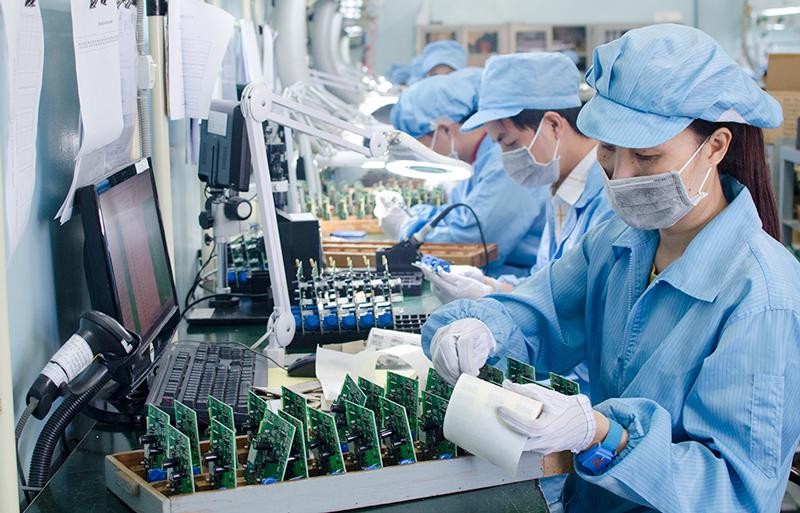
The record import-export turnover of 100 billion USD in Ho Chi Minh City and Bac Ninh proves the attractiveness of FDI.
Economists say the commercial success of these two “super-localities” is largely based on FDI. Foreign corporations not only bring capital, but also technology, advanced production processes and established global supply chains, creating a growth rate that many other localities, which rely heavily on domestic economies, find difficult to keep up with.
Trade map tilts and warns of long-term growth
The excessive concentration of FDI capital in the two leading localities is creating an unbalanced economic map. While most other provinces and cities are still striving towards an import-export scale of tens of billions of USD, Ho Chi Minh City and Bac Ninh have left us far behind with outstanding growth rates. This gap is not only reflected in the scale of turnover, but also in the quality of growth, the level of technology absorption and economic spillover.
The concern lies in the growing gap in competitiveness and technology attraction between the two FDI centers and the rest of the economy. This gap can lead to a “two-speed growth” situation: the local group grows rapidly thanks to high-quality FDI and the other group grows more slowly due to limited internal resources. This mismatch poses risks to the sustainability of national growth.
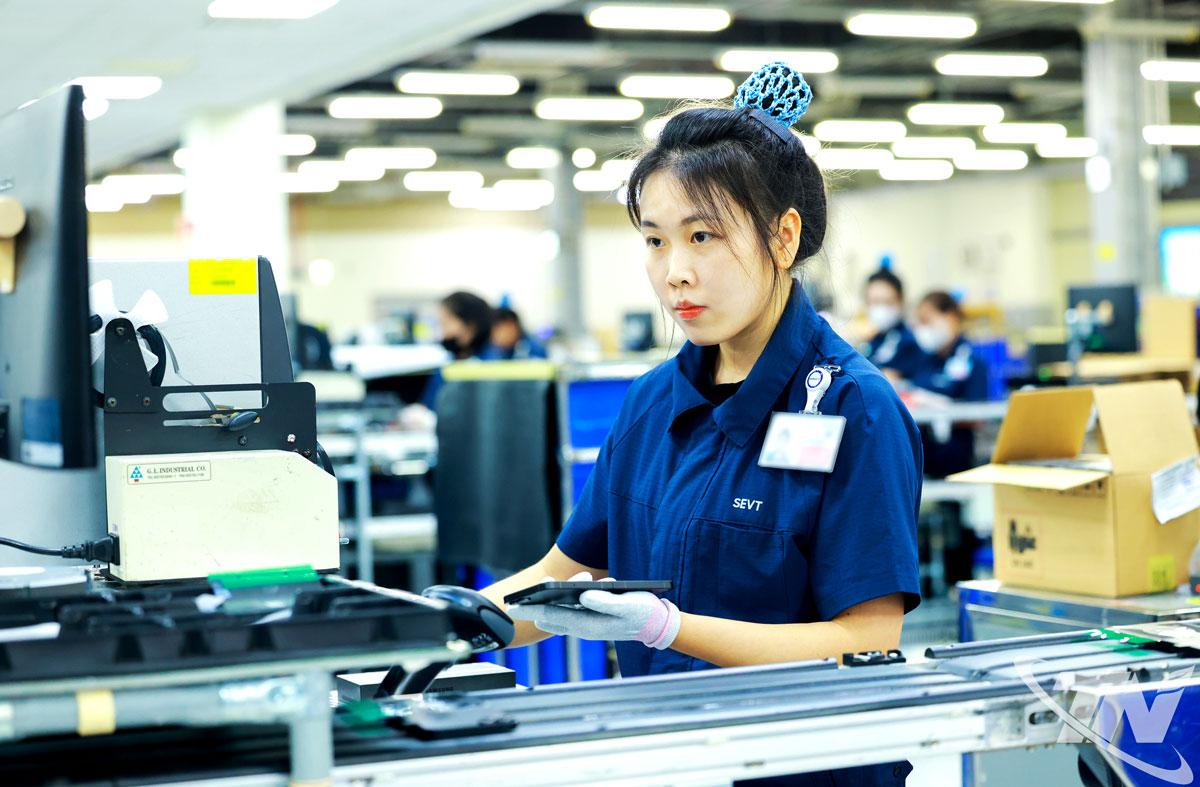
Vietnam needs to reallocate capital flows and screen new generation FDI.
The consequences are social problems such as overloaded infrastructure, shortage of high-quality labor in large cities, while many neighboring provinces have not created enough job opportunities. Without a strategy to reallocate resources and attract investment more evenly, the gap will widen, undermining the goal of inclusive development that Vietnam is aiming for.
Expanding the "100 billion USD club" through domestic resources and the allocation of FDI capital.
Over-reliance on the performance of “hyperlocal” regions leaves the economy vulnerable if either region experiences fluctuations in investment, logistics or supply chains. This is the time for Vietnam to shift its strategic thinking: spreading growth momentum instead of just exploiting overloaded hotspots.
According to economic experts, Vietnam needs to reallocate capital flows and screen new-generation FDI. Policymakers need to consider the success of Ho Chi Minh City and Bac Ninh not only as a goal, but also as a lesson on the model of attracting high-quality FDI. To address the imbalance, the strategy must focus on allocating and screening new-generation FDI, creating new "growth poles". Instead of concentrating in saturated areas, secondary localities such as Hai Phong, Dong Nai, Binh Duong, or provinces in the Central Key Economic Zone need special preferential policies to attract capital for high technology, deep processing, and green logistics.
This requires synchronous investment in connecting infrastructure from highways, seaports, airports to high-quality human resources. Localities need to proactively build specialized industrial zones linked to supply chains, prepare clean land, energy and logistics services - decisive conditions to form new "growth poles".
In addition, experts also believe that our country needs to develop internal strength and link value chains. An equally important pillar is to develop internal strength so that Vietnamese enterprises can participate in the "100 billion USD playground". If domestic enterprises do not have enough capacity, the spillover effect from FDI will only be a "one-way flow".

To expand the "100 billion USD club", it is necessary to simultaneously deploy many solutions to increase competitiveness for domestic enterprises.
Talking to reporters about this story, Dr. To Hoai Nam, Permanent Vice President and General Secretary of the Vietnam Association of Small and Medium Enterprises, emphasized that the role of domestic enterprises is irreplaceable. "We need to develop brands, improve product quality and provide technical support so that Vietnamese enterprises can become strategic partners, not just auxiliary processors," Mr. Nam affirmed.
According to the Vietnam Association of Small and Medium Enterprises, to expand the "100 billion USD club", it is necessary to simultaneously implement many solutions to increase the competitiveness of domestic enterprises. In particular, priority is given to supporting enterprises to access preferential credit, technology transfer and technical training to meet international standards. In parallel, forming sustainable chain links between domestic enterprises and the FDI sector through supply-demand connection programs and a clear localization roadmap will help increase the rate of added value within the country. Finally, improving management capacity, developing brands and supporting enterprises to directly access export markets are considered the key for Vietnamese enterprises to enter the high-value playing field.
The success of the two leading localities is just the tip of the trade iceberg. To develop evenly and sustainably and escape the middle-income trap, Vietnam needs a regional economic restructuring strategy, creating more "100 billion USD factories" supported by domestic strength and a solid supporting industry network. The determination to transform will determine Vietnam's position in the next decade./.
Source: https://vtv.vn/two-super-regions-surpassed-100-billion-usd-cu-hich-de-viet-nam-buoc-vao-giai-doan-tai-cau-truc-tang-truong-100251204225753789.htm


![[Photo] The captivating scenery of the fragrant maple forest in Quang Tri](/_next/image?url=https%3A%2F%2Fvphoto.vietnam.vn%2Fthumb%2F1200x675%2Fvietnam%2Fresource%2FIMAGE%2F2025%2F12%2F10%2F1765353233198_lan09046-jpg.webp&w=3840&q=75)


![[Photo] Explore the US Navy's USS Robert Smalls warship](/_next/image?url=https%3A%2F%2Fvphoto.vietnam.vn%2Fthumb%2F1200x675%2Fvietnam%2Fresource%2FIMAGE%2F2025%2F12%2F10%2F1765341533272_11212121-8303-jpg.webp&w=3840&q=75)




























![[Video] The craft of making Dong Ho folk paintings has been inscribed by UNESCO on the List of Crafts in Need of Urgent Safeguarding.](https://vphoto.vietnam.vn/thumb/402x226/vietnam/resource/IMAGE/2025/12/10/1765350246533_tranh-dong-ho-734-jpg.webp)
































































Comment (0)