

Focus on protecting minors who are victims.
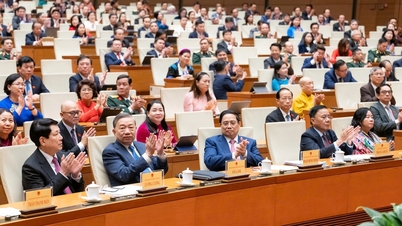
Continuing the agenda of the 7th Session, on the morning of June 21st, the National Assembly discussed the draft Law on Juvenile Justice in the plenary hall.
Speaking at the meeting, National Assembly Deputy Le Thanh Hoan (from Thanh Hoa province) stated that many countries have applied diversion and restoration of justice. Diversion is not intended to disregard the law and justice, but is considered a new measure to maintain justice.
According to the delegates, the draft law has focused on protecting minors who are victims. However, the provisions on protecting the rights of "victims" or "victims," including both minors and adults, are still inadequate.
It is necessary to avoid a tendency to prioritize the best interests of juvenile offenders, which may sometimes go beyond what is necessary and infringe upon the fundamental rights of other individuals in society, especially direct victims of abuse.
Therefore, the delegates proposed adding to Article 5 a requirement that measures for diversion outside the community must be agreed upon and consented to by the victim.
Regarding the authority to apply diversionary measures, in Article 53, the representative proposed implementing option 2, which is that the application of diversionary measures is solely the responsibility of the court, but not only at the request of the investigating agency or the prosecutor's office; the court has the full right to consider and decide. This is because Vietnam has a criminal policy and criminal procedure that are very different from other countries.
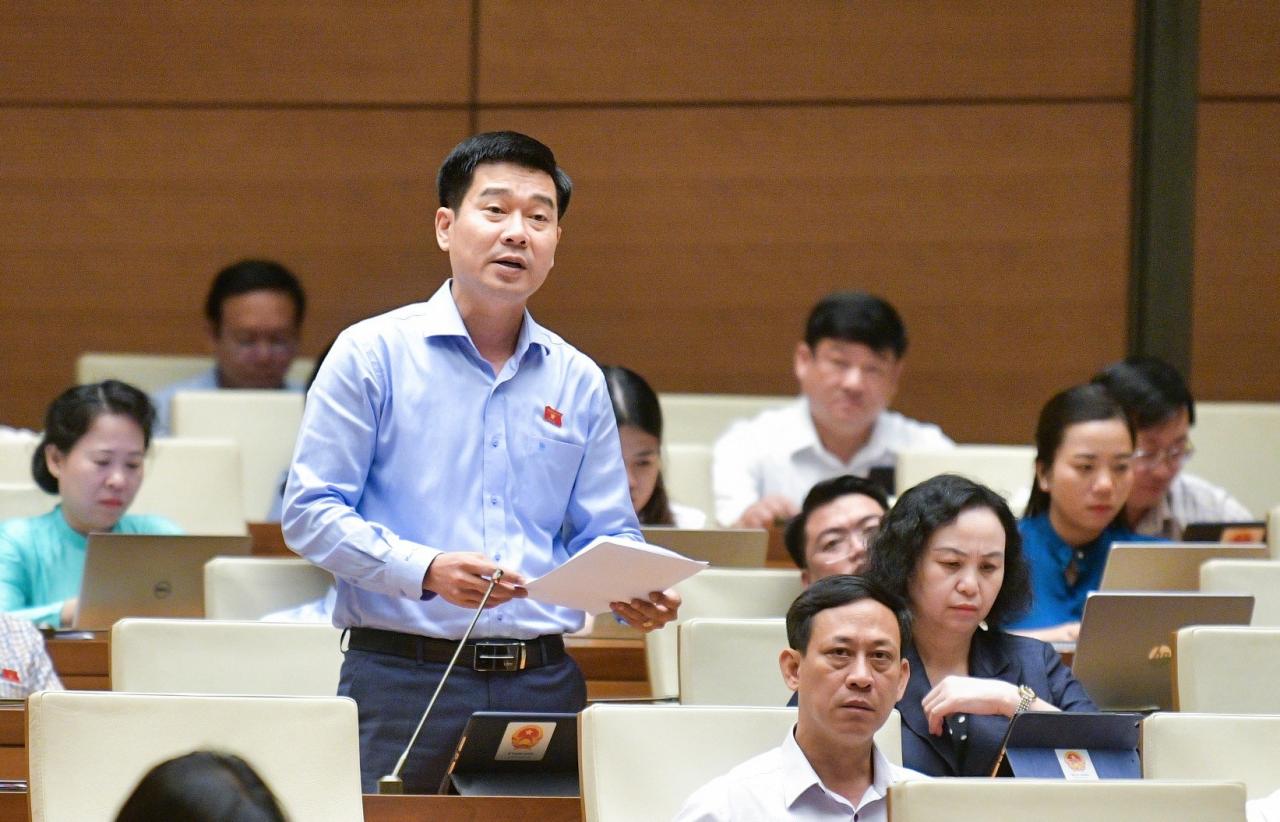
National Assembly Deputy Le Thanh Hoan.
Essentially agreeing with the Government 's submission and the Judicial Committee's verification report on the draft Law on Juvenile Justice, National Assembly Deputy Nguyen Thi Ngoc Xuan (Binh Duong delegation) suggested that, to ensure consistency in the policy of diverting juvenile offenders, it is proposed to add to Article 37 of the draft law that the group of people aged 12 to under 14 years old are eligible for diversion measures.
"Because, according to research, two out of the twelve diversionary measures—education at the commune, ward, or town level, and education at reform schools—as stipulated in Clauses 10 and 12 of Article 36 of the draft Law, lack consistency and uniformity in specific handling measures compared to the Law on Handling Administrative Violations," Ms. Xuan said.
According to the delegates, it would be very dangerous if the draft law omitted the age group from 12 to under 14 years old from which the 12 diversion measures are applied.
According to reported data on the situation of offenders and victims under 18 in criminal cases in 2021, the crime situation committed by minors is becoming increasingly complex, serious in nature, and often focuses on crimes such as theft, robbery, crimes against life and health, and drug-related crimes.
More specifically, the group of lawbreakers aged 12 and above is showing signs of increasing. Therefore, the representative proposed adding this group to the policy for diverting juvenile offenders.
Regarding the principle of applying diversionary measures, National Assembly Deputy Nguyen Thanh Sang (Ho Chi Minh City delegation) stated that Clause 4 of Article 40 stipulates that diversionary measures shall not be applied if the offender is already 18 years old at the time of consideration.
However, delegates argued that the aforementioned regulation is not consistent with the criminal policy regarding minors.
Because at the time they committed the crime, they were minors, and the decision on when to apply the diversion measure rests with the prosecuting authorities. Now, delaying the process and depriving minors of the benefit is inappropriate. "If there isn't enough time, applying a simplified procedure in this case would be more suitable," Mr. Sang said.
Helping juvenile offenders correct their mistakes.
National Assembly Deputy Nguyen Thi Viet Nga (from Hai Duong province) believes that building a legal framework for juvenile justice is very much in line with global trends and reflects the humane and progressive nature of Vietnam's legal system.
However, given the current trend of juvenile crime, delegates believe that careful consideration should be given to the drafting of each provision of this law.
"To ensure that when the law is enacted, it is both humane, creating conditions for juvenile offenders to recognize, correct, and remedy their mistakes, but also has a strict educational and deterrent effect," Ms. Nga said.
According to reports from authorities, the increasing number of juvenile offenders is a serious problem today. Many crimes are committed by minors, with extremely serious methods and consequences, some of which have shocked society.
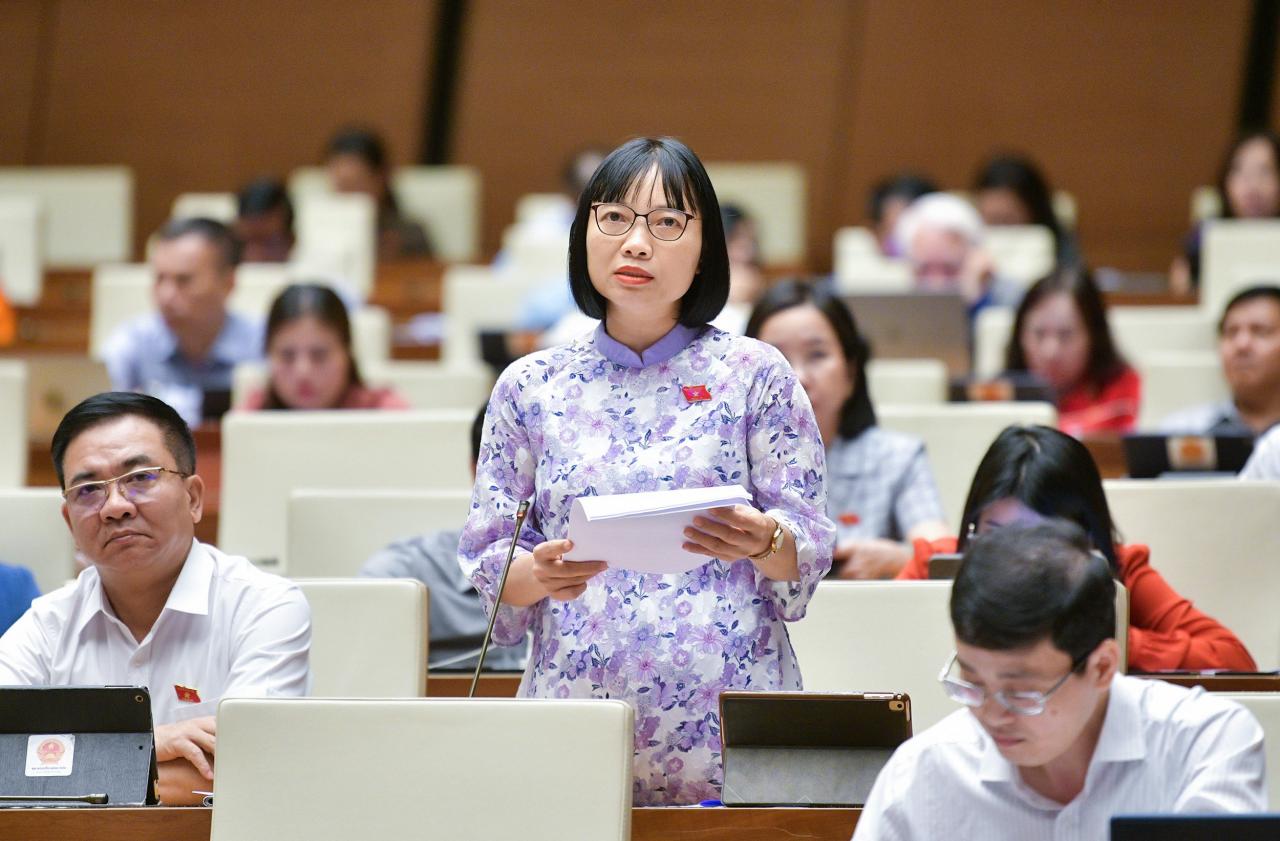
National Assembly Deputy Nguyen Thi Viet Nga.
Ms. Nga stated that, given this reality, the lack of appropriate and strict legal measures and punishments to ensure fairness will cause public resentment and loss of trust. Furthermore, it could lead to a situation where many young people exploit the humanitarian policies towards minors to entice, incite, or hire them to commit crimes, which is very worrying.
Regarding the diversion measures stipulated in Article 36 of the draft, Article 36 specifies 12 diversion measures, of which three, according to the delegates, need careful consideration regarding their feasibility. These measures are: "prohibiting contact with individuals at risk of leading juvenile offenders to commit new crimes," "restricting travel hours," and "prohibiting visits to locations at risk of leading juvenile offenders to commit new crimes."
"These measures sound very reasonable, but in reality, implementing them effectively is extremely difficult. We don't have the manpower to monitor daily and hourly who minors meet, where they go, and at what times, while these measures, according to the draft regulations, are supposed to be applied for at least 3 months to 1 year," Ms. Nga analyzed.
And for these measures to be feasible and effective, according to the delegates, they must be clearly defined. In particular, the preparation of human resources and equipment to support the task of monitoring the implementation of diversion measures for juvenile offenders is crucial.
Explaining and clarifying concerns about the new regulations, Chief Justice of the Supreme People's Court Nguyen Hoa Binh stated that, regarding the extension of the age range to 12-14 years old, he believes that according to the current Criminal Law, those aged 12 to 14 are not considered criminals, and any offense committed by them is not a crime.
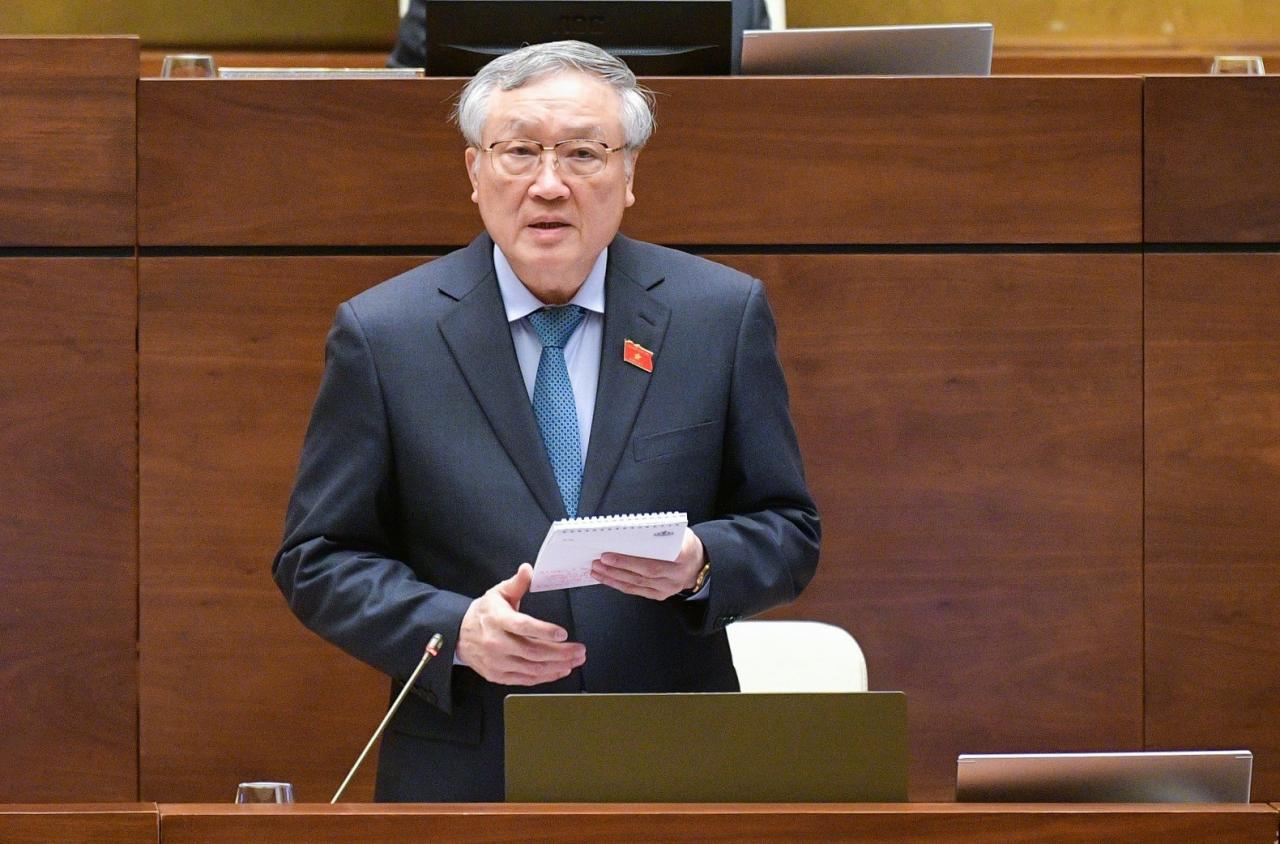
Chief Justice of the Supreme People's Court Nguyen Hoa Binh
Under applicable conditions, one of the requirements is that it must be voluntary.
“The goal of diversionary measures is for the children to voluntarily acknowledge their shortcomings and sincerely correct them, not to be forced. In cases where children are faced with two choices – either they are already suspected of a crime and are being charged, or they agree to diversionary measures; or they agree to a normal investigation, prosecution, and trial – the law will give them a choice. I believe both parents and children will choose the diversionary option.”
"Allowing them to change direction is a social and legal opportunity. If the children do not voluntarily correct their mistakes, then the normal investigation, prosecution, and trial process will be activated," Mr. Binh said.
Regarding the ban on going to places and coming into contact with people at risk of committing new crimes, Mr. Binh said that it is necessary to clarify how the ban should be implemented, during which hours, and that it should depend on the violations committed by the children.
"If the children violate the rules or steal at the supermarket, they are banned from going to the supermarket; if they violate the rules by sexually abusing children, they are banned from going to places where there are young children; if they violate the rules by using drugs, they are banned from going to places with drug problems, nightclubs, or associating with such individuals," Mr. Binh said, adding that this depends on the children's behavior, so it's impossible to say what exactly should be banned .


















![[Image] Close-up of the newly discovered "sacred road" at My Son Sanctuary](/_next/image?url=https%3A%2F%2Fvphoto.vietnam.vn%2Fthumb%2F1200x675%2Fvietnam%2Fresource%2FIMAGE%2F2025%2F12%2F13%2F1765587881240_ndo_br_ms5-jpg.webp&w=3840&q=75)























































Comment (0)