

NIO – the Chinese electric vehicle manufacturer dubbed the "Tesla killer" – needs to burn more money to compete in the world's largest electric vehicle market.
NIO was dubbed a "Tesla killer" when it launched its 2017 SUV with a beautiful design, a large touchscreen, and voice control features, but priced at only half the cost of Tesla's Model X. NIO is one of China's most celebrated electric vehicle startups. However, they are also an example of the challenges many automakers are facing in the price war in the world's largest electric vehicle market.
NIO's sales have plummeted over the past few months, forcing the company to cut prices, reduce investments, and spend more cash. This month, CEO William Li said NIO would have to be more cautious in managing liquidity risk as weak sales over the past two weeks are putting pressure on cash flow.
Last week, NIO announced that a company backed by the Abu Dhabi government would invest $740 million in the company. Li predicted sales would rebound this month, following the launch of a new SUV model.
NIO has been relatively slow to react to other automakers in the price war. Their recent moves demonstrate how competition is impacting automakers' profitability and changing supply chains.
Some startups have even been eliminated from the game after burning through cash in the crowded Chinese market. This year, electric vehicle sales there have slowed due to weak demand and the Chinese authorities ceasing subsidies for buyers.
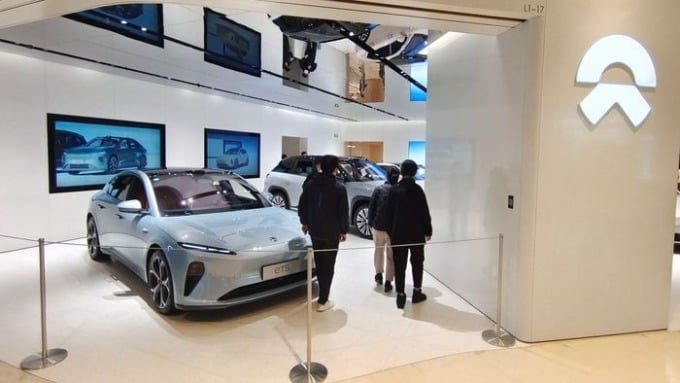
NIO's electric vehicle models are on display. Photo: CFOTO
WM Motor had to halt most of its production at the beginning of the year, lay off employees, and close many stores due to running out of money and debt. In May, Letin Auto – famous for its $4,000 electric hatchback – also filed for bankruptcy because it could not raise additional capital.
XPeng – another prominent Chinese startup listed in the US – has also seen a decline in sales since September last year, despite having reduced car prices by more than 10% since the beginning of this year. Compared to the same period last year, XPeng is currently selling 40% fewer cars. The company also has little time left to reverse the situation, as cash reserves are low while competitors are catching up technologically, according to analysts at CMB International.
Once darlings of investors, global electric vehicle manufacturers are struggling with low liquidity, operational issues, and fierce competition. American companies like Rivian Automotive and Lucid Group are also facing difficult times as cash reserves shrink.
Sales growth for electric and hybrid vehicles in China has slowed in recent quarters. Two years ago, growth was in triple digits. According to the China Passenger Car Association, sales in this vehicle segment increased by only 41% in the first five months of this year.
"Not everyone can survive in this market," said Joel Ying, an automotive analyst at Nomura. Startups are more vulnerable than established automakers. This is because established automakers still rely on their cash cow: gasoline cars, Ying explained.
The Wall Street Journal reported a few days ago that Beijing is drafting a stimulus package to revive the economy and consumption. Last week, China's Ministry of Finance also extended the tax exemption for electric and hybrid gasoline-electric vehicles until the end of 2025.
For foreign automakers, the Chinese market is even more challenging. Brands like Ford Motor are still failing in the electric vehicle market in China. Volkswagen – which dominates the gasoline car market and sells many electric vehicles in other markets – has yet to have a model in the top 10 best-selling electric vehicles in China.
Tesla remains the number two name in this electric vehicle market. They sold over 200,000 vehicles to Chinese customers in the first five months of this year.
The largest market share is held by Chinese automaker BYD, backed by a company owned by billionaire investor Warren Buffett. BYD sold 900,000 vehicles (including hybrids) in the first five months of the year. Li Auto – a manufacturer of high-end hybrid vehicles – also sold over 100,000 units during the same period, emerging as one of the strongest players in this market.
Since the beginning of the year, dozens of Chinese car manufacturers have had to lower prices. Dealers have also launched promotions to stimulate demand. In January, Tesla drastically reduced car prices in China. Local competitors, such as Xpeng and BYD, quickly followed suit.
NIO had not previously participated in the price war. Their deliveries in April and May fell to 6,000 units, compared to over 10,000 in previous months. Analysts believe NIO's problems are exacerbated by its slow launch of new models to replace older ones that have become less attractive to buyers.
Declining sales are putting pressure on the company's profitability. Profit margins on new car sales fell to 5% in the first quarter, compared to 18% in the same period last year. At the end of March, the company's cash and short-term liquidity also decreased by a third compared to last year, to $5 billion. NIO's debt currently stands at $2 billion.
NIO's CEO said this month that they don't expect to break even until at least the end of 2024. This is a year later than previously forecast. They also postponed investments in fixed assets and some research and development (R&D) activities.
Earlier this month, NIO had to cut the price of all its products in China by $4,200. This means they will discontinue their free battery swapping service – a key selling point for NIO. The startup previously allowed buyers to purchase vehicles without batteries (one of the most expensive components of electric vehicles) and participate in a free battery swapping program that only took a few minutes at their stations.
Currently, new buyers will have to pay for this battery swapping service. NIO also plans to add 1,000 battery swapping stations in China this year, bringing the total to 2,400. However, the company says that for the service to be profitable, they need more users.
Tu Le, director of Sino Auto Insights, believes that price reductions may temporarily boost sales. However, NIO will have to change its product and pricing strategies. In May, NIO launched the ES6 SUV. Morgan Stanley suggests that this model has helped increase customer traffic to NIO dealerships.
Ha Thu (according to WSJ)
Source link


































































Comment (0)