

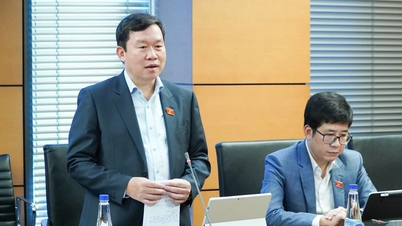
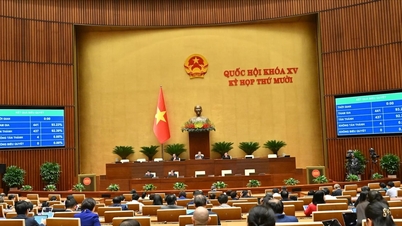
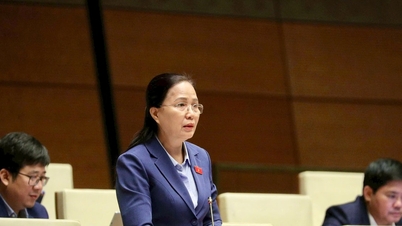
During the discussion, many National Assembly deputies said that the press is under direct pressure from digital platforms, fragmented revenue sources, changes in reader behavior and increasing demands for transparency and accuracy. Therefore, press development policies must be supplemented with more specific, specific and feasible ones, in line with the context of digital transformation and modern press trends. In particular, there should be tax incentives and financial support for press agencies performing political and public service tasks, as well as support for investment in digital technology to meet new operational requirements.
Taking into account these opinions, the Standing Committee of the Culture and Social Affairs Committee and the drafting agency revised the draft Law on Press (amended) in the direction of adding the provision: The State has a tax incentive policy according to the provisions of law. Accordingly, press agencies are entitled to a tax rate of 10% prescribed in the Law on Corporate Income Tax. Previously, only printed newspapers enjoyed this rate, while electronic newspapers, television and radio were subject to a tax rate of 20%. In the context of a sharp decline in traditional advertising revenue, investment in digital technology , data infrastructure and high-quality human resources are very costly, tax incentives create financial space for press agencies to maintain operations and have conditions for reinvestment.
Along with that, the draft Law stipulates that the State invests in the press, focusing on training, fostering human resources, scientific research, and applying modern technology to press agencies; national digital press platform; digital press data infrastructure; digital tools to monitor press activities in cyberspace. Given the fact that many newsrooms are still limited in financial capacity, the State's investment in common platforms not only helps reduce the capacity gap between press agencies, increase the efficiency of data management, but also creates conditions for the press to truly transform to a technology-based operating model.
Along with infrastructure investment is the policy of assigning tasks, ordering, bidding and supporting transmission and broadcasting costs to ensure that the press performs well its political and social functions. This mechanism not only maintains the role of public interest journalism, but also requires transparency, competition and governance based on output results. Perfecting the ordering mechanism in the direction of measuring efficiency will help the state budget maximize its effectiveness and avoid spreading.
Another important point of acceptance is to determine that the press is allowed to access funding from the Science and Technology Development Fund, the National Technology Innovation Fund and similar funds. Access to this funding will create opportunities for newsrooms to invest in artificial intelligence systems, big data analysis, multi-platform production technology and modern electronic newsroom management models. However, for this policy to truly come into life, there needs to be specific guidance to help press agencies access funds in a convenient and transparent manner.
The press is facing unprecedented pressures: fierce competition from cross-border platforms, a decline in public trust in the face of fake news, the erosion of traditional economic models and the increasingly urgent need for digital transformation. In this context, no press agency can overcome it alone without a legal framework that is dynamic enough to keep up with technological changes.
Therefore, the amendments in the draft of the Press Law (amended) this time show the efforts of the drafting agency and the reviewing agency in creating a new policy framework that is more flexible, more modern and more suitable for the digital media environment. When a guiding law is issued with the right mechanism and strong enough policies, it not only removes the current bottleneck but also creates momentum for the press to develop professionally, modernly, firmly carry out the mission of information, propaganda and accompany the development of the country.
Source: https://daibieunhandan.vn/hoan-thien-chinh-sach-phat-trien-bao-chi-10399294.html

![[Photo] Cat Ba - Green island paradise](/_next/image?url=https%3A%2F%2Fvphoto.vietnam.vn%2Fthumb%2F1200x675%2Fvietnam%2Fresource%2FIMAGE%2F2025%2F12%2F04%2F1764821844074_ndo_br_1-dcbthienduongxanh638-jpg.webp&w=3840&q=75)















































































Comment (0)