

On December 4, in Manila, Philippines, the Conference to announce the regional report of the Southeast Asia Primary School Learning Outcomes Assessment Program (SEA-PLM) 2024 cycle in the fields of Mathematics and Reading took place. Permanent Deputy Minister of Education and Training Pham Ngoc Thuong delivered an online speech at the Conference.
Vietnam participates in the SEA-PLM Program in the 2019 cycle and the 2024 cycle. The SEA-PLM Program in the 2024 cycle has 7 participating countries: Cambodia, Timor Leste, Laos, Myanmar, Malaysia, Philippines and Vietnam.
Grade 5 students in participating countries completed the same Reading, Writing, and Mathematics assessment designed by the ASEAN Ministers of Education (SEAMEO) Secretariat.
In this 2024 cycle, Vietnam has 152 primary education institutions in 53 provinces/cities (old) participating in the survey, with 152 primary school principals, 1,074 teachers teaching grade 5 subjects, about 6,000 grade 5 students and 6,000 parents.
The report published by the SEAMEO Secretariat shows that Vietnamese 5th graders achieved the highest scores in Mathematics with an average score of 334.6 points (down 1.99% compared to the 2019 cycle results).
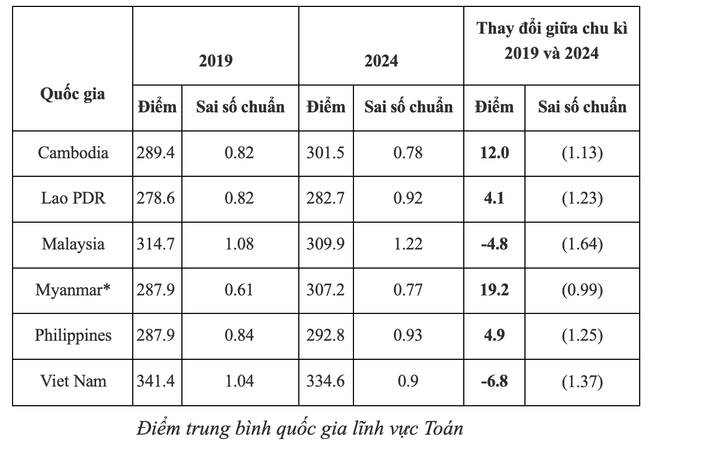
In the 2024 cycle, the rate of Vietnamese students achieving high proficiency in Mathematics was 88%, higher than the rate of the remaining countries and higher than the regional average (36%).
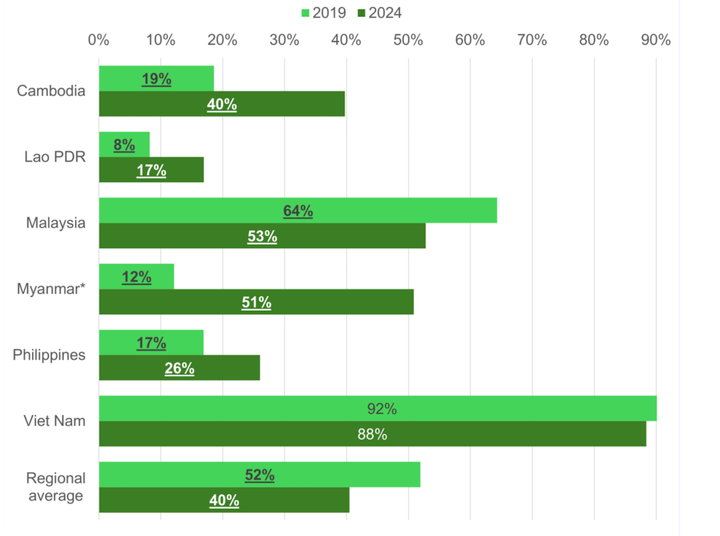
Percentage of 5th graders achieving high proficiency in Mathematics
At the same time, in the 2024 cycle, Vietnamese 5th graders continued to achieve the highest score in the Reading Comprehension area with an average score of 323.5 points (down about 3.86% compared to the 2019 cycle). The percentage of Vietnamese students achieving high proficiency in the Reading Comprehension area was 66%, higher than the percentage of the remaining countries and higher than the regional average (40%).
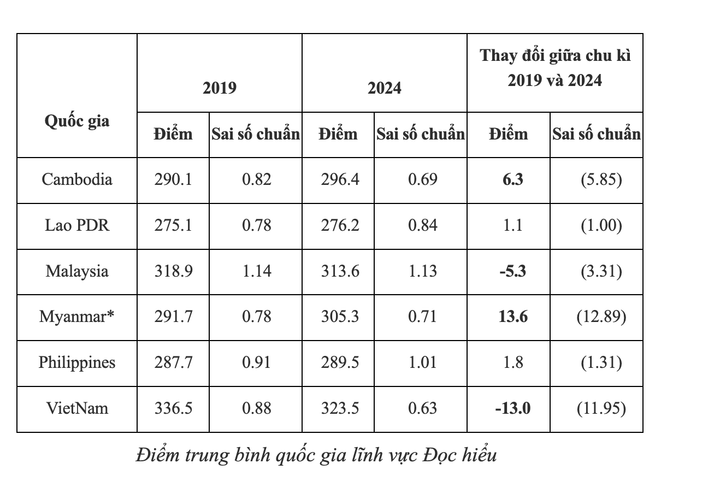
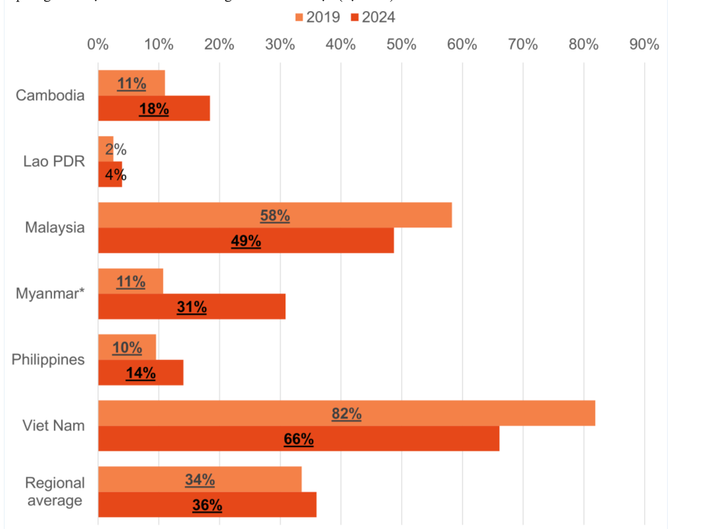
Percentage of 5th graders achieving high proficiency in Reading Comprehension
Vietnam also has the highest percentage of students achieving the minimum competency level compared to the Sustainable Development Goals in Reading (86%) and Mathematics (95%) according to the results in the 2024 cycle.

Percentage of grade 5 students in participating countries achieving the minimum competency level in SDG 4.1.1b – Reading.
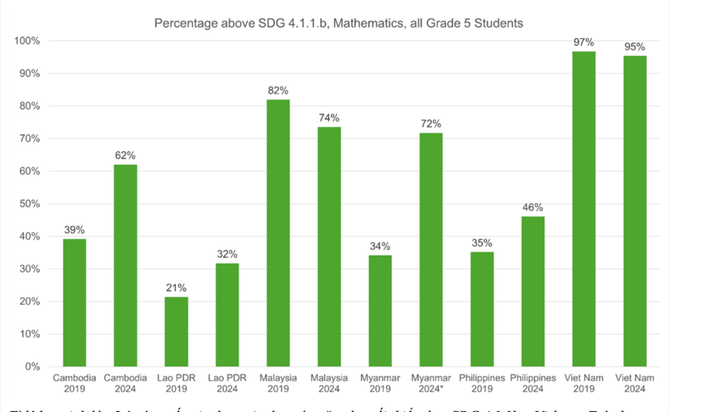
Percentage of grade 5 students in participating countries achieving the minimum level of competency in SDG 4.1.1b – Mathematics.
SEAMEO also shared 10 findings from the SEA-PLM data for the 2019 and 2024 cycles at the Conference and detailed in the Regional Report.
First, only half of students achieved the minimum proficiency level in Reading and only a third in Mathematics, highlighting the urgent need to increase investment in foundational learning, prioritizing disadvantaged groups and disadvantaged schools.
Second, learning outcomes have remained stable despite the shocks of 2019, but forward-looking action and investment in the education system are needed.
Third, students in the low ability group improve slowly, requiring targeted intervention strategies and accelerated support to close the gap.
Fourth, learning barriers still exist, affecting the outcomes of male and female students differently, and it is necessary to build an education system to ensure equal opportunities.
Fifth , socio -economic conditions still greatly affect students' results.
Sixth, early learning opportunities and school resources have a greater impact on student outcomes.
Seventh, students perform better when their home language matches the language used in the assessment.
Eighth, teacher qualifications have improved but pedagogical capacity is still lacking.
Ninth, investment in education is on a downward trend while the demographic dividend – the period when the labor force accounts for a high proportion – is gradually closing. Therefore, the education system needs to improve equity and efficiency, ensure that all learners have access to quality education, and optimize the use of resources to maintain sustainable growth.
Tenth, the use of data for decision-making is limited, and there is a need to strengthen progress monitoring, replicate effective practices, and promote evidence-based policymaking.
Source: https://vtcnews.vn/students-vietnam-tiep-tuc-dan-dau-dong-nam-a-ve-toan-va-doc-hieu-ar991170.html


![[Photo] Cat Ba - Green island paradise](/_next/image?url=https%3A%2F%2Fvphoto.vietnam.vn%2Fthumb%2F1200x675%2Fvietnam%2Fresource%2FIMAGE%2F2025%2F12%2F04%2F1764821844074_ndo_br_1-dcbthienduongxanh638-jpg.webp&w=3840&q=75)


























![[Photo] 60th Anniversary of the Founding of the Vietnam Association of Photographic Artists](/_next/image?url=https%3A%2F%2Fvphoto.vietnam.vn%2Fthumb%2F1200x675%2Fvietnam%2Fresource%2FIMAGE%2F2025%2F12%2F05%2F1764935864512_a1-bnd-0841-9740-jpg.webp&w=3840&q=75)





























































Comment (0)