

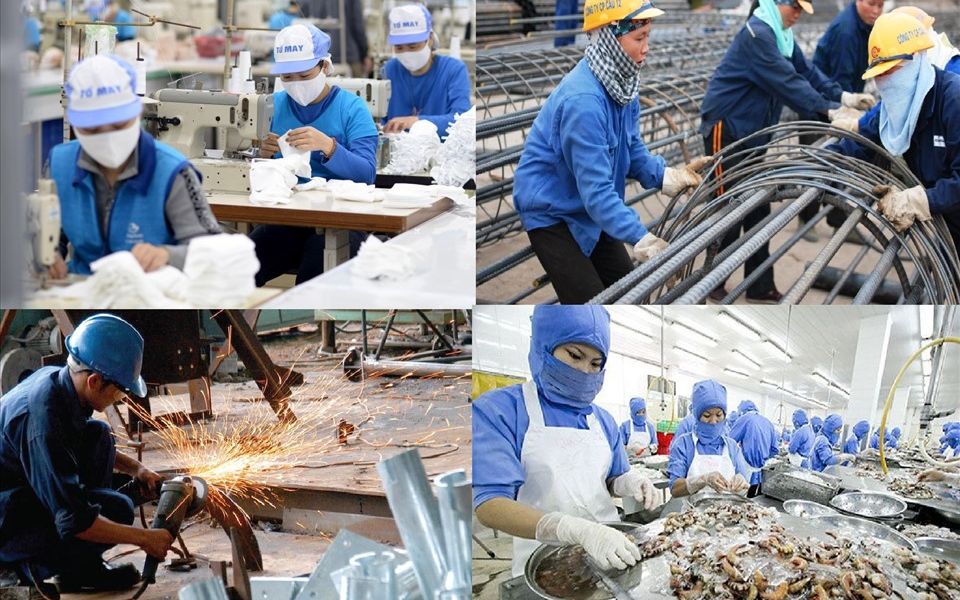
A golden opportunity, but with uncertain external risks.
The latest report from the International Labour Organization (ILO), published by mainstream media outlets last week, provided a comprehensive picture of Vietnam's labor market in the context of globalization. The fact that over 35% of Vietnam's total employment is linked to global supply chains not only confirms the country's increasingly deep role in the international trade system but also warns of a significant level of dependence.
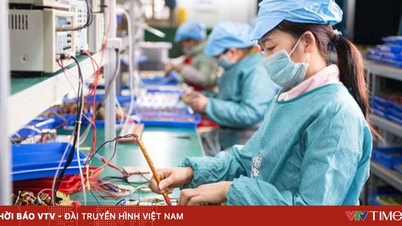
Of these tens of millions of jobs, the manufacturing sector accounts for 49%, particularly labor-intensive industries such as textiles and textile products (nearly one-third). The shift in global supply chains, especially in the context of geoeconomic restructuring, has brought orders and growth opportunities for businesses, but the downside is significant uncertainty.
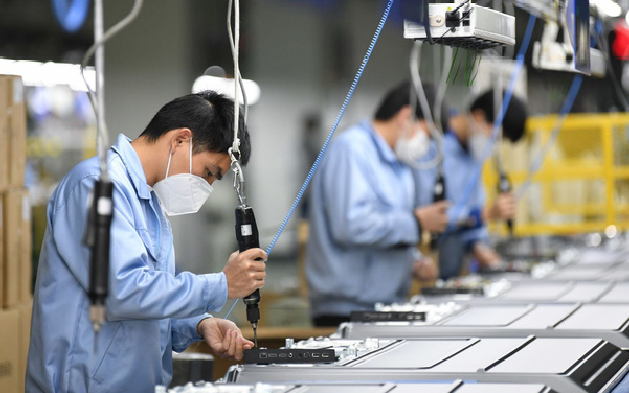
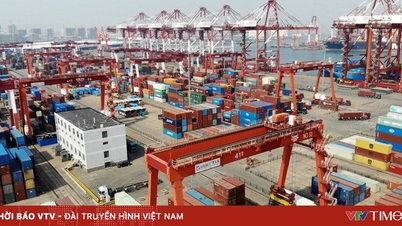
Over 76% of jobs in Vietnam's supply chains depend directly or indirectly on demand from overseas.
According to the ILO, over 76% of jobs in Vietnam's supply chains depend directly or indirectly on demand from overseas markets such as ASEAN, China, the EU, Japan, South Korea, and the United States. This highlights the high level of exposure of the economy to unpredictable fluctuations in international markets, from inflation and conflicts to changes in trade policies. If a major market experiences a decline in demand, millions of Vietnamese workers are at immediate risk of being affected.
The Vietnamese labor market faces significant challenges as more than 35% of total jobs are linked to global supply chains. The country needs to upgrade its workforce skills and supporting industries to escape the dependence trap and meet the new "rules of the game" for sustainable development.
Economic experts have pointed out that the process of integration and participation in global supply chains is changing the rules of the game. Dr. Trinh Quoc Vinh, a member of the Scientific Council at the Institute for Strategic Policy Research in Industry and Trade (CISMO - Ministry of Industry and Trade ), emphasized that the purely cost-optimization mindset is gradually being replaced by a holistic risk management mindset. Instead of focusing solely on market expansion, integration is now closely linked to supply chain security, self-reliance, and the resilience of the economy. Large markets are imposing stricter requirements on the environment, emissions, labor, and social responsibility. This is the "new rules of the game" that Vietnam must face. If Vietnamese businesses do not quickly upgrade their production standards and comply with the EU AI Act's supply chain auditing regulations or other green standards, more than 35% of these jobs could be threatened.
Overcoming the low skills trap and lack of autonomy in supporting industries.
The government needs to act as a "midwife" for supporting industries. Clear, long-term financial and tax incentives are needed to encourage domestic businesses to invest in R&D, core technologies, and the production of components that meet international standards. Establishing specialized industrial zones and creating mandatory linkage mechanisms between FDI enterprises and Vietnamese supporting technologies will help increase the localization rate, thereby reducing dependence on imports and strengthening the self-reliance of the national supply chain, protecting millions of jobs from external uncertainties.
According to economic experts, Vietnam's primary involvement in labor-intensive and low-value-added stages of the supply chain is the main reason for the instability of its labor market. To ensure sustainable development and increase the resilience of these 35% of crucial jobs, Vietnam needs to definitively address two major bottlenecks: labor quality and supporting industrial capacity.
Although the number of jobs linked to supply chains is growing steadily, the ILO notes that the proportion of highly skilled jobs remains low. This reflects the fact that Vietnam's labor productivity is still low compared to other countries in the region and around the world.
According to economic and financial expert Dr. Nguyen Tri Hieu, the shortage of highly skilled labor not only limits Vietnam's ability to attract high-quality FDI projects, but also makes it difficult for domestic businesses to move into higher value-added stages such as research and development (R&D), design, or complex logistics.
Economic experts believe that Vietnam needs a fair transition strategy for its workforce, including retraining, to avoid being left behind in the industrial revolution.
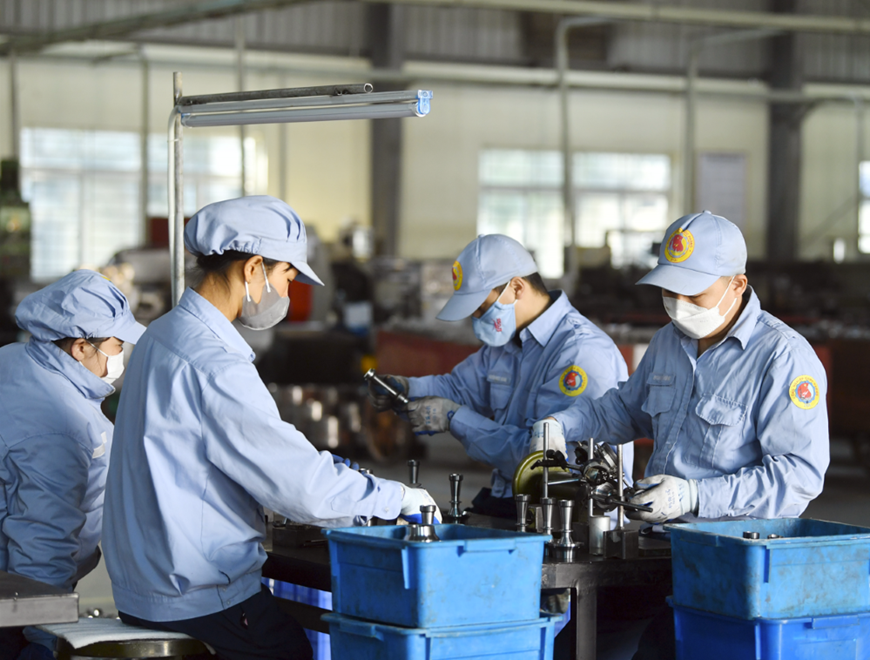
Vietnamese businesses need to "think big" to dominate global supply chains.
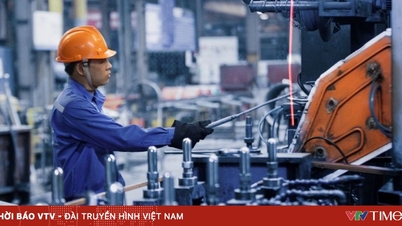
The second issue is the capacity of Vietnam's supporting industries. Analyses show that technological content remains a major bottleneck, as domestically produced supporting industrial products are still simple and have low value in the overall product value structure. This leads to domestic businesses remaining heavily dependent on imported raw materials and components.
From a business perspective, Vietnamese businesses need to "think big" to dominate global supply chains. This goes beyond simply fostering linkages with FDI companies; more importantly, it involves linking Vietnamese businesses with each other to form longer, deeper connections, capable of handling larger orders and minimizing unfair competition. "Mergers and acquisitions (M&A) are considered a crucial strategy for businesses to diversify their industries and enhance competitiveness in the context of strong restructuring," Mr. Hieu suggested.
The deep level of integration into global supply chains is evidence of the success of the integration policy. However, the figure of over 35% of jobs is not only a source of pride but also a warning about risks and responsibilities. To transform the opportunity of supply chain relocation into sustainable development, Vietnam needs to prioritize investment in human resources and technology. The national strategy must shift from leveraging the advantage of cheap labor costs to training a high-quality workforce, while simultaneously creating a stronger and more self-reliant supporting industrial ecosystem, helping the country minimize dependence and confidently face the new global "rules of the game".
Source: https://vtv.vn/hon-35-viec-lam-viet-nam-gan-chuoi-cung-ung-toan-cau-thach-thuc-trong-luat-choi-moi-100251209224001231.htm



![[Photo] Closing Ceremony of the 10th Session of the 15th National Assembly](/_next/image?url=https%3A%2F%2Fvphoto.vietnam.vn%2Fthumb%2F1200x675%2Fvietnam%2Fresource%2FIMAGE%2F2025%2F12%2F11%2F1765448959967_image-1437-jpg.webp&w=3840&q=75)



































![[OFFICIAL] MISA GROUP ANNOUNCES ITS PIONEERING BRAND POSITIONING IN BUILDING AGENTIC AI FOR BUSINESSES, HOUSEHOLDS, AND THE GOVERNMENT](https://vphoto.vietnam.vn/thumb/402x226/vietnam/resource/IMAGE/2025/12/11/1765444754256_agentic-ai_postfb-scaled.png)




































Comment (0)