

Clearly define digital business models.
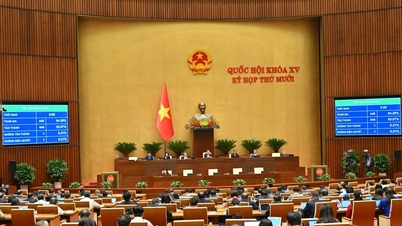
On the morning of December 10th, with 444 out of 446 attending delegates voting in favor, the National Assembly officially passed the Law on E-commerce. The law applies to domestic and foreign organizations and individuals participating in e-commerce activities in Vietnam and will take effect from July 1st, 2026.
The National Assembly's approval of the E-commerce Law has received positive reviews from experts, the business community, and the public. Accordingly, the E-commerce Law is expected to create a robust, modern, and practical legal framework; bring Vietnam closer to international standards; create a transparent and equitable environment; and provide strong impetus for the development of the digital economy in general and e-commerce in particular in the coming years.

Lawyer Nguyen Thanh Ha - Chairman of SB LAW Firm. Photo: Quoc Chuyen
In a brief interview with the Industry and Trade Newspaper, Lawyer Nguyen Thanh Ha - Chairman of SB LAW Law Firm - assessed that the greatest significance of the E-commerce Law lies in the fact that Vietnam, for the first time, has a specialized legal document that comprehensively regulates e-commerce activities.
According to lawyer Nguyen Thanh Ha, before the Law on E-commerce, we mainly regulated e-commerce through decrees and circulars; therefore, the legal framework was fragmented, and many new issues arising from the digital economy were not fully covered.
Therefore, the E-commerce Law will help clearly define digital business models, from e-commerce trading platforms, intermediary platforms, business social networks to cross-border transaction forms. " This is very important because for a long time, many new models have developed too rapidly, while the law has not kept pace, causing gaps in management, disputes, and consumer protection, " said lawyer Nguyen Thanh Ha.
Furthermore, the E-commerce Law creates a legal framework for digital trust – a key element for all electronic transactions. With clear regulations on electronic contracts, platform responsibilities, personal data protection, and information transparency, the E-commerce Law not only protects consumers but also brings stability and predictability to businesses.
Furthermore, according to lawyer Nguyen Thanh Ha, the newly enacted E-commerce Law will directly impact businesses, from managing digital platforms and cross-border transactions to protecting personal data and consumer rights. Therefore, businesses need to pay special attention to four major groups of obligations and prepare now to minimize legal risks.
First and foremost, the most notable change is the requirement for transparency in platform operations. E-commerce platforms, intermediary applications, and social networks with business functions are now required to publicly disclose their operating methods, from product recommendation algorithms and information display mechanisms to rules for handling violations and search engine rankings. The primary goal is to ensure fair competition in these operations.
Furthermore, according to lawyer Nguyen Thanh Ha, the group of obligations related to managing cross-border transactions requires foreign businesses and sellers to have legal representatives in Vietnam, comply with tax obligations, and provide transaction data when requested by competent authorities. “ This change directly impacts business models conducted through international platforms or small-scale imports, and failure to comply may result in penalties or restrictions on operations, ” Mr. Ha stated.
Furthermore, lawyer Nguyen Thanh Ha pointed out that the E-commerce Law emphasizes the responsibility to control counterfeit goods, pirated goods, goods infringing intellectual property rights, fraud, and infringing content. Accordingly, e-commerce businesses no longer play the role of "intermediaries standing outside" as before. If the platform allows the existence of prohibited goods, counterfeit goods, misleading information, or intellectual property infringement without effective control measures, businesses will be held jointly liable.
" These changes require businesses to comprehensively upgrade their compliance systems, from contracts and operating regulations to technological infrastructure, instead of just fulfilling minimum obligations as before," Mr. Ha emphasized.
Businesses should review their entire operating system early on.
To ensure the E-commerce Law is implemented effectively, lawyer Nguyen Thanh Ha also suggested that synchronized preparation is needed from three sides: the State, businesses, and consumers.
First, lawyer Nguyen Thanh Ha suggested the early issuance of guiding decrees and technical standards, especially those related to data management, account registration and verification, transaction information storage, platform monitoring mechanisms, algorithm control, etc. At the same time, he recommended investing in building a modern e-commerce monitoring system capable of tracking cross-border transactions, detecting counterfeit goods, and protecting consumers in the digital environment.
In particular, businesses, which are directly affected by the E-commerce Law, are advised to review their entire e-commerce operating system, including terms of service, data policies, electronic contracts, and seller management processes; establish a digital compliance department to assess legal risks and update policies promptly. Simultaneously, they should train personnel in data, legal, and platform operations to gain a competitive advantage as the market becomes increasingly transparent and standardized.
Finally, lawyer Nguyen Thanh Ha recommends that consumers clearly understand their rights, from the right to data protection and the right to demand transparency to the right to file complaints, which will contribute to building a safer, healthier, and more sustainable online transaction environment for the entire market.
The Law on E-commerce, drafted under the leadership of the Ministry of Industry and Trade , comprises 7 chapters and 41 articles. The law regulates policies for e-commerce development; e-commerce platforms and the responsibilities of organizations and individuals involved in e-commerce activities; e-commerce with foreign elements; the responsibilities of organizations providing e-commerce support services; and the application of technology in managing and handling violations in e-commerce.
Source: https://congthuong.vn/luat-thuong-mai-dien-tu-tao-nen-tang-phap-ly-ve-niem-tin-so-434239.html

![[Photo] Prime Minister Pham Minh Chinh holds a phone call with the CEO of Russia's Rosatom Corporation.](/_next/image?url=https%3A%2F%2Fvphoto.vietnam.vn%2Fthumb%2F1200x675%2Fvietnam%2Fresource%2FIMAGE%2F2025%2F12%2F11%2F1765464552365_dsc-5295-jpg.webp&w=3840&q=75)


![[Photo] Closing Ceremony of the 10th Session of the 15th National Assembly](/_next/image?url=https%3A%2F%2Fvphoto.vietnam.vn%2Fthumb%2F1200x675%2Fvietnam%2Fresource%2FIMAGE%2F2025%2F12%2F11%2F1765448959967_image-1437-jpg.webp&w=3840&q=75)


















































![[OFFICIAL] MISA GROUP ANNOUNCES ITS PIONEERING BRAND POSITIONING IN BUILDING AGENTIC AI FOR BUSINESSES, HOUSEHOLDS, AND THE GOVERNMENT](https://vphoto.vietnam.vn/thumb/402x226/vietnam/resource/IMAGE/2025/12/11/1765444754256_agentic-ai_postfb-scaled.png)
















































Comment (0)