

Proposing two major logistics projects.
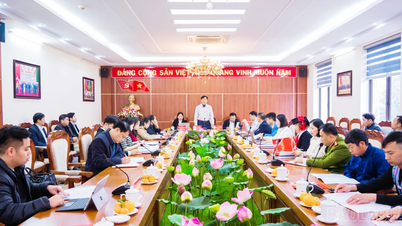
This morning (September 29th), Committee 2 on infrastructure development, seaports, logistics, and new energy within the framework of the Vietnam Private Sector Economic Outlook 2025 (ViPEL 2025) held a meeting, engaging in lively discussions on related issues. Attending the meeting were 20-25 leading enterprises in the same sectors and fields related to infrastructure development, industrial parks, logistics, and new energy.
Mr. Pham Quoc Long, Deputy General Director of Gemadept Joint Stock Company, proposed two projects: a new International Maritime Center in Ho Chi Minh City and the development of waterway transport – focusing on upgrading and expanding the Ha Nam canal.

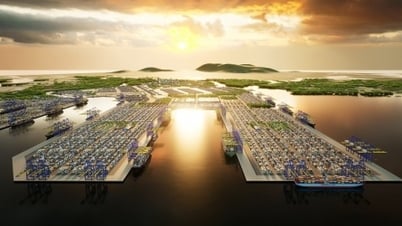
Proposal for a new international maritime center in Ho Chi Minh City (Source: GMD).
Regarding the new International Maritime Center project in Ho Chi Minh City, Mr. Long proposed a public-private partnership mechanism. In this mechanism, the State would play a role in overall planning, ensuring a seamless connection between the Cai Mep port and the Free Trade Zone, and defining functional zones; it would also implement policies to attract national-level investors, guaranteeing their financial capacity and budget. Furthermore, the State would create a dynamic environment with streamlined and digitized administrative procedures.
Regarding the "private" element, private enterprises will collaborate on research and commit to providing consultancy during the planning phase; they will also commit to investment, ensuring progress, and fulfilling social responsibilities.

Proposed resources for the project on Water Transport Development - Focusing on upgrading and expanding the Ha Nam canal (Source: GMD).
Regarding the Water Transport Development Project - focusing on upgrading and expanding the Ha Nam canal, Mr. Long stated that the State needs to disburse approximately 6,480 billion VND in public investment capital; review bridge clearances on key routes; implement policies to encourage and facilitate businesses, and reform administrative procedures related to disbursement and investment...
Private businesses, on the other hand, need to commit to reducing logistics costs (cutting freight rates by 10%), improving service quality; and committing to investing in the construction of new watercraft, barges, and ships.
Proposing open mechanisms for seaport development.
Agreeing with the above proposal, Mr. Ngo Anh Tuan - General Secretary of the Vietnam Association of Maritime Agents, Brokers and Services (Visaba) - supports the idea of building an international maritime center in Ho Chi Minh City.
However, to succeed, Mr. Tuan believes that Vietnam needs to selectively adopt the operational and management advantages of Singapore's seaports and the development policies of Shanghai (China). Ho Chi Minh City aspires to become a mega-seaport, but its current ports are small, fragmented wharves lacking a comprehensive cargo connectivity system. Therefore, the city needs open policies and breakthrough mechanisms.
In particular, Mr. Tuan proposed that there should be a separate unit for managing seaports; currently, Vietnam manages seaports according to each sector.

Many business and association representatives presented their suggestions at the meeting (Photo: Organizing Committee).
Also making a suggestion, Mr. Dang Vu Thanh - General Director of Southern Logistics Joint Stock Company (Sotrans) - said that the project to transform Vietnam into an international maritime hub is the dream of many people in the industry.
Mr. Thanh believes that the development of inland waterways should not only focus on the South but also on the North. One of the key bottlenecks is the low clearance under bridges. In many places, the bridge clearance is only 7.5m, reducing the economic efficiency of inland waterway transport compared to road transport. Businesses cannot fix this on their own; they can only make better commitments if the bridge clearance is increased.
He proposed improving the legal framework so that businesses can effectively operate inland waterways. At the same time, private businesses should be involved in policy-making and planning to ensure programs are implemented effectively.
Mr. Thanh also emphasized the willingness of businesses to participate, even at the cost of hiring foreign consultants, but they are particularly hesitant if there is no established mechanism. Therefore, he suggested that the State should prioritize perfecting the mechanisms for the development of international maritime centers.
Expressing his opinion, Mr. Pham Anh Tuan, General Director of Portcoast Engineering and Consulting Joint Stock Company, emphasized that developing a maritime center has been a long-standing concern. Vietnam has the necessary conditions to establish a maritime center in Cai Mep - Can Gio.
However, to make this concern a reality, Mr. Tuan also proposed appropriate implementation mechanisms, including mentioning a separate port management unit. He raised the question of whether a "port authority" could be formed in the future: zoning port development and management in each locality; with broader central government management at the overall planning level.
Proposing wind power projects and industrial park infrastructure.
At the workshop, Mr. Nguyen Ngoc Thai Binh - Deputy General Director of Refrigeration and Electrical Engineering Corporation (REE) - proposed the REE Southern Vietnam offshore wind power project under a public-private partnership mechanism. The project has a capacity of 10,000MW.

Mr. Nguyen Ngoc Thai Binh, representative of REE, proposed the REE Nam Bo offshore wind power project (Photo: Organizing Committee).
According to him, the project will have a three-phase roadmap, with a total investment of approximately 892,000 billion VND (after tax). To realize this project, the enterprise proposes that the Government consider issuing new mechanisms and policies and prioritize the flexible application of existing policies, creating a solid legal framework for the project.
Specifically, the businesses proposed a separate, clear, and stable legal framework for large-scale offshore wind power projects, aligned with the strategic direction of the energy sector. This legal framework must address specific issues such as marine space management, licensing procedures, and onshore land use rights for auxiliary facilities, ensuring consistency with transmission grid planning.
Regarding electricity pricing, REE proposes the need to establish a stable, long-term electricity pricing mechanism (PPA contract) with a minimum term of 20 years and high financial feasibility.
Regarding investment incentives, the highest possible investment incentives should be applied to the project, including incentives on corporate income tax, import tax, and other fees, in accordance with current regulations for projects in priority sectors.
In addition, the government should consider guaranteeing a suitable percentage of the loan, helping businesses access financing with the best terms and interest rates.
Representatives from Shinec Joint Stock Company proposed a project for Logistics Zone No. 1 at Lien Chieu Port (Da Nang) and Ninh Diem Industrial Park (Khanh Hoa). The goal is to contribute to reducing logistics costs by approximately 16% of GDP, attract clean technology FDI, and create tens of thousands of jobs.
In this project, Shinec proposes that the State be responsible for developing and issuing development plans for industries, regions, and sectors, while also establishing specific mechanisms to encourage investment.
The government also needs to focus resources on "backbone" public infrastructure projects, including inter-regional transportation, electricity, water supply and drainage, telecommunications, and land clearance.
On the business side, Shinec is responsible for mobilizing and allocating the necessary capital according to the project scale; and commits to building and operating the logistics infrastructure and industrial park in accordance with international standards on environmental, social, and governance (ESG)...
The Private Economic Development Research Board (Board IV) held a ceremony to announce the Vietnam Private Economic Overview model and introduce the Executive Council and key personnel of the committees.
Entrepreneurs and businesses will work together to build a comprehensive model of Vietnam's private economy, with the continuous operation of committees, including working groups and associations that are united in their efforts.
Committee 2 on infrastructure development and industries with national competitive advantages includes Mr. Mai Huu Tin, Mr. Thai Nhu Hiep - Chairman of the Board of Members and Director of Vinh Hiep Co., Ltd.; Mr. Pham Hong Diep - Chairman of the Board of Directors of Shinec Joint Stock Company; Mr. Pham Quoc Long - Deputy General Director of Gemadept Joint Stock Company; and Mr. Nguyen Quoc Khanh - Chairman of AA Corporation.
Following the Prime Minister's directive, Committee IV was tasked with implementing a model that acts as a bridge between the public and private sectors, aiming to shift the mindset from "everyone for themselves" to a spirit of "public-private co-creation".
The highlight of the model is to promote new actions and ensure that the implementation of Resolution 68 yields tangible results. Activities will be implemented at three levels: national, local, and grassroots, aiming to mobilize the participation of businesses of all sizes and sectors.
Source: https://dantri.com.vn/kinh-doanh/hop-uy-ban-2-vipel-giac-mo-bien-viet-nam-thanh-trung-tam-hang-hai-quoc-te-20250929153627208.htm




![[Photo] Ho Chi Minh City, a multi-centered megacity after the merger](https://vphoto.vietnam.vn/thumb/402x226/vietnam/resource/IMAGE/2025/10/28/1761644283512_ndo_br_2-jpg.webp)
































































Comment (0)