

Connecting infrastructure to foster development.
Dong Nai is in the process of adjusting its provincial planning to align with a two-tiered local government model and its role as a regional center. In the revised plan, transportation is not only a technical infrastructure but also a strategic lever for restructuring development space and creating an economic -urban-service value chain.
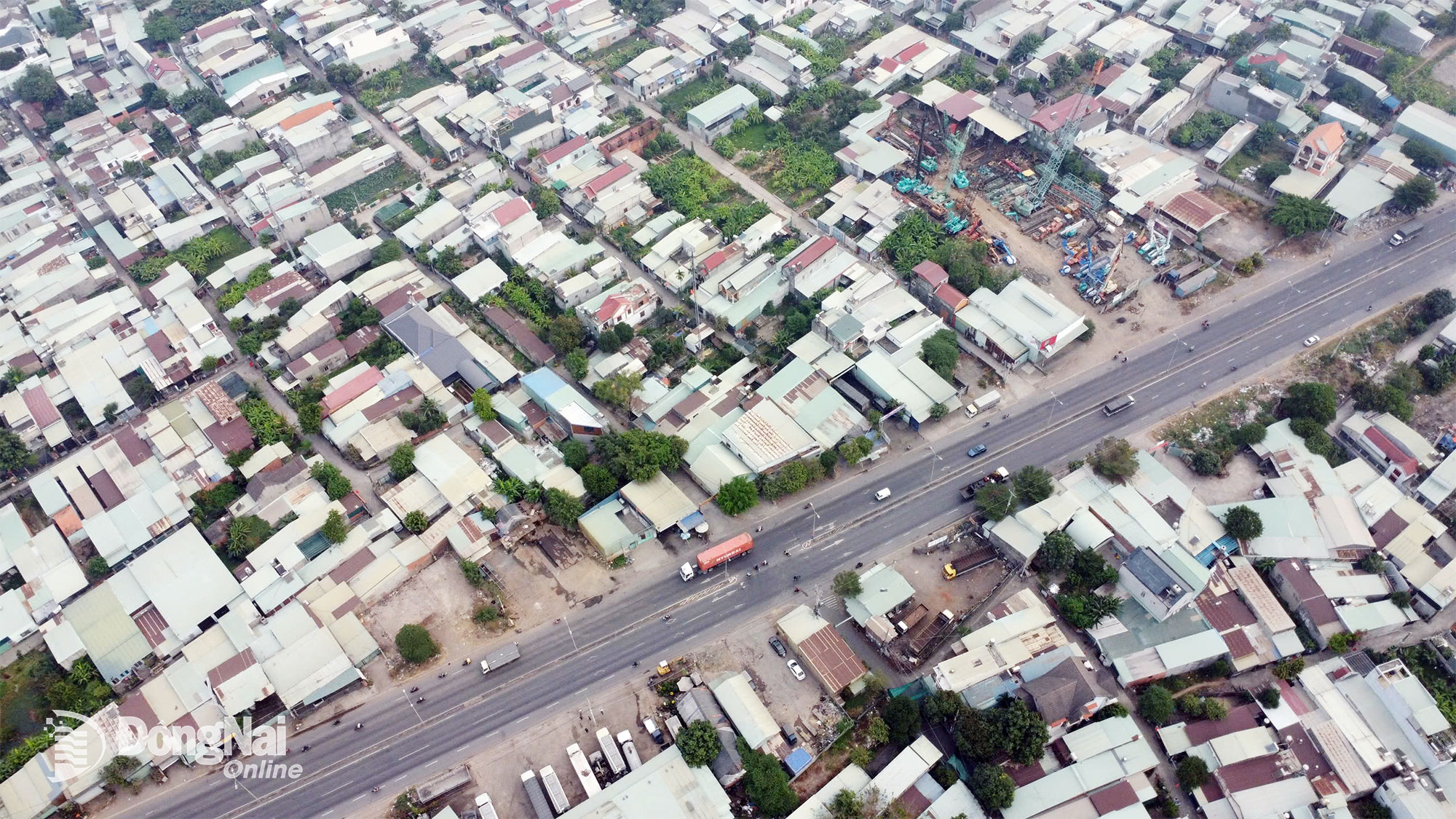 |
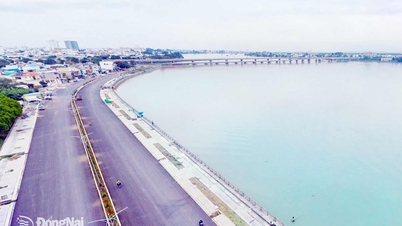
| The section of Vo Nguyen Giap road passing through Phuoc Tan ward, Dong Nai province, will be directly connected to the Bien Hoa - Vung Tau expressway and the elevated section of National Highway 51. |
Connecting transportation infrastructure is the foundation for realizing Dong Nai's vision of green, modern development, deeply integrated into regional and international networks.
Developing a comprehensive and modern infrastructure.
Dong Nai is urgently addressing infrastructure bottlenecks to achieve a "dual" goal: effectively leveraging its advantages to boost socio-economic development and building a synchronous, modern infrastructure. The province prioritizes investment in connecting infrastructure in industrial zones, urban areas, seaports, and airports. Simultaneously, it invests in and upgrades provincial roads and internal roads to effectively utilize existing and planned expressways and ring roads, increasing connectivity between major projects such as Ring Road 3, the Bien Hoa - Vung Tau expressway, and bridges connecting to Ho Chi Minh City.
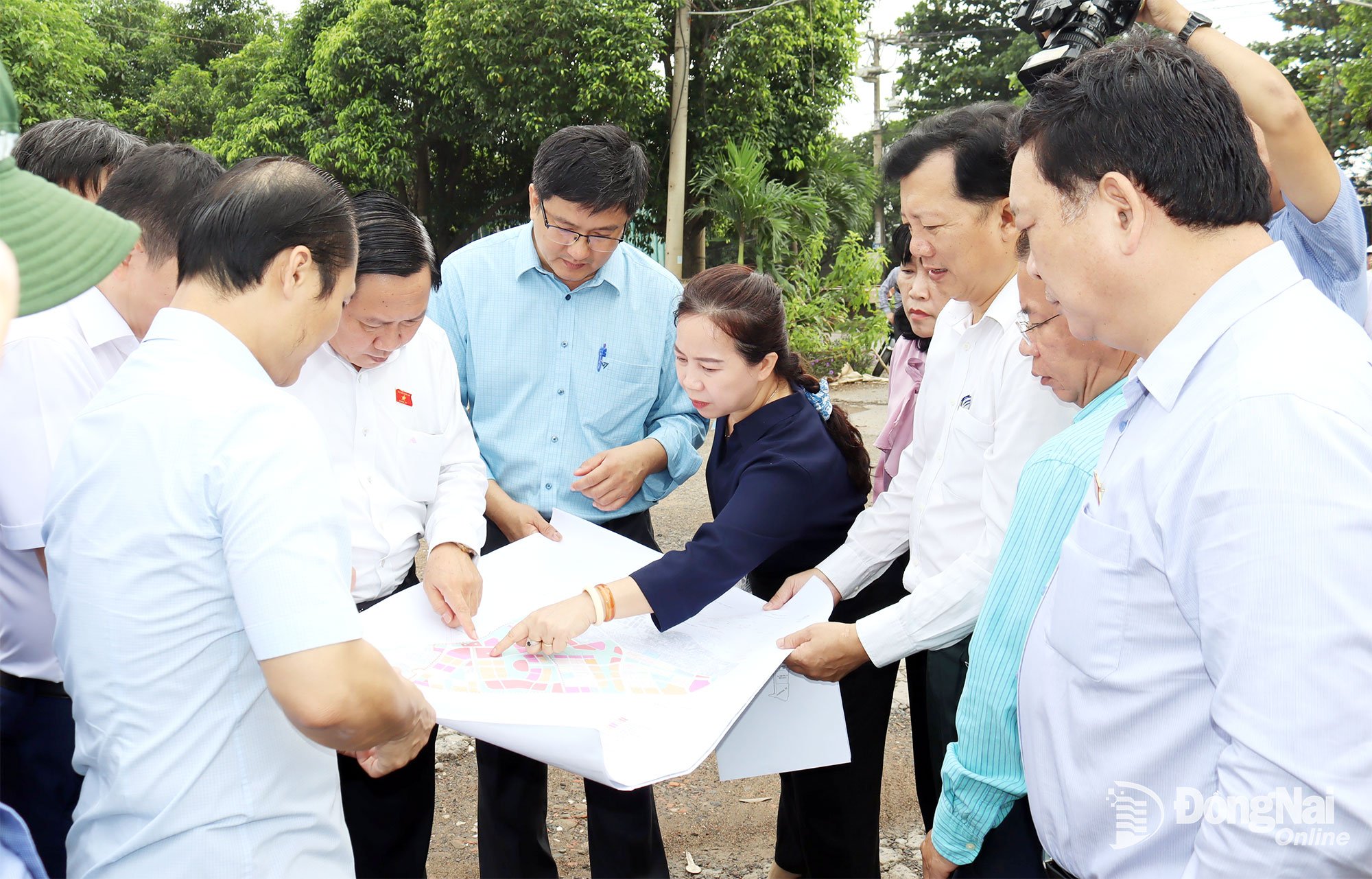 |
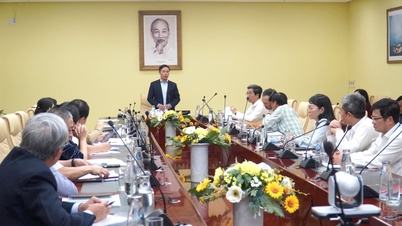
| The Provincial National Assembly Delegation is monitoring the planning and land use work at the upcoming urban development project in Tran Bien Ward. |
The province is also coordinating the implementation of transportation and logistics infrastructure projects in accordance with the Southern Key Economic Region Planning.
According to the Provincial People's Committee, there are currently 13 road construction projects connecting Ho Chi Minh City with Dong Nai province under investment, including 7 routes under construction in the two provinces, 5 routes under construction in Ho Chi Minh City, and 1 route under construction in Dong Nai.
Regarding railways, the current plan includes 5 connecting lines between the two localities (2 urban railway lines and 3 national lines) along with 45 road connection points (14 existing lines, 13 lines under investment, and 18 lines already included in the plan). Typical projects include extending the Ben Thanh - Suoi Tien metro line to the Dong Nai Provincial Administrative Center and Long Thanh International Airport; the Bien Hoa - Vung Tau railway line; and the railway line connecting Tan Son Nhat Airport with Long Thanh Airport.
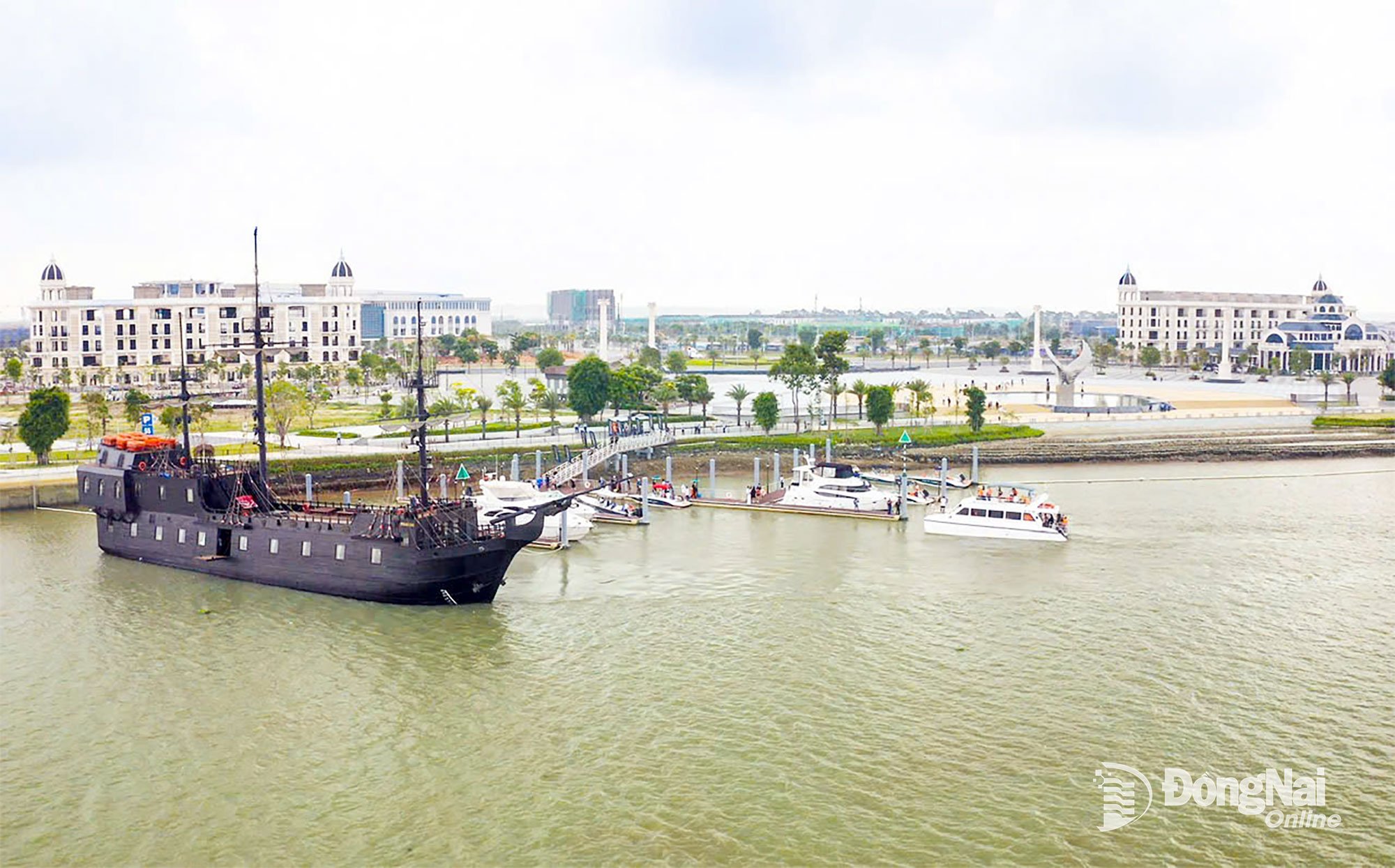 |
| Ecological urban area in Long Hung ward, Dong Nai province |
Although inland waterways have been exploited, their efficiency is still low.
According to Vu Hong Van, Secretary of the Provincial Party Committee and Head of the National Assembly Delegation of Dong Nai province, synchronously connecting transportation with Ho Chi Minh City is a solution for the mutual development of both localities. He emphasized the need to promptly research and implement additional transportation projects beyond the three existing connection methods (road, rail, and water), such as high-speed rail and connecting bridges, to meet travel demands, reduce travel time, and especially shorten the distance between Tan Son Nhat Airport and Long Thanh Airport.
Meanwhile, Tran Luu Quang, Secretary of the Central Committee of the Communist Party and Secretary of the Ho Chi Minh City Party Committee, commented that after the merger, both Ho Chi Minh City and Dong Nai have great potential and advantages for development. The two localities need to frankly acknowledge the current obstacles and work together to overcome them for the common development of the localities and the region.
Forming an urban-industrial-logistics chain.
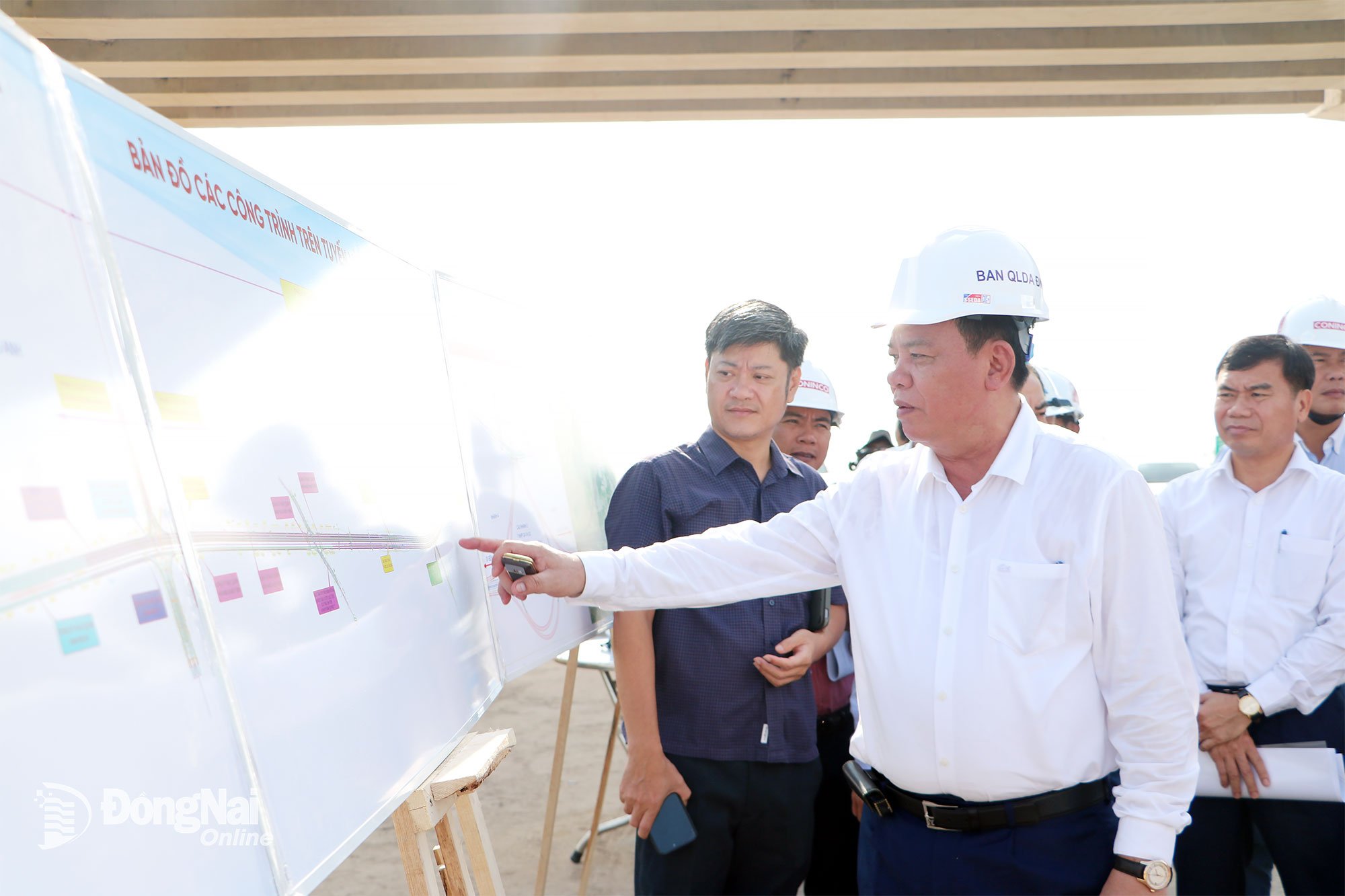 |
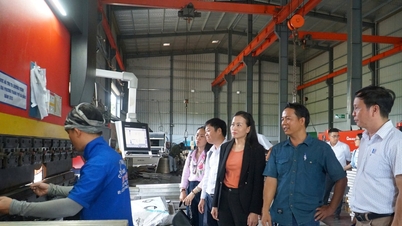
| Deputy Secretary of the Provincial Party Committee and Chairman of the Provincial People's Committee Vo Tan Duc inspects the Ring Road 3 project in Ho Chi Minh City. Photo: Pham Tung |
As a dynamic development axis, encompassing all the elements of transportation, industry, urbanization, services, and ecology, the southern area of Dong Nai is oriented towards forming a long-term urban-industrial-logistics corridor.
According to the Ho Chi Minh City Institute of Construction Planning, Dong Nai's connectivity strategy needs to focus on three levels: intra-provincial, inter-regional, and international. At the intra-provincial level, it is necessary to link key cities and economic zones along the North-South axis, forming a comprehensive transportation network. At the inter-regional level, it is necessary to strengthen links with Ho Chi Minh City and Lam Dong, developing a chain of urban-industrial zones from the plains to the highlands, helping Dong Nai to play its role as a transportation hub, attract investment, and share economic functions with major cities. At the international level, the Long Thanh International Airport project is the core, helping it become an important air transit center in the region. Multimodal connectivity from air, sea, and road international routes at three levels will help Dong Nai integrate deeply into regional and global value chains, creating momentum for sustainable development.
Meanwhile, a research team from the University of Economics Ho Chi Minh City suggested that Dong Nai's spatial development strategy should focus on building a dynamic economic zone, organizing a strategic economic axis, defining specific development zones, improving connectivity infrastructure, and designing ecological and riverside urban areas. Through this, Dong Nai should be positioned as an international-level logistics, industrial, and service center, becoming a sustainable "Smart Region" that balances economic, social, and environmental development.
Dong Nai is accelerating the development of a synchronized and intelligent transportation system, aiming for effective regional connectivity. The province is applying digital technology in traffic management and operation, as well as logistics, to optimize goods flow, reduce congestion, and increase connectivity.
At the same time, investment is being directed towards modern public transportation routes such as metro, rapid bus, and light rail, directly connecting urban areas, seaports, and Long Thanh airport, creating momentum for urban and regional economic development.
Clearing the way, paving the path for a breakthrough in the dynamic region.
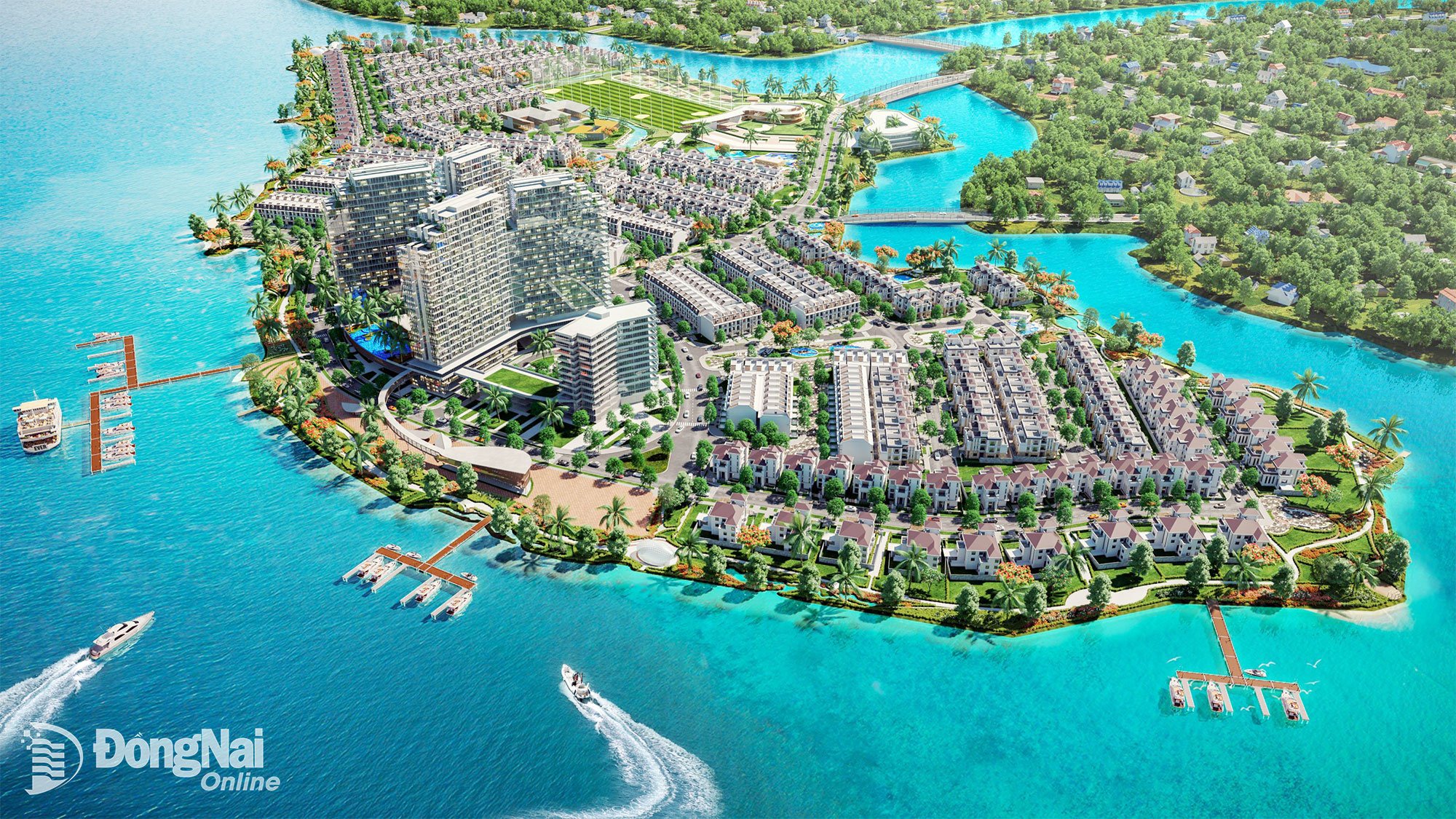 |
| Ecological urban area project in Tan Van islet, Bien Hoa ward. |
During the process of adjusting the provincial planning, Dong Nai placed transportation infrastructure in an organic relationship with urban planning, industrial development, residential areas, and public services, ensuring synchronous, efficient, and sustainable development.
The overarching principle is to put people at the center, investing in infrastructure not only to facilitate convenient transportation but also to improve the quality of life and access to social services. Areas with limited infrastructure will receive comprehensive investment in both technical and social infrastructure. The province aims to build a green, modern, and environmentally friendly transportation system, contributing to reducing greenhouse gas emissions and paving the way for the region's breakthrough development.
Many experts, when contributing to the adjustment of the Dong Nai Provincial Planning, shared the view that the province's investment in synchronized transportation infrastructure is like opening up a "runway" for breakthrough development. Once the expressways, ring roads, and river bridges are completed, Dong Nai will become a strategic connecting center between Ho Chi Minh City and the Central Highlands provinces. The opening of roads to industrial zones, urban areas, seaports, and airports will maximize investment efficiency; the province will have more space for development, promoting economic restructuring towards a green and modern direction.
It can be said that transportation connectivity is the "key" to unlocking comprehensive development in the economy, urban areas, society, and human resources. When this issue is addressed comprehensively, southern Dong Nai will become a strategic growth area, a driving urban center for the province and the Southeast region. This is the foundation for realizing Dong Nai's vision of green, modern development, deeply integrated into regional and international networks. In particular, Phuoc Tan and Long Hung wards, with many urban projects that have completed legal procedures and internal infrastructure, are expected to become new urban centers with outstanding development potential.
PV
Source: https://baodongnai.com.vn/kinh-te/202510/ket-noi-giao-thong-loi-mo-cho-vung-dong-luc-so-1-dong-nai-ky-3-ce30942/
![[Image] Leaked images ahead of the 2025 Community Action Awards gala.](/_next/image?url=https%3A%2F%2Fvphoto.vietnam.vn%2Fthumb%2F1200x675%2Fvietnam%2Fresource%2FIMAGE%2F2025%2F12%2F16%2F1765882828720_ndo_br_thiet-ke-chua-co-ten-45-png.webp&w=3840&q=75)
![[Image] The tenacious fighting spirit of Vietnamese women's football](/_next/image?url=https%3A%2F%2Fvphoto.vietnam.vn%2Fthumb%2F1200x675%2Fvietnam%2Fresource%2FIMAGE%2F2025%2F12%2F17%2F1765990260956_ndo_br_4224760955870434771-copy-jpg.webp&w=3840&q=75)
![[Live] 2025 Community Action Awards Gala](/_next/image?url=https%3A%2F%2Fvphoto.vietnam.vn%2Fthumb%2F1200x675%2Fvietnam%2Fresource%2FIMAGE%2F2025%2F12%2F16%2F1765899631650_ndo_tr_z7334013144784-9f9fe10a6d63584c85aff40f2957c250-jpg.webp&w=3840&q=75)

![[Photo] Prime Minister Pham Minh Chinh receives the Governor of Tochigi Province (Japan)](/_next/image?url=https%3A%2F%2Fvphoto.vietnam.vn%2Fthumb%2F1200x675%2Fvietnam%2Fresource%2FIMAGE%2F2025%2F12%2F16%2F1765892133176_dsc-8082-6425-jpg.webp&w=3840&q=75)
![[Photo] Prime Minister Pham Minh Chinh receives Lao Minister of Education and Sports Thongsalith Mangnormek](/_next/image?url=https%3A%2F%2Fvphoto.vietnam.vn%2Fthumb%2F1200x675%2Fvietnam%2Fresource%2FIMAGE%2F2025%2F12%2F16%2F1765876834721_dsc-7519-jpg.webp&w=3840&q=75)


































![[Live] Closing Ceremony and Award Presentation for the "Impressive Vietnam Tourism" Video/Clip Creation Contest 2025](https://vphoto.vietnam.vn/thumb/402x226/vietnam/resource/IMAGE/2025/12/17/1765974650260_z7273498850699-00d2fd6b0972cb39494cfa2559bf85ac-1765959338756946072104-627-0-1338-1138-crop-1765959347256801551121.jpeg)












Comment (0)