

With a low population density, much of the landscape here is almost untouched by humans, opening up ideal adventure routes for nature lovers, and an enchanting stopover for souls seeking a connection with local history and culture.
Below are 10 typical places where visitors can fully experience the "treasures" and "pleasures" unique to Laos.
Luang Namtha - The Adventure Capital of the Northern Jungle
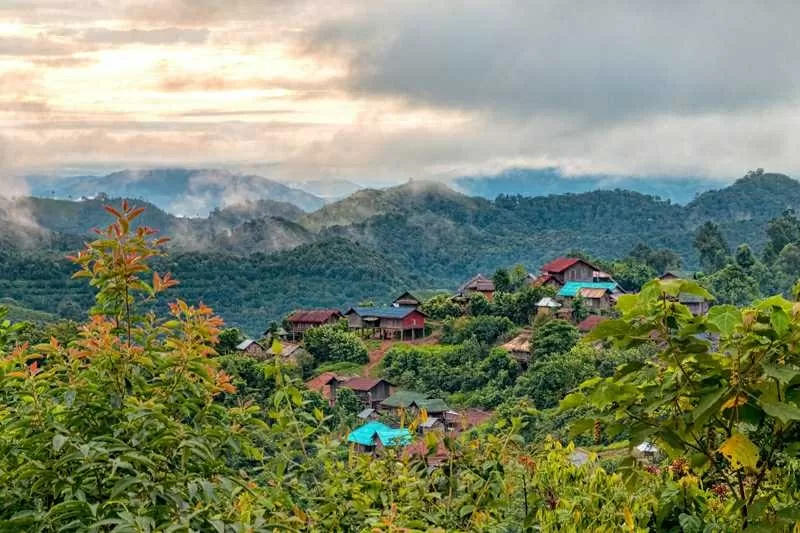 |
| Luang Namtha, Laos. (Source: Go Guides) |
Located in the northern mountainous region bordering Yunnan Province (China), Luang Namtha is known as the adventure capital of Laos. This is a paradise for outdoor exploration activities such as trekking through the forest, kayaking, cycling or rafting on pristine rivers.
Surrounding the town is the vast Nam Ha National Reserve, stretching over 220,000 hectares, gathering a rich primeval ecosystem with old forests, high mountains, deep streams and rare animals. This is also home to many ethnic minority groups such as Akha, Khmu... creating a colorful cultural picture.
Visitors can take trips lasting from a few days to a week to learn jungle survival skills, use native bamboo to make tents, dishes and cooking utensils, and forage for food in the jungle, or stay at homestays in local villages.
The ideal time to do trekking activities is from November to February, when the weather is dry and the nights are quite cool. March to May is hot and smoky due to slash-and-burn farming. The rainy season (June to October) is slippery, muddy and full of leeches.
Vang Vieng – Surreal beauty between limestone mountains and Nam Song River
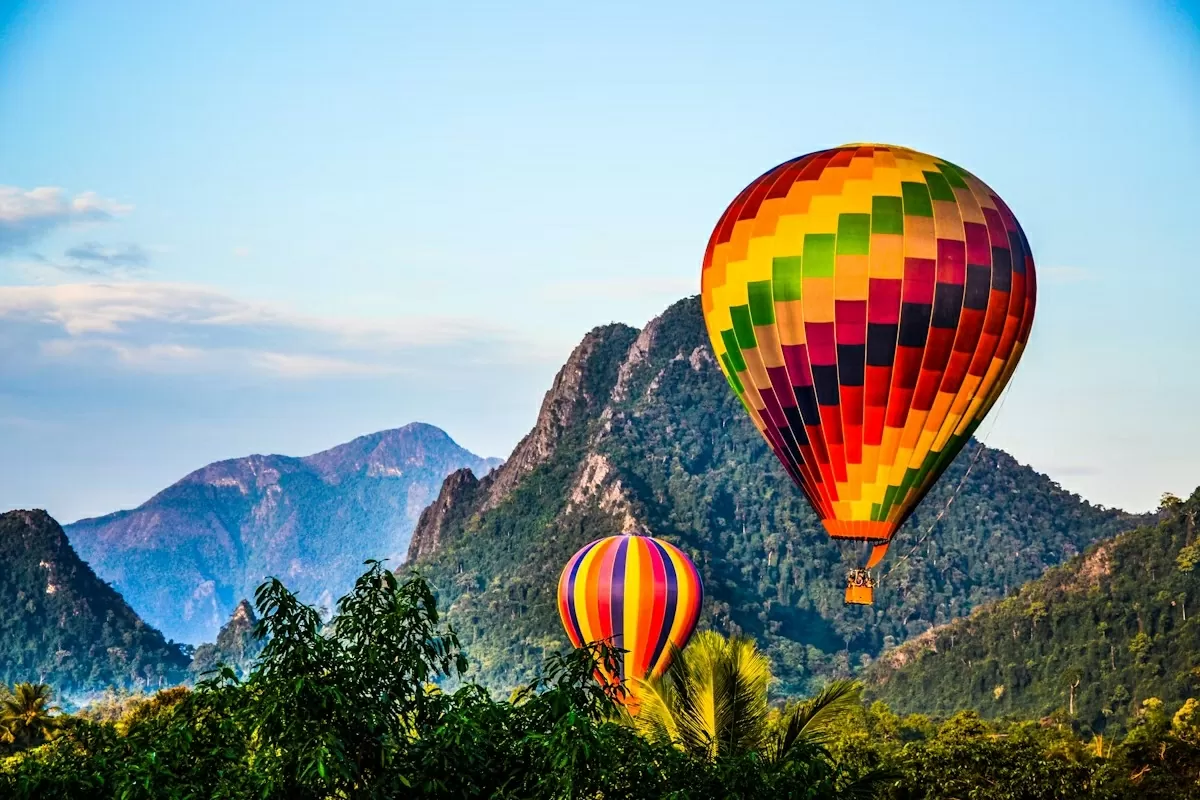 |
| Hot air balloon tour over the mountains in Vang Vieng, Laos. (Source: Shutterstock) |
About 150km from the capital Vientiane, Vang Vieng offers breathtaking scenery that few places in the region can match.
Hundreds of vertical limestone mountains reflect on the emerald Nam Song River, creating a picture both majestic and poetic like in a movie.
Here, visitors can participate in a series of exciting activities such as tubing, kayaking, mountain climbing, exploring mysterious caves or admiring the panoramic view of nature from a hot air balloon floating high above.
After the Laos-China high-speed railway came into operation, Vang Vieng became more accessible, quickly becoming an ideal weekend getaway for visitors from Vientiane or nearby tourist destinations.
Plain of Jars – A thousand-year-old mystery in the Phonsavan plateau
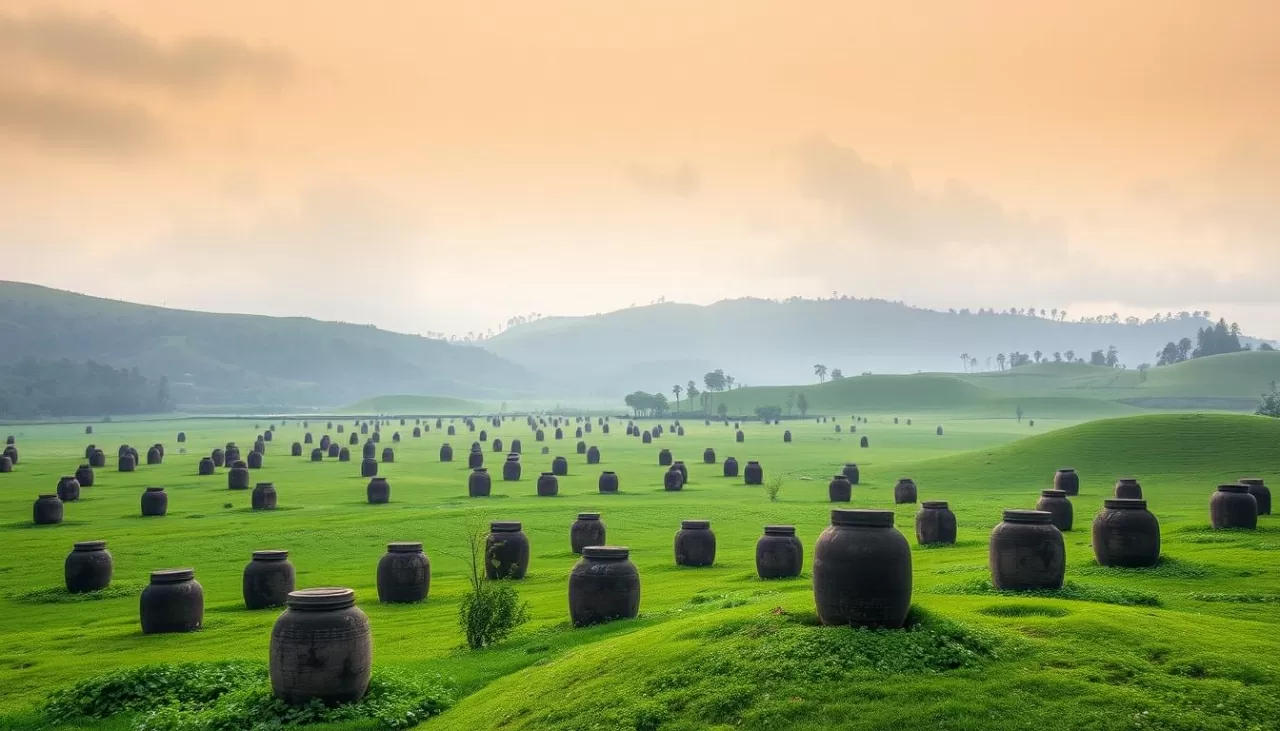 |
| The Plain of Jars is recognized by UNESCO as a World Heritage Site. (Source: Viland Travel) |
If you love archaeology and ancient mysteries, the Plain of Jars will definitely give you the feeling of stepping into another world.
Perched on a plateau some 1,100m above sea level near the town of Phonsavan, this UNESCO World Heritage Site is a must-see. On the misty hillsides are more than 2,100 giant stone jars, dating from 600-1200 BC, whose origins and purpose remain a mystery.
Some theorize that this was the site of ancient funeral rites, others believe that the jars were used to brew wine or store rainwater. However, amidst the mysterious beauty are painful memories of war, when Phonsavan suffered a huge amount of bombs in the 20th century.
Therefore, many tours have been organized here, combining visits to the provincial museum and the MAG center (mine clearance organization), along with a visit to Ban Napia village, where people use aluminum from bomb shells to make spoons and daily utensils.
Today, when coming to the Plain of Jars, visitors not only admire a unique heritage in the world, but also listen to stories of loss, revival and strong aspirations of the Lao people.
Phongsali – Where time seems to stand still
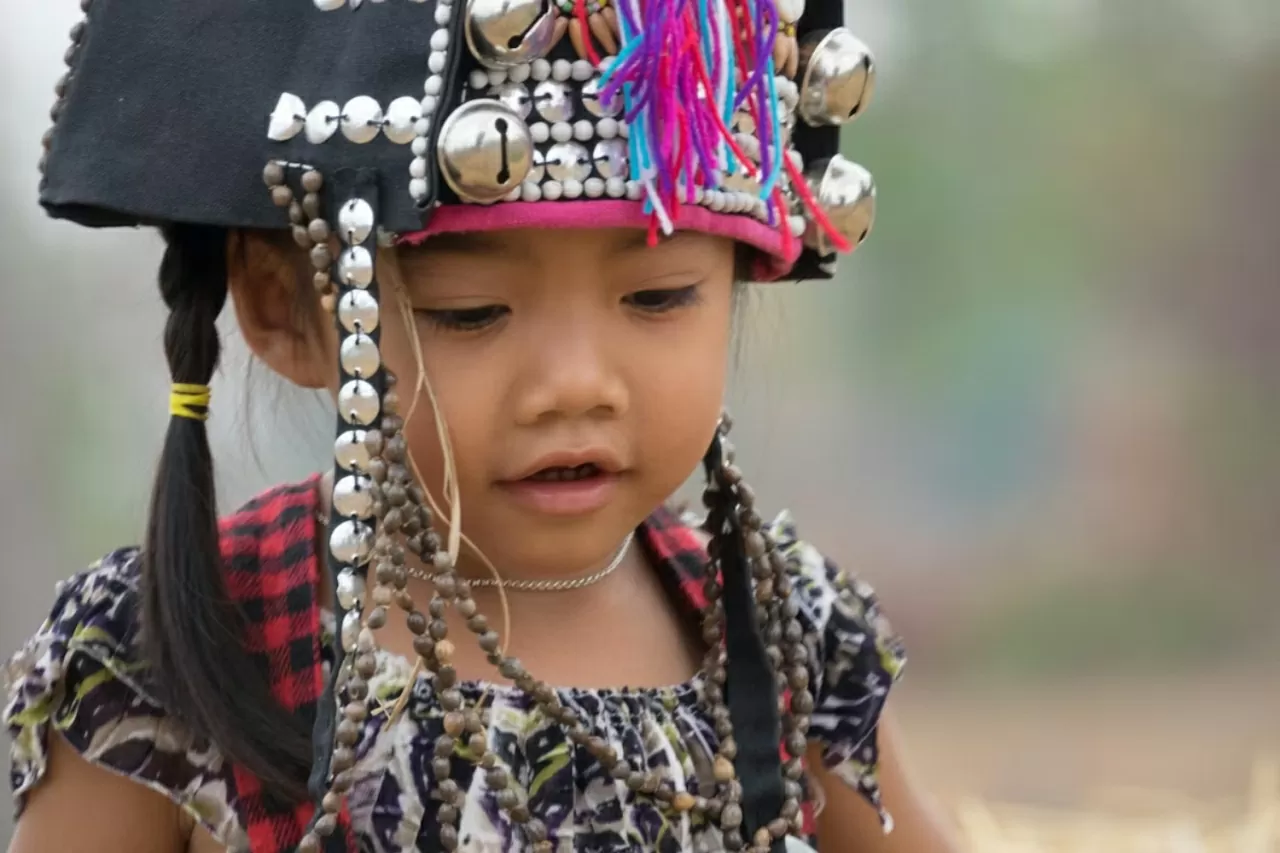 |
| An Akha girl in her distinctive headdress, decorated with glittering coins. (Source: Lonely Planet) |
Although somewhat remote and less visited, Phongsali is a destination for those who really want to "get off the familiar tourist map".
Perched on a mountainside at an altitude of about 1,500m, Phongsali has a cool climate in winter, a rarity in much of Southeast Asia. All year round, the place is often covered by a magical “sea of clouds” due to the mist rolling up from the valley below, creating a mesmerizing scene.
Phongsali is a great trekking destination, offering visitors the chance to meet many of Laos’ traditional ethnic minority communities. Around 10 Akha groups live here, alongside the Phu Noi, Lolo and Tai Dam. Many of them still wear traditional clothing and maintain their ancient customs. The Akha women are known for their distinctive headdresses, which are decorated with glittering coins.
In addition, visitors can also visit the vast tea plantations in Phongsali. More interestingly, here, Mandarin (Yunnan dialect) is more popular than Lao, so local restaurants serve many Chinese dishes with a strong Yunnan flavor.
It can be said that the vast tea hills, year-round cool climate and Yunnan-inspired cuisine have created a very unique identity for this place, very "different from Laos" but also very attractive.
Luang Prabang – The cultural heart and soul of the land of a million elephants
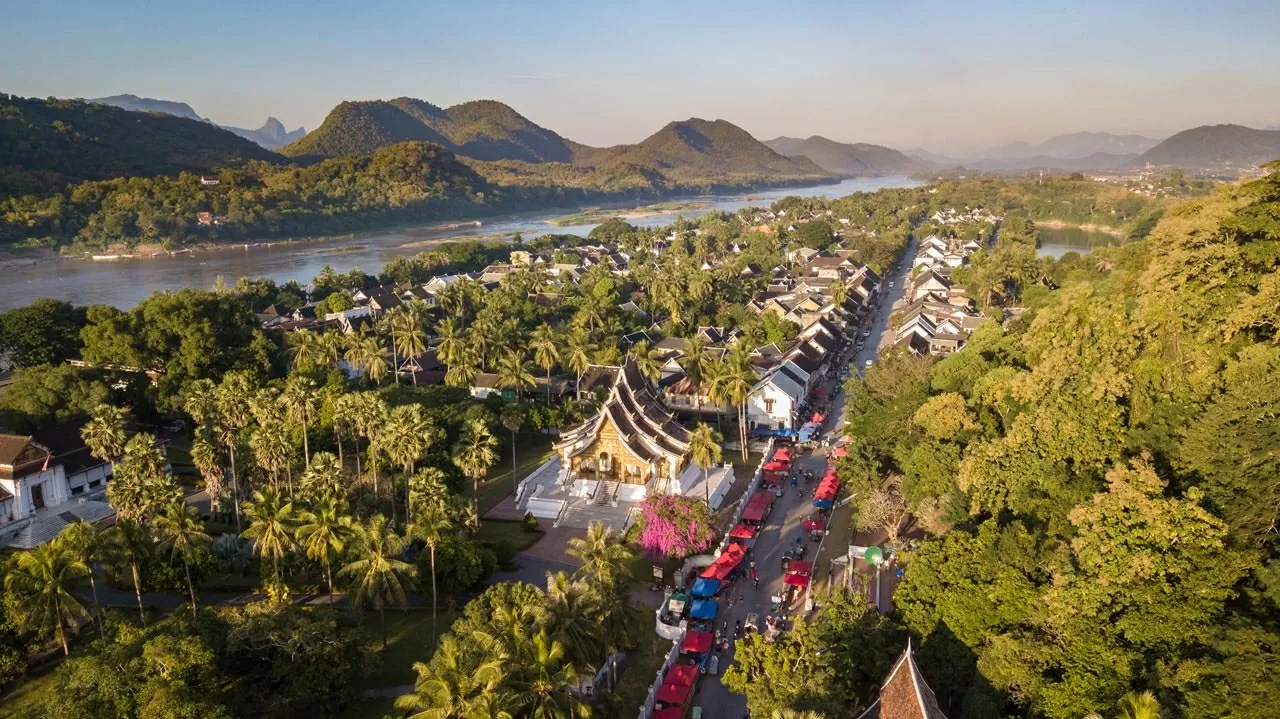 |
| Luang Prabang is recognized by UNESCO as a World Heritage Site. (Source: Asia Travel and Leisure) |
As the most sacred place in Laos, the ancient capital of Luang Prabang is recognized by UNESCO as a World Heritage Site.
Nestled on a small peninsula, embraced by the Mekong and Nam Khan rivers, and surrounded by green hills, this place is memorable for its subtle blend of traditional Buddhist architecture and French-Lao style.
Temples such as Wat Xieng Thong and Wat Mai Suwannaphumaham with their multi-tiered curved roofs and elaborate reliefs have become iconic images of the country. Early morning, the alms-giving ritual of monks in the orange-yellow hues spreading throughout the old town is a sacred and emotional moment.
At night, the Luang Prabang night market is brightly lit, opening up an attractive culinary space with typical dishes such as jaew bong (a chili paste made from garlic, shallots and dried buffalo skin), Lao sticky rice or kai phaen ( Mekong seaweed grilled with tamarind and sesame and then dried in the sun). Outside the city, the emerald Kuang Si waterfall or the sacred Pak Ou caves add to the completeness of the exploration journey.
Luang Prabang is also home to some of Laos’ most distinctive boutique resorts. Many are converted French villas, official or royal residences, with four-poster beds, antiques and a nostalgic atmosphere.
In particular, if you come here in the second week of April, you will be able to join the Bunpimay festival, the traditional Lao New Year, which is also a giant “water war”. People buy water guns, water balloons and stand in front of their houses or shops to… pour water on anyone who passes by.
Mekong River – "The slow breath" of the country
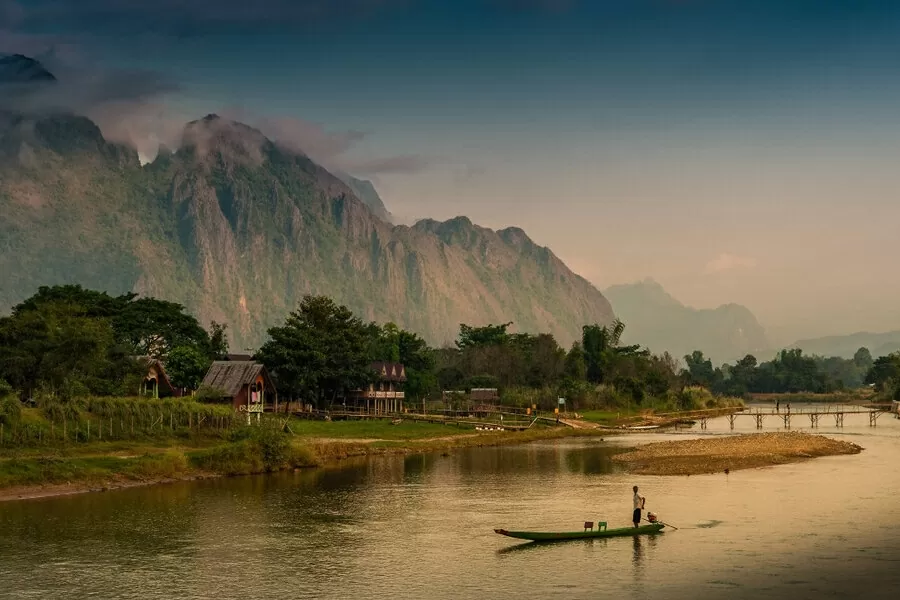 |
| The Mekong River flows peacefully through Laos. (Source: Lonely Planet) |
The mighty Mekong River, which flows through much of Laos straight into the East Sea, is not just a river but the lifeblood of the entire Southeast Asian country.
This gentle river flows through the length of the country, carrying a slow, peaceful pace of life and closely associated with the lives of local people.
One of the most rewarding experiences is the slow boat journey from Luang Prabang to Huay Xai. Every bend reveals majestic mountain vistas, idyllic small villages and moments of tranquility rarely found in today’s fast-paced modern world.
On that journey, visitors can also experience a pace of life that seems unchanged for decades while drifting along the misty green mountainsides, silently watching fishermen cast their nets on dugout canoes.
Si Phan Don – The maze of 4,000 islands and the peaceful pace of life
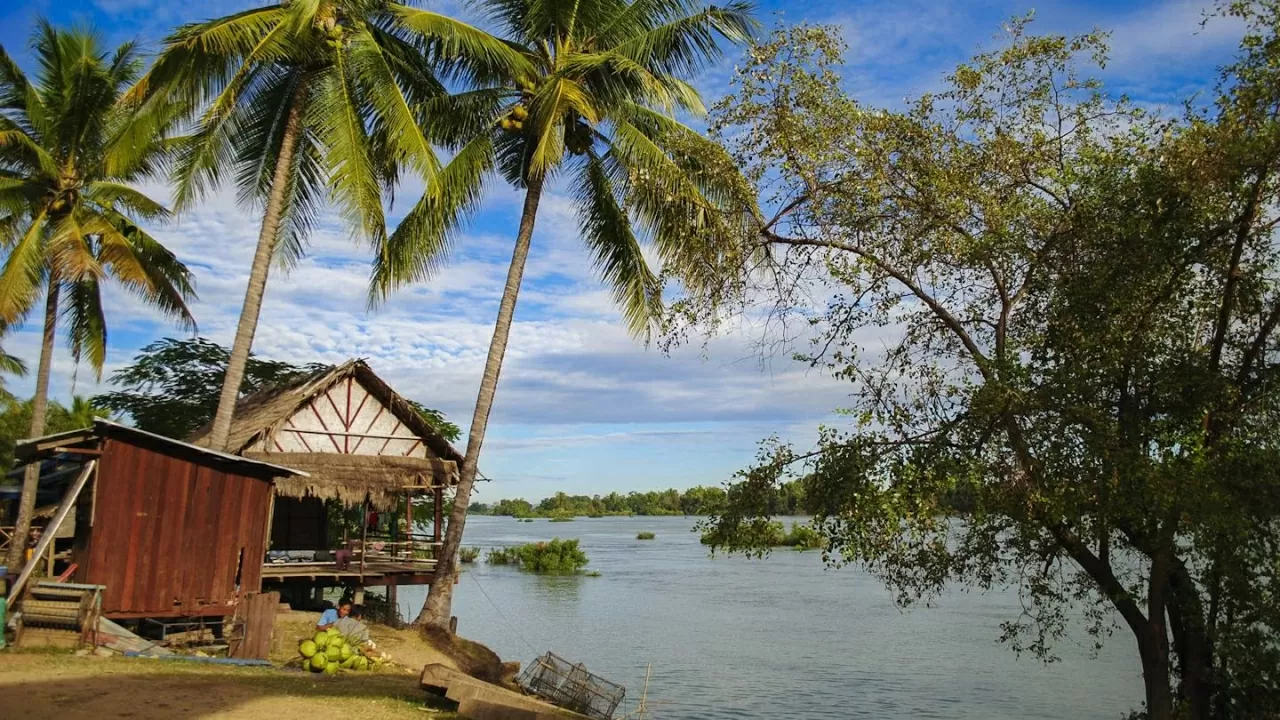 |
| The best time to visit Si Phan Don is during the dry season from November to March. (Source: Shutterstock) |
Located in southern Laos, the Si Phan Don archipelago (4,000 islands) appears like a symphony of water and sky.
There are actually not 4,000 islands in Si Phan Don, but in the dry season, when the water level is low, countless outcrops, water hyacinths and vines emerge, making the place look like a maze of small islands, creating a river that is both wild and poetic.
Don Det and Don Khone are the two most popular islands, with Don Det being the most popular choice for those looking to swing in hammocks and settle down in bamboo bungalows. This can be considered a “beach” holiday in the only landlocked country in Southeast Asia.
If you don’t just want to relax, you can also kayak on the Mekong River, or rent a bicycle to cross the old French-built railway bridge to Don Khone – home to the majestic Li Phi waterfall. The rice fields at Don Khone are especially beautiful during the planting season in June or the harvest season in late autumn.
Sainyabuli Elephant Conservation Center – A journey to preserve the soul of Laos
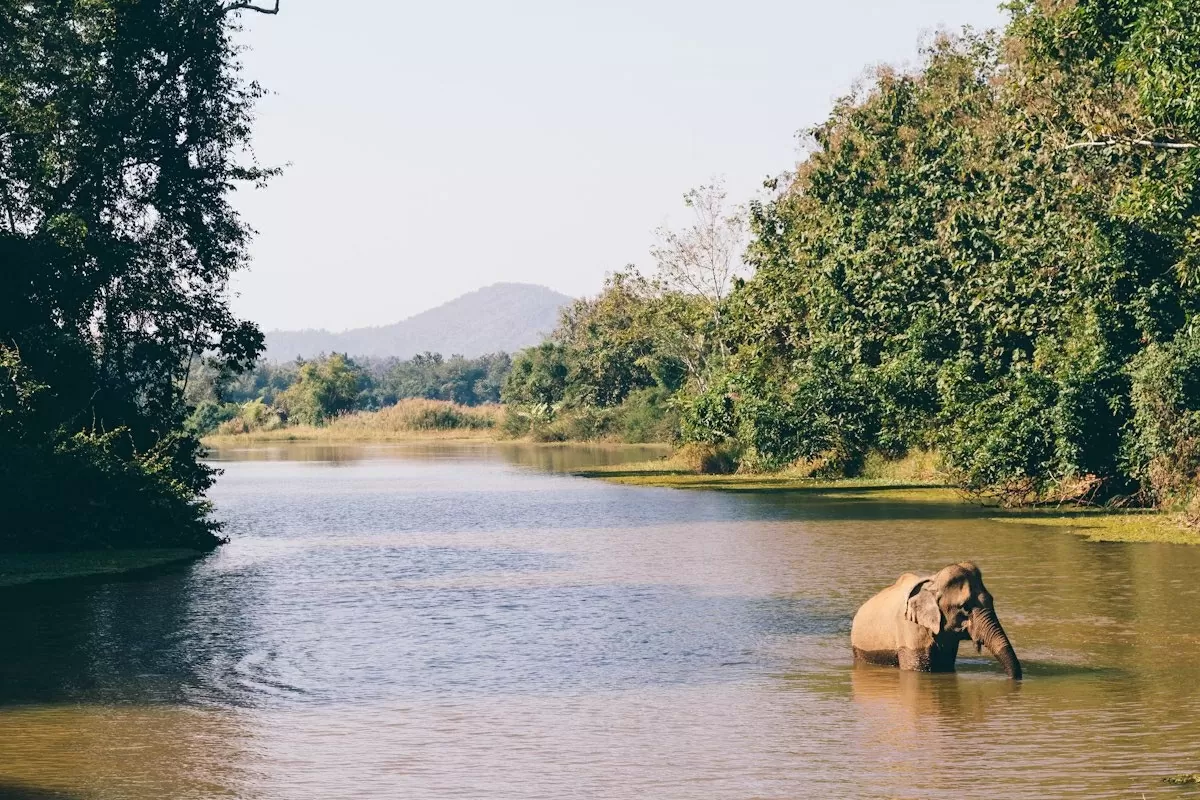 |
| An Asian elephant takes a dip in a pond in Sainyabuli. (Source: Lonely Planet) |
The ancient kingdom of Laos was called Lan Xang, which means “million elephants.” But today, Laos has fewer than 800 elephants, and only half of them live in the wild.
Hence, the elephant conservation centre in Sainyabuli was born as an effort to revive and preserve this sacred symbol of the country.
Unlike other tourist areas that exploit elephants for entertainment purposes, this place focuses on rescuing, caring for and releasing elephants back into the forest. To see this iconic animal in its most natural environment, visitors can go to Nam Tien Lake.
After a boat ride across the lake and checking into your bungalow, you'll walk with elephants and their mahouts in the jungle, watch them bathe, visit the elephant hospital and learn about the challenges of caring for and maintaining this iconic Southeast Asian species.
The center currently has about 25 elephants, cared for by biologists, veterinarians, guides and a team of professional mahouts.
This trip also takes you to a land very few tourists have ever set foot on: Sainyabuli province - home to the majority of Lao elephants and the center of efforts to release them back into the wild.
Vieng Xai – Traces of history
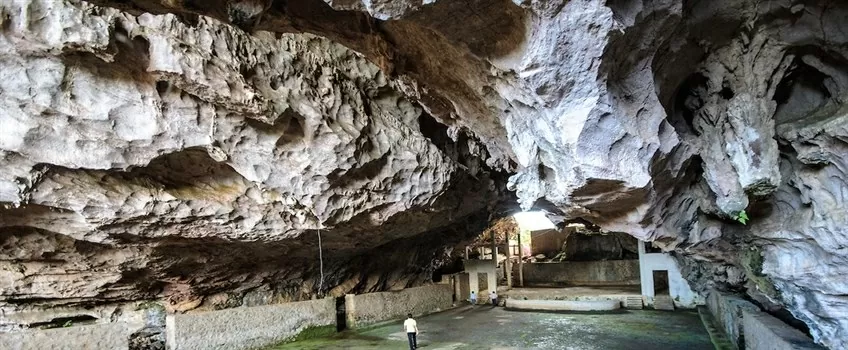 |
| Vieng Xai cave system is an "underground city" during the war. (Source: Vivutravel) |
Vieng Xai is not a destination of splendid beauty, but it has very special historical value.
In northeastern Laos, bordering Vietnam, Houaphanh province suffered about 2 million tons of bombs and ammunition dropped by the US between 1964 and 1973.
During this time, Pathet Lao revolutionary forces discovered more than 480 caves hidden deep in the jungle around Vieng Xai and turned it into an “underground city” with a hospital, meeting rooms, communication systems, and even a theater for rallies, weddings, and movie screenings.
Today, these caves have become “living museums”, telling true stories of war, the will to survive and the strength of humankind in the face of adversity. This is a must-see stop for those who want to understand more deeply about the modern history of this country.
Visitors can get around by bicycle. English-speaking guides and audio guides are available, providing a vivid history lesson and a sense of the Lao people’s extraordinary efforts to survive amid bombs and bullets.
Nong Khiaw – Hidden gem by the Nam Ou River
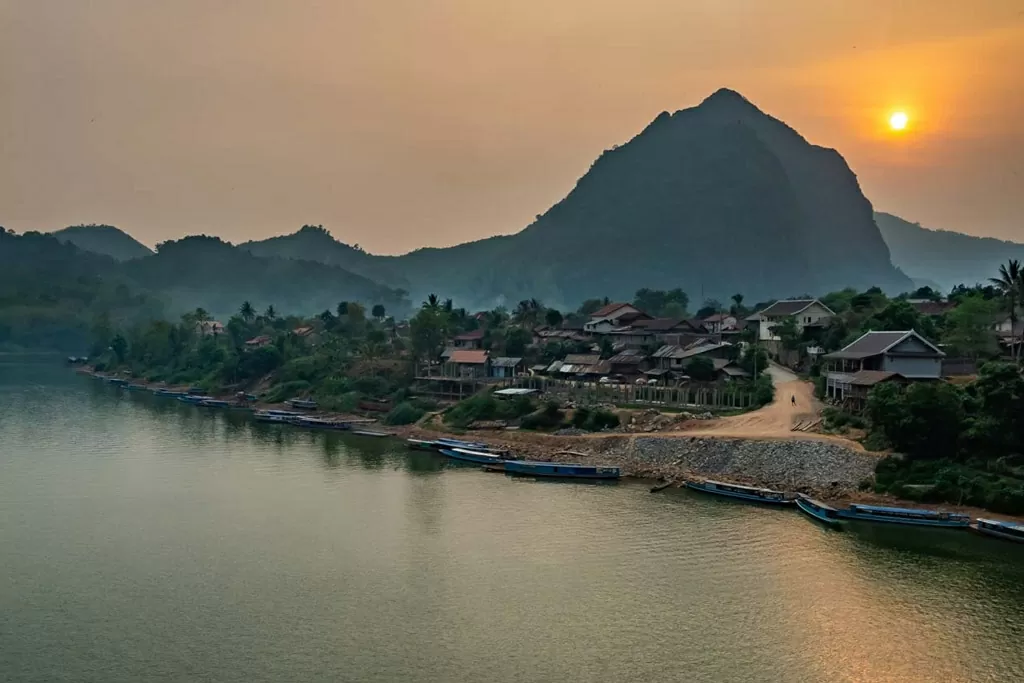 |
| Nong Khiaw is a small town located peacefully on the Nam Ou River. (Source: Viland Travel) |
The journey ends at Nong Khiaw, a small town nestled peacefully on the Nam Ou River, surrounded by majestic limestone cliffs. No noise, no luxury hotels, Nong Khiaw has a rustic, pristine and gentle beauty.
This is one of the few places in Laos where visitors can explore on their own without a tour, from conquering seven high-altitude viewpoints around town, visiting wartime caves, to kayaking on peaceful rivers.
In addition, visitors can easily join cheap tours to secret waterfalls, visit traditional weaving villages, camp overnight on top of Pha Daeng, or kayak all the way to Luang Prabang.
Many of the guesthouses and restaurants here have views of the river and the majestic limestone mountains. If you don’t like the crowds during peak season, you can take a boat trip upstream for about an hour to Muang Ngoi Neua, an even smaller and quieter village that resembles Nong Khiaw 15 years ago.
Not flashy, not bustling, Laos conquers visitors with its genuine beauty and emotional depth. From the red dirt roads, the moss-covered temples to the gentle smiles of the local people, all contribute to creating a country with a distinct soul. Laos is not just a destination, but a state of being, of slowness, connection and listening.
A journey to Laos, sometimes, is also a journey to find the peace lost in the hustle and bustle of modern life.
Source: https://baoquocte.vn/kham-pha-ve-dep-nguyen-so-cua-dat-nuoc-trieu-voi-336304.html


![[Photo] Cat Ba - Green island paradise](/_next/image?url=https%3A%2F%2Fvphoto.vietnam.vn%2Fthumb%2F1200x675%2Fvietnam%2Fresource%2FIMAGE%2F2025%2F12%2F04%2F1764821844074_ndo_br_1-dcbthienduongxanh638-jpg.webp&w=3840&q=75)







































![[VIMC 40 days of lightning speed] Da Nang Port: Unity - Lightning speed - Breakthrough to the finish line](https://vphoto.vietnam.vn/thumb/402x226/vietnam/resource/IMAGE/2025/12/04/1764833540882_cdn_4-12-25.jpeg)






































Comment (0)