

The draft Law amending and supplementing a number of articles of the Law on Product and Goods Quality is being drafted by the Ministry of Science and Technology and is expected to be submitted to the National Assembly for comments at the ninth session (May 2025).
The draft Law amending and supplementing a number of articles of the Law on Product and Goods Quality is being drafted by the Ministry of Science and Technology and is expected to be submitted to the National Assembly for comments at the ninth session (May 2025).
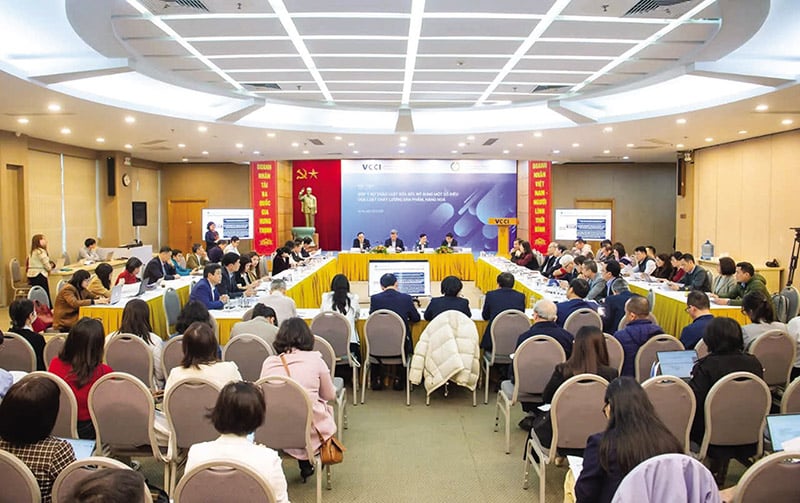 |
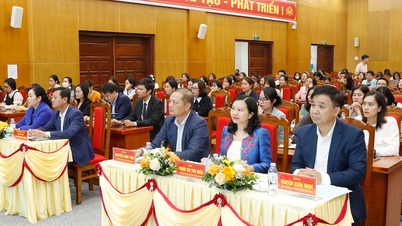
| Workshop to provide feedback on the Draft Law on Product and Goods Quality, organized by the Vietnam Federation of Trade and Industry. |
Facing many changes
"Businesses are always wary of ambiguity," said Mr. Truong Van Cam, Vice President and General Secretary of the Vietnam Textile and Garment Association (VITAS), at the beginning of his remarks at the Workshop on Contributing Opinions to the Draft Law on Product and Goods Quality (Draft) organized by the Vietnam Federation of Commerce and Industry (VCCI) earlier this week.
Previously, the new contents of the Draft were sent to businesses by the National Standards and Quality Measurement Committee (Ministry of Science and Technology). Businesses are of great concern regarding the amendments to policies.
According to the draft submission, the Law on Product and Goods Quality (2007) does not fully meet international treaties and obligations in free trade agreements that Vietnam is a party to. Therefore, the amendment will ensure a complete and synchronized system of legal documents on product and goods quality, creating the necessary legal framework for the implementation of state management activities on product and goods quality, ensuring uniformity in the application of laws on product and goods quality, contributing to the creation of a healthy investment and business environment, in line with international practices, consistent with the Agreement on Technical Barriers to Trade (TBT Agreement) of the World Trade Organization (WTO) and the chapters on technical barriers to trade of new generation free trade agreements (CPTPP, EVFTA, RCEP...).
With this perspective, four main policy areas will be revised.
Firstly, innovate the process of identifying products and goods that may pose safety risks (Group 2 products and goods).
Secondly, applying technology in quality management and product traceability.
Thirdly, developing high-quality national infrastructure ensures the goals of sustainable development and international integration.
Fourth, enhance the effectiveness of product and goods quality management, and promote the delegation and decentralization of management responsibilities to suit the current situation.
Specifically, the Draft has reviewed 8 groups of administrative procedures, abolishing 3 of them, including the declaration of conformity and registration for quality inspection of certain imported goods in group 2; registration of conformity assessment activities; and amending 5 administrative procedures (registration for quality inspection of certain imported goods in group 2; registration for exemption from quality inspection of imported goods; issuance of certificates of right to use codes and barcodes; registration of designation of conformity assessment standards; registration of training activities for assessment experts).
However, precisely because of these numerous changes, businesses need the content outlined in the Draft to be clear, transparent, and conducive to their operations. "Businesses shouldn't have to waste any more time or money," Mr. Cam urged the Drafting Committee.
There are quite a few concerns.
Ms. Dao Thi Thu Huyen, Deputy Director of the External Relations Department (Canon Vietnam), presented at the seminar a comparison of international practices regarding product and goods quality with Vietnamese regulations. This comparison highlighted 10 regulations, such as the determination and announcement of product quality levels by manufacturing enterprises; the determination of internal control measures to ensure product quality; the selection of conformity assessment organizations for testing, inspection, and certification of product and goods quality, etc., comparing them with five international markets: China, Japan, South Korea, Europe, and the United States.
"Most of the most advanced countries don't have regulations as strict as Vietnam," Ms. Huyen shared, based on information she gathered from comparisons.
- Ms. Dao Thi Thu Huyen, Deputy Director of External Relations Department (Canon Vietnam)

According to the draft, when new procedures arise, it takes at least one month from preparation to approval, leading to increased manpower, costs, and the risk of not being able to export orders on time.

Similarly, the regulations of the Law on Product and Goods Quality related to imports and exports are also stricter than those of some comparable economies. In particular, Ms. Huyen stated that developed countries do not impose many responsibilities on exports, only tightening regulations on items related to health, such as food and pharmaceuticals.
But what worries Ms. Huyen the most is that the current regulations are already very strict, even stricter than many advanced countries in the world, but the draft that the Ministry of Science and Technology is putting out for public comment is even stricter.
"The draft has changed the regulation on the application of traceability codes and electronic labels from non-mandatory to mandatory. Therefore, businesses will have to go through additional registration procedures to meet the regulations, which also means increased manpower, time, and costs," Ms. Huyen analyzed.
Naturally, the consequence will be increased product prices, negatively impacting consumer purchasing power, and consequently reducing business revenue...
"We propose amending the draft to reduce existing administrative procedures without increasing them compared to the regulations of advanced countries such as Japan, South Korea, Europe, and the United States. Simultaneously, inspections of goods circulating in the market need to be strengthened," Ms. Huyen recommended.
Regarding this matter, a representative from WinCommerce General Trading and Service Joint Stock Company stated that the company fully agrees with the Party and State's policy on applying technology to manage product and goods quality, including the application of barcodes, electronic labeling, and other related tools. This helps all parties involved in the supply chain to trace origins, recall products, and manage production, transportation, and sales more easily.
However, these new requirements also pose a challenge for businesses in developing appropriate IT infrastructure and systems to manage data comprehensively and integrate data from different departments, from production and quality control to warehousing and distribution.
“With significant challenges in technology deployment, increased investment costs will create financial pressure and affect the competitiveness of businesses, especially small and medium-sized enterprises. This will inevitably lead to higher product prices, directly impacting the rights of domestic consumers. Furthermore, the need for detailed traceability information, including details of storage, handling, and transportation facilities, will create difficulties in product labeling and affect the competitiveness of businesses,” a business representative stated.
Therefore, businesses propose that government agencies implement the regulations in a phased manner, tailored to the specific circumstances of each business, and provide detailed support and guidance to ensure the smoothest possible implementation and minimize associated costs.
Source: https://baodautu.vn/khong-de-doanh-nghiep-chiu-ton-them-thoi-gian-tien-bac-d250870.html




















































































Comment (0)