

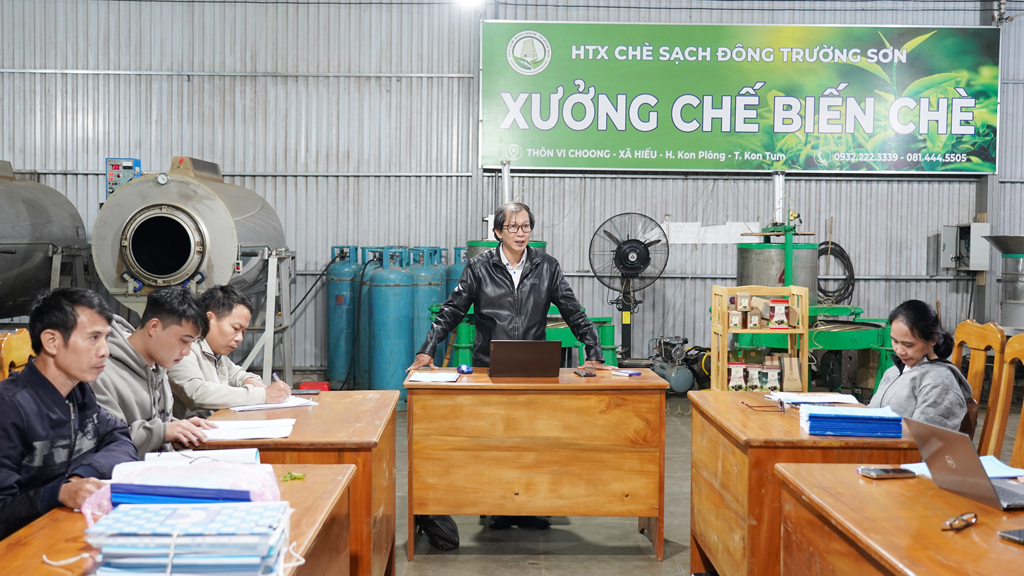
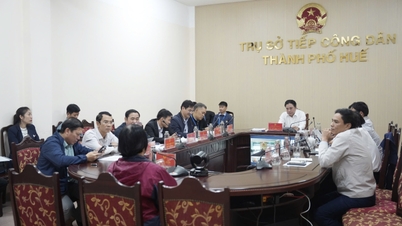
Dr. Phan Van Hieu – Deputy Director of the Department of Science and Technology, Chairman of the Council, presided over the meeting.
The inspection team consisted of members of the Council as per Decision No. 1653/QD-UBND dated November 25, 2025, of the Chairman of the People's Committee of Quang Ngai province. Dr. Phan Van Hieu – Deputy Director of the Department of Science and Technology, Chairman of the Council, presided over the meeting. The Council conducted consultations, evaluations, and acceptance of the project's implementation results in accordance with Circular No. 07/2016/TT-BKHCN dated April 22, 2016, of the Minister of Science and Technology and other relevant current regulations on the management of science and technology tasks.
This project is centrally managed and implemented from December 2022 to December 2025, spearheaded by the Dong Truong Son Clean Tea Cooperative; the Tea Research and Development Center is the technology transfer agency. The main objective of the project is to establish a new tea raw material area through the application of advanced technical processes, building intensive farming models according to VietGAP standards, and perfecting the technology for processing high-quality tea products.
According to the report, the Dong Truong Son Clean Tea Cooperative has implemented the project on schedule, fully carrying out all contents and completing the products as approved in the project proposal. Six technological processes related to the project's models have been successfully transferred and adopted. A highlight is that the cooperative has mastered the entire process, implemented it in actual production, and guided people in applying it according to VietGAP standards.
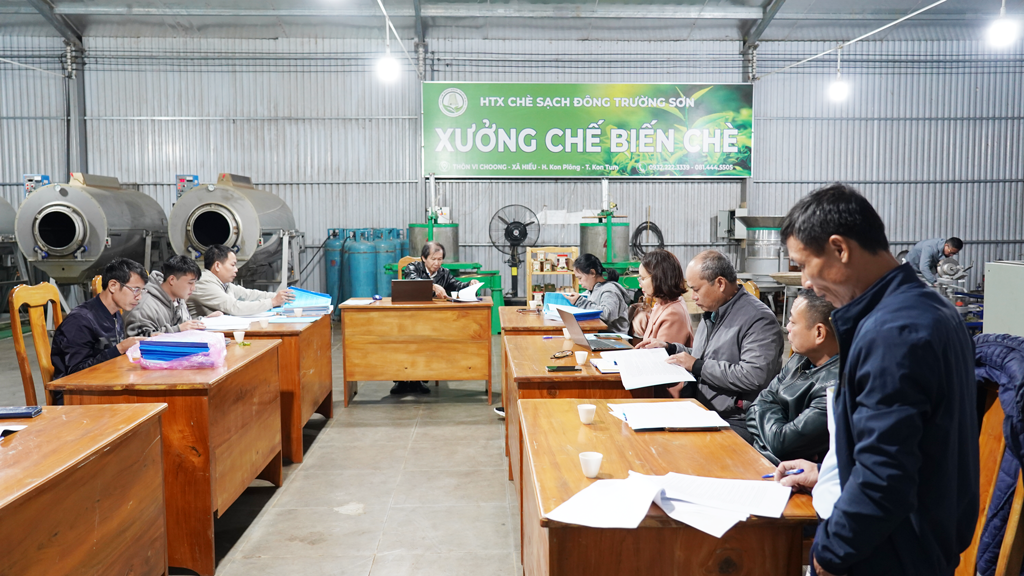
Representatives from the lead agency will report on the project's implementation results.
The project also focuses on training and developing human resources: 10 local technicians received intensive training to improve their ability to supervise and provide technical support at the local level; 200 farmers received training on tea planting and care procedures, helping to improve production capacity and reduce errors in technical practice.
Proactive technology transfer is a crucial foundation for the model to be scalable and develop sustainably.
New tea variety cultivation model: The project has successfully planted 30 hectares of Kim Tuyen, Huong Bac Son, PH8, and TRI 5.0 varieties with a survival rate of 90.2–93.6%, exceeding the target. Yields reached 3.25–4.02 tons/ha, surpassing the 3.0–3.5 tons/ha target outlined in the project proposal. During the 2022–2025 period, the total harvested fresh tea buds reached 181.76 tons, equivalent to 160–202.93% of the project target.
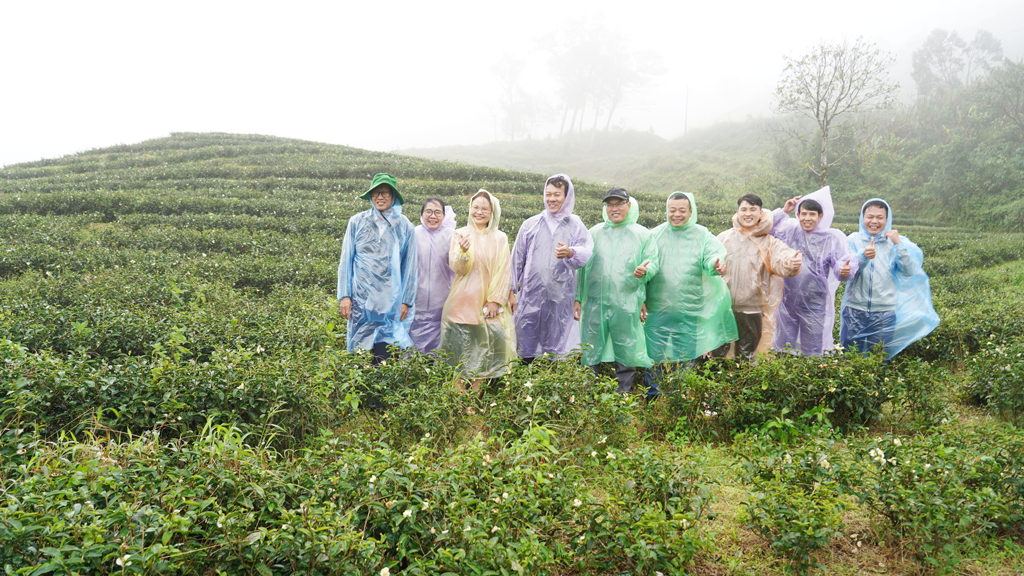
The inspection team visited the model for growing the new tea variety.
A model for planting new tea varieties such as Kim Tuyen, PH11, TRI 5.0, and PH8 was implemented on an area of 30 hectares. After 3 years, the average yield reached 8.5 tons/ha; the percentage of buds reached 91.01%; and the percentage of good quality products after processing reached 51.78% – 86.8%. These results demonstrate the good adaptability of the new tea varieties in Kon Plong, opening up opportunities for the formation of large-scale tea production areas.
Green tea and Oolong tea processing models: Both processing models are equipped with modern, synchronized equipment, meeting technical requirements. High-quality green tea: capacity: 1.5 – 2.0 tons/day; trial production: 18 tons, achieving 260% of the plan; product quality meets Vietnamese standards (TCVN), with stable color and flavor. Oolong tea: capacity: 0.3 – 0.5 tons/day; trial production: 3.4 tons, achieving 240% of the plan.
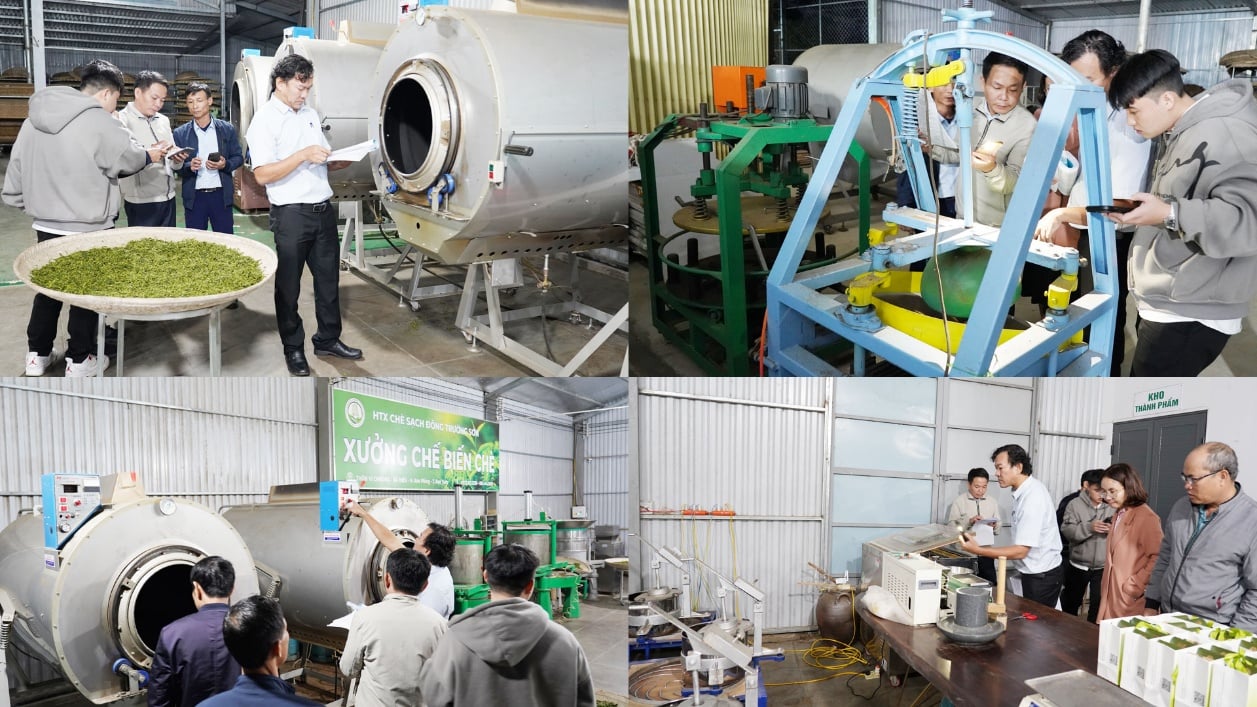
The inspection team examined the project's equipment and machinery.
The tea quality meets the TCVN 12713:2019 standard . Improving on-site processing lines contributes to increasing product value, reducing raw material transportation costs, and creating a closed value chain for the local tea industry.
One of the highlights of the project is the integrated supply chain model from production to consumption. The total output of fresh tea buds under the contracted purchase agreement reached 834.46 tons, an increase of 32.45% compared to the target. Many households participating in the model have higher incomes thanks to the percentage of A and B grade tea reaching over 50%, and the selling price of raw materials increasing by 25-40% compared to the control group.
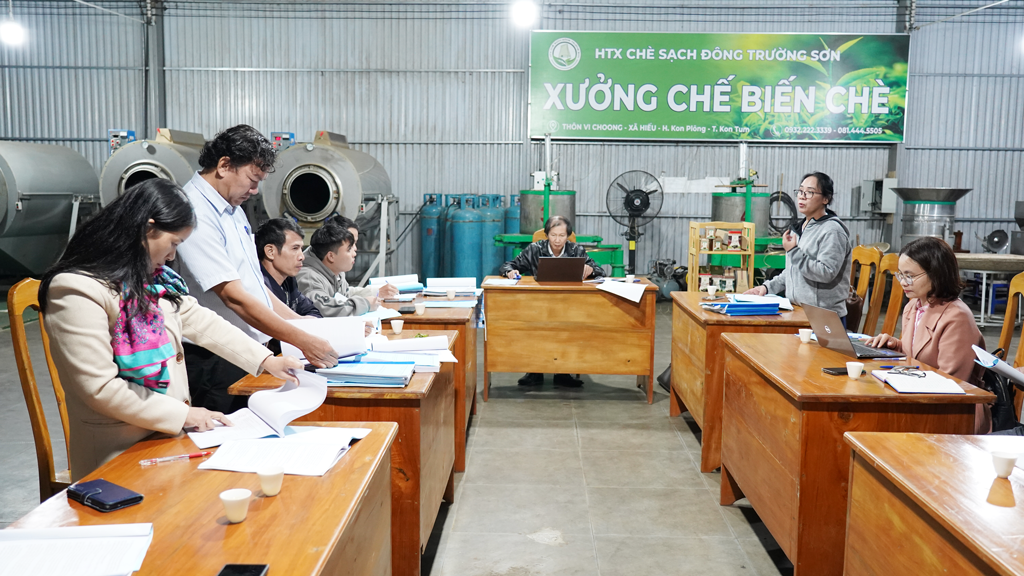
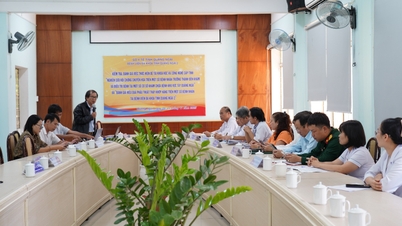
The team reviewed the project documents and provided feedback for corrections and additions to address any shortcomings.
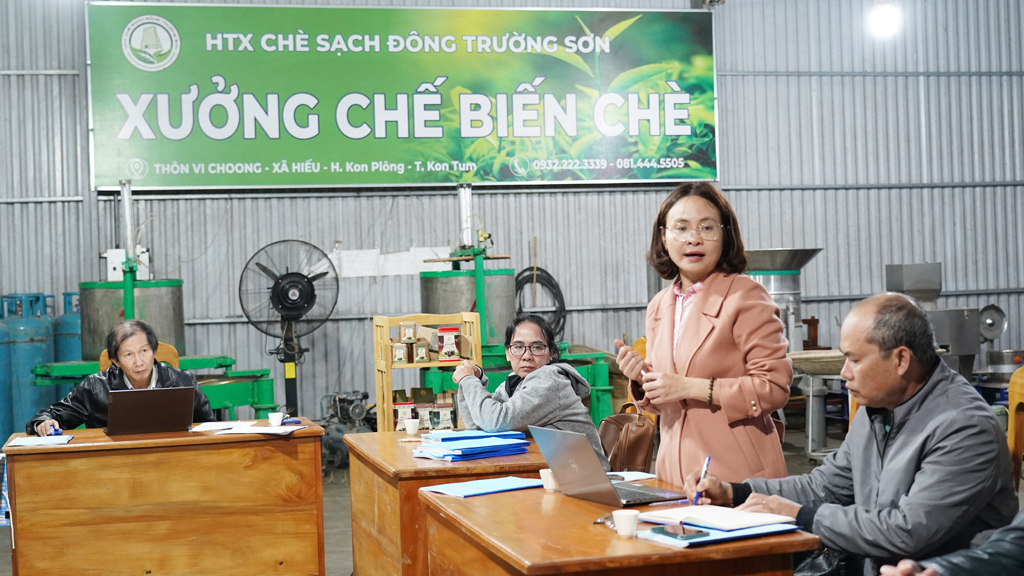
Ms. Nguyen Thi Bich Hang, Deputy Head of the Faculty of Biology, Agriculture and Environment, University of Education, Da Nang University, gave a presentation and participated in the discussion.
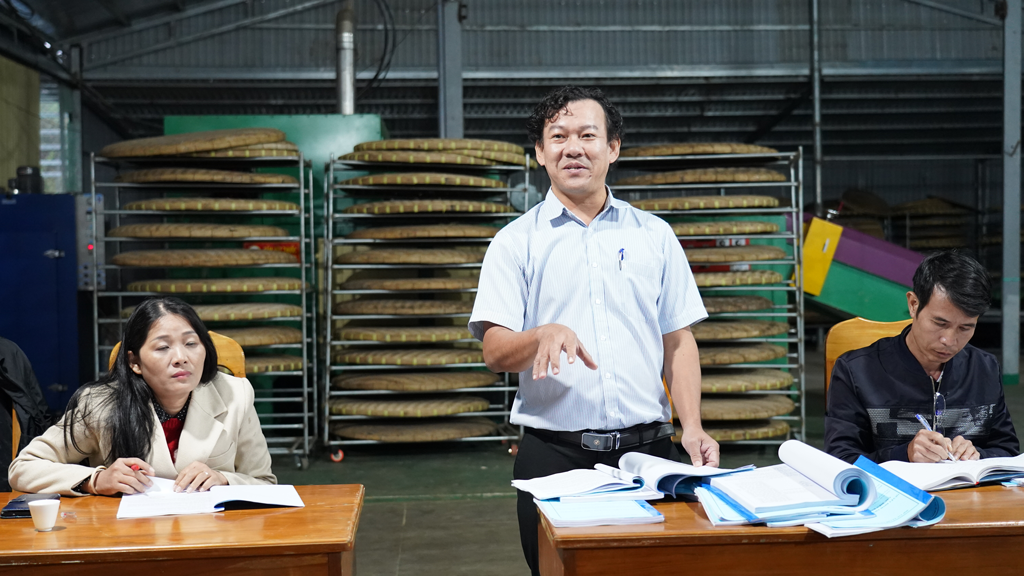
Dr. Nguyen Thanh Liem, Director of the Agronomy Training Program, Faculty of Natural Sciences , Quy Nhon University - Vice Chairman of the Council, delivered a speech and participated in the discussion .
Through field surveys and project document review, the inspection team assessed that the project was well-organized, ensuring timely progress and compliance with regulations; most indicators met or exceeded the stated objectives, and the tea growing area has initially formed a value chain for a distinctive agricultural product of Kon Plông district. The inspection team requested the lead unit and the transferring unit to review and complete the implementation documents according to the program's procedures and requirements, supplementing biochemical analysis samples of tea raw materials to enhance the persuasiveness of the acceptance results; and to continue monitoring productivity and quality indicators of raw materials at each model to serve the overall evaluation at the end of the project.
The project not only yielded production results exceeding expectations but also laid the groundwork for promoting the development of high-tech agriculture in Kon Plông. The establishment of a high-quality tea raw material area, along with an on-site processing system, opens up a sustainable economic development direction for the local people.
With these promising results, the model can be considered for expansion in the next phase, contributing to increased agricultural production value, higher incomes for people, and affirming the role of science and technology in restructuring the agricultural sector in mountainous regions.
Van Binh
Source: https://skh.quangngai.gov.vn/danh-muc-cot-phai/tin-tuc/khoa-hoc-ky-thuat-va-cong-nghe/kiem-tra-thuc-te-du-an-ung-dung-tien-bo-kh-cn-phat-trien-mo-hinh-san-xuat-va-che-bien-che-tai-huyen-kon-plong-tinh-kon-t.html

































































![[Infographic] Many activities at the 96th anniversary commemoration of the death of Deputy Scholar Nguyen Sinh Sac](https://vphoto.vietnam.vn/thumb/402x226/vietnam/resource/IMAGE/2025/12/11/1765441454787_infographic-nhieu-hoat-dong-tai-le-gio-lan-thu-96-cua-cu-pho-bang-nguyen-sinh-sac20251211010322.webp)













Comment (0)