

Baoquocte.vn. Over the past 70 years (October 10, 1954 - October 10, 2024), Hanoi has risen to become one of the major cities in Southeast Asia, with rapid and sustainable economic growth.
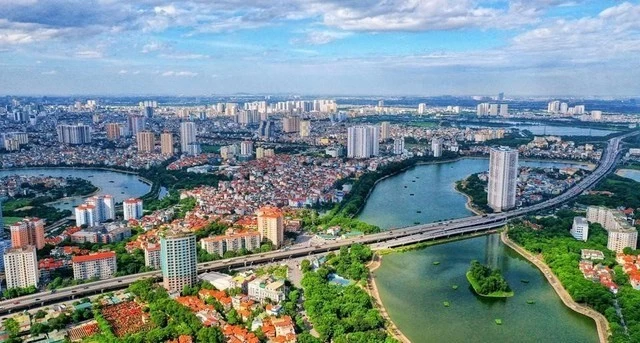 |
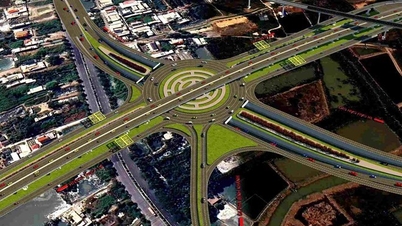
| Hanoi is constantly striving to modernize its economic structure. (Source: Bnews) |
Hanoi's income scale has increased dramatically, and its economic structure is increasingly shifting towards a more modern, sustainable, greener, and cleaner direction. However, given the environmental challenges, the capital city needs to focus on developing a green economy and a circular economy in the coming years…
Leading the nation in the fields of economy, culture, and education.
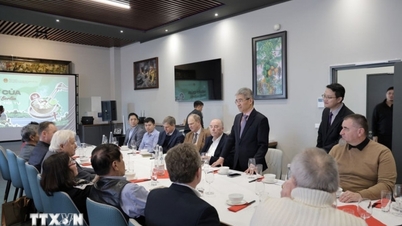
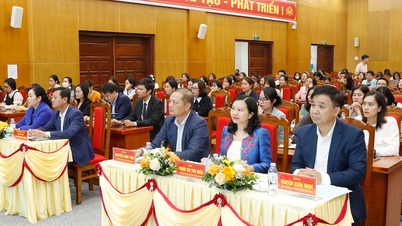
At the seminar "Hanoi's Economy - 70 Years Towards Circular and Sustainable Development," Associate Professor Dr. Nguyen Thanh Loi, Editor-in-Chief of the Economic & Urban Newspaper, affirmed: "Hanoi is constantly striving to perfect its economic structure towards modernization. New economic models such as the digital economy, green economy, and circular economy are gradually forming and developing, playing an increasingly important role in the sustainable development of the Capital."
According to him, the capital city of the country is continuously improving its investment and business environment, especially by minimizing complex administrative procedures. This creates favorable conditions for businesses to develop and attracts many large domestic and foreign projects.
Meanwhile, Dr. Le Quoc Phuong, former Deputy Director of the Center for Industrial and Trade Information (Ministry of Industry and Trade), observed that Hanoi today has become the leading city of the country in the fields of economics, culture, education, etc.
Mr. Phuong believes that Hanoi's economic model has undergone positive changes in recent years, prioritizing trade, services, and tourism, and developing according to new economic models around the world.
"The fact that the service and trade sector accounts for nearly two-thirds of the Gross Regional Domestic Product (GRDP) is a rather correct direction for Hanoi. Tourism has placed Hanoi among the top 10 fastest-growing tourism cities in the world," assessed Dr. Le Quoc Phuong.
Elaborating on the potential of the capital city, Mr. Phuong cited that in 2023, Hanoi's import and export accounted for nearly 9% of the total import and export turnover of the whole country, placing Hanoi in 8th position out of 63 provinces and cities.
| "Economic development has contributed to rapid changes in social infrastructure. Nowadays, even in remote districts like Phuc Tho and Ba Vi, cars can reach right to the doorstep," said Assoc. Prof. Dr. Bui Thi An, former Member of Parliament in the 13th term and Director of the Institute of Environmental Resources and Community Development. |
The industrial and construction sectors account for approximately 16% of Hanoi's total product, attracting around 4,500 foreign direct investment (FDI) projects with a total registered investment capital of over US$33 billion. In addition, Hanoi has 1,350 craft villages, of which 313 are recognized as traditional craft villages.
Associate Professor Bui Thi An, former Member of the National Assembly of the 13th term and Director of the Institute of Environmental Resources and Community Development, happily stated that while in the past, mentioning Hanoi's economy often brought to mind Vong sticky rice cakes and Nhat Tan peaches, now people immediately think of the economic zones of the capital city.
"Economic development has contributed to rapid changes in social infrastructure. Nowadays, even in remote districts like Phuc Tho and Ba Vi, cars can reach right to the doorstep," Associate Professor Bui Thi An shared.
Associate Professor Dr. Dinh Trong Thinh, former Head of the Department of International Finance (Academy of Finance), said that Hanoi's income scale has increased very strongly from 2010 to 2023, with its GRDP often leading the country with a growth rate of about 7%.
"It is very important that in 2023, Hanoi's per capita income surpassed that of Ho Chi Minh City for the first time," Associate Professor Dr. Dinh Trong Thinh emphasized.
This expert also highly appreciated Hanoi's gradual transformation into a locality with a faster, stronger, and more rapid shift in its economic structure towards services, as well as towards a green and clean economy, compared to other provinces and cities nationwide.
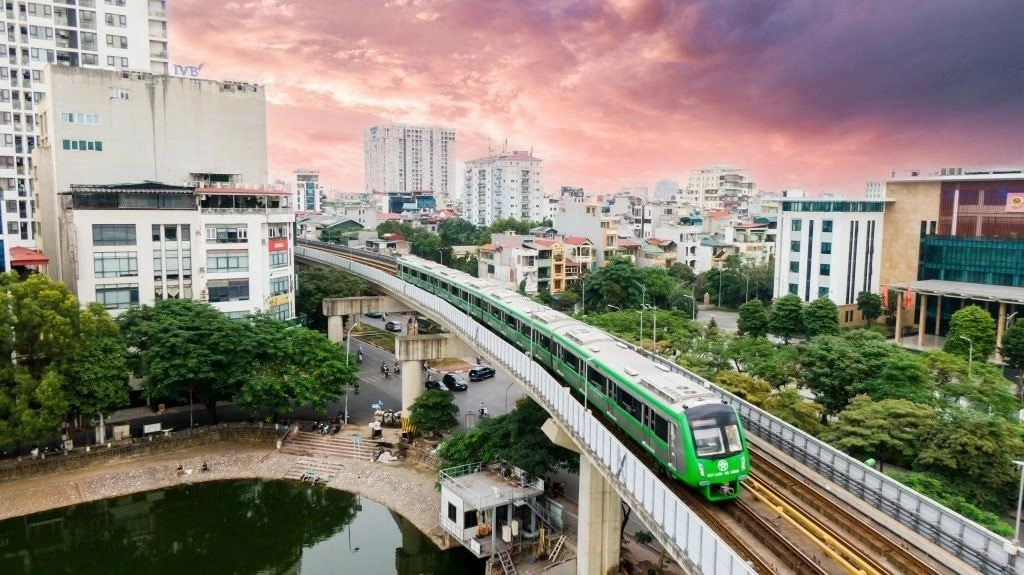 |
| The capital city will urgently need comprehensive strategies and solutions to accelerate progress and ensure sustainability. (Source: Financial and Monetary Market Magazine) |
Transforming to a new model, towards sustainable growth.
With a determination to promote rapid and sustainable growth, improve the efficiency of resources, and align with the wave of innovation and the Fourth Industrial Revolution (Industry 4.0), Hanoi is committed to focusing on developing the digital economy and green production to increase the added value of products while protecting the environment; and setting targets for various sectors and fields.
According to Hanoi's Digital Transformation Program until 2025, with a vision to 2030, Hanoi strives to become the national center for innovative startups by 2030 and to be among the top 3 localities nationwide in terms of digital transformation, information technology, competitiveness index, innovation, and cybersecurity.
The value achieved by the digital economy accounts for over 40% of GRDP, and labor productivity has increased by an average of over 7.5% per year…
| "The challenge for Hanoi is to transform into a new growth model, supported by skills, technology, and breakthroughs in productivity and sustainability," said Mr. Nguyen Ngoc Son, Vice Rector of the School of Economics and Public Management (National Economics University). |
Resolution No. 15/NQ-TW of the Politburo has set development goals for the capital's economy, and the Law on the Capital City, passed by the National Assembly, is a very favorable condition for Hanoi's development.
During this process, experts realized that the capital city urgently needs comprehensive strategies and solutions to accelerate progress and ensure sustainability.
Discussing the new economic model that Hanoi is aiming for, Mr. Nguyen Ngoc Son, Vice Rector of the School of Economics and Public Management (National Economics University), stated that the challenge for Hanoi is to transform into a new growth model, supported by skills and technology, with breakthroughs in productivity and sustainability.
"Hanoi needs to transform its growth model towards increasing resource efficiency, green development, environmental friendliness, and moving to phase 3 of the development process, which is an innovation-based economy and a digital economy; high growth but with improved growth quality and economic competitiveness."
"Next, the capital city needs to shift to an industrialization model that leverages dynamic comparative advantages and high-level competitive advantages," Mr. Son suggested.
Associate Professor Bui Thi An observed that the capital city has made significant and steady progress. However, it cannot be complacent with what it has achieved; the capital must continue to strive for improvement. Hanoi will need comprehensive strategies and solutions to accelerate progress and ensure sustainability.
According to Ms. An, Hanoi needs to first develop very specific policies and mechanisms. Following that, it needs to organize, direct, and supervise each stage of the circular economy implementation by businesses, organizations, and individuals.
At each stage, or at any point, an assessment is needed to adjust policy mechanisms for the circular economy, enabling Hanoi to achieve breakthrough and sustainable development with a green economy and all green sectors. To achieve this, the capital city needs to effectively implement the circular economy; it needs to create a more favorable environment in terms of taxes, land, and especially a very important credit mechanism to make it easier for businesses to implement the circular economy.
To develop Hanoi's economy in a circular and sustainable manner, Chairman of N&G Holding Group Nguyen Hoang affirmed that Hanoi needs to carefully study the 17 Sustainable Development Goals of the United Nations and the models of some capitals in Asia, Northern Europe, etc., in order to develop a suitable program and model.
The capital city should allocate research and implementation funds for all sectors; provide a roadmap for each industry, and clearly communicate the message to every citizen to encourage participation. At the same time, a Council for Sustainable Socio-Economic Development should be established, inviting experts in various fields, businesses, etc., to participate in the implementation, Mr. Hoang proposed.
Source: https://baoquocte.vn/kinh-te-ha-noi-vuon-minh-tiep-tiep-hanh-trinh-phat-trien-tuan-hoan-ben-vung-287844.html







































































Comment (0)