

The State Bank of Vietnam announced that the average lending interest rate is currently at 8.3% per year, a decrease of 0.96% compared to the end of 2023.
Reporting to the Prime Minister at the meeting on the afternoon of August 5th, the State Bank of Vietnam stated that since the beginning of the year, the agency has implemented measures to facilitate businesses and individuals' access to bank credit, restore production and business, control inflation, and ensure the safety of the credit system.
According to the report, interest rates on loans and savings continued to fall. By the end of June, the average lending rate was 8.3% per year, down 0.96% from the end of 2023. The average deposit rate was 3.59% per year, down 1.08%.
System-wide credit growth recovered from the end of March, gradually increasing over the months, exceeding the growth rate of the same period last year, reaching 6% by the end of the second quarter. At the end of July, outstanding credit was nearly VND 14.33 trillion, an increase of 14.99% compared to the same period in 2023 and an increase of 5.66% compared to the end of last year.
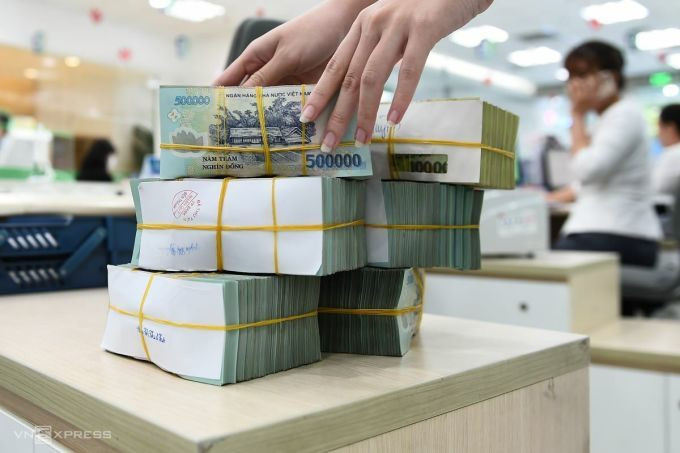
In fact, since the beginning of the year, the Government has repeatedly requested the State Bank of Vietnam to find solutions to reduce lending interest rates in the context of the manufacturing and business sectors still facing difficulties due to reduced orders, weak demand, and high lending interest rates.
At today's meeting, Prime Minister Pham Minh Chinh stated that monetary policy has contributed to socio-economic development goals in the first months of the year. However, he noted that interest rates are still trending upwards, credit growth has not met expectations, and the demand for loans is expected to increase towards the end of the year.
The Prime Minister instructed the banking sector to achieve credit growth of approximately 15% this year, focusing on lending to sectors that are drivers of economic growth. For credit institutions that have not fully utilized their allocated quotas, the Prime Minister requested that the funds be transferred to other banks with the potential for growth.
The agency must also continue to direct and encourage banks to reduce costs, apply information technology, and undergo digital transformation to lower lending interest rates. The Prime Minister noted that state-owned commercial banks must take the lead in implementing this.
According to him, the amount of money deposited by the public in banks is currently over 15 million billion VND. The State Bank of Vietnam must find solutions to ensure this capital effectively serves production and business. The agency must also manage exchange rates flexibly, control the gold and foreign exchange markets, and handle bad debts.
With a preferential credit package of 120 trillion VND for social housing development, the State Bank of Vietnam proposed increasing it to 140 trillion VND with longer loan terms and reduced interest rates. The Prime Minister requested that the banking sector's regulatory body study appropriate access conditions and find ways to implement this credit package, as it is a humane policy aimed at helping disadvantaged people have housing.
Besides credit, as of July 31st, the central exchange rate was 24,255 VND per USD, an increase of 1.63% compared to the end of 2023. This is a low, stable average compared to other currencies in the region and around the world, according to the State Bank of Vietnam.
Source













![[Photo] Prime Minister Pham Minh Chinh holds a phone call with the CEO of Russia's Rosatom Corporation.](/_next/image?url=https%3A%2F%2Fvphoto.vietnam.vn%2Fthumb%2F1200x675%2Fvietnam%2Fresource%2FIMAGE%2F2025%2F12%2F11%2F1765464552365_dsc-5295-jpg.webp&w=3840&q=75)













































Comment (0)