

Specifically, according to Decision No. 389/QD-BVHTTDL dated February 21, 2024, signed by Minister of Culture, Sports and Tourism Nguyen Van Hung, the traditional festival, social customs and beliefs of the Fishing Festival of Cam Lam Village, Xuan Lien Commune, Nghi Xuan District, Ha Tinh Province, have been included in the list of National Intangible Cultural Heritage.
Previously, the People's Committee of Ha Tinh province prepared a scientific dossier to submit to the Ministry of Culture, Sports and Tourism for consideration and recognition of the Cam Lam Village Fishing Festival as a national intangible cultural heritage.
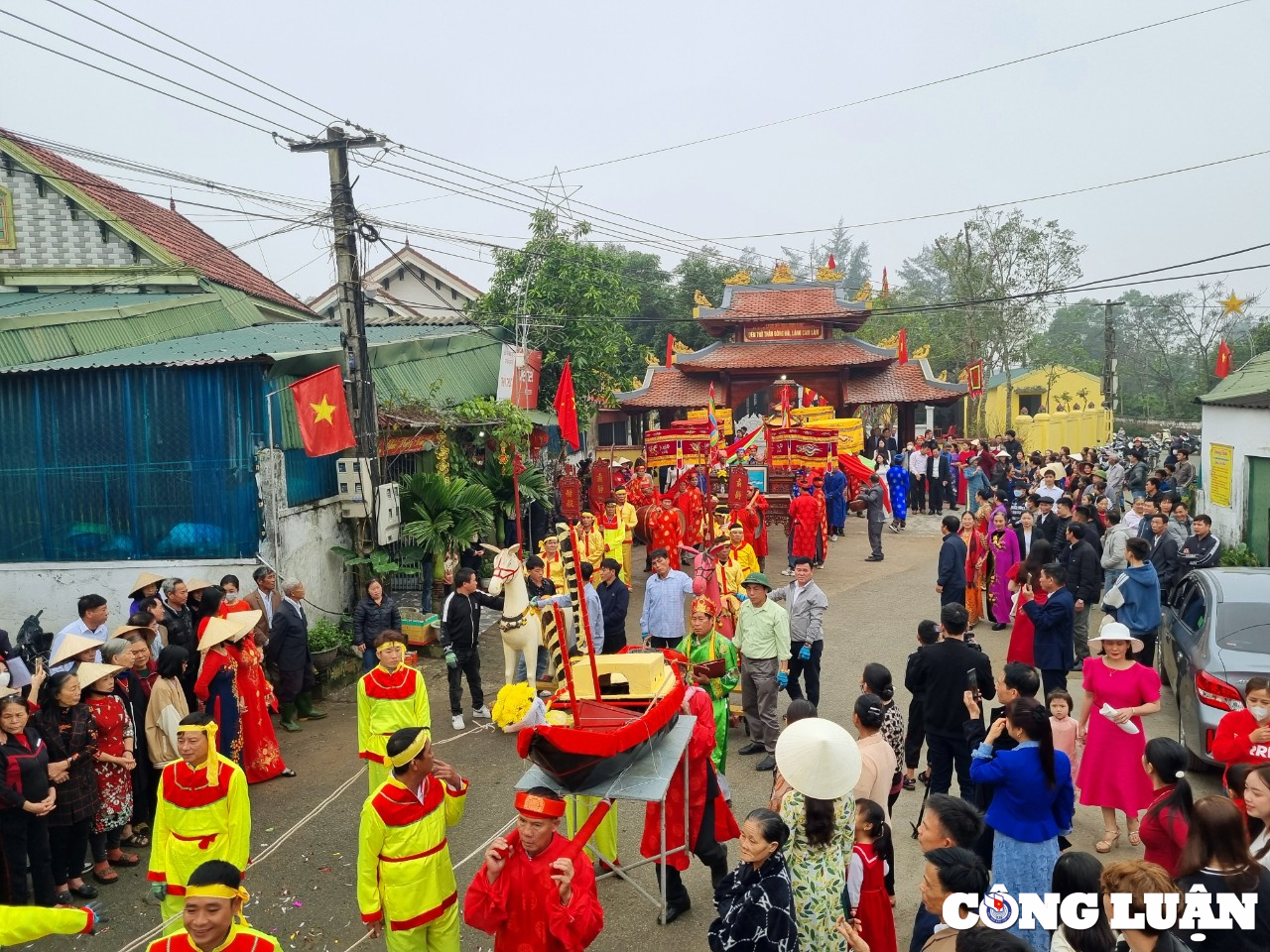
After the ceremony, the people proceed to carry the sacred fish to the sea to pray for favorable weather and a bountiful harvest in the new year.
The custom of worshipping the Whale God in Cam Lam village, Xuan Lien commune, holds a particularly important place in the spiritual life of the local people. This deeply ingrained custom expresses the fishermen's gratitude to the Whale God and serves as an opportunity for them to pray for a smooth, successful, and safe year at sea, with their boats overflowing with blessings.
According to historical records, in 1953, Cam Lam village organized a procession of the sacred deities (the village's tutelary god and the fisherman). Although time has passed and the Fishing Festival has gradually faded, on the 15th and 1st of each lunar month, the fishermen of Cam Lam village still place their absolute spiritual faith and belief in the Fisherman. To this day, Cam Lam village continues to maintain the Fishing Festival, but with different rituals each year.
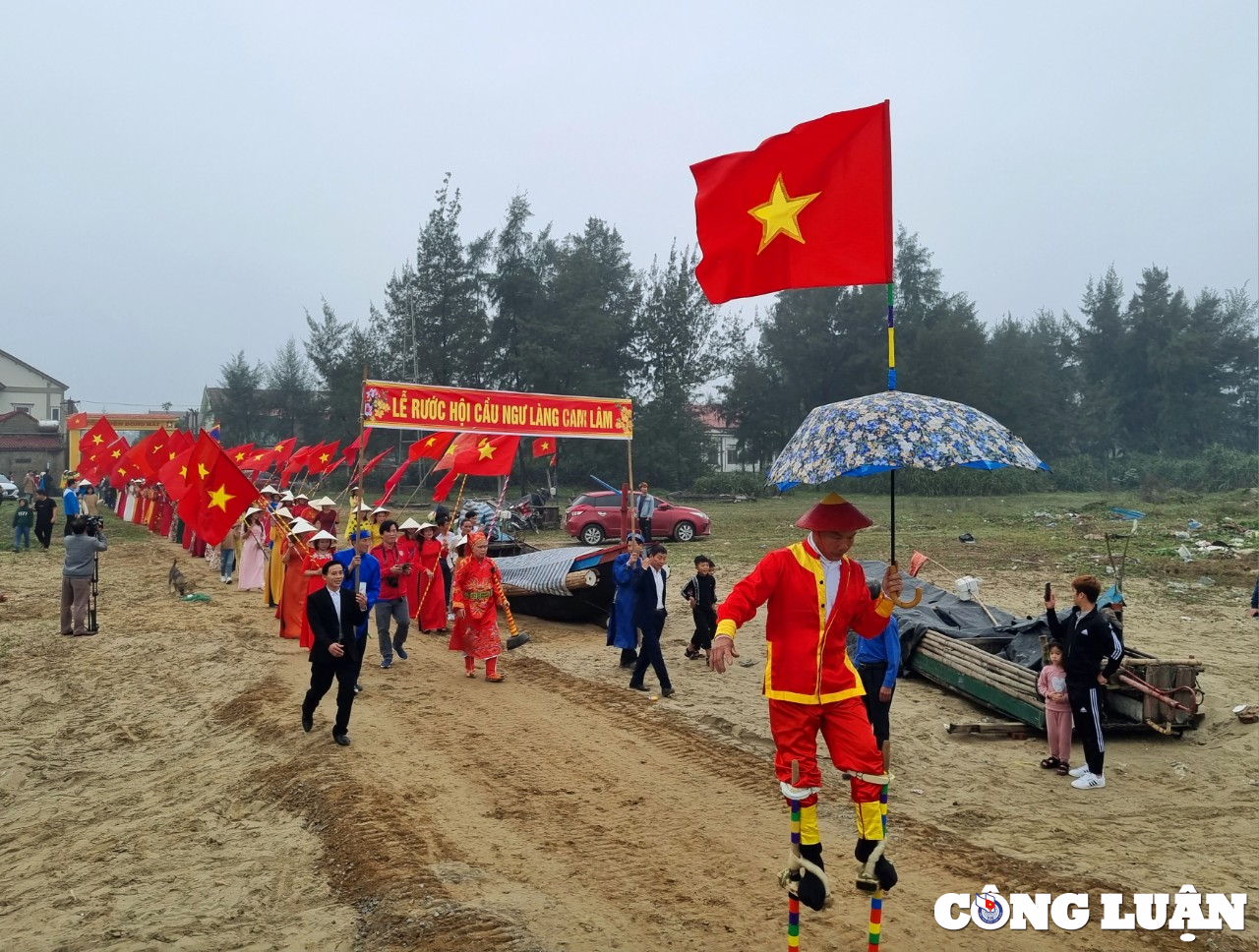
The Cam Lam Village Fishing Festival is organized in a well-organized and attractive manner, becoming a festival rich in traditional religious and spiritual culture in this rural area.
Dong Hai Temple is located in Lam Hai Hoa village, Xuan Lien commune (formerly Cam Lam village). Cam Lam village was founded by three men, Tran Canh, Le Cong Toan and Nguyen Nhu Tien (some books record him as Mr. Nguyen Nhat Tan), who asked for a deserted sandy beach and then gathered people to establish a hamlet. From a barren land, it has now become a bustling fishing area.
Fishing is a long-standing tradition in the coastal villages of Cam Lam. One morning, the villagers found a whale skeleton washed ashore on the village's sandy beach. Whales are considered sacred fish (fish gods), often helping fishermen in distress. Many fascinating stories have been told about them. For example, whales helped lift boats and push them closer to shore to rescue people in distress; whales lifted people adrift at sea and carried them closer to shore, then used the waves to release the boats and people onto the sand... These acts of kindness led people to liken the whale to a deity, and the locals call it the God of the East Sea.
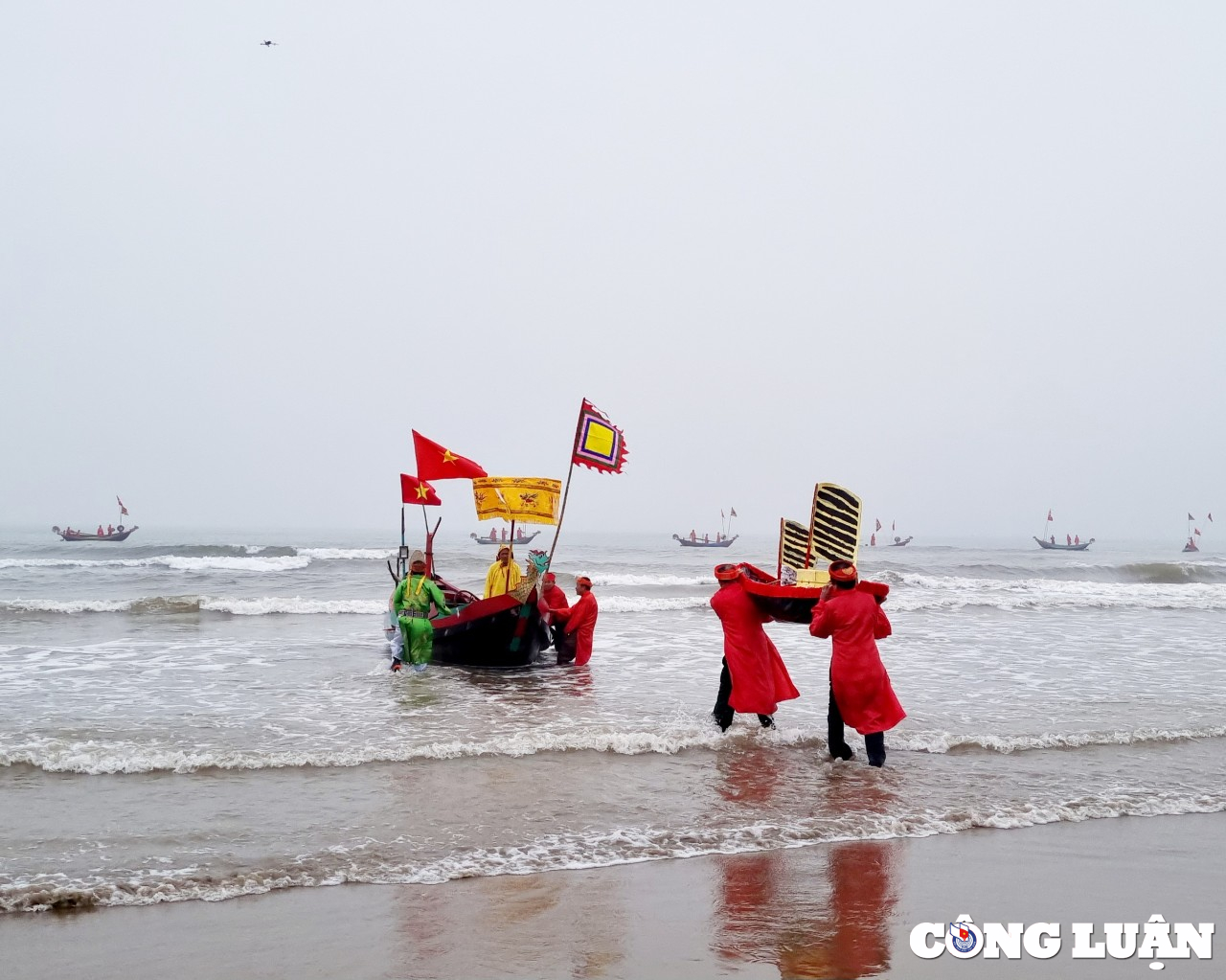
The boat-running ritual in the fishing festival.
When whale bones wash ashore, the locals organize a proper funeral and burial ceremony, treating them like human remains. Fishermen even set up altars; initially, it was a simple shrine, but as the lives of the coastal people improved, they built a very solemn temple. This temple was later bestowed the title of "Eastern Sea God" by a royal dynasty: "The guardian of the sea and fishing grounds, the miraculous and responsive fisherman, bestowed with the title of 'Great Supreme and Most Sacred God' by successive dynasties ." The temple faces northeast, covering an area of nearly 2000 square meters, and its T-shaped structure looks very majestic and solemn.
In the center of the temple is a whale tomb covered with black granite (there are 17 whale tombs buried on either side of the main hall). Inside is a built-in altar, on which rests a set of three gilded wooden dragon thrones and ancestral tablets, along with incense burners and other common religious artifacts. Dong Hai Temple in Xuan Lien commune has four royal decrees and was classified as a Provincial-level Historical and Cultural Relic in 2017.
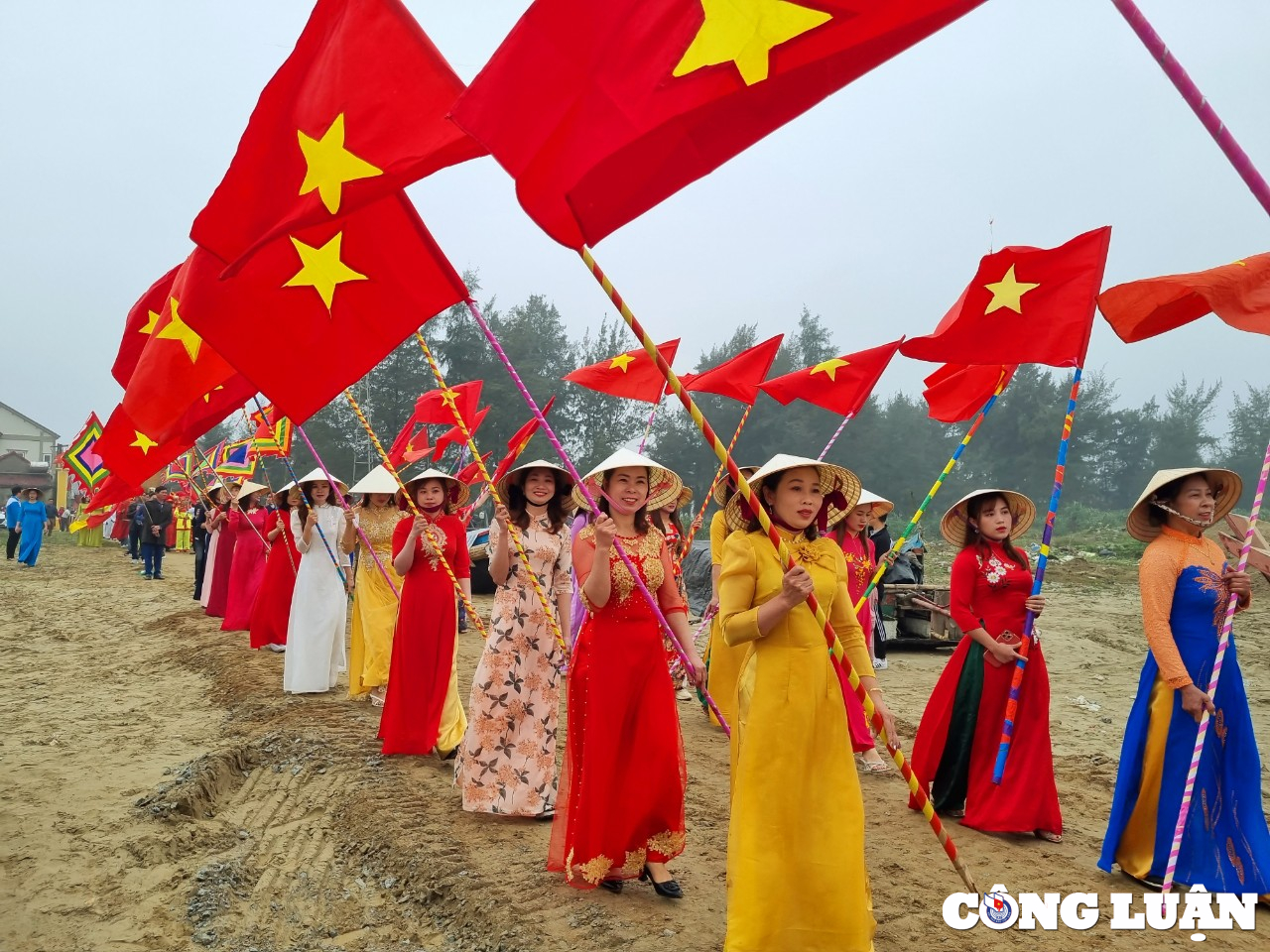
A large number of people enthusiastically participated in the festival.
According to Mr. Dinh Trong Lien, Head of Cam Lam Village, the Cam Lam Fishing Festival has existed for hundreds of years. The custom of worshipping the Whale God among the local fishermen is closely linked to the worship of the village's tutelary deity. During the day, the rituals are performed, followed by traditional folk games and sports; at night, lively singing and dancing continue throughout the night. Cam Lam has a long-standing traditional folk art club, and in recent years, other forms of folk art such as Nghe Tinh folk songs and chants have also been developed. The Fishing Festival is held at Dong Hai Temple (a temple containing the mausoleum of the fishing gods).
On the day of the ceremonial part of the Fishing Festival, fishermen will organize a solemn and respectful ceremony with all the traditional rituals, including welcoming the deity, carrying the sacred decree, and reciting prayers. The procession of the sacred decree is the opening part of the Fishing Festival (starting from the Ông's shrine, which is the Đông Hải temple).
Following this, the fishermen will continue with the rituals of welcoming the sea and carrying the spirit of the God of the East Sea. During the ceremony, members of the Ritual Committee are assigned by the Organizing Committee to perform the traditional rituals at the Upper, Middle, and Lower Halls. The offerings include local specialties, incense, and flowers. After offering the gifts, the chief officiant will read the congratulatory address and the ceremonial text.
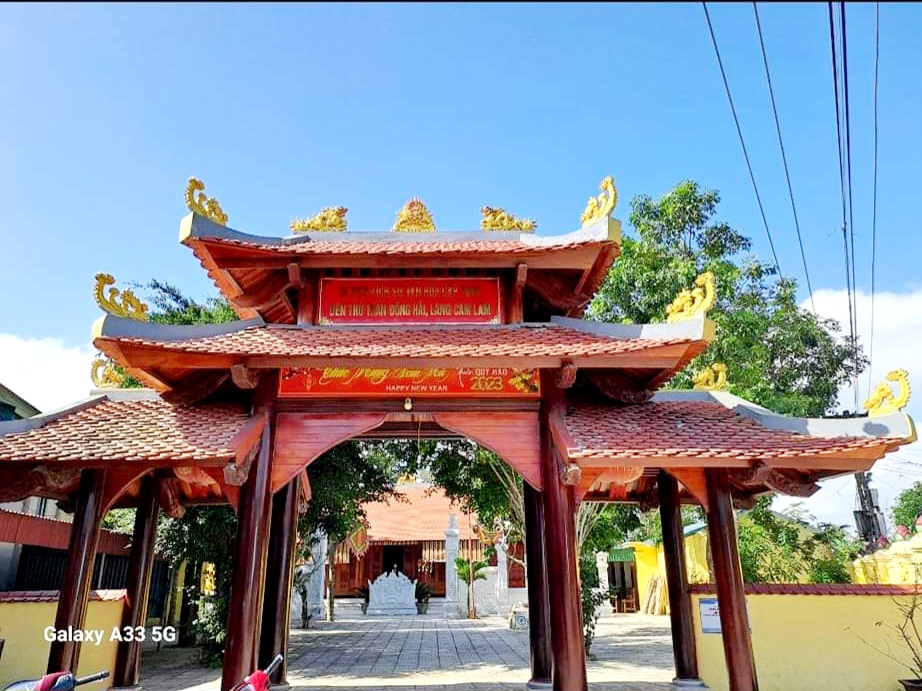
Dong Hai Temple (also known as Whale Temple) is located in Lam Hai Hoa village and is a place of worship for Dong Hai Dai Vuong, also known as the fish god.
Before and after the prayer ceremony concludes, the festive part of the Fishing Festival will begin with a series of folk games and performances such as the Kieu play and the Nghe Tinh folk songs and chants.
In addition, people also organize lively sporting activities such as boat racing, stilt walking, tug-of-war, traditional martial arts competitions, etc. All these activities create a festive atmosphere that is both solemn and vibrant and exciting.
Source






















![[Video] The craft of making Dong Ho folk paintings has been inscribed by UNESCO on the List of Crafts in Need of Urgent Safeguarding.](https://vphoto.vietnam.vn/thumb/402x226/vietnam/resource/IMAGE/2025/12/10/1765350246533_tranh-dong-ho-734-jpg.webp)











































Comment (0)