

However, in the new context, this level of education still faces many challenges in order to develop in a substantive and comprehensive way, especially the requirement for autonomy and proactiveness in building plans and programs for childcare and education that are appropriate to local realities.
Boldly embrace innovation.
Nghia Long Kindergarten (Nghia Long, Nghe An ) is located in a mountainous area facing many difficulties, with 66% of its children being from ethnic minority communities. Recognizing that applying information technology to teaching is an inevitable trend to improve the quality of education, the school decided to build and implement a smart school model in the 2024-2025 school year.
Ms. Ho Thi Thuy Lien, the school principal, said that the school has developed a set of criteria for smart schools that are suitable to the local reality, and has actively advised the local government on matching funds and mobilized social resources to supplement and upgrade facilities.
Specifically, the school renovated 3 classrooms, 5 functional rooms, and restrooms, and also built a smart classroom worth 2.6 billion VND; and purchased equipment, whiteboards, and smart teaching software from the budget and social contributions worth 160 million VND.
The school also organizes training to enhance the digital skills of its teaching staff, including skills in creating QR codes, using teaching support software, virtual assistant tools, and new applications that teachers have found effective. As a result, teachers can design smart lessons, engaging lectures, and lively learning activities suitable for young children.
Ms. Pham Ngoc Dinh from Huong Tram Kindergarten (Tan Thanh, Ca Mau ) shared that kindergarten teachers need attention and investment in developing their professional skills, especially in STEM and digital transformation.
"Early childhood education programs and methods need to be reformed towards an integrated and advanced approach, strongly applying digital technology and artificial intelligence in classroom management and educational activities. This helps children access diverse experiences, stimulates scientific thinking, and develops life skills from an early age," Ms. Dinh emphasized.
Ms. Ha Thi Xo, from Yen Tan Kindergarten (Tan Minh, Ninh Binh), said that early childhood education is entering a period of profound transformation as children grow up in a digitized environment, access information early, and develop independent cognitive abilities. This requires teachers to constantly innovate methods, create a learning environment rich in experiences, and promote children's natural creativity.
According to Ms. Xô, the education sector needs to give teachers more autonomy, from designing activities and developing teaching materials to innovating classroom methods, while also increasing opportunities for international learning and access to standardized and practical training courses.
From a management perspective, Ms. Vu Thi Quang, Principal of Yen Chinh Kindergarten (Phong Doanh, Ninh Binh), believes that the current requirements for early childhood education development go beyond simply caring for and nurturing children. It must also focus on building an open, experiential learning environment that provides a foundation for long-term development. Schools need to connect closely with parents, the local community, and social organizations to create an ecosystem that supports children's holistic development.
Regarding digital transformation, the Principal of Yen Chinh Kindergarten emphasized: “What we need is a synchronized management system, convenient tools for assessing children's development, and an effective communication platform with parents. Innovation must begin with governance, not with exposing children to too many devices.”
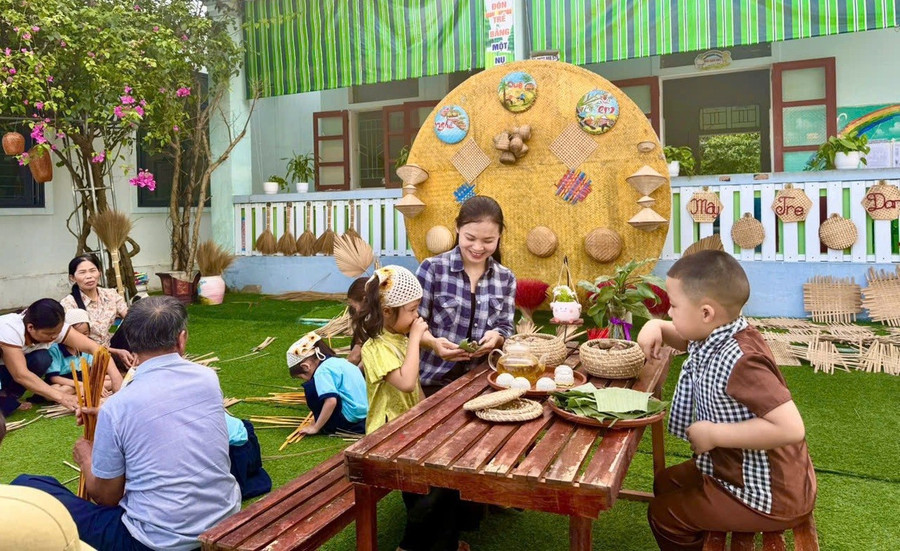
Enhance coordination
Khanh Binh Tay Kindergarten (Da Bac, Ca Mau) is one of the schools located in a remote area of the province. Ms. Tran Kieu Khen, the school principal, stated that the facilities, although invested in a long time ago, are now deteriorating. The schoolyard and many classrooms are often flooded during heavy rains or high tides, failing to adequately meet the children's learning needs. Furthermore, there is still a shortage of personnel according to Circular 19 of the Ministry of Education and Training.
Ms. Khen stated: "For early childhood education to develop, there needs to be mechanisms and policies that prioritize and reward staff and teachers, especially in remote, disadvantaged, and difficult areas, in order to attract and retain high-quality human resources."
At the same time, policies are needed to support disadvantaged students, creating conditions to maximize school enrollment for children of school age, ensuring that no one is left behind. In addition, the synchronized investment in infrastructure and equipment, especially modern technological equipment, needs to be ensured evenly across regions to meet educational requirements in the new context.”
Ms. Vu Thi Quang believes that one of the biggest obstacles for preschools today is the lack of uniformity in facilities and equipment. To create a foundation for sustainable development, long-term investments are needed, from sturdy classrooms, experiential learning areas, and natural playgrounds to standard functional rooms.
Furthermore, proactively developing the curriculum is crucial. Principals and teachers also need to be more deeply involved in selecting learning materials, structuring the curriculum, and applying new educational methods suitable for each group of children.
The principal of Yen Chinh Kindergarten emphasized: "A true breakthrough in early childhood education must come from a synchronized approach: investment - staff - mechanisms. When barriers are removed, the educational environment is improved, and the staff is empowered, early childhood education will fulfill its role as the foundation of the entire education system."
In Nghe An province, over the past five years, all preschools and educational institutions have implemented the model of "Coordination between family, school, and community in childcare and education." Schools closely cooperate with the Parent-Teacher Association to develop plans for the socialization of education with various flexible forms. At the same time, the Education sector mobilizes the participation of the community, units, and organizations to strengthen facilities and conditions for comprehensive childcare and education.
Over the five years of implementing the model, Nghe An province has mobilized more than 800,000 man-days and raised over 900 billion VND to support schools in purchasing equipment, supplies, and toys for preschool children. Along with upgrading facilities, schools have proactively collaborated with parents to develop educational programs and organize activities for the care and education of children. Many themed experiential learning plans have also been implemented, contributing to the development of skills and sparking children's interest in exploring the world around them.
Specifically, in the 2025-2026 school year, Phuc Son Kindergarten (Nghe An) will officially receive new, spacious, and modern facilities. The project was invested in by the local government, integrating various resources from the new rural development program and school building reinforcement. After being put into use, the school will continue to mobilize resources to gradually supplement teaching equipment and improve the quality of education for children.
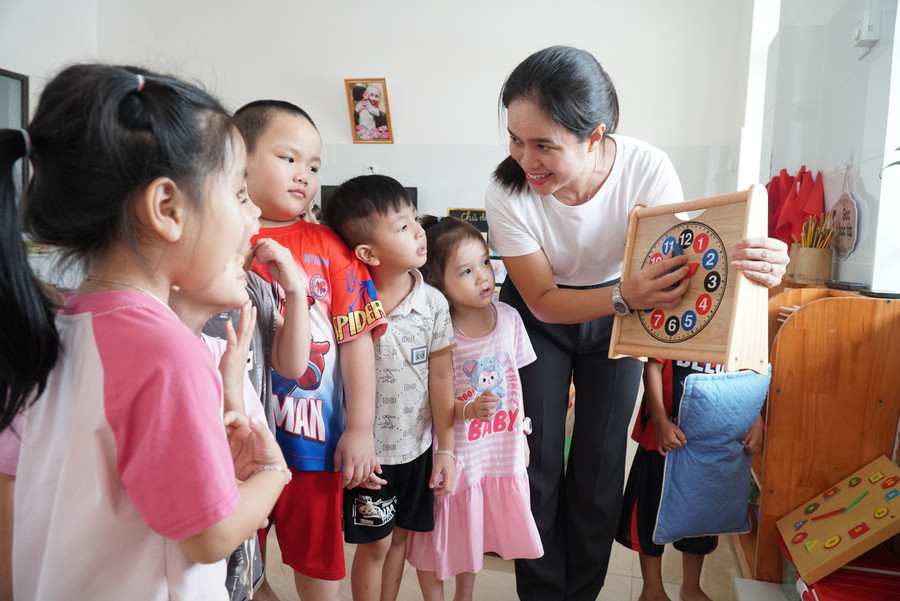
Proactive breakthrough solutions
Currently, Ca Mau province has 218 preschools with over 2,100 groups/classes, including 22 private schools. The number of preschool teachers and staff in the province is over 4,200. The schools' facilities have received significant investment, with nearly 85% meeting national standards, including 63 schools achieving level 2 standards, accounting for over 34%.
In recent times, the Ca Mau Education Department has implemented many effective teaching models and methods such as STEAM, happy preschools, and child-centered approaches; maintaining specialized programs for motor skills, language development, and life skills. Programs like "I Love Vietnam," English language introduction, and inclusive education have been expanded, creating a diverse learning environment and contributing to the holistic development of children.
Mr. Ho Thanh Nhut, Deputy Head of the Preschool and Primary Education Department (Ca Mau Department of Education and Training), said that in addition to the achievements, preschool education in the area still faces many challenges, especially in the context of digital transformation.
The quality of education varies unevenly across localities; some schools in remote and disadvantaged areas lack adequate facilities, have insufficient and inadequately trained teachers. Many administrators have limited skills, and teachers are not yet bold enough to innovate teaching methods, exhibiting passive teaching approaches and failing to fully promote children's active participation.
In the spirit of Resolution 71-NQ/TW, the provincial Department of Education and Training has proposed comprehensive solutions for reforming preschool education, tailored to local conditions. These solutions focus on improving the professional capacity and training level of administrators and teachers; developing the preschool education curriculum; and piloting the new preschool education curriculum.
At the same time, attention should be paid to investing in synchronized infrastructure to meet the needs of two-session-per-day teaching and boarding; and promoting digital transformation throughout all levels of education. The solutions also ensure equitable access to education for all, especially children with disabilities, ethnic minorities, and children living in particularly disadvantaged socio-economic areas.
Mr. Nguyen Van Khoa, Deputy Director of the Nghe An Department of Education and Training, said that in the context of the two-level government, preschool education in the province has seen many positive developments to meet new requirements. The Department of Education and Training proactively requested schools to effectively carry out advisory work and plan the school network in accordance with the current development stage, while ensuring the goal of universal preschool education for kindergarten children and implementing reforms in the childcare and education program.
In addition, effective coordination with local authorities, organizations, and parents is emphasized to mobilize all resources and support schools in improving their facilities, especially in mountainous and disadvantaged areas.
The education sector continues to invest in building a modern and friendly learning environment, while proactively implementing digital transformation and applying artificial intelligence in the development of educational plans and programs. Advanced educational methods are selectively replicated, ensuring their suitability to the practical realities of each school and locality.
Early childhood education is the foundation for the sustainable development of the entire education system. To realize the goal of "Children today - the world tomorrow," educational institutions need to continue innovating methods, focusing on health care, ensuring safety and nutrition, while building a friendly, positive learning environment that suits the local conditions and the characteristics of each group of children.
Furthermore, close collaboration with local authorities and parents will contribute to improving the overall quality of childcare and education. - Mr. Nguyen Van Nguyen - Director of the Department of Education and Training of Ca Mau Province
Source: https://giaoducthoidai.vn/mam-non-trong-tam-doi-moi-giao-duc-dot-pha-de-phat-trien-ben-vung-post760221.html

![[Photo] Prime Minister Pham Minh Chinh attends the Conference summarizing and implementing tasks of the judicial sector.](/_next/image?url=https%3A%2F%2Fvphoto.vietnam.vn%2Fthumb%2F1200x675%2Fvietnam%2Fresource%2FIMAGE%2F2025%2F12%2F13%2F1765616082148_dsc-5565-jpg.webp&w=3840&q=75)














































































Comment (0)