

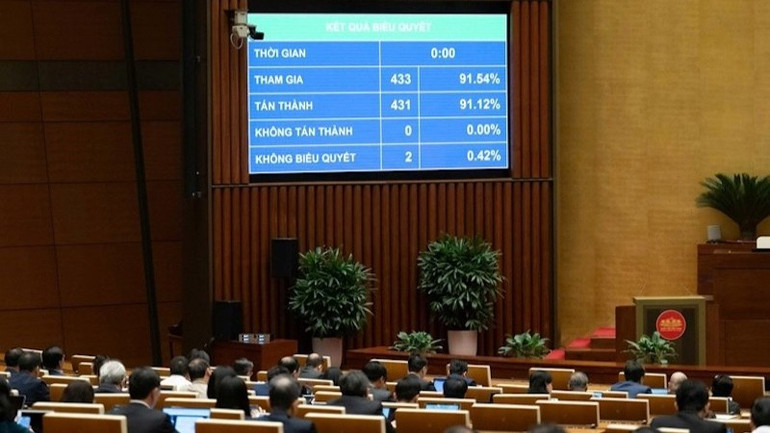
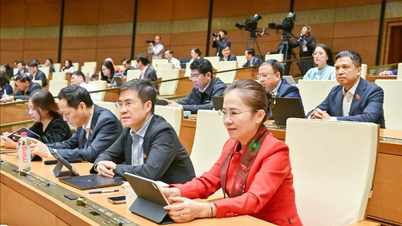
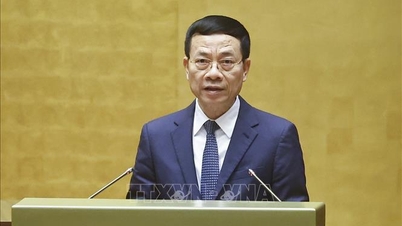
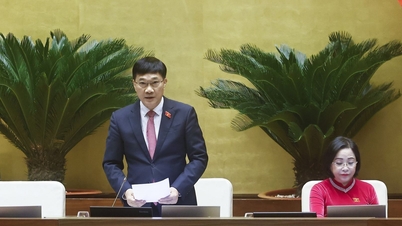
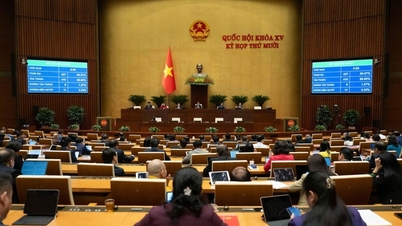
Continuing the agenda of the 10th Session, on the morning of December 11th, the National Assembly passed a Resolution on some special mechanisms and policies to create breakthroughs in the work of protecting, caring for, and improving the health of the people with a majority of votes in favor.
The resolution, comprising nine articles, stipulates a number of special mechanisms and policies to create breakthroughs in the work of protecting, caring for, and improving the health of the people.
Increase the percentage and level of reimbursement for medical examination and treatment costs under health insurance.
The resolution stipulates the expansion of healthcare benefits and the reduction of medical costs for citizens.
Accordingly, the rate and level of reimbursement for medical examination and treatment costs under health insurance will be increased; funding for screening, diagnosis, and early treatment of certain diseases and priority groups from the Health Insurance Fund will be implemented according to a roadmap consistent with the socio -economic development conditions of the country, the balancing capacity of the State budget, the health insurance fund, and the increase in health insurance contributions as follows:
Individuals participating in health insurance who are members of near-poor households; and elderly people aged 75 and above receiving social retirement benefits are entitled to 100% coverage of medical examination and treatment costs within the scope of their health insurance coverage.
Increase the benefit rate within the scope of health insurance coverage for those covered under social policies, vulnerable groups, low-income individuals, and other priority groups; the health insurance fund will cover the costs of screening, diagnosis, and early treatment of certain diseases.
Implement free hospital services according to a suitable schedule.
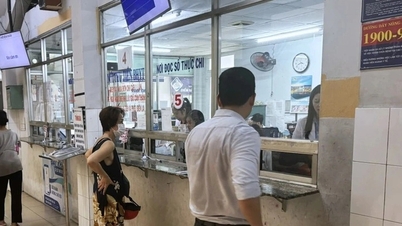
According to the Resolution, the policy of waiving basic hospital fees within the scope of benefits for health insurance participants will be implemented according to a roadmap consistent with the socio-economic development conditions of the country, the balancing capacity of the Health Insurance Fund, and the increase in health insurance contributions.
The pilot program aims to diversify health insurance packages, offer a variety of health insurance service types, and provide supplementary health insurance based on the needs of eligible individuals.
Regarding the salary and allowance policies for medical staff, the Resolution clearly states: Medical doctors, traditional medicine doctors, dentists, preventive medicine doctors, and pharmacists will be classified at salary level 2 upon recruitment into their respective professional positions until new salary regulations are issued. Those regularly and directly engaged in medical professional work in the fields of psychiatry, forensic medicine, forensic psychiatry, emergency resuscitation, and pathology will receive a professional incentive allowance at 100%.
Individuals who regularly and directly perform medical professional duties at commune-level health stations and preventive health facilities are entitled to the following professional incentive allowances: 100% for ethnic minority and mountainous areas, areas with difficult socio-economic conditions, areas with particularly difficult socio-economic conditions, border areas, and islands; and a minimum of 70% for cases not falling under point a, Clause 3, Article 3.
The government will regulate the details of this matter in accordance with the socio-economic development conditions of the country.
Violating the health, life, or honor of healthcare workers may result in criminal prosecution.
To ensure the safety of healthcare workers, the Resolution clearly stipulates: Anyone who commits acts that violate the physical integrity, health, life, or insult the honor and dignity of healthcare workers shall, depending on the nature and severity of the violation, be subject to disciplinary action, administrative penalties, or criminal prosecution. If damage is caused, compensation must be paid in accordance with the law. Furthermore, they shall be required to publicly apologize through mass media, at their place of residence, at their workplace, or at the medical facility where the violation occurred.

The government prioritizes investment in building a national healthcare database, digital infrastructure, and a shared, interconnected platform. It encourages businesses to invest in and develop digital healthcare products and services through public-private partnerships.
In addition, the Resolution also stipulates special policies in recruitment in the healthcare sector; and forms of attracting social resources in the healthcare sector.
According to the Resolution, the Government shall guide the implementation of this Resolution; and periodically report to the National Assembly annually on the results of its implementation in the report on health activities. The Ministry of Health is the focal agency, responsible to the Government, and shall preside over and coordinate with ministries, ministerial-level agencies, government agencies, and People's Committees of provinces and centrally-administered cities to guide, monitor, supervise, inspect, summarize, and evaluate the implementation of the Resolution.
This Resolution shall take effect from January 1, 2026, except as stipulated in Clause 2, Article 2 of the Resolution: “Implementing a policy of basic fee exemption within the scope of benefits for health insurance participants according to a roadmap consistent with the socio-economic development conditions of the country, the balancing capacity of the Health Insurance Fund, and the increase in health insurance contributions.”
The provisions of Clause 2, Article 2 of this Resolution shall take effect from January 1, 2030.
Source: https://nhandan.vn/mo-rong-quyen-loi-cham-soc-suc-khoe-va-giam-chi-phi-y-te-cho-nguoi-dan-post929462.html


















































































Comment (0)