

 |
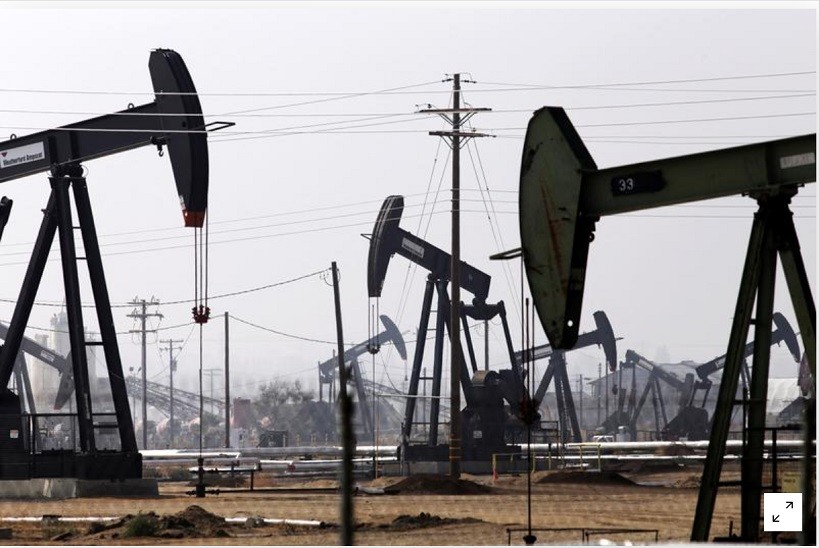
| Oil prices today, June 3: All eyes on OPEC+, experts say not to underestimate Saudi Arabia. (Source: Reuters) |
According to Reuters , at the close of the week's final trading session, oil prices rose more than 2% after the US Congress passed a debt ceiling agreement, preventing a government default in the world's largest oil consumer.
Brent crude futures for August delivery rose $1.85, or 2.5%, to $76.13 per barrel. US WTI crude rose $1.64, or 2.3%, to $71.74 per barrel. These were the highest closing prices for WTI since May 26th and Brent since May 29th.
However, for the week as a whole, both benchmark oil prices fell by about 1%. This was the first week of declines after two consecutive weeks of price increases.
The surge in oil prices was also influenced by US employment data, fueling hopes of a possible pause in interest rate hikes by the Federal Reserve (Fed).
The market's focus has also shifted to the June 4 meeting of the Organization of Petroleum Exporting Countries (OPEC) and its allies, including Russia, collectively known as OPEC+.
Reuters, citing sources from OPEC+, reported that the alliance is unlikely to implement deeper supply cuts at this meeting, but some analysts believe it remains possible given disappointing demand indicators from China and the US in recent weeks.
Edward Moya, senior market analyst at OANDA data and analytics firm, said: “Nobody wants to short crude oil going into the OPEC+ meeting this weekend. Traders should never underestimate what Saudi Arabia will do and take advantage of in OPEC+ meetings.”
Saudi Arabia is the largest producer in OPEC. Its energy minister has warned that those shorting on falling oil prices should "watch out" for losses.
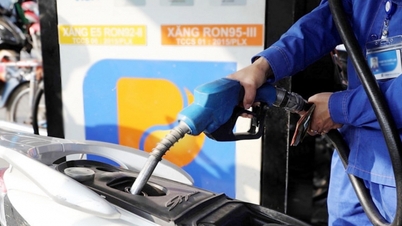
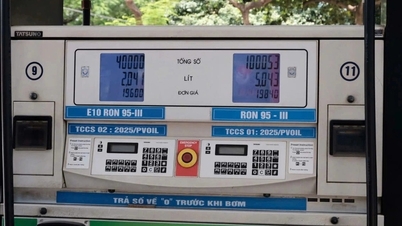
Domestic retail prices of gasoline on June 3 are as follows:
E5 RON 92 gasoline should not exceed 20,878 VND/liter.
RON 95 gasoline is not more than 22,015 VND/liter.
Diesel oil not more than 17,943 VND/liter.
Kerosene price should not exceed 17,771 VND/liter.
Fuel oil price should not exceed 14,883 VND/kg.
The aforementioned domestic fuel prices were adjusted by the Ministry of Finance and the Ministry of Industry and Trade at the price adjustment meeting on June 1st.
The global oil market during this price adjustment period (May 22 - June 1) was influenced by several factors, including: OPEC+'s production cuts; concerns about the US debt ceiling; stalled industrial activity; and higher interest rates increasing the risk of economic recession. These factors caused oil prices to fluctuate, with both increases and decreases occurring.
Also during this price adjustment period, the Ministry of Industry and Trade and the Ministry of Finance decided to maintain the same level of contributions to the Fuel Price Stabilization Fund for all petroleum products as in the previous period and to continue not disbursing funds from the fund for all petroleum products.
Source


![[Photo] Prime Minister Pham Minh Chinh holds a phone call with the CEO of Russia's Rosatom Corporation.](/_next/image?url=https%3A%2F%2Fvphoto.vietnam.vn%2Fthumb%2F1200x675%2Fvietnam%2Fresource%2FIMAGE%2F2025%2F12%2F11%2F1765464552365_dsc-5295-jpg.webp&w=3840&q=75)

![[Photo] Closing Ceremony of the 10th Session of the 15th National Assembly](/_next/image?url=https%3A%2F%2Fvphoto.vietnam.vn%2Fthumb%2F1200x675%2Fvietnam%2Fresource%2FIMAGE%2F2025%2F12%2F11%2F1765448959967_image-1437-jpg.webp&w=3840&q=75)















































![[OFFICIAL] MISA GROUP ANNOUNCES ITS PIONEERING BRAND POSITIONING IN BUILDING AGENTIC AI FOR BUSINESSES, HOUSEHOLDS, AND THE GOVERNMENT](https://vphoto.vietnam.vn/thumb/402x226/vietnam/resource/IMAGE/2025/12/11/1765444754256_agentic-ai_postfb-scaled.png)


















































Comment (0)