

Pork is one of the most popular and widely consumed foods, rivaling chicken in popularity worldwide .
However, pork is often overlooked compared to beef due to taste, personal preference or cost of raising. That leads to some misconceptions about pork.
Pork is fatter than beef
Sometimes it's just a matter of perspective, for example one person might wince at a piece of pork that is perceived as fatty, while at the same time enjoying a prime beef steak simply because it has beautiful marbling.
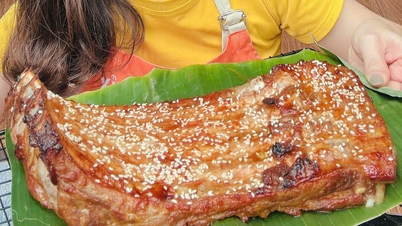
However, just like beef, different parts of the pig will have different fat and lean ratios. The ribs are quite fatty, followed by the shoulder and belly.
On the other hand, pork tenderloin is lean and tender, and the outer layer of fat can be easily removed, and a simple grilled pork tenderloin can be compared to a lean chicken breast.
In other words, choose a cut of pork that fits your meal and aim for recipes that favor lean cuts (if that's your preference).
Pork needs to be cooked thoroughly.
In the old days, pigs were often kept in small pens, and were therefore more susceptible to parasites. So in those days, pigs needed to be thoroughly cooked to kill any microorganisms.
Now, if the pork comes from farms that ensure safety regulations, you don’t need to worry too much about this. According to the recommendations of the US Department of Agriculture (USDA), whole pork is considered safe when cooked to 73 degrees Celsius, ground pork at 80 degrees Celsius.
However, to be safe, it is still advisable to cook meat thoroughly and avoid contact with other sources of infection.
This is not a healthy choice.
Pork is considered to be less healthy than beef or chicken because it is higher in calories, and lard contains more saturated fat. However, beef lard actually contains more saturated fat.
Also, if you compare pork loin chops to beef T-bone steaks - you'll find that pork offers a little more protein and a little less calories (and less fat).
While beef is richer in iron, pork is typically lower in sodium, but rich in potassium, vitamins A, E, and D (among other benefits), so nutrition isn't an issue.
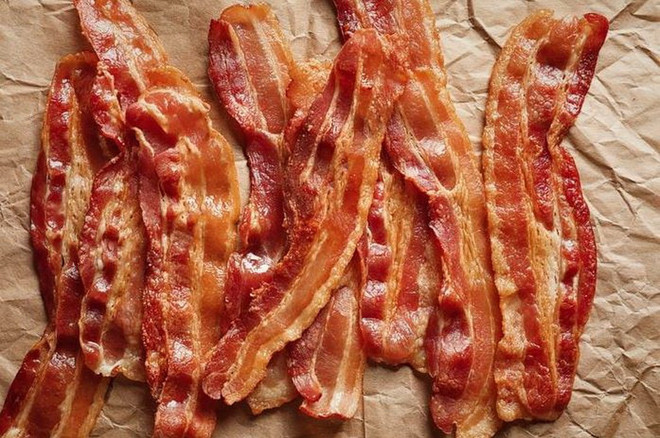
So, if your diet and lifestyle are healthy and you don't have any specific risk factors, there's no reason you can't enjoy pork in moderation — whether it's bacon or regular pork.
Pork is white meat
Is pork a white meat? Not necessarily. According to the USDA and other sources, pork is considered a red meat because it contains more myoglobin (the iron-carrying molecule that gives meat its red or pink color) than poultry or fish.
Since the meat of any large livestock animal is automatically considered red meat, pork qualifies under that standard as well.
However, depending on the animal the meat comes from, some cuts of pork are whiter while others are redder. As a general rule, you will find that leaner, more tender cuts of pork, like the loin and rump, are lighter in color than tougher, more commonly used cuts like the shoulder and leg. This is largely because they are made of different types of muscle fibers.
Lighter fibers make up fast-twitch muscles for quick bursts of activity, and darker fibers make up slow-twitch muscles needed for endurance. It's easy to remember which is which because lighter meat is best for quick cooking methods like grilling, while darker meat is best for slow cooking.
Pork is quite bland and quite similar.
Pork is far from bland. It's rich, flavorful, and versatile, and its flavor depends on how you prepare it.
First, many people only cook their pork well done. That’s fine for darker cuts of meat, like pork shoulder, but it makes lighter cuts dry and less appealing. So the USDA recommends cooking these lighter cuts to 165 degrees.
Pork is unsustainable and harmful to the environment.
If you do an internet search to quantify the environmental impact of food, you will find that beef is by far the food with the highest impact, while pork and poultry are 9th and 10th on the list.
So while pork itself is not as sustainable and environmentally friendly as plant-based protein sources, it is more sustainable than beef, and replacing a few beef meals a month with pork would have a significant impact./.
Source: https://www.vietnamplus.vn/mot-so-noi-oan-cua-thit-lon-ma-khong-phai-ai-cung-nhan-ra-post1080876.vnp










































































![[Podcast] National Assembly approves personal allowance deduction of VND 15.5 million/month](https://vphoto.vietnam.vn/thumb/402x226/vietnam/resource/IMAGE/2025/12/10/1765340032834_hnm-1cdn-vn-thumbs-540x360-2025-11-04-_hnm-1cdn-vn-thumbs-540x360-2025-06-27-a7b22b8722-_thu.jpeg)


















Comment (0)