

Nam Nha Pagoda is located in Binh Thuy Ward, Can Tho City (formerly Bui Huu Nghia Ward, Binh Thuy District, Can Tho City). The pagoda's facade faces the Binh Thuy River, receiving cool breezes that push back dust, smog, and the noise of traffic. From across the canal, the yellow color of the ancient pagoda is subtly visible behind rows of old, shady trees.
The road leading to Nam Nha Pagoda is Cach Mang Thang Tam Street – one of the main traffic arteries in the inner city of Can Tho. In contrast to the bustling streets and hectic pace of life, anyone who sets foot in Nam Nha Pagoda simply wants to take a deep breath amidst the surprisingly tranquil and peaceful atmosphere. Alongside the ancient beauty of the architecture are meticulously cared-for green plants, creating a refreshing and soothing sight.
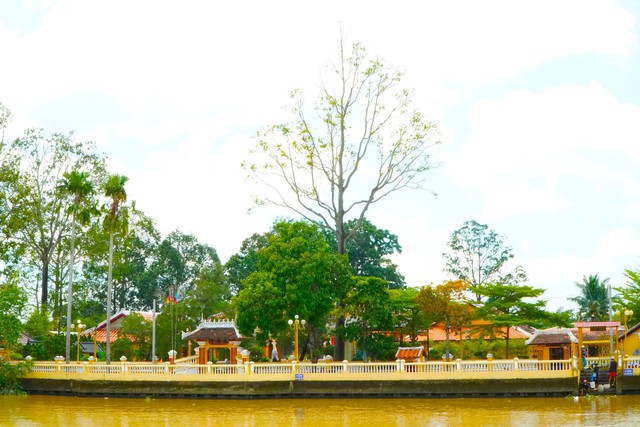
Nam Nha Pagoda as seen from across the Binh Thuy River, Can Tho City.
PHOTO: THANH DUY
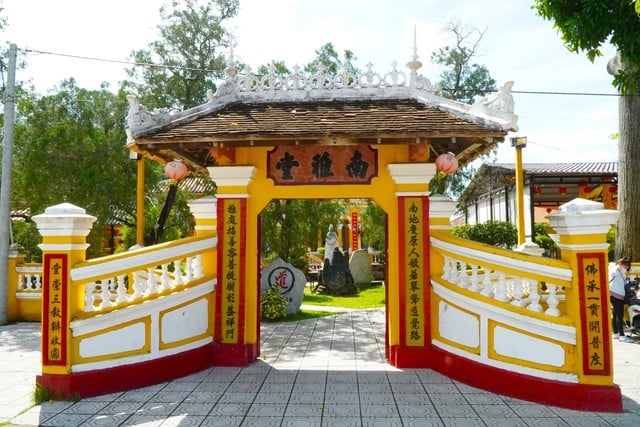
According to historical records, Nam Nha Pagoda was built in 1895 by Mr. Nguyen Giac Nguyen, one of the students of the top scholar Bui Huu Nghia. Its predecessor was a traditional Chinese medicine shop called Nam Nha Duong.
PHOTO: THANH DUY
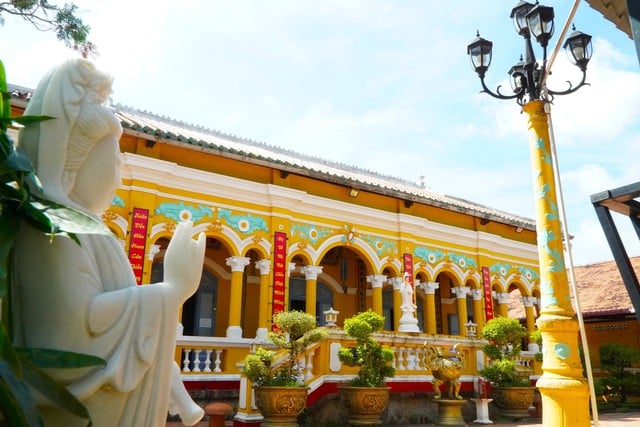
In 1917, after being damaged, Nam Nha Pagoda was renovated using bricks, tiles, and other materials purchased from France. Since then, the pagoda has undergone many more repairs and renovations, but it still retains its original architecture in a blend of Asian and European styles.
PHOTO: THANH DUY
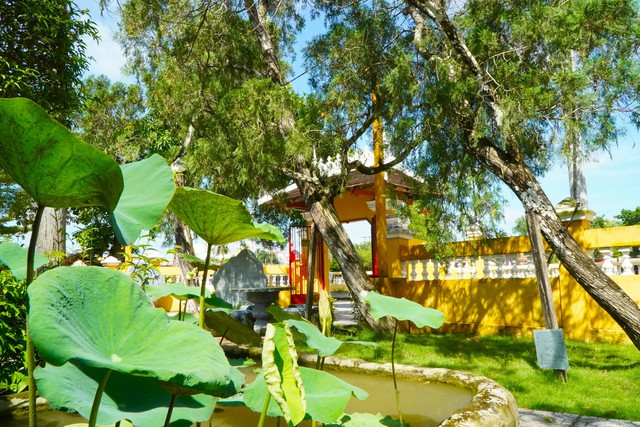
Nam Nha Pagoda may not have grandiose symbols, but it impresses with its harmonious blend of natural scenery and unique architecture. Upon entering the pagoda gate, visitors will immediately feel the refreshing green space of centuries-old trees.
PHOTO: THANH DUY
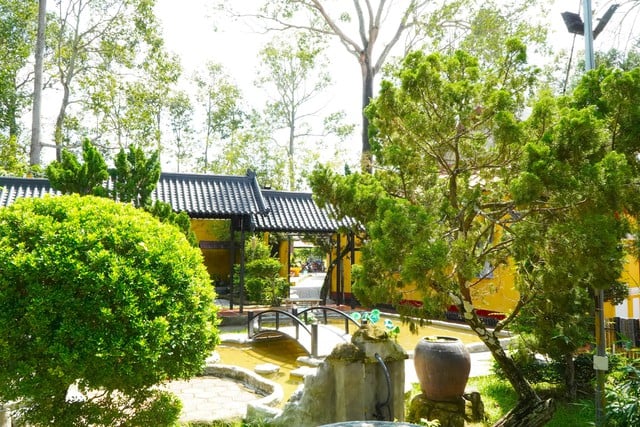
In front of the main hall of the temple is a large garden. It features a combination of green lawns, cypress trees, ancient pine trees, and more. The temple has meticulously created a miniature landscape with rockeries, a wooden bridge, and a lotus pond. Everything is decorated like a royal garden often seen in historical dramas.
PHOTO: THANH DUY
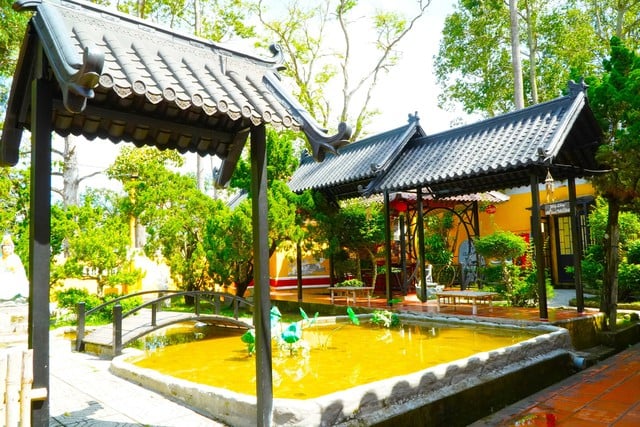
The structures within the temple are built in a balanced and sturdy manner. The yin-yang tiled roofs create an ancient, serene beauty, making it appealing to those who enjoy taking photos with a "timeless" feel.
PHOTO: THANH DUY
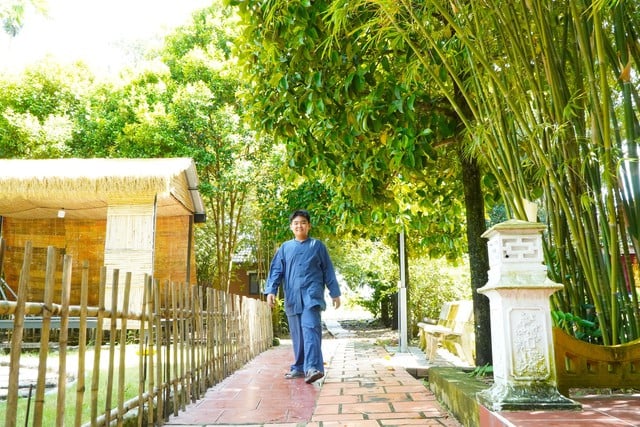
Behind the temple is another large courtyard, planted with many clumps of bamboo, ornamental flowers, sal trees, and fruit trees. Highlights in this green space are the statues and simple wooden huts. Entering this place is like stepping into a realm of immortals, detached from worldly concerns, very peaceful and relaxing.
PHOTO: THANH DUY
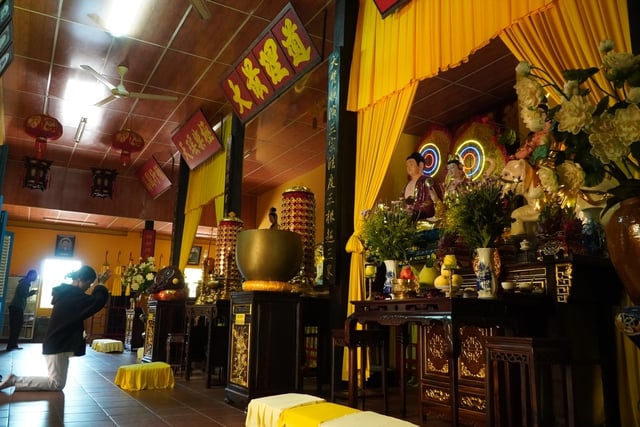
Nam Nha Pagoda, belonging to the Minh Su sect originating from China, worships the Three Religions: Buddha, Confucius, and Lao Tzu. Monks are vegetarians, shaving their heads is not mandatory, and clothing is free but modest and dignified. The pagoda's guiding principle is cultivating virtue and accumulating merit, resulting in a simple and approachable atmosphere.
PHOTO: THANH DUY

The pagoda has a library with many books and nearly 20 computers. People who need to use them for studying are welcome. For the past two years, the pagoda has organized charitable classes teaching foreign languages and computer skills to children during the summer.
PHOTO: THANH DUY
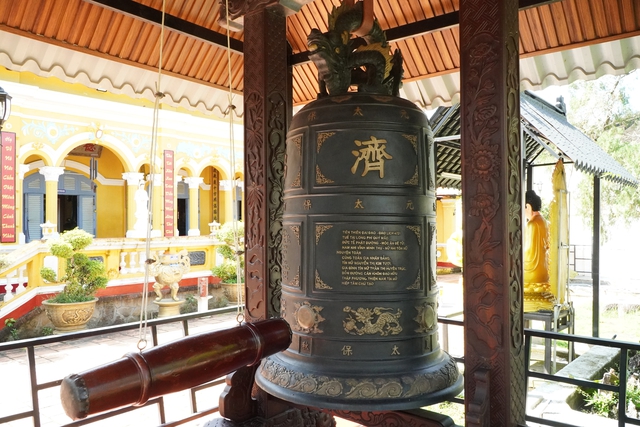
Every year, Nam Nha Pagoda holds major festivals such as the full moon ceremonies in the first, seventh, and tenth months of the lunar calendar, and the commemoration of Buddha's birthday. The pagoda also performs festivals according to Vietnamese religious rituals to preserve the national cultural and religious identity.
PHOTO: THANH DUY
Along with its architectural and natural landmarks, Nam Nha Pagoda is also known as a significant historical site. From 1905, under the strong influence of the Dong Du movement, the patriotic spirit of the monks and Buddhist followers was strongly aroused. This pagoda became a financial center, supporting students studying abroad and opposing the French colonial policy of keeping the people ignorant.
In particular, from 1907 to 1940, Nam Nha Pagoda served both as a place of worship and as the headquarters of the Dong Du movement in Can Tho. Here, in October 1913, the patriotic scholar Cuong De and Mr. Nguyen Giac Nguyen discussed national affairs and mobilized the patriotic movement in Southern Vietnam. Later, the pagoda was discovered by the French colonial authorities and closed down.
However, amidst the difficulties of the revolution, the Hau Giang Special Committee of the Southern Regional Party Committee still chose this place as a liaison point with revolutionary organizations throughout the region. Because of its historical significance, in January 1991, Nam Nha Pagoda was classified as a National Historical Monument.
Source: https://thanhnien.vn/ngoi-chua-130-nam-tuoi-xanh-mat-giua-trung-tam-can-tho-18525082310025627.htm


![[Image] Close-up of the newly discovered "sacred road" at My Son Sanctuary](/_next/image?url=https%3A%2F%2Fvphoto.vietnam.vn%2Fthumb%2F1200x675%2Fvietnam%2Fresource%2FIMAGE%2F2025%2F12%2F13%2F1765587881240_ndo_br_ms5-jpg.webp&w=3840&q=75)



















































































Comment (0)