

On December 11, the Mastercard Economics Institute (MEI) released its annual report on the economic outlook for 2026, showing that growth in the Asia- Pacific region will generally remain stable as the global economy adapts to changes in tariffs, a wave of investment in AI, and shifting consumer trends.
Globally, MEI forecasts real GDP growth to slow slightly to 3.1% in 2026, compared with an estimated 3.2% in 2025.
MEI believes that the global economic outlook for 2026 will be shaped by two parallel sets of factors: risks and opportunities. Fiscal stimulus packages, along with rapid technological advancements, particularly the integration of AI into business operations, are expected to provide strong impetus for growth.

However, the benefits from these drivers will not be uniform across regions. Prolonged geopolitical tensions and ongoing supply chain restructuring continue to create fault lines, increasing uncertainty for trade and manufacturing. The uneven distribution of technological benefits could also create policy and growth challenges in some markets.
Despite some contrarian factors, MEI forecasts GDP growth in the Asia-Pacific region to remain stable in 2026. A combination of cooling inflation, supportive monetary policy, and rising real incomes in some markets is improving household living conditions and bolstering overall regional stability. Consumers will continue to embrace technology and value, prioritizing meaningful moments like travel and in-person experiences, while remaining price-sensitive for essential needs. Tourism continues to be a key economic driver, with both outbound and intraboundary tourism showing strong growth.
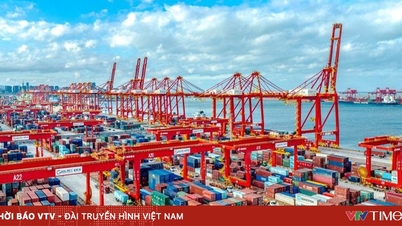
According to the Mastercard Institute for Economic Research, global trade will continue to restructure following tariff adjustments in 2025. Mainland China is accelerating the diversification of exports to new markets, as the share of e-commerce sales from China to the US declines from 28% (in 2024) to 24% (as of August 2025).
For the Asia-Pacific region, this shift presents both risks and opportunities: import markets heavily reliant on low-cost goods from mainland China are experiencing deflationary trends in imports, while exporters in Japan and some parts of South Asia face US tariff pressures and weakening external demand. Despite these adjustments, Asia-Pacific's central position in the global supply chain remains strong. India, ASEAN, and mainland China are playing increasingly larger roles as businesses restructure their supply chains and investment flows.
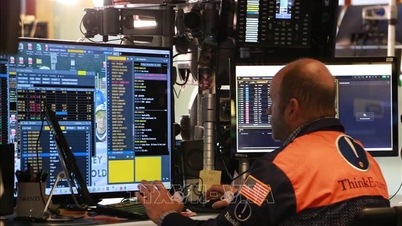
MEI's analysis indicates that AI adoption, along with targeted fiscal support, will be key drivers of growth in 2026. According to the MEI AI Spending Index, South Korea, Japan, India, and the Hong Kong Special Administrative Region are showing strong growth in the adoption of AI tools across both the business and consumer sectors.
Simultaneously, selective industrial and infrastructure policies, such as the development of AI hubs, data centers, smart cities, and investments in semiconductors, are laying the groundwork for the next phase of digitalization. Overall, these shifts are helping the Asia-Pacific region position itself and benefit strongly from the global productivity transformation driven by AI.
Tourism continues to be one of the most sustainable economic drivers in the Asia-Pacific region. In the first half of 2025, Singapore's outbound tourism spending was $2.7 billion higher than the same period in 2019; meanwhile, Indonesia and the Philippines led the region with outbound tourism spending increases of 40% and 28%, respectively.
MEI's 2026 Economic Outlook report covers 12 markets across Asia and Oceania, built from a variety of publicly available data sources combined with aggregated and anonymized transaction data from Mastercard, along with MEI's analytical models to estimate economic activity. Further in-depth reports and analyses from MEI can be viewed here.
Source: https://doanhnghiepvn.vn/kinh-te/nam-2026-tang-truong-gdp-chau-a-thai-binh-duong-se-duy-tri-on-dinh/20251212053623988


![[Photo] Closing Ceremony of the 10th Session of the 15th National Assembly](/_next/image?url=https%3A%2F%2Fvphoto.vietnam.vn%2Fthumb%2F1200x675%2Fvietnam%2Fresource%2FIMAGE%2F2025%2F12%2F11%2F1765448959967_image-1437-jpg.webp&w=3840&q=75)


![[Photo] Prime Minister Pham Minh Chinh holds a phone call with the CEO of Russia's Rosatom Corporation.](/_next/image?url=https%3A%2F%2Fvphoto.vietnam.vn%2Fthumb%2F1200x675%2Fvietnam%2Fresource%2FIMAGE%2F2025%2F12%2F11%2F1765464552365_dsc-5295-jpg.webp&w=3840&q=75)






































![[OFFICIAL] MISA GROUP ANNOUNCES ITS PIONEERING BRAND POSITIONING IN BUILDING AGENTIC AI FOR BUSINESSES, HOUSEHOLDS, AND THE GOVERNMENT](https://vphoto.vietnam.vn/thumb/402x226/vietnam/resource/IMAGE/2025/12/11/1765444754256_agentic-ai_postfb-scaled.png)




































Comment (0)