

By cooperating and respecting the law, resolving disputes peacefully, and acting transparently and fairly, we can achieve peace in the South China Sea.
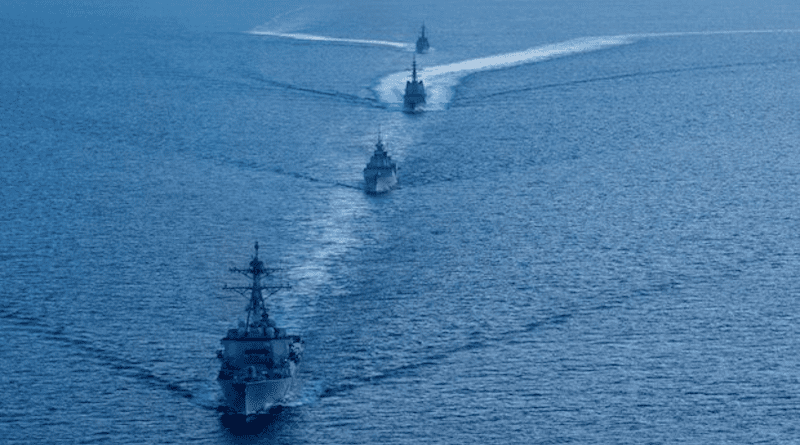 |
| Recently, the situation in the South China Sea has become increasingly complex as tensions between China and the Philippines have escalated. (Source: Euro Asia Review) |
In a recent analysis in Euro Asia Review, veteran Indonesian diplomat Simon Hutagalung, who holds a master's degree in comparative political science from New York University, focused on potential solutions to the conflict in the South China Sea. He emphasized peaceful negotiations in the spirit of international law, open channels of communication, confidence-building measures, resource development cooperation, adherence to the 1982 United Nations Convention on the Law of the Sea (UNCLOS), and the participation of mediators. The World & Vietnam newspaper has translated and summarized the analysis.
Peace negotiations in the spirit of UNCLOS
International law, specifically UNCLOS, provides a solid framework for resolving maritime disputes. Established in 1982, UNCLOS clearly defines the rights and responsibilities of states in the oceans. UNCLOS promotes the peaceful use of marine resources and the equitable resolution of conflicts.
Article 279 of UNCLOS 1982 states that disputes should be settled by peaceful means, promoting a cooperative international maritime order.
Conflicts in the South China Sea could utilize dispute resolution mechanisms outlined in UNCLOS, such as arbitration and international judicial resolution.
The 2013 arbitration case brought by the Philippines against China before the Permanent Court of Arbitration (PCA) in The Hague is a prime example and is considered a precedent.
The 2016 ruling invalidated China's expanded "nine-dash line" claim, thereby reinforcing the principles set forth in UNCLOS (PCA, 2016).
Despite China's rejection of the ruling, the PCA's decision underscores the importance of a legal framework in resolving disputes.
Clearly, engaging in negotiations based on the spirit of UNCLOS can enhance the legitimacy and acceptability of any agreement reached.
Open communication and building trust.
Effective conflict resolution requires transparent and open communication, as well as confidence-building measures among countries with territorial claims in the South China Sea.
Dialogue can help minimize misunderstandings and promote trust and cooperation. Channel 2 diplomacy, involving non-governmental organizations and experts, can supplement formal negotiations by providing informal channels for dialogue.
Confidence-building measures could include establishing hotlines for immediate contact in case of incidents, conducting joint naval exercises, and sharing information on military operations.
The ASEAN Regional Forum (ARF) and the ongoing negotiations on the Code of Conduct in the South China Sea (COC) between China and ASEAN serve as a platform that can facilitate open contact and build trust.
The ARF promotes dialogue and security cooperation, while the COC aims to prevent conflict in the South China Sea by establishing rules and regulations agreed upon by the parties.
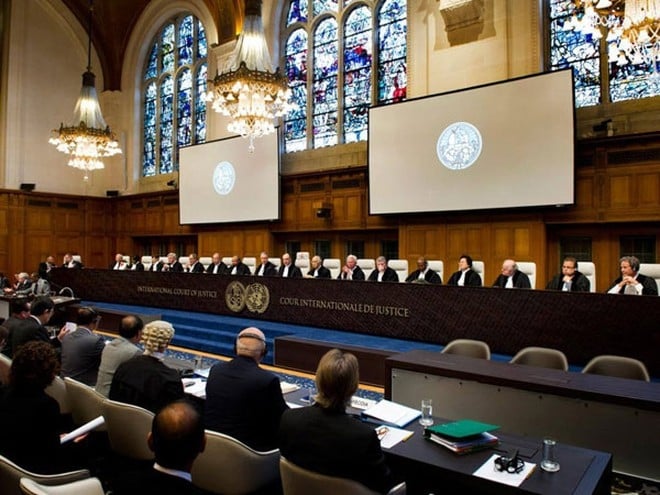 |
| A court session at the PCA. (Source: PCA) |
The shared development of resources can also be promoted. It can be seen that conflicts in the South China Sea partly stem from the region's abundant resources such as fisheries and hydrocarbons.
Jointly developing marine resources and transforming competition into effective cooperation is also a solution to potential disputes and conflicts.
Joint Development Agreements (JDAs) allow countries with territorial claims in the South China Sea to jointly exploit resources and share benefits, temporarily setting aside sovereignty disputes.
A clear legal framework, a fair benefit-sharing mechanism, and effective dispute resolution procedures are essential to ensuring the success of JDAs. Furthermore, establishing multilateral JDAs under international oversight will guarantee transparency and fairness.
However, the most important thing is to adhere to the mechanisms for peaceful dispute resolution outlined in UNCLOS. UNCLOS provides various mechanisms such as negotiation, mediation, and arbitration to resolve conflicts peacefully.
Adherence to these mechanisms is crucial for achieving a sustainable conflict resolution. The Permanent Court of Arbitration (PCA) ruling in the Philippines-China arbitration case underscores the importance of respecting international judicial rulings.
The role of mediation
Mediation solutions are non-binding but constructive, fostering dialogue. Neutral third parties support this process by facilitating negotiations and proposing solutions.
Furthermore, although not legally binding, mediation measures can lead to formal agreements. The International Court of Justice (ICJ) and the International Tribunal for the Law of the Sea (ITLOS) are forums for judicial resolution in the spirit of UNCLOS.
The involvement of mediators is crucial, facilitating dialogue and ensuring fairness in negotiations. Reputable international actors can also enhance the legitimacy and acceptability of proposed solutions. Mediators can be states, international organizations, or individuals with expertise in conflict resolution and maritime law.
The United Nations, through bodies such as the Political and Peacebuilding Commission (DPPA), can support reconciliation. Regional organizations such as ASEAN and the East Asia Summit (EAS) can also contribute to this process.
In addition, experienced figures, including former heads of state or diplomats, can serve as reliable mediators.
In summary, resolving conflicts in the South China Sea requires practical solutions such as joint resource development and adherence to the peaceful resolution mechanisms outlined in UNCLOS.
Effective dialogue and confidence-building measures can foster trust between nations, potentially transforming competition into cooperation in the development of shared resources.
Furthermore, the involvement of neutral (third-party) mediators is essential to facilitate dialogue and ensure fairness. By cooperating, respecting the law, peacefully resolving disputes, and acting transparently and fairly, we can achieve peace in the South China Sea.
Source: https://baoquocte.vn/nha-ngoai-giao-ky-cuu-indonesia-phan-tich-chia-khoa-cho-cang-thang-o-bien-dong-277016.html















![[Photo] Prime Minister Pham Minh Chinh holds a phone call with the CEO of Russia's Rosatom Corporation.](/_next/image?url=https%3A%2F%2Fvphoto.vietnam.vn%2Fthumb%2F1200x675%2Fvietnam%2Fresource%2FIMAGE%2F2025%2F12%2F11%2F1765464552365_dsc-5295-jpg.webp&w=3840&q=75)














































Comment (0)