

Lecanemab, branded as Leqembi, was the first drug licensed in Japan to both treat the underlying causes of Alzheimer's disease and slow the progression of its symptoms.
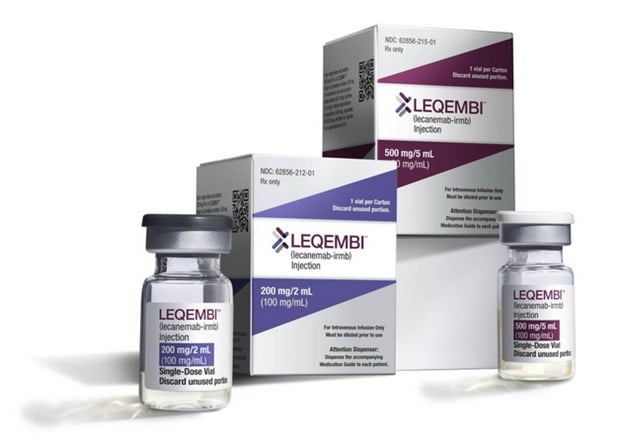
Lecanemab vials, marketed as Leqembi, are intended for the US market. (Source: Kyodo)
The drug, intended to treat early-stage disease and mild cognitive impairment, is expected to be available as early as the end of this year. However, experts also warn that the drug may cause side effects, including some serious ones.
Previously, a multinational clinical trial showed that 17.3% of people taking Lecanemab experienced brain hemorrhage compared to 9% of those taking placebo, while brain swelling was observed in 12.6% with Lecanemab and 1.7% with placebo.
Experts say that the condition of those receiving treatment will need to be carefully monitored, especially if they have other health problems.
In the US, the drug was approved in July, but authorities have mandated that patients undergo APOE genetic testing. Those with APOE4, one of three APOE genes, are more likely to develop Alzheimer's disease. APOE4 is also a risk factor for brain swelling and bleeding known as ARIA, caused by the drug's antibodies. However, in Japan, genetic testing will not be required when using Lecanemab.
Treatment with Lecanemab will involve injections every two weeks for 1.5 years, in addition to monitoring the patient's brain condition through MRI scans.
Reportedly, the cost of the drug in the US is $26,500 per year. Drug prices in Japan are also expected to remain high.
Minh Hoa (compiled from Vietnam+, Ho Chi Minh City Women's Newspaper)
Source





























![[Photo] Prime Minister Pham Minh Chinh holds a phone call with the CEO of Russia's Rosatom Corporation.](/_next/image?url=https%3A%2F%2Fvphoto.vietnam.vn%2Fthumb%2F1200x675%2Fvietnam%2Fresource%2FIMAGE%2F2025%2F12%2F11%2F1765464552365_dsc-5295-jpg.webp&w=3840&q=75)











































Comment (0)