

Speaking to VietNamNet , Ms. Le Dieu Linh, Deputy Director of Summit Education Organization, said that the demand for high-quality human resources in developed countries currently focuses mainly on STEM fields and healthcare, but the priority structure differs in each country.
For example, in the US , STEM fields remain the most important pillar for long-term employment opportunities, especially in technology, data science , artificial intelligence, and cybersecurity. According to the US Bureau of Labor Statistics , many technology jobs are projected to grow by over 25-30% over the next decade.
In addition, the STEM OPT policy, which allows international students to stay and work after graduation, gives this field a significant advantage over social sciences and humanities.
"Besides information technology - a 'hot' field for over a decade - there are also several other options for international students to diversify their career opportunities, such as civil engineering, food engineering, automation engineering, etc.," Ms. Linh said.
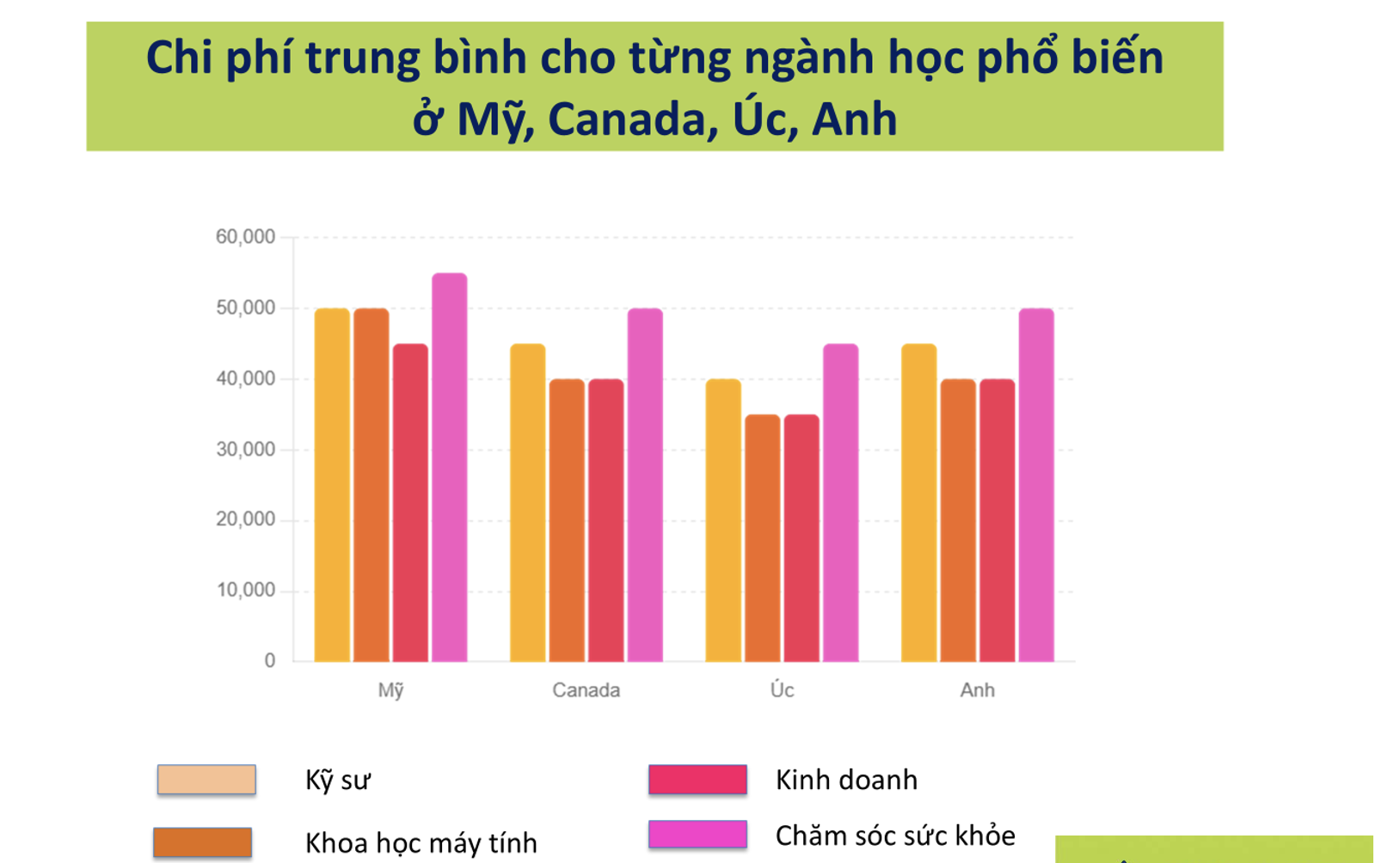
Meanwhile in Canada , despite a slowing labor market and rising unemployment rates compared to previous periods, the country's immigration policy still strongly prioritizes healthcare , alongside STEM and certain skilled technical fields, in order to compensate for long-term shortages due to an aging population.
Australia currently maintains a relatively low unemployment rate compared to many other developed countries. Demand for labor is clearly concentrated in the healthcare, engineering and construction, information technology, and skilled trades sectors.
In particular, states and regions outside of major urban centers often have more open policies to attract international workers, creating more opportunities for international students willing to work in these areas.
In the UK , the job market is more competitive, and opportunities to stay depend heavily on the visa structure. In this context, the healthcare sector remains the most advantageous thanks to the Health and Care Worker visa . For other sectors, international students must strictly meet the requirements regarding occupation codes and minimum wage for the Skilled Worker visa.
"Generally, there isn't one 'golden field' that applies to all countries. While the US leans towards STEM, Canada favors healthcare and essential industries, Australia balances healthcare, engineering, and technology, and the UK prioritizes healthcare above all else. Therefore, students need to choose a field based on their individual abilities, visa policies, and the actual needs of each market, rather than simply following trends," Ms. Linh said.
Opportunities remain abundant, but competition is becoming increasingly fierce.
According to Ms. Linh, international students in fields such as STEM, information technology, and nursing are often prioritized for employment not only due to labor shortages but also because these fields are closely linked to the socio-economic development strategies of their respective countries, while fewer and fewer locals are choosing to pursue these fields.
STEM and information technology are key sectors that determine national productivity, innovation, and competitiveness in the context of digital transformation, artificial intelligence, and automation. However, in many countries, local students tend to avoid demanding, high-pressure engineering fields or those requiring lengthy studies, forcing governments to rely on international talent to maintain development momentum.
Meanwhile, nursing and healthcare are directly impacted by the aging population, but they are demanding jobs with many shifts and high stress levels, so the number of young local people pursuing these fields is insufficient to meet the actual needs of the healthcare system.
“In the next 3-5 years, the trend of prioritizing these sectors is unlikely to reverse, although the level may be adjusted according to the economic cycle. Demand for STEM and information technology may slow down in the short term in some markets, but it will remain strong in the long term because digital transformation and AI are not fleeting trends,” Ms. Linh said.
Therefore, she argues that prioritizing staying should not be understood as "easy," but rather as an opportunity for international students who truly fill gaps that the local workforce is not or is not yet ready to fill. Thus, students need to thoroughly research their chosen field of study to assess its suitability.
“Currently, technology fields offer many early experiential courses, while nursing and healthcare also allow access to internships so that students can understand the specifics of the profession before pursuing it long-term. Besides that, foreign languages and communication skills remain core competencies that determine the competitiveness of international students in the international labor market, regardless of their field of study,” Ms. Linh said.

Source: https://vietnamnet.vn/nhung-nganh-hoc-co-loi-the-du-hoc-va-o-lai-lam-viec-dinh-cu-o-nuoc-ngoai-2472201.html




























































































Comment (0)