

While serving as a key leader in a mountainous commune, he unexpectedly resigned and ventured into business by establishing the Van Pa pig farming cooperative. After several years of development, his business has gradually become stable and effective. He is Do Van Anh, 45 years old, Director of the Huong Hiep Agricultural Cooperative, Huong Hiep commune, Dakrong district.
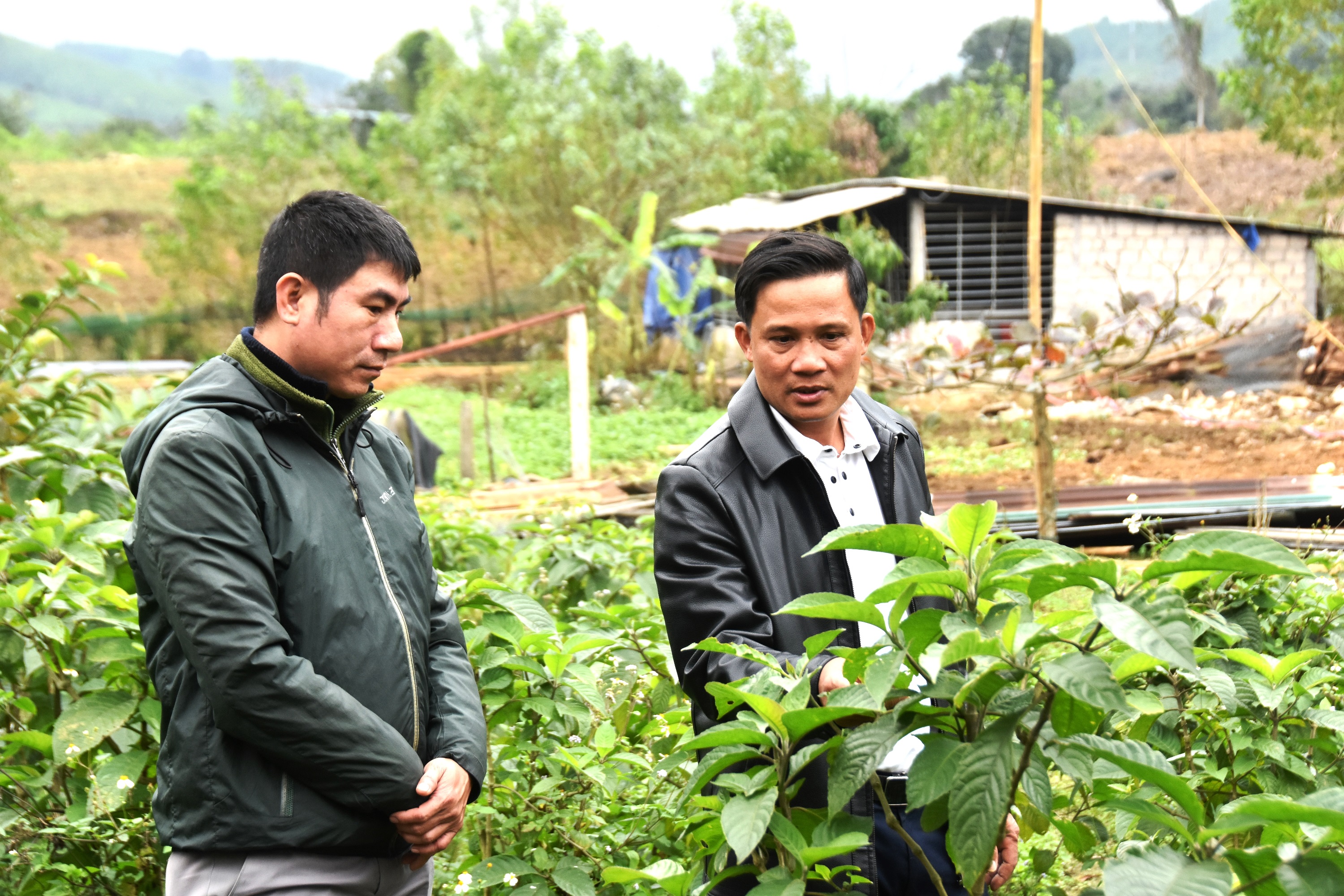
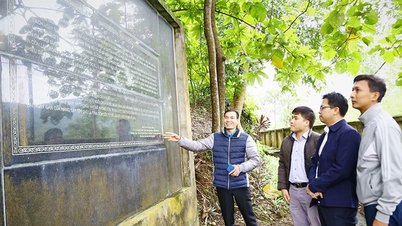
Mr. Do Van Anh (on the right) discusses tea varieties used for pig and goat farming at Huong Hiep Agricultural Cooperative - Photo: D.V.
Quit his government job and started a livestock farm.
After several attempts to arrange a meeting, one day at the end of February 2025, we met Mr. Anh at his spacious farm in Huong Hiep commune. Sitting in a wooden hut behind a small, breezy lake, Mr. Anh enthusiastically recounted his journey in changing his business direction.
Going back in time, after graduating from the Public Administration program at Hanoi University in 2005, he returned to his hometown and became the Deputy Secretary of the Youth Union of Trieu Nguyen commune. In 2015, Mr. Anh assumed the position of Vice Chairman of the People's Council of the commune, and in 2018, he became the Acting Chairman of the People's Council of Trieu Nguyen commune. While his career was stable and he was on the verge of a higher position, in 2021, Mr. Anh unexpectedly submitted his resignation and returned to his hometown to start a business raising pigs and goats. “In my locality, almost everyone wants to stay in a stable government job. So when I decided to resign, my relatives and many friends were very surprised. But before resigning, I thought about it very carefully. I've always been passionate about livestock farming since I started working in the youth organization. When I decided to resign, I had already outlined a plan to register and establish an agricultural and livestock cooperative to create a new direction... I think I have to dare to think and dare to act to succeed on this new path,” Mr. Anh shared.
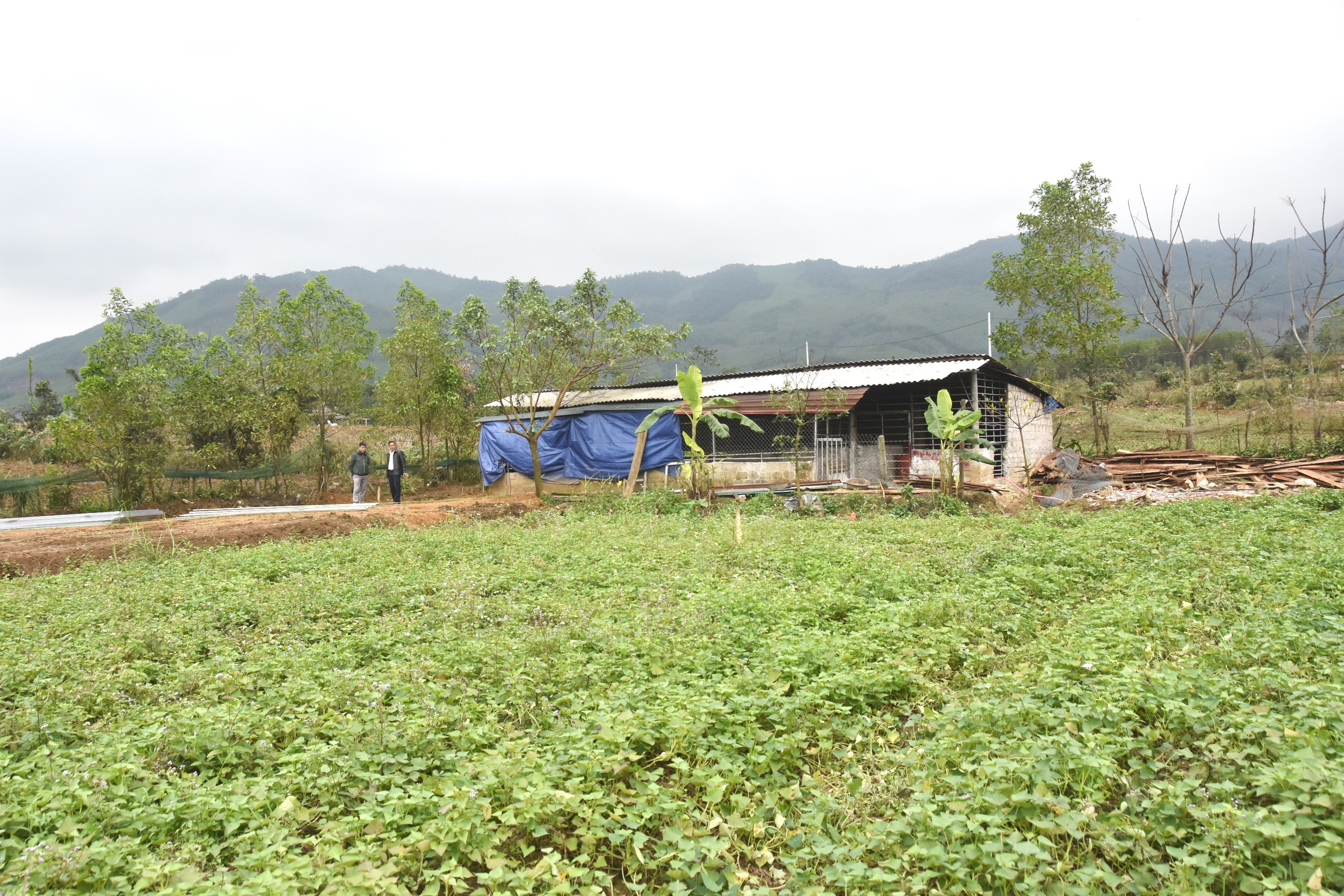
Huong Hiep Agricultural Cooperative proactively sources feed for Van Pa pigs using its sweet potato garden - Photo: D.V.
In 2022, Mr. Anh bought and leased 2 hectares of land in Phu An village, Huong Hiep commune, and registered the Huong Hiep Agricultural Cooperative with two main business lines: civil construction and livestock farming. He dedicated much of his effort and determination to the livestock sector, focusing on two main livestock species: pigs and goats. With the available land, which was dry and flat, Mr. Anh invested hundreds of millions of dong in building barns, drilling wells, installing irrigation systems, and planting vegetables and grass... to raise pigs and mountain goats. “Initially, I registered to raise common pig breeds, but then I remembered hearing about the Van Pa native pig breed conservation project when I was working in the youth organization. Because I was fascinated by this traditional breed, I decided to pursue it,” Mr. Anh recounted.
Efforts to restore and breed Van Pa pigs
Mr. Anh said that the Van Pa pig is a special breed, a long-standing specialty of the Van Kieu and Pa Ko people. Previously, the people would catch wild boars and breed them with free-range pigs. The piglets were named Van Pa (Van being the Van Kieu name, Pa being the Pa Ko name). “This breed has black skin and hair, a straight back, a long snout, and is especially fast, likened to an athlete. In the past, the Van Pa pig was widely raised by the Van Kieu and Pa Ko people. But with societal development and the introduction of many new breeds that grow quickly and are easy to sell, this breed almost disappeared for a time. Therefore, when I opened the cooperative, I hoped to revive this traditional indigenous pig breed to test my abilities and gradually bring it back to the market,” Mr. Anh said.
Previously, while still working, in 2021, he searched and bought several Van Pa female pigs from local people. He only managed to raise a few because this breed is a cross between wild boar and is very aggressive and difficult to raise. At that time, he raised the pigs in his fairly large garden in Krong Klang town. He couldn't find any Van Pa male pigs, and this breed doesn't breed with white male pigs. After some time, he bought a wild boar male weighing about 8-10 kg from a local person and released it into his pen for them to mate.
But at first, they fought fiercely. Then, following his father's advice, he cooked shrimp paste for the pigs to eat so they would bond quickly. And it took another 5-6 months, when he saw they were more tame, before he let the two pigs together to mate. About 3 months later, when the female pig was close to giving birth, Mr. Ánh released her from the cage.
However, he later discovered his pigs had disappeared. “Following my father’s advice, I cooked some pork floss and stirred it until it smelled fragrant. Surprisingly, the entire herd, including the parents and piglets, crawled through the fence and returned from the garden. Needless to say, I was overjoyed. Only later did I learn that they had left because they lacked a suitable breeding environment to follow their natural instincts.”
"From these initial breeding stock, I directly bred them, raising and selling them to local people; then I bought them back to raise again and sell them on the market," Anh recounted. After two years of raising the herd, Anh's farm now has two pig pens with about 150-200 pigs, including breeding sows for gene pool development and pigs for meat production.
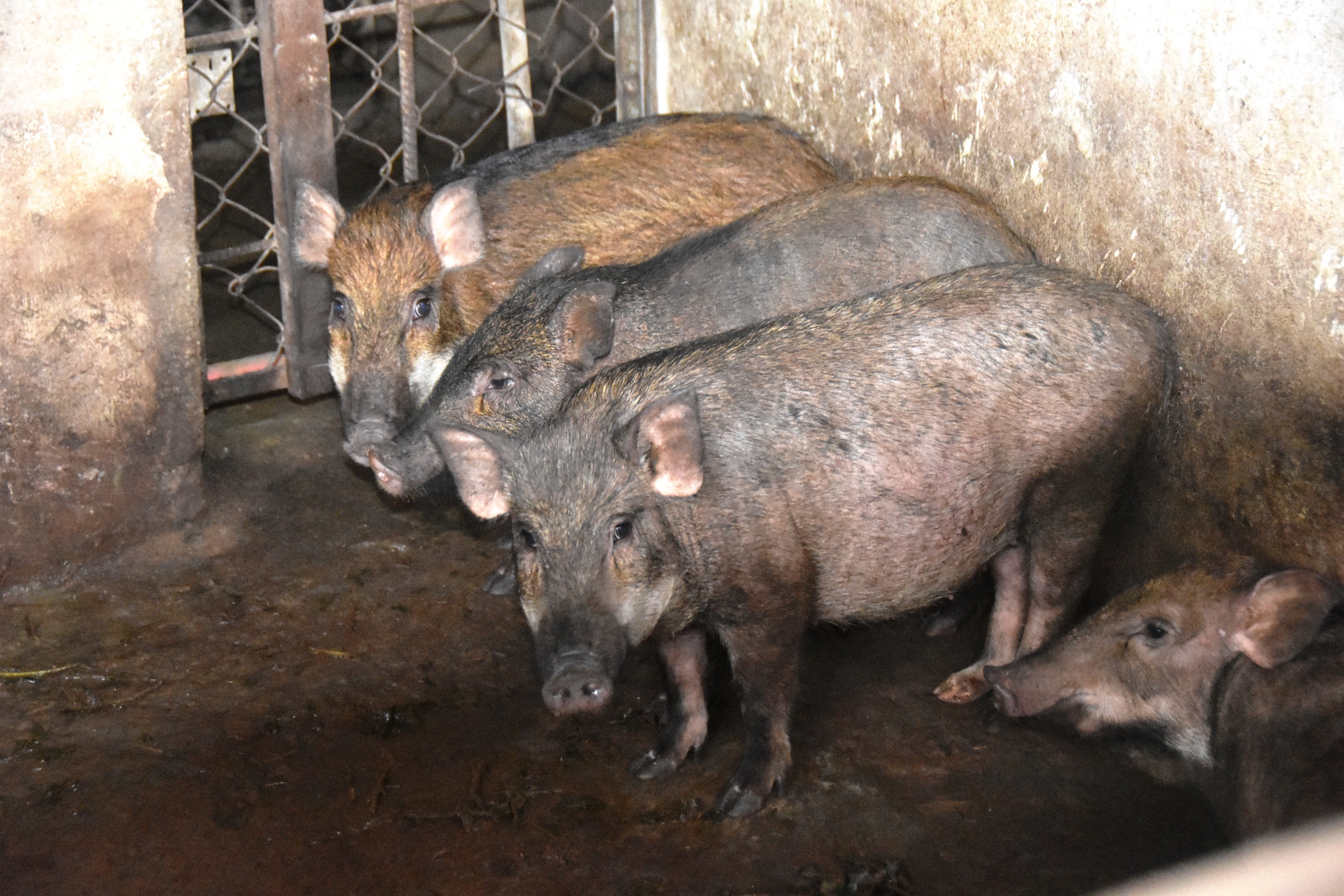
Van Pa pigs are raised on the farm of Huong Hiep Agricultural Cooperative - Photo: D.V.
According to Mr. Anh, Van Pa pigs only eat sweet potato leaves, giant tea plants, and elephant grass, and have very good resistance to disease, but they grow slowly. These pigs have short bodies, slightly large bellies, arched backs, straight legs, 10 to 14 teats, and only mate naturally, giving birth to 2 litters per year, with each litter containing 8 to 12 piglets.
Unlike industrially raised pigs that can be sold for about 70-80 kg in about 3 months, Van Pa pigs need to be raised for 6 months before being sold, each weighing only 25-30 kg and standing 0.4-0.5 m tall. Mr. Anh said that during the Lunar New Year of the Year of the Snake - 2025, the cooperative sold over 200 Van Pa pigs to customers at a price of 150,000 VND/kg. “Van Pa pigs only eat vegetables and grass, so the meat is very delicious and free of growth hormone residue, which is why it is favored by many people.”
Let's rise together.
We followed Mr. Anh on a tour of the spacious, airy farm with its lush gardens of sweet potatoes, elephant grass, and giant tea plants. Alongside these was a newly leveled plot of land stocked with materials and equipment ready for the construction of livestock pens. Mr. Anh explained that the cooperative is currently expanding its farm to raise approximately 300 animals to meet the growing demand from customers.
At the same time, they are considering taking the Van Pa pig brand further. “Raising pigs in general is high-risk. But with this Van Pa breed, the risk is low, especially regarding disease, because they have very good resistance. During the African swine fever outbreaks in recent years, many farms have experienced significant pig deaths, but our cooperative's pigs have remained almost completely unaffected. These pigs are also easy to raise, mainly fed on vegetables, grass, and agricultural by-products, and their price is quite high, making farming quite favorable,” Mr. Anh said.
The output of Van Pa pigs is currently very stable. In addition, the Huong Hiep Agricultural Cooperative currently provides employment for 6 cooperative members, mainly from the Van Kieu and Pa Ko ethnic groups, with stable incomes averaging 7.5 million VND/person/month (men work in civil construction, women work in livestock farming).
Having been involved with the cooperative from the beginning, Ms. Ho Thi Bong (32 years old) from Phu An village shared: “Before, my husband and I worked various odd jobs, but the income was low and unstable, only enough to raise our two children. Now, working in pig and goat farming is not too strenuous, is stable, and has a fairly high salary, so we can live quite comfortably. My husband and I are very happy.”
According to Le Dai Loi, Vice Chairman of the People's Committee of Dakrong District, besides contributing to the preservation and restoration of the Van Pa pig breed, Huong Hiep Agricultural Cooperative also provides breeding stock, creates jobs for local people, and contributes to poverty reduction in the area. Mr. Loi believes that the Van Pa pig breed has the opportunity to become a brand and a distinctive product of Quang Tri province if it receives investment for development, expansion of breeding scale, and increased production to supply the market in the future.
Duc Viet
Source: https://baoquangtri.vn/nuoi-khat-vong-lam-giau-with-lon-van-pa-192426.htm













































































Comment (0)