

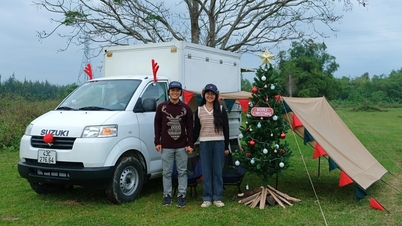
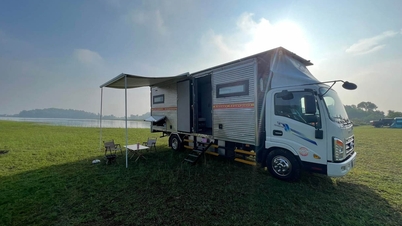
Mr. Thang (Hanoi) bought a truck, designed and built the cargo area into an "apartment" complete with bedrooms, a living room, and a kitchen so his family could comfortably travel throughout Vietnam.
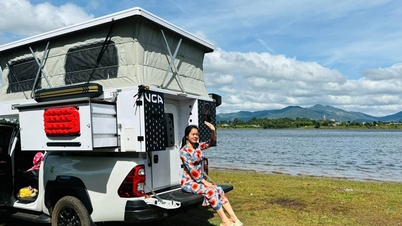
Many young families tend to buy or convert their personal cars into "mobile homes" for travel and exploration . They see this as a travel option that ensures privacy, offers many interesting experiences, and especially provides many opportunities for family bonding.
VietNamNet newspaper presents to readers a series of articles titled ' Traveling Everywhere in a Mobile Home '.
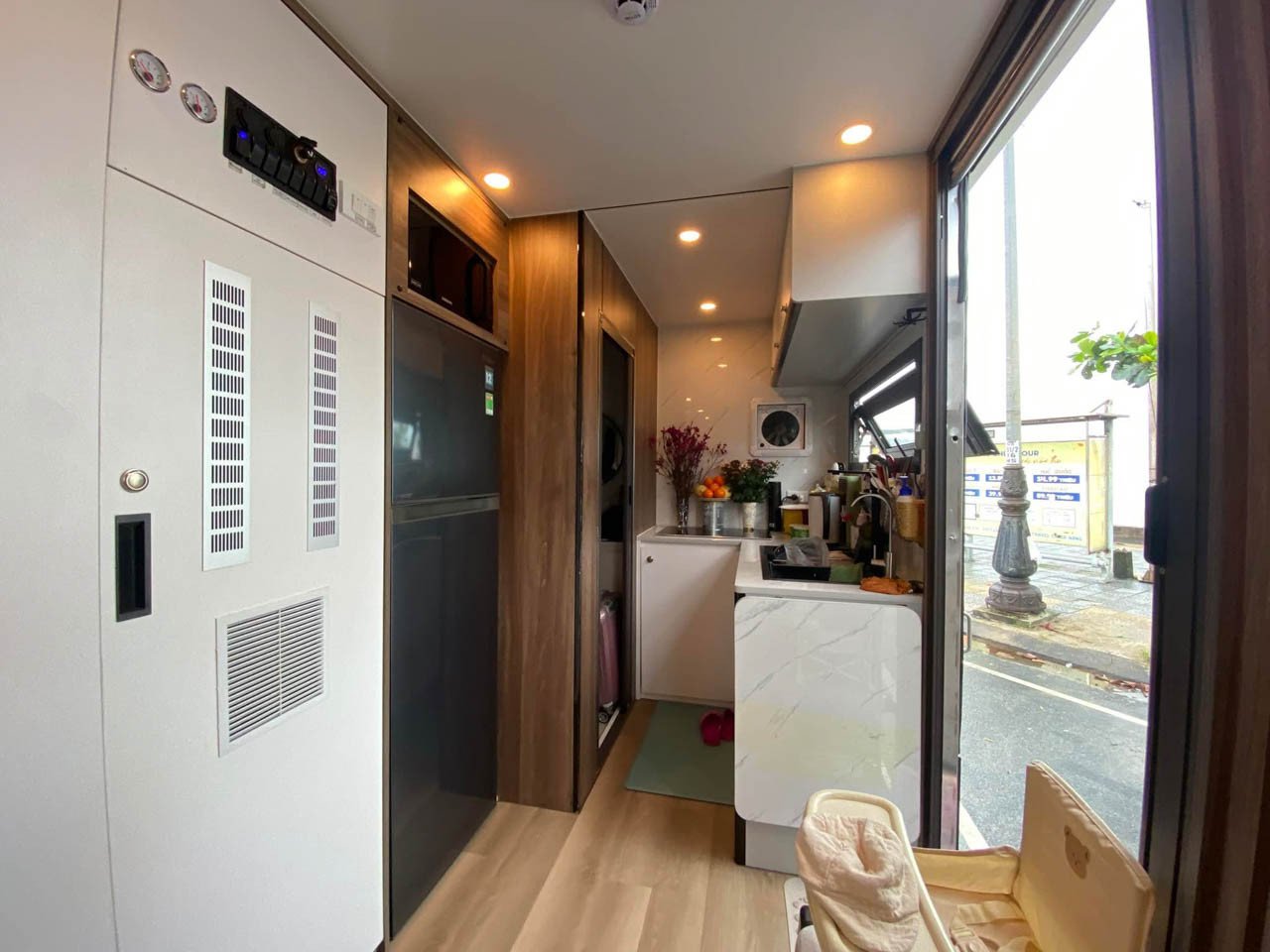
Taking advantage of the weekend, Mr. Thang and Ms. Huyen spent time cleaning up their family's unique "house." This "house," designed and constructed by Mr. Thang on a truck bed, measures over 12 square meters and is more than 2 meters high. It includes a bed, sofa, coffee table, kitchen, toilet, and is fully equipped with amenities such as an air conditioner, washing machine, dryer, water filter, and a 300-liter refrigerator.
"The vehicle's interior is designed like a studio apartment, with enough space and amenities for my family to use during our travels. In the past three years, we've taken two cross-Vietnam trips and dozens of longer vacations to various locations across North, Central, and South Vietnam. Since having our 'mobile home,' my wife and I haven't had to rent guesthouses or hotels," Thang said.
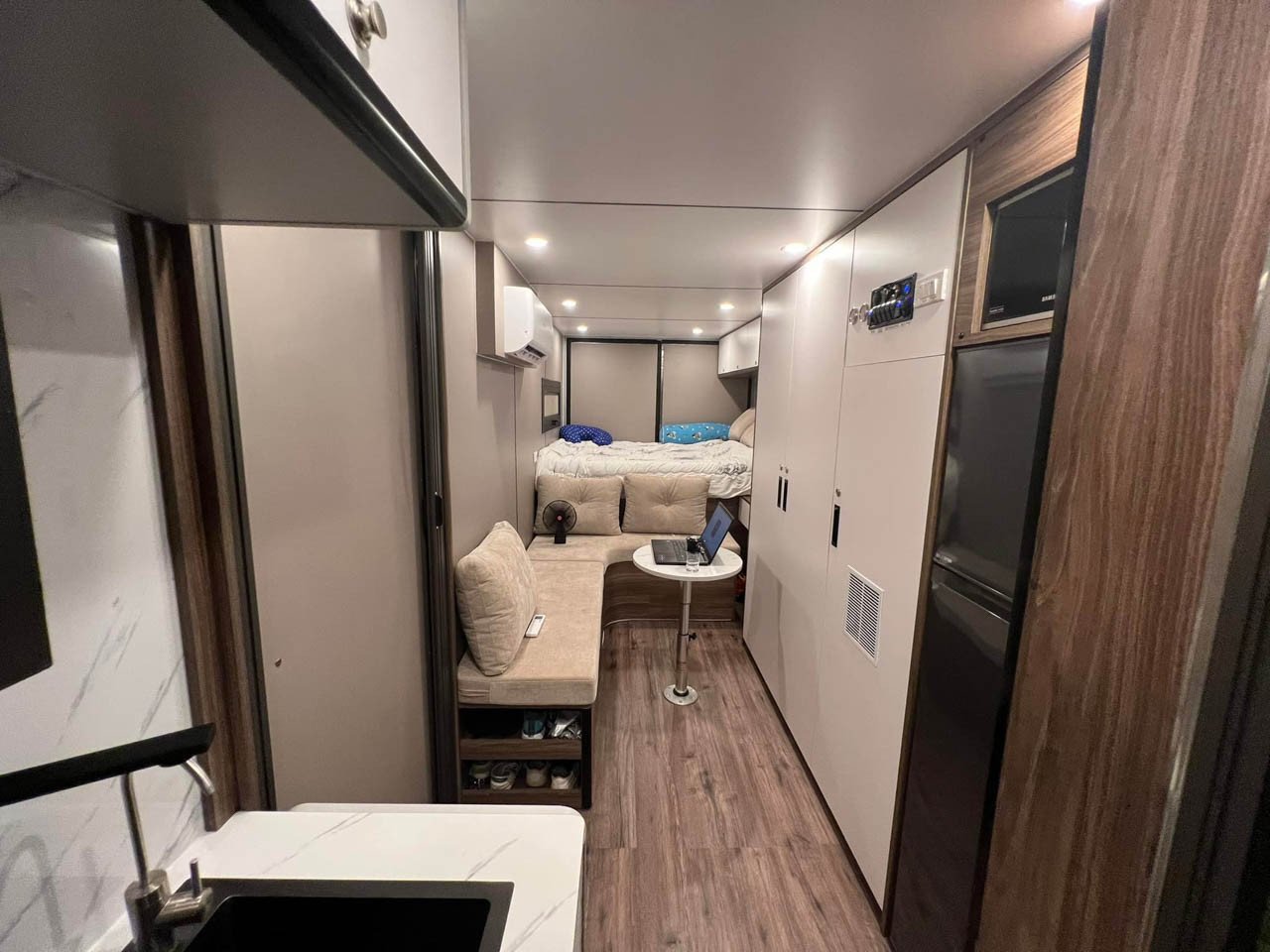
Spending 1.3 billion VND to "transport apartments" onto trucks.
Mr. Nguyen Ngoc Thang (39 years old) and his wife, Ta Thi Thu Huyen (38 years old, both living in Hanoi ), are passionate about traveling. However, after having three children (currently 15, 5, and 2 years old), the family has fewer and fewer opportunities to travel together.
"Every trip becomes a stressor when my wife has to rush around booking tickets, reserving rooms, and packing suitcases of all sizes for the children. Especially when the children are young, we have to bring everything from milk bottles, diapers, medicine, and lots of other odds and ends," Thang recounted.
During the Covid-19 pandemic, with more time at home, Mr. Thang began researching the "mobile home" model. In 2022, he started converting a 16-seater vehicle into a "mobile home," practicing taking his wife and children on long trips.
More than a year later, to have more living space and ensure safety, Thang decided to "upgrade" and buy a cargo truck.
"The truck bed is fitted with six solar panels to power the vehicle's appliances. The water tank holds up to 600 liters, so my family can use it comfortably for 3-5 days before needing to refill. Refilling the water is as simple as pumping gas; wherever we stop, people are happy to give us water," Thang said.
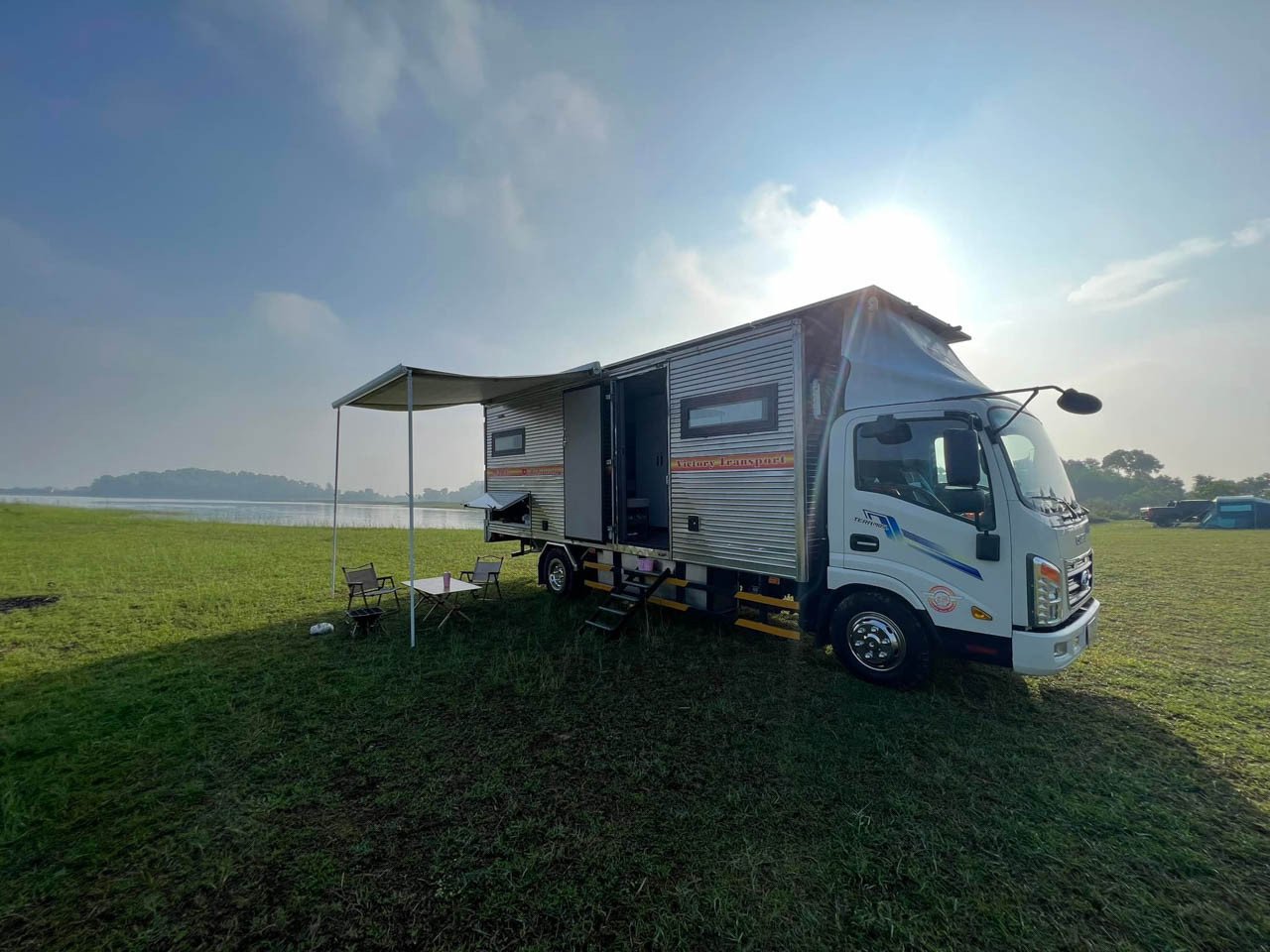
"The cost of 1.3 billion VND is not small; it's enough for my family to take dozens of luxurious trips across the country. However, these trips in the 'mobile home' are an opportunity for the family to bond."
"My wife, our children, especially our 15-year-old eldest, have plenty of time to talk, share meals, and play together. Each trip helps us become closer and understand each other better," Thang said.
Another reason why this Hanoi father "splurged" on a "mobile home" is the increasing air pollution, which causes his two young children to frequently suffer from respiratory illnesses. Whenever the weather is too cold, humid, or the pollution index is high, he and his wife drive the car to "take their children away to escape."
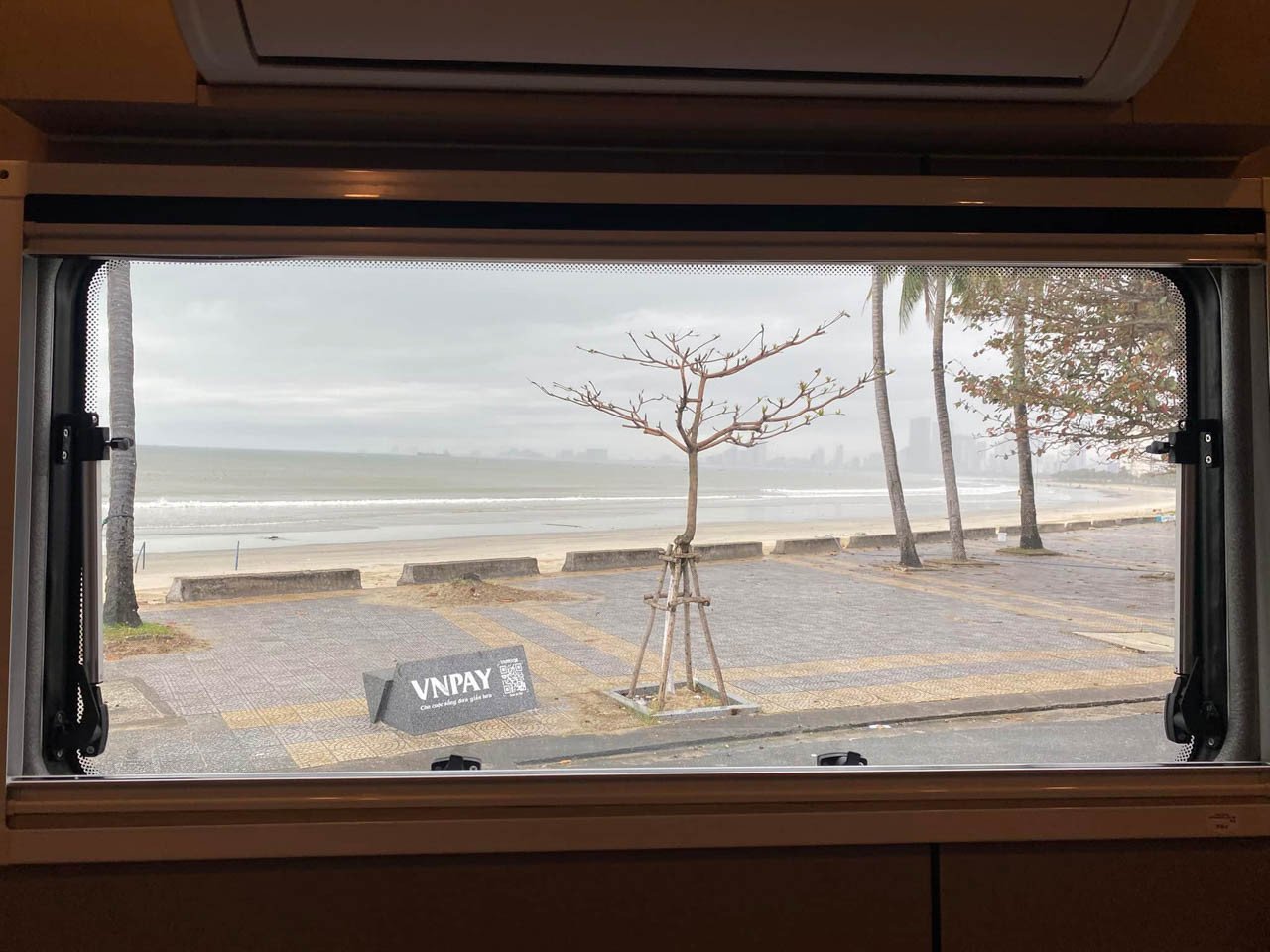
Most recently, they departed from Hanoi on the 9th day of the Lunar New Year to travel to Da Nang to escape the humid season for 10 days. Da Nang isn't too far, but the weather is sunny and pleasant, allowing their two children, aged 2 and 5, to play comfortably. The family can find safe parking along the beach to watch the sunrise each morning and the sunset in the evening.
Journeys of "healing"
For the past two years, every June, when his eldest son begins his summer vacation, Thang and his son embark on a cross-Vietnam trip. The whole family chooses a new destination, hoping to explore it for an extended period, so that Huyen can fly there with their youngest child.
In the summer of 2024, this family chose Quy Nhon as their "gathering point." For almost the first week, Thang and his son visited the places the son wanted to see, chatting along the way. The two of them went to local markets, enjoyed local dishes, or bought groceries to cook in the car.
"I bring a motorbike and an electric bicycle with me. I usually park them at a fixed, safe spot, then my son and I ride them into the villages to explore the local life," Thang said.
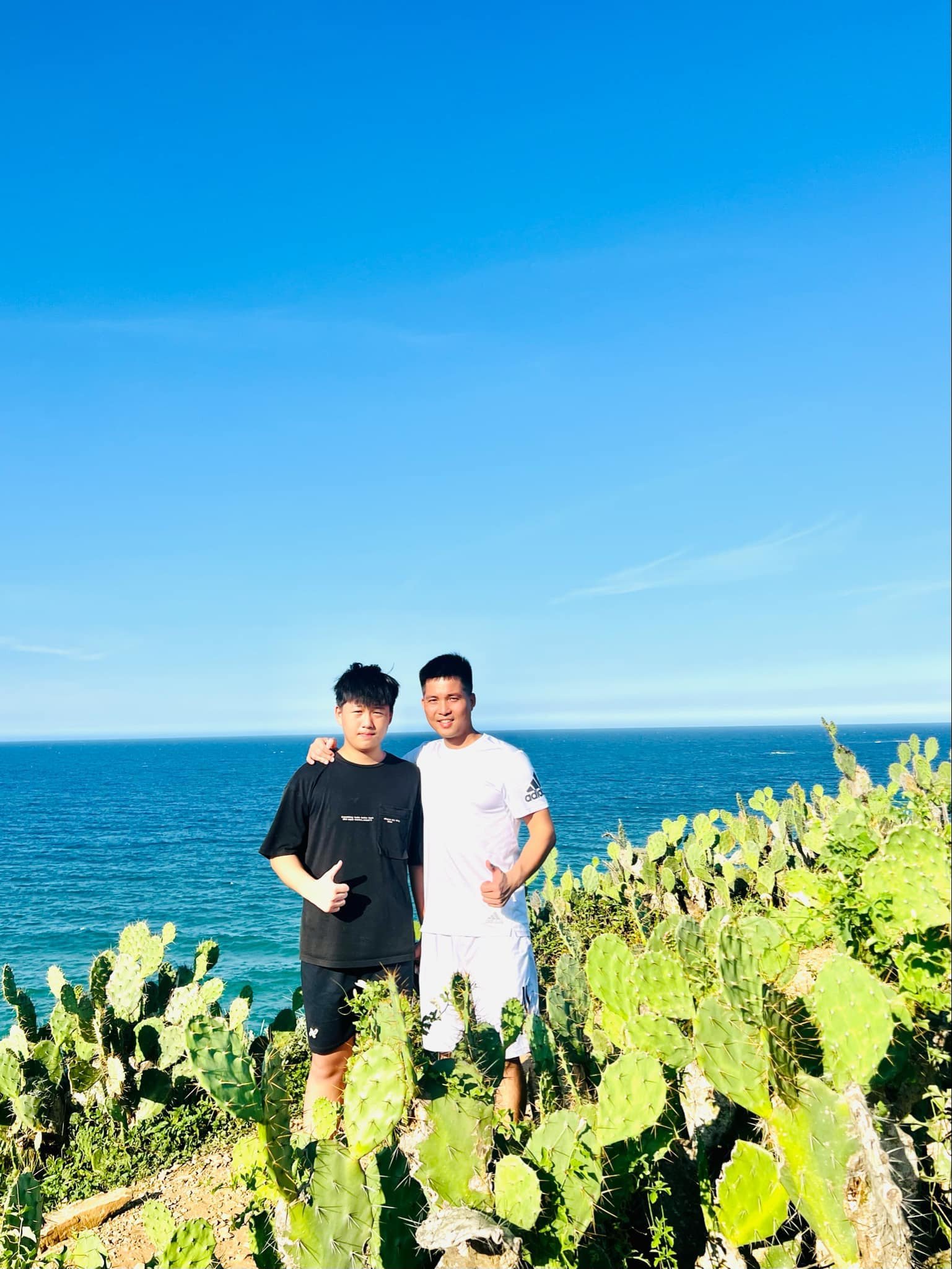
The whole family reunited in Binh Dinh and then drove along the coastal road to Ho Chi Minh City, experiencing the Mekong Delta and the Central Highlands.
On this trip, the family spent most of their time in coastal fishing villages, staying 2-3 nights at each place. Besides swimming, Mr. Thang took his children to see the locals raising and catching seafood, and to experience "wildlife" on the islands. He usually contacted local friends in advance to ask them to recommend attractive places for recreation.
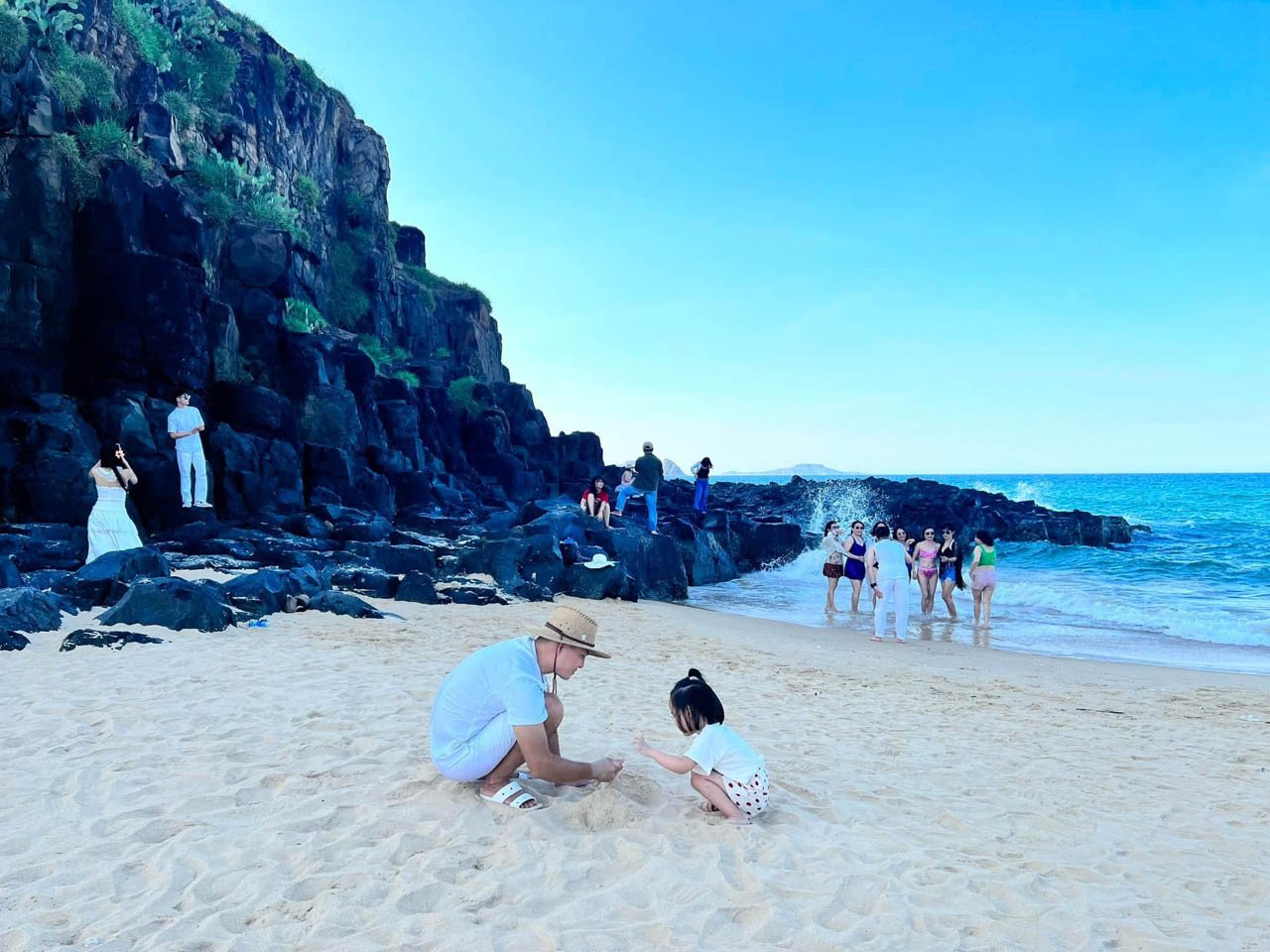
The fishing village that the Hanoi family loved and stayed the longest in was An Hai fishing village in Tuy An district, Phu Yen province. It boasts beautiful, pristine, and peaceful scenery, often compared to the setting in the famous Korean drama "Hometown Cha-Cha-Cha," and is located about 25km north of Tuy Hoa city center.
"An Hai fishing village has clear blue seawater, long stretches of white sand, and the locals are very simple and hospitable. The landscape here is unique thanks to the unusual, rugged rock formations," Thang recounted. Every morning, his family can go to the market to buy seafood caught that day, which is very fresh and reasonably priced.
 |  |  |
On their journey exploring the Central Highlands, the family's favorite place to stay the longest was Mang Den, thanks to its fresh, cool climate and majestic yet picturesque scenery. "This is the ideal place to 'slow down' and travel in a 'mobile home.' Because Mang Den doesn't have many accommodations yet. With our vehicle, we can stay anywhere with beautiful scenery," Thang said.
Each cross-Vietnam trip usually lasts two months. When the family returns to Hanoi, their eldest son is back in school. He doesn't attend summer classes but instead dedicates his time to exploring the country, learning about its geography, culture, and history. His preparations for the new school year are filled with countless memorable moments with his parents and siblings. "His health and life skills have also improved noticeably," Mr. Thang said.
At other times of the year, Thang and his wife often take their two children on short trips. "We just choose a suitable destination, and the whole family gets in the car and drives. I no longer worry about how to arrange milk and diapers, or how to cook porridge for the little ones," Huyen confided.

Mr. Thang owns a business. He works remotely every day. When important documents or contracts need signing, he signs, stamps, and sends them to his employees via express delivery. He prefers to stay longer in major cities with airports and hospitals. "If there's an urgent matter, I'll fly back to handle it and return the same day," he said.
According to Thang, many people say that these trips mainly serve the needs of the parents, and the children don't understand anything about them.
"In fact, my wife and I divide our time so that each member of the family gets to visit their favorite places. For places without beaches or amusement parks, I spend an hour each day taking the children to playgrounds or shopping malls. The rest of the time, the children go camping with their parents, meet friends, etc. We go on long trips and proactively arrange our meals and accommodation, so we never have to rush," he said.
The more they travel, the closer Thang and his wife and children become.
Photo/Video: Provided by the interviewee

Source: https://vietnamnet.vn/ong-bo-ha-noi-chi-1-3-ty-dong-be-chung-cu-vao-xe-tai-dua-ca-nha-di-han-gan-2379041.html














![[Photo] Prime Minister Pham Minh Chinh holds a phone call with the CEO of Russia's Rosatom Corporation.](/_next/image?url=https%3A%2F%2Fvphoto.vietnam.vn%2Fthumb%2F1200x675%2Fvietnam%2Fresource%2FIMAGE%2F2025%2F12%2F11%2F1765464552365_dsc-5295-jpg.webp&w=3840&q=75)












































Comment (0)