

In the context of big data, rapidly changing markets, and increasingly complex economic relationships, the demands on economic and financial forecasting tools are changing dramatically.
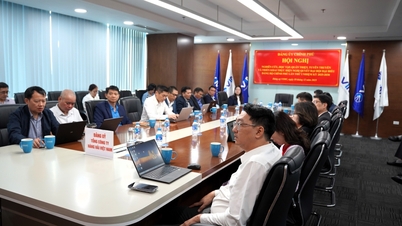
This was clearly demonstrated in the scientific seminar "Economic Time Series Analysis: Approaches from Econometric Models and Machine Learning," organized by the Academy of Finance and the International Center for Mathematical Research and Training, with presentations by Dr. Cu Thu Thuy and MSc. Hoang Huu Son.
The discussion not only provided a comprehensive overview of traditional time series models but, more importantly, highlighted a new step forward: upgrading econometric models with modern machine learning techniques.
The introductory part of the seminar systematizes the characteristics of time series such as trend, seasonality, cycles, stationarity, noise, and classic models such as ARIMA, SARIMA, ARDL, ECM, VAR/VECM, or GARCH...
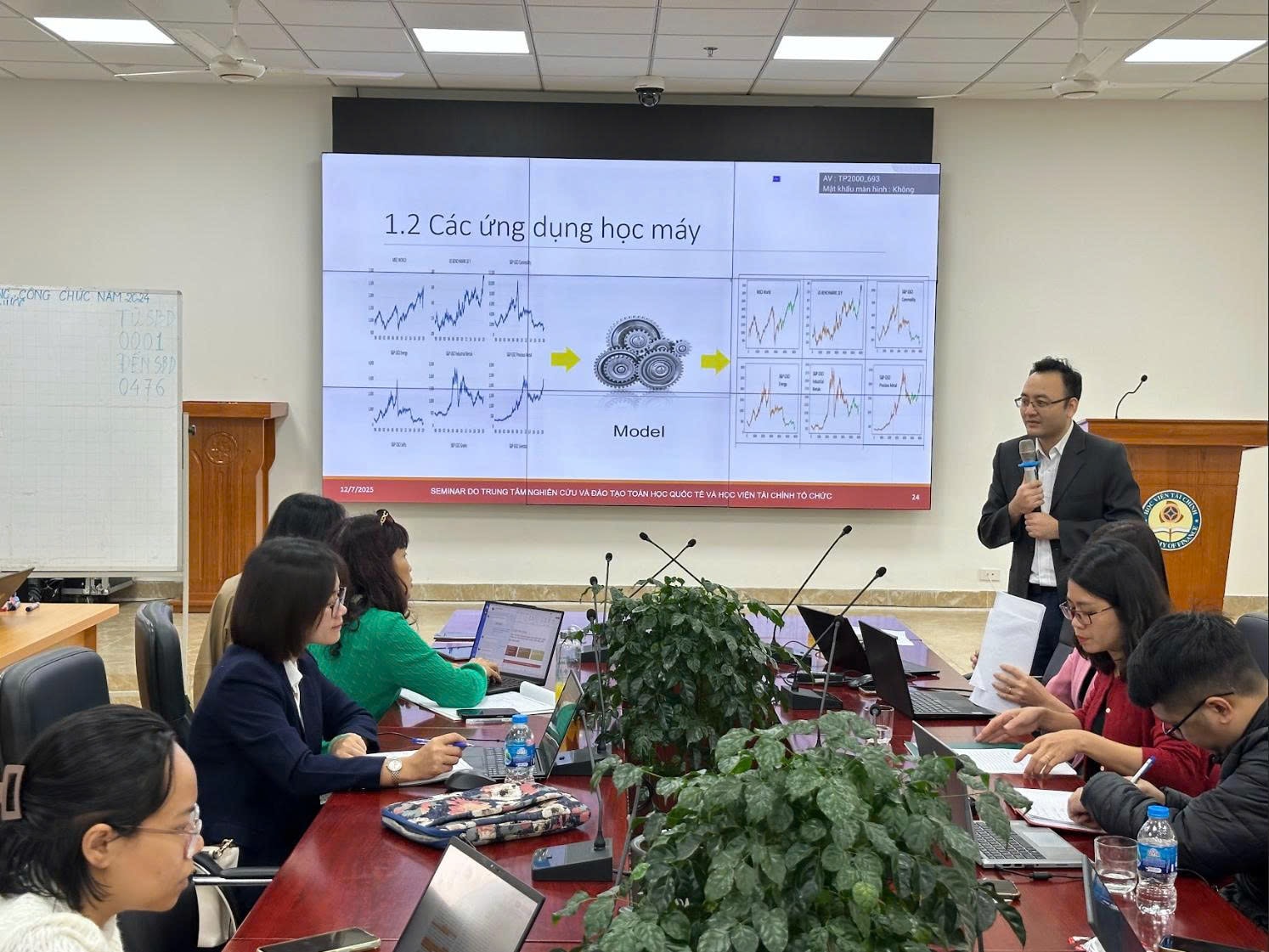
These tools have formed the foundation of econometric research for decades, with distinct advantages: good interpretive power, standardized theoretical framework, low computational cost, and suitability for small-scale data.
Today, financial markets operate with a diverse structure in which there is high uncertainty, many shocks and long-term dependencies. The number of variables and data sources expands rapidly, from high-frequency data to unstructured data. In such an environment, traditional assumptions (stationarity, normal distribution, linearity, etc.) are often no longer appropriate, making the accuracy of traditional models somewhat limited. And Machine Learning is one of the modern and topical approaches.
Therefore, the Seminar summarizes the basic knowledge of machine learning and the role of machine learning, neural networks and deep learning in time series analysis such as MLP, RNN, LSTM, Bi-LSTM, Stacked LSTM. Different from the classical linear model, Machine Learning has overcome the limitations of traditional econometric models as well as allows modeling nonlinear relationships, remembering long-term dependencies and automatically learning patterns in data series.
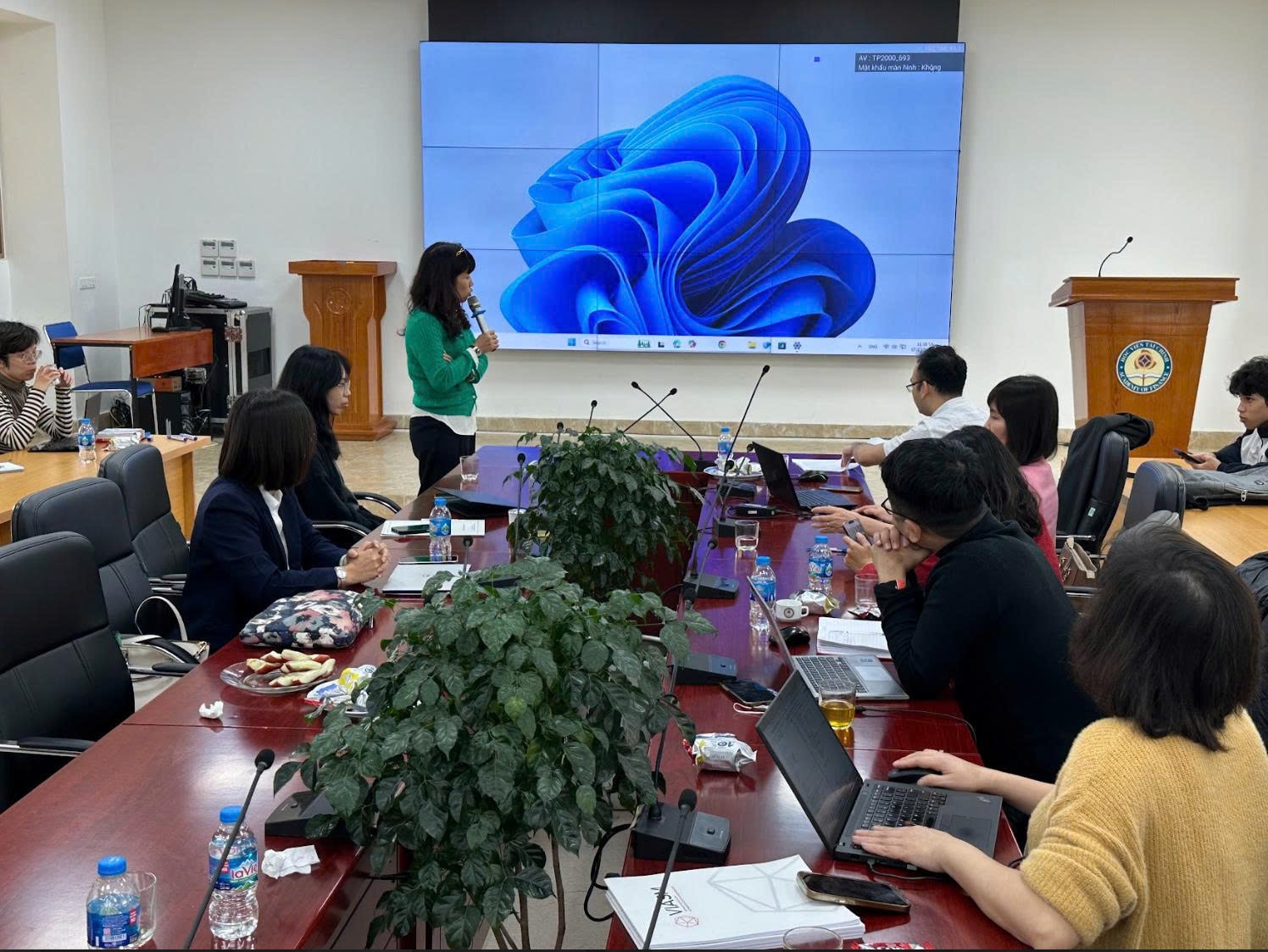
Through the presentation of Bitcoin and VN-Index price forecasting experiments with different models, it has been proven that the LSTM model gives low RMSE, MAE, MAPE errors even when the data is heavily noisy, and through the LSTM models, it also reflects the economic nature of the predicted data, thereby demonstrating the clear advantages of machine learning and deep learning in economic and financial forecasting.
A prominent point of view at the Seminar is: econometrics and machine learning are not opposites, but complement and enhance each other. Econometrics provides theoretical framework, causal structure, and policy interpretation capabilities. Machine learning provides powerful computing power, nonlinear modeling, big data processing capabilities, and noise immunity.
This combination has created a new generation of models – from VAR-LSTM, hybrid State Space + Deep Learning, to time series transformation – which are becoming an international research trend.
Furthermore, the presentations and discussions at the seminar also confirmed the importance of investing in infrastructure and data for machine learning and deep learning.
Because the research facilities directly impact the architecture, the computational efficiency of the model in solving real-world problems, as well as aiming for high-quality international publications.
The seminar affirmed the shift in research thinking from relying solely on linear models to leveraging deep learning models; from small datasets to large datasets; and from descriptive analysis to highly accurate prediction.
This is an important direction for the fields of Mathematical Economics, Finance and Banking, Data Analysis, and Data Science at the Academy of Finance.
Source: https://daibieunhandan.vn/phan-tich-chuoi-thoi-gian-kinh-te-tiep-can-tu-mo-hinh-kinh-te-luong-va-hoc-may-10399890.html






















![[Video] The craft of making Dong Ho folk paintings has been inscribed by UNESCO on the List of Crafts in Need of Urgent Safeguarding.](https://vphoto.vietnam.vn/thumb/402x226/vietnam/resource/IMAGE/2025/12/10/1765350246533_tranh-dong-ho-734-jpg.webp)














































Comment (0)