

On April 26, 1986, the world was shaken by the Chernobyl disaster, when a safety test at Reactor No. 4 of the Chernobyl Nuclear Power Plant failed miserably.
The reactor's design flaws, coupled with serious human error, led to a sudden increase in power, causing a series of explosions that destroyed the building and resulted in fires that lasted for days.
As a result, a large amount of radioactive material was released throughout Ukraine, Belarus, and many areas of Europe, turning Chernobyl into one of the most dangerously contaminated areas on the planet.
To address this environmental disaster, a 30km-wide exclusion zone was established to restrict human contact.
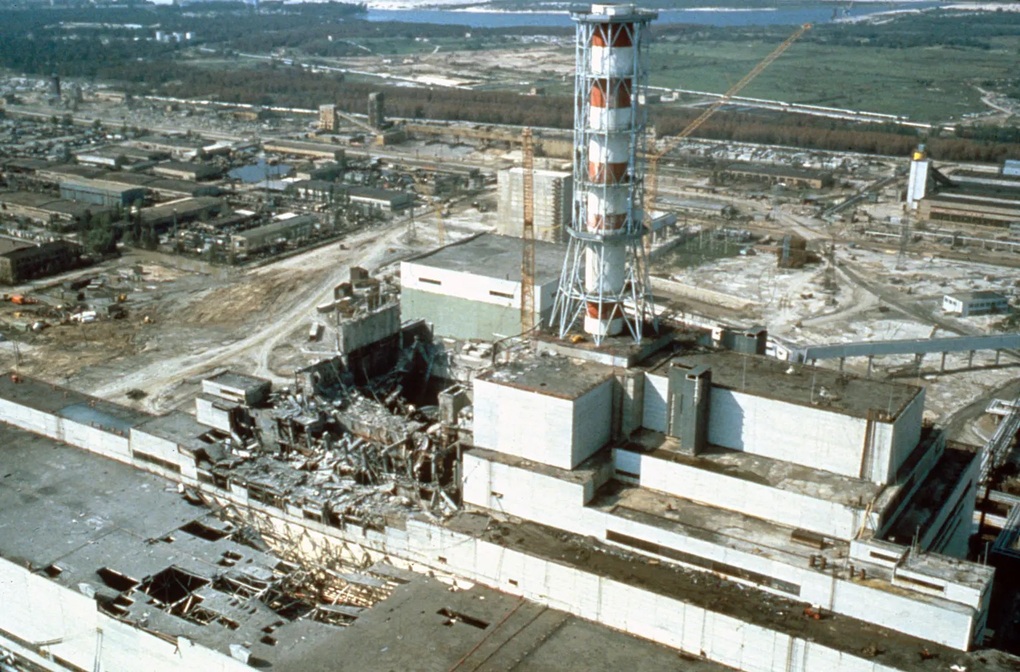
The Chernobyl nuclear power plant a few weeks after the disaster (Photo: Getty).
However, amidst the desolate ruins of the destroyed reactor, scientists discovered a strange phenomenon: a type of black fungus not only survived but also thrived in the extreme radiation environment, seemingly absorbing radiation for energy.
Strange black mushrooms defy radiation.
In 1997, Ukrainian scientist Nelli Zhdanova conducted an investigation inside the damaged Chernobyl reactor and made a surprising discovery. Black mold covered the ceilings, walls, and even metal surfaces.
The survey identified 37 types of fungi, many of which were dark in color due to cells filled with melanin.
Melanin, the pigment that gives skin its color and protects humans from sunlight, plays a protective role in Chernobyl fungi, absorbing and neutralizing radiation. The most dominant species, Cladosporium sphaerospermum , even tends to grow toward radioactive particles.
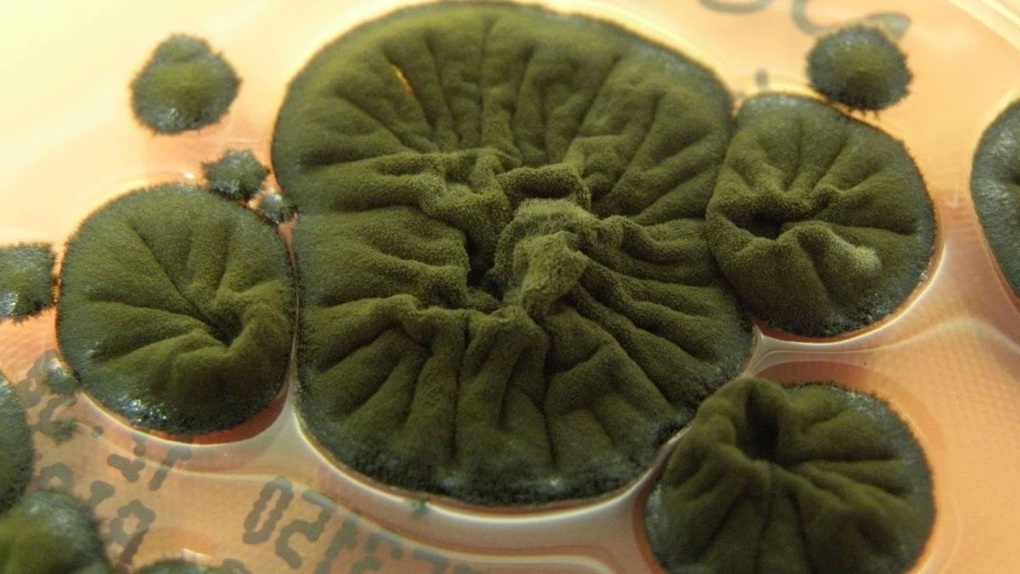
The mold Cladosporium sphaerospermum is cultured at the University Hospital Center in Coimbra, Portugal (Photo: Rui Tomé/Atlas of Mycology).
In 2007, nuclear scientist Ekaterina Dadachova discovered that melanized fungi grew about 10% faster when exposed to radioactive caesium compared to fungi that were not exposed to radiation.
Dr. Dadachova stated: "It's possible that the mold here uses melanin to convert radiation into its energy. Similar to photosynthesis in plants, instead of using sunlight, the mold here obtains energy through ionizing radiation."
Recently, scientists at Stanford University conducted radiation experiments on Cladosporium sphaerospermum .
Despite noting its ability to thrive in high-radiation environments and its melanin's activity in the form of ionizing radiation, the research team emphasized that there is no clear evidence yet that this fungus actually "eats" radiation. The precise mechanism of this characteristic remains a mystery.
Melanin-based adaptations aren't limited to fungi. Tree frogs living in the Chernobyl area have become darker than frogs outside, and appear to survive better in the contaminated zone.
This suggests that melanin may protect organisms and contribute to the process of evolution.
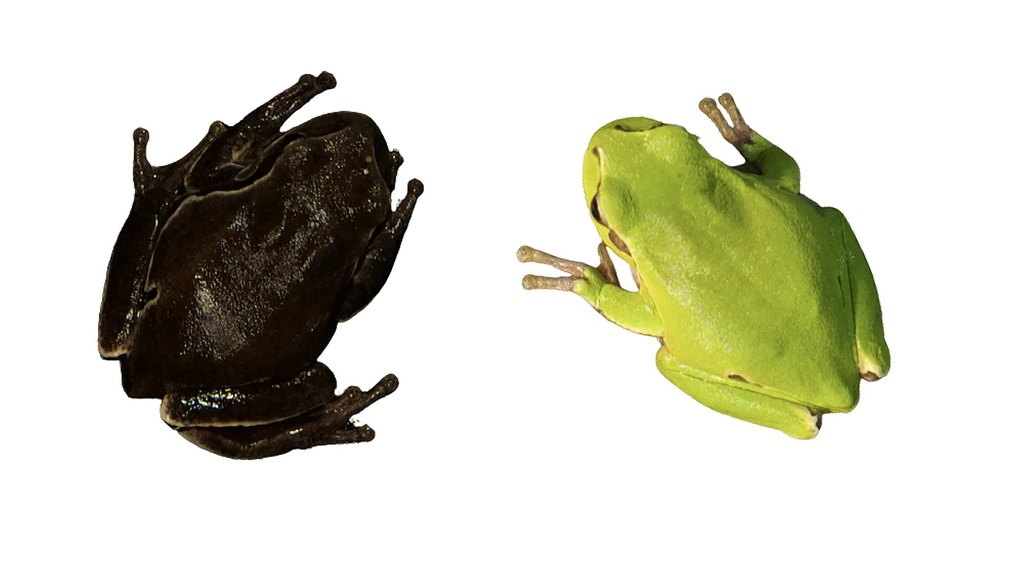
Ionizing radiation may have caused tree frogs inside the Chernobyl zone to have darker skin (left) compared to those outside the contaminated area (right) (Photo: Germán Orizaola/ Pablo Burraco)
However, not all researchers agree. Some organisms at Chernobyl did not grow faster when exposed to radiation, and many species could not survive in this environment.
A 2022 study by Sandia National Laboratory also found no differential growth in the tested fungi. Therefore, the possibility of fungi synthesizing radioactivity remains purely theoretical.
Scientists have yet to find a clear metabolic pathway or biological mechanism to prove that the fungus is converting radiation into energy. Nevertheless, this cautious approach is prompting further research into this particular fungus.
26 days in space: The extraordinary capabilities of the Chernobyl fungus.
In 2018, samples of fungi from Chernobyl were sent to the International Space Station (ISS). For 26 days, they were exposed to high levels of cosmic radiation, stronger than any environment on Earth.
The research results showed that fungi grow faster in space. A thin layer of fungi blocked some cosmic radiation, and sensors placed beneath the sample recorded lower radiation levels. This suggests that fungi can act as a natural radiation shield, even in a thin layer.
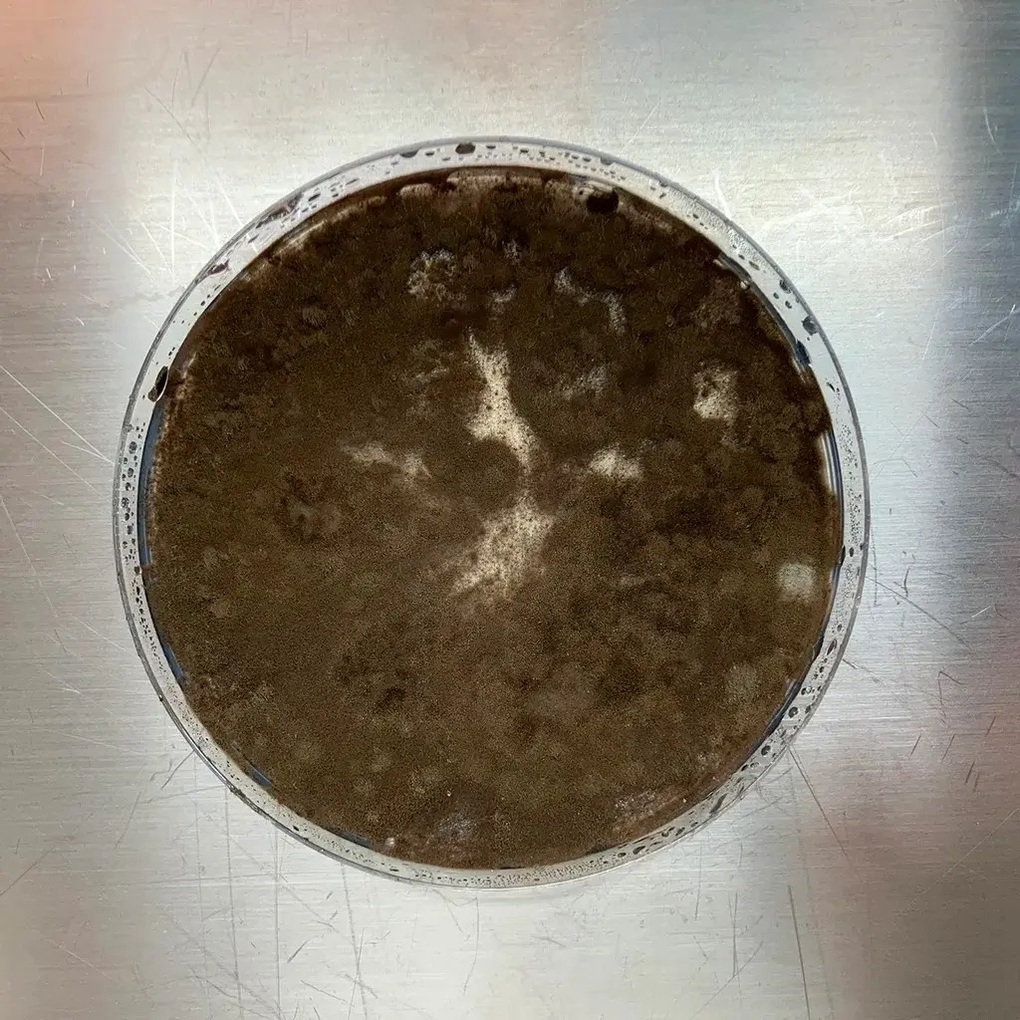
A strain of one of the Chernobyl molds in a petri dish (Photo: Nils Averesch/ Aaron Berliner).
In space, radiation is one of the greatest dangers to astronauts, especially on Mars exploration missions. The planet lacks a protective magnetic field, leaving astronauts directly exposed to cosmic rays that can damage cells, increase the risk of cancer, and affect the brain.
Traditional radiation shields often use heavy metals, making them expensive to produce and use. Therefore, a living shield made from fungi could open up the potential for producing new protective devices.
Fungi have the ability to grow and regenerate themselves, and can become thicker as radiation levels increase. Scientists are exploring the use of fungi, or melanin-rich biological materials, in space missions.
Despite promising results, researchers emphasize the need for more comprehensive studies on these types of fungi.
For molds from radioactive contamination zones to become protective materials for astronauts, more time and rigorous testing are needed before they can be part of space missions.
Source: https://dantri.com.vn/khoa-hoc/phat-hien-kha-nang-bi-an-trong-nam-moc-o-vung-tham-hoa-hat-nhan-chernobyl-20251210134416893.htm












![[Video] Application of Biofloc technology in building an industrial-scale shrimp farming model](https://vphoto.vietnam.vn/thumb/402x226/vietnam/resource/IMAGE/2025/12/11/1765415061532_1765268925610-jpg.webp)



















![[Video] The craft of making Dong Ho folk paintings has been inscribed by UNESCO on the List of Crafts in Need of Urgent Safeguarding.](https://vphoto.vietnam.vn/thumb/402x226/vietnam/resource/IMAGE/2025/12/10/1765350246533_tranh-dong-ho-734-jpg.webp)
































































Comment (0)