

Cold hands and feet are a common condition, especially in cold weather or after sitting for long periods. According to experts, most cases are not dangerous and simply reflect the body's way of regulating itself to stay warm.
However, sometimes an unusually cold sensation in the extremities can be related to certain underlying medical conditions that require attention.
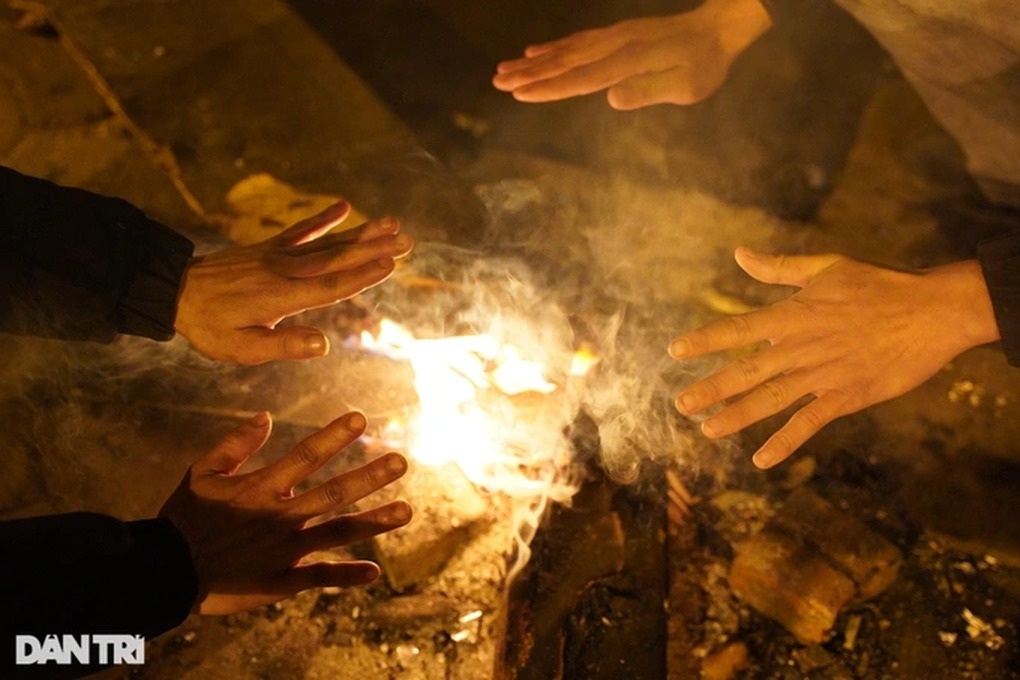
In winter, many people tend to light fires to keep their hands warm (Photo: Ngoc Huyen).
When the temperature drops, the fingers and toes are the first to feel the cold because they are far from the center of the body.
Professor Stephen Cheung of Brock University (Canada) explains that hands and feet don't have large muscles or thick layers of fat to keep them warm. Their temperature is maintained by a system of small blood vessels from the heart. When exposed to cold, the body immediately constricts these vessels to reduce heat loss and direct more blood to vital organs like the heart, lungs, and liver.
"The brain always prioritizes protecting vital organs. The hands and feet take a backseat at this point," he said.
In addition, some groups tend to have colder hands and feet than others. Women are generally more sensitive to cold than men because blood vessels constrict more quickly when the temperature drops.
Children and underweight individuals are also more susceptible to cold due to having less fat and muscle mass to generate and retain heat. Older adults, with their weakened vascular and nervous systems over time, have a reduced ability to regulate their body temperature.
Although cold hands and feet are common, they can sometimes be a warning sign of underlying health issues.
One common condition is Raynaud's syndrome. In this condition, exposure to cold or stress causes the small arteries in the hands and feet to constrict suddenly, causing the fingers and toes to change color to white, blue, or purple depending on skin color.
Most cases of Raynaud's syndrome are not dangerous, but sometimes it can be an early sign of autoimmune diseases such as lupus or scleroderma.
Additionally, a persistent feeling of coldness in the extremities can be related to peripheral artery disease, blood clots, nerve damage, hypothyroidism, anemia, or a side effect of certain medications.
Experts advise patients to seek medical attention if cold symptoms appear suddenly, worsen, cause pain, or are accompanied by skin damage such as ulcers, cracks, or scabs.
To improve the condition of cold hands and feet, experts emphasize that keeping the whole body warm is more important than just warming the hands or feet. When the body is warm enough, the nervous system will stop vasoconstriction and allow blood to flow evenly to the extremities.
Before going out in cold weather, people should wear multiple layers of clothing, choose windproof clothing, and wear a hat to keep their head warm. Clothing should also be breathable to prevent sweat from compromising the heat-retaining properties of the garments.
Increasing physical activity is also an effective way to warm up your hands and feet. When you exercise, your body releases a large amount of heat energy and pushes blood from the core to the extremities. Even brisk walking, stepping in place, or light activity can have a noticeable effect.
Some people have a habit of suddenly immersing their hands and feet in hot water. This can damage blood vessels and increase the burning sensation in the hands and feet.
Doctors also advise that while cold hands and feet are a common symptom, if they appear unusually or persist, you should see a doctor for early detection of vascular or endocrine diseases that could have long-term health consequences.
Source: https://dantri.com.vn/suc-khoe/dau-hieu-lanh-tay-chan-cho-thay-suc-khoe-dang-gap-van-de-20251209163318043.htm


























![[Video] The craft of making Dong Ho folk paintings has been inscribed by UNESCO on the List of Crafts in Need of Urgent Safeguarding.](https://vphoto.vietnam.vn/thumb/402x226/vietnam/resource/IMAGE/2025/12/10/1765350246533_tranh-dong-ho-734-jpg.webp)
































































Comment (0)