

The Deputy Prime Minister stated clearly, "The disbursement of public investment funds should be the responsibility of each individual, not something that needs to be urged," and "If the legal regulations are overlapping and problematic, even urging won't get it done."
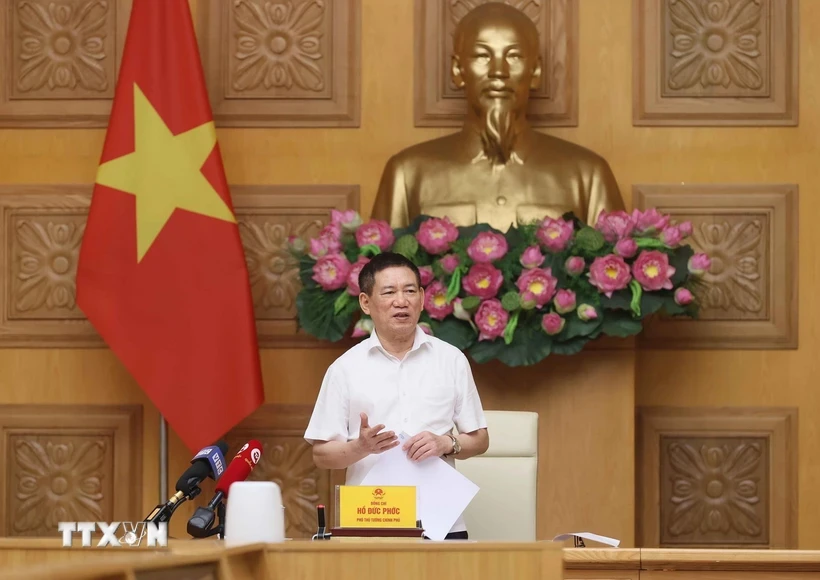
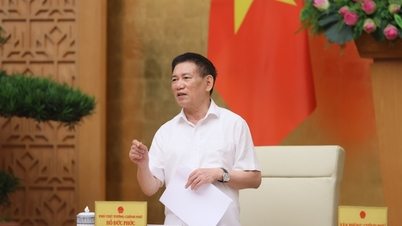
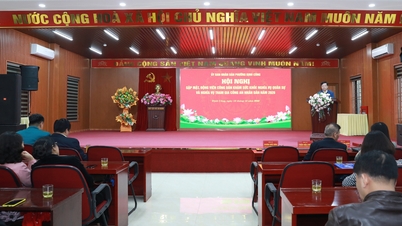
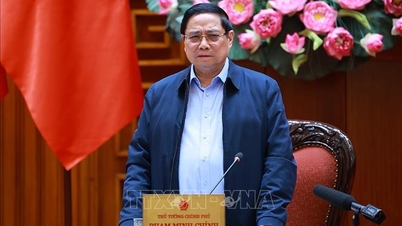
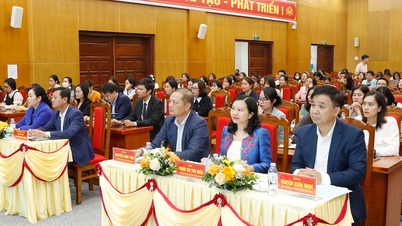
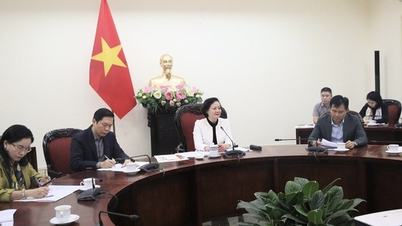
On the morning of November 15th, at a meeting of Task Force No. 4 and No. 7 on inspecting, urging, resolving difficulties and obstacles, and accelerating the disbursement of public investment capital in 2024, Deputy Prime Minister Ho Duc Phoc, head of the two Task Forces, emphasized the need to focus on work, work quickly and strongly, but also to ensure solidity, sustainability, and quality.
Strict investment management
The Deputy Prime Minister stated clearly, "The disbursement of public investment funds should be the responsibility of each individual, not something that needs to be urged," and "If the legal regulations are overlapping and problematic, even urging won't get it done."
In response to the demands of the recent 10th Central Committee Conference on how to accelerate economic growth, utilize resources most effectively, avoid resource stagnation, and prevent obstacles and difficulties, as well as the directives of the General Secretary, we are entering a new era, an era of striving for prosperity and development. The Government has proposed amendments to several laws: the Law on Public Investment, the Law on Planning; the Ministry of Finance is drafting one law amending seven other laws; and the Ministry of Planning and Investment has been tasked with leading the drafting of one law amending four other laws.
"We very much hope that after the National Assembly votes to approve it, the promulgation of the legal regulations will make things easier for us," the Deputy Prime Minister shared, citing the Law on Public Investment as an example: "The Law on Public Investment has many new amendments such as assigning responsibility to localities."
After investment capital is submitted by ministries, sectors, and localities, the list of projects will be given to the localities for decision-making and can be adjusted from one project to another without having to be submitted to higher levels, as long as it does not exceed the total capital allocated to the locality. Targeted program capital will also be reformed in this direction. This will save time, allow projects to be completed sooner, and maximize their effectiveness.
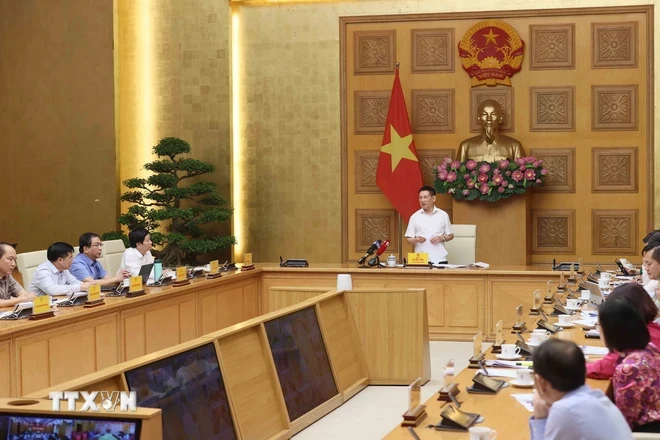
According to Deputy Prime Minister Ho Duc Phoc, unfinished projects will lead to many negative consequences, weakening contractors, preventing them from delivering the required volume of work, and causing a decline in the quality of the construction. Projects involving technology, if prolonged, will lead to outdated technology that fails to meet requirements, resulting in significant waste.
Taking the highway project as a specific example, the Deputy Prime Minister stated that prioritizing quantity over quality, leading to subsidence and collapse, has enormous consequences, as exemplified by the Da Nang-Quang Ngai expressway project, which was invested in by VEC and had to "pay the price." When entrusting the decision-making to local authorities, careful planning is essential.
"If you completely delegate the work to consultants, and the road collapses, sinks, or breaks the next day, you'll be entirely responsible. Therefore, you must calculate from the design stage what types of vehicles will use the road and what load it will withstand," the Deputy Prime Minister emphasized, while also requesting that a long-term vision be considered to ensure the longevity of the project.
The Deputy Prime Minister requested that mountainous provinces rebalance their total budget revenue, especially land use fees, to ensure they fulfill their commitments to the Government. He noted that if the commitments are not met, the People's Committees and People's Councils must immediately convene a meeting to request the Government to allocate additional capital to the medium-term program so that the projects can be effective and avoid being left unfinished due to lack of funds, leading to delays in final settlement. The case of the Viet Duc and Bach Mai Hospital Phase 2 projects in Ha Nam serves as a prime example.
"We must focus on accelerating progress and ensuring excellent governance. We must balance fiscal policy and budget revenue, not just make commitments to get things done only to have no one to handle the issues later, which is very troublesome," the Deputy Prime Minister emphasized.
The head of the task force also noted that with only 45 days left in 2024, the disbursement rate is very low, with central ministries and agencies only achieving 36.09% and localities 52.19%. To achieve the committed 95% disbursement rate, a tremendous effort is required, involving round-the-clock work and timely procedures.
We must focus on accelerating the disbursement of public investment capital from now until the end of the year, managing investment strictly, especially regarding violations of project volume and quality, which are the root causes of losses. In addition, we must focus on resolving obstacles, and ministries and sectors must promptly meet the requirements of localities; we are determined to complete the work volume before December 31, 2024.
The Deputy Prime Minister assigned specific tasks to the ministries, including the Ministry of Planning and Investment, which is to review proposals from the provinces to adjust the total investment amount, investment procedures, fund transfers, resolve obstacles in investment procedures, and advise on the allocation of additional capital for projects to ensure timely completion, maximize efficiency, and bring the projects into handover and use as soon as possible. The Ministry of Finance is to address issues related to ODA funding, allocate capital, and adjust investment capital upon receiving input from the Ministry of Planning and Investment.
Low disbursement rate
According to a report by the Ministry of Planning, the total state budget investment plan for 2024 assigned by the Prime Minister to 21 units (10 ministries and central agencies, 11 localities) under Task Force No. 4 is VND 47,236.241 billion (accounting for 6.9% of the total national investment plan).
Currently, only the Ministry of Finance has not yet allocated its entire assigned capital plan, with a remaining unallocated capital of VND 44.013 billion, due to incomplete investment procedures. This accounts for 0.09% of the total investment capital plan of the units under Task Force No. 4 and 0.3% of the total unallocated capital nationwide.
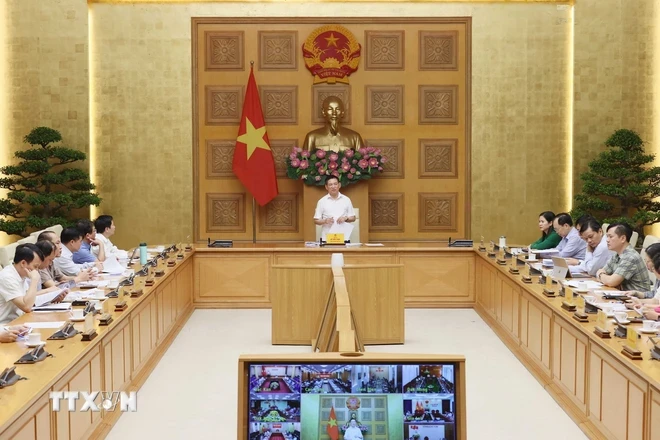
The disbursement rate for the first 10 months reached 59.8% of the plan assigned by the Prime Minister, higher than the national average (52.46%). Of these, 4 central agencies and 8 localities had disbursement rates higher than the national average; 5 ministries/central agencies and 3 localities had disbursement rates below the national average.
According to a report by the Ministry of Finance, the total state budget investment plan for 2024 allocated to the five localities under Task Force No. 7 is VND 21,807.443 billion. As of the reporting date, all five localities have allocated the entire planned capital.
The detailed allocated capital for the 5 localities is 26,113.333 billion VND, reaching 119.75% of the plan assigned by the Prime Minister. Basically, all localities allocated more capital than the plan assigned by the Prime Minister (due to increased allocation of local budgets).
By the end of October 2024, the total disbursed capital of the five localities reached 48.36% of the plan (lower than the national average), of which three localities (Dak Lak 60.49%; Dak Nong 50.89%; Gia Lai 51.76%) had disbursement rates higher than the national average, while two localities (Kon Tum 42.93%, Lam Dong 38.37%) had disbursement rates lower than the national average. The estimated disbursement for the whole year in four out of five localities (Dak Lak, Gia Lai, Kon Tum, Lam Dong) is expected to reach 95% or more, while Dak Nong province is projected to disburse only 92% (below 95%).
Many obstacles
The main difficulties and obstacles in the disbursement of public investment capital by the units under the two Task Forces lie in legal regulations; investment preparation and land clearance; project implementation; and the implementation of national target programs.
The process and procedures for converting forest land to other uses, as stipulated in the Forestry Law, are complex, time-consuming, and do not provide sufficient autonomy for localities, thus affecting the overall progress of project implementation. These are the obstacles faced by the provinces of Dak Nong, Gia Lai, and Kon Tum.
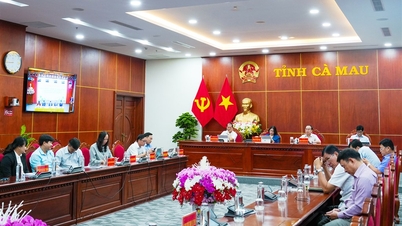
Representatives from Cao Bang province stated that the disbursement rate in the locality is low, reaching only 48.1% to date. The biggest difficulty is the disbursement of funds for the Dong Dang - Tra Linh expressway project, which involves a very large amount of capital but has a low disbursement rate. This is due to prolonged rain and flash floods, affecting the project's progress. The province is accelerating construction progress during the dry season and is committed to achieving 95% disbursement by 2024.
According to Pham Duc Toan, Standing Vice Chairman of the People's Committee of Dien Bien province, by the end of October 2024, the province had disbursed 58.4% of its allocated funds. For a disadvantaged province like Dien Bien, public investment is a crucial resource for promoting socio-economic development, and the disbursement rate has not yet met the set targets.
Mr. Pham Duc Toan cited reasons such as the low revenue from land use in 2024 compared to the allocated budget due to the general difficulties, unfavorable weather conditions, the scarcity of materials, especially sand, the sharp increase in unit prices, and the inability of licensed supply to meet demand, affecting the construction process of key projects in the final stages. In addition, subjective reasons include the need to improve the capacity and management of consulting and construction work from investors to contractors; the province has regularly held meetings to resolve difficulties and obstacles.
Among the localities with disbursement rates below the national average, Chairman of the People's Committee of Lai Chau province, Le Van Luong, shared the difficulties in land clearance, construction materials, and the shortage of sand and gravel due to obstacles related to the Mineral Law, which have yet to be resolved. Revenue from land use is also very low, affecting disbursement results.
Also at the meeting, representatives from the Ministries of Finance, Planning and Investment, and Natural Resources and Environment responded to the opinions and recommendations of the localities.
Source
















































































Comment (0)