

 |
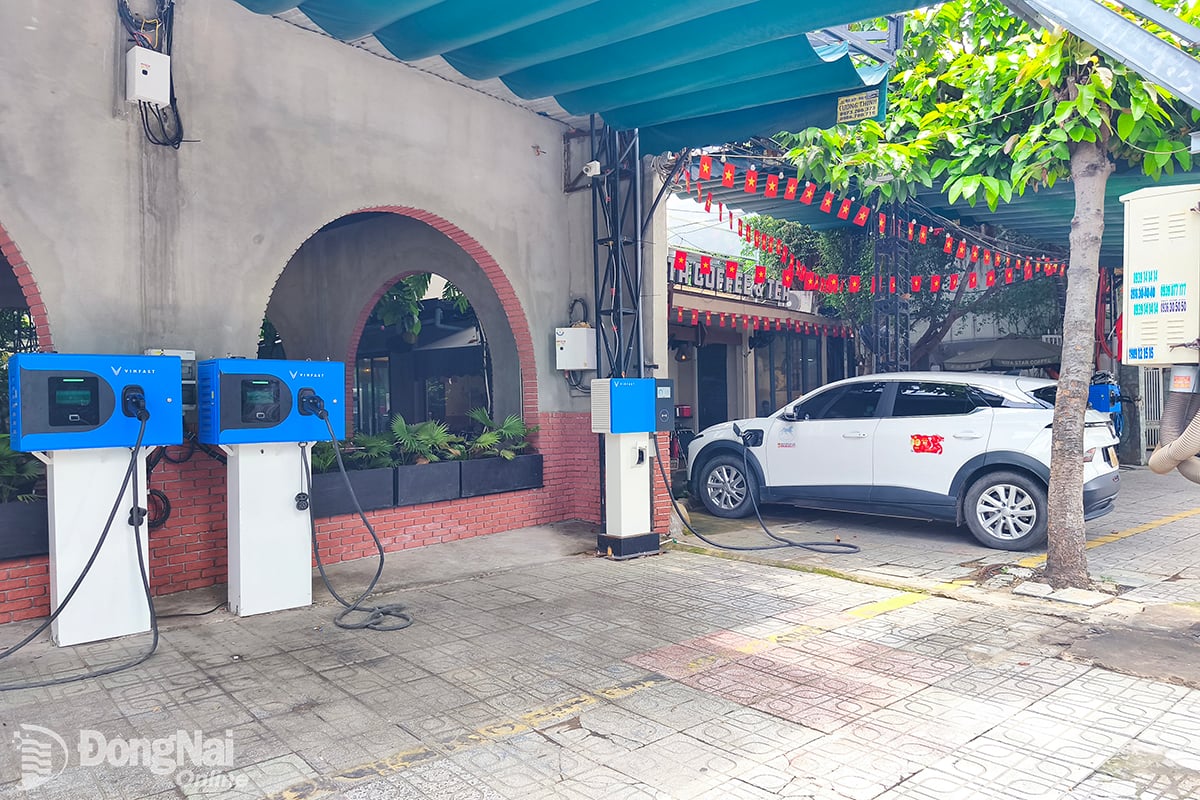
| A coffee shop in Tan Trieu ward has invested in an electric vehicle charging station. Photo: Van Gia |
The model of a coffee shop combined with an electric vehicle charging station complements the existing electric vehicle charging station network but at a lower investment cost, while also providing convenience for drivers and residents and aligning with current development trends.
In line with current trends
The trend of using electric vehicles is rapidly increasing among the population because they are environmentally friendly and do not emit pollutants. Along with the demand for electric vehicles, this has also created opportunities for individuals and businesses to invest in charging stations for these vehicles to provide services. In particular, due to their convenience, many businesses, especially in urban areas, have emerged as coffee shops that also function as electric vehicle charging stations for drivers.
Taking advantage of his lunch break, Mr. Nguyen Van Luan, a ride-hailing driver residing in Tan Trieu ward, stopped at a local cafe to rest, enjoy a cup of coffee, and charge his electric car. According to Mr. Luan, electric car drivers need to recharge their batteries after a while when they are nearly depleted. Previously, he used to go to charging stations in shopping malls or gas stations to charge his car, but he finds the cafe-style charging station model more convenient because it provides a relaxing space.
Dong Nai 's goal is to develop electric vehicle charging station infrastructure; green energy supply and storage stations (biofuel, hydrogen, ammonia, etc.) by 2030 to meet 100% of the needs of public transportation vehicles, replacing new investments using electricity and green energy, and vehicles used by people and businesses.
Zenta Cafe (located at 58D Nguyen Van Tien Street, Tan Trieu Ward) has been operating a charging station for cars and motorbikes since the beginning of 2025. This is a franchised station belonging to the Green Power Station system of Vietnam Green Power Station Joint Stock Company. Ms. Phi Thi Hai Yen, the cafe manager, said: "Recognizing the increasing number of electric vehicles on the market, the cafe decided to invest in an electric vehicle charging station. Here, customers can have a parking space and relax with coffee while waiting for their vehicles to charge. Having an electric vehicle charging station also adds another channel for the cafe to attract a segment of customers."
Similarly, at a cafe in Trang Dai ward that charges electric motorbikes, in addition to customers charging their batteries while enjoying coffee, they also offer loaner chargers and on-site battery jump-starting services. The prices of drinks are also very reasonable, making it convenient for drivers.
In fact, the development of the coffee shop-cum-charging station model is a direct result of the strong ongoing trend of green urbanization. The need for safe, flexible, and easily accessible charging stations will become an indispensable part of the new transportation infrastructure. While investing in public charging stations requires significant capital, integrating this model into residential areas in a flexible and low-cost manner is becoming a trend. This presents an opportunity for small businesses, individual entrepreneurs, or those operating in the F&B industry to utilize existing space to expand their services without major changes to their structure or initial business objectives.
Develop a plan for electric vehicle charging stations.
In Dong Nai province, the number of electric vehicles is increasing rapidly. Responding to the actual demand and proposals from the Department of Industry and Trade, in June 2025, the Provincial People's Committee issued a plan to implement the development of electric vehicle charging stations, storage infrastructure, and green energy supply for transportation vehicles in the industry and trade sector of the province until 2030, with a vision to 2050. Accordingly, the goal is to develop electric vehicle charging station infrastructure, supply stations, and green energy storage facilities; to develop the industry producing electric and green energy-powered transportation vehicles and equipment... to promptly meet the needs of developing a green transportation system, aiming for net zero emissions by 2050.
The province requires that planning and construction focus on developing the power supply network to ensure electricity supply for the development of electric vehicle charging stations, power stations, and green energy storage facilities; charging station infrastructure in industrial zones, supermarkets, bus stations, rest stops, parking lots, especially along national highways, and expanding to the entire provincial road network. At the same time, criteria for developing green energy charging station and power station infrastructure should be included in regulations, as well as criteria for green bus stations and rest stops.
Previously, in March 2025, the Department of Construction also issued a document to guide the removal of difficulties in investing in and constructing electric vehicle charging stations. According to regulations, charging equipment and poles installed in construction projects or project components to serve the project's utility and for use by vehicles, other vehicles and equipment, or for personal use as stipulated in point b, clause 1, Article 123 of Government Decree No. 175/2024/ND-CP, do not require a construction permit. However, the installation and construction location must ensure environmental safety, fire prevention, and firefighting requirements. Therefore, investors in this business model need to carefully study the regulations to ensure compliance.
Van Ninh
Source: https://baodongnai.com.vn/xa-hoi/202509/quan-ca-phe-dau-tu-tram-sac-xe-dien-54c2976/






























































































Comment (0)