

Hanoi : Dengue fever cases are rising rapidly, with more outbreaks emerging.
Over the past week, Hanoi has recorded 73 new cases of dengue fever (an increase of 35 cases compared to the previous week) and 2 outbreaks.
According to the Hanoi Department of Health , in the past week (from the 14th to the present), there have been 73 new cases of dengue fever in Hanoi (an increase of 35 cases compared to the previous week). Patients are distributed across 19 districts, with the majority recorded in Dan Phuong district with 41 cases.
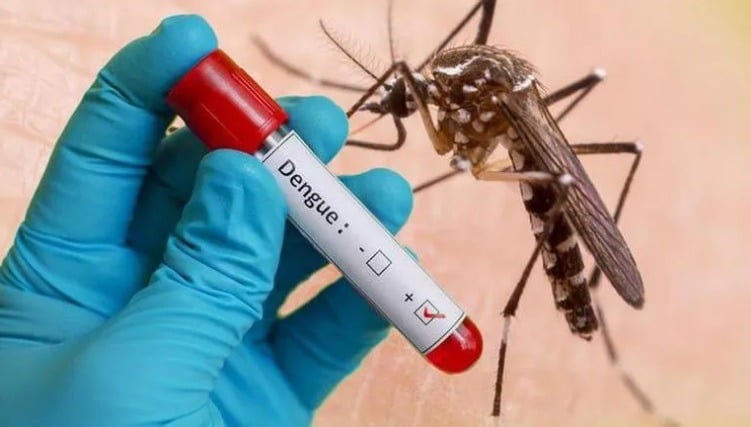 |
| Over the past week, Hanoi has recorded 73 new cases of dengue fever (an increase of 35 cases compared to the previous week) and 2 outbreaks. |
Thus, cumulatively from the beginning of 2024 to the present, the entire city has recorded 856 cases of dengue fever (an increase of more than 1.7 times compared to the same period in 2023).
Additionally, two more dengue fever outbreaks were recorded last week in Trung Liet ward (Dong Da district) and Phuong Dinh commune (Dan Phuong district).
To date, the city has 14 dengue fever outbreaks. Currently, 4 outbreaks are still active in Bai Thap and Dong Van hamlets ( Dong Thap commune, Dan Phuong district); cluster 10 of Tan Hoi commune (Dan Phuong district); E4 Thai Thinh residential area, Trung Liet ward (Dong Da district); and Phuong Mac hamlet, Phuong Dinh commune (Dan Phuong district). The outbreak in Dong Thap commune, Dan Phuong district alone has recorded 89 patients so far.
Health experts believe that dengue fever no longer develops in cycles but changes according to climate and environmental conditions. They predict that erratic weather patterns of rain and sunshine will increase the risk of outbreaks from July to November.
In particular, groups such as the elderly, those with underlying health conditions, and children need more attention because they are at a higher risk of developing severe illness.
Highlighting the dangers of dengue fever, the World Health Organization (WHO) states that 3.9 billion people in 129 countries are at risk of dengue infection, representing more than half of the world's population. It is estimated that there are 390 million dengue cases worldwide annually, 96 million of which present with clinical symptoms.
Severe cases occur in approximately 500,000 people each year, with a mortality rate of 10% among hospitalized patients. However, this mortality rate could be reduced to below 1% if the disease is detected, diagnosed, and treated early based on warning signs.
In Vietnam, according to statistics from the Ministry of Health, in 2023 the country recorded more than 172,000 cases of dengue fever, with 43 deaths. Compared to 2022, the number of cases decreased by about 54%, and the number of deaths decreased by 72% (a decrease of 108 cases).
Bacterial co-infection is a relatively rare but serious complication in dengue fever cases. Up to 44% of dengue-related deaths involve bacterial co-infection.
According to Mr. Khong Minh Tuan, Deputy Director of the Hanoi Center for Disease Control (CDC), dengue fever is no longer a disease that develops in cycles, but has a high number of cases every year due to climate change, environmental factors, and demographic characteristics. Therefore, it is a disease that must be prioritized for prevention and control.
Given the unpredictable nature of infectious diseases in general, and dengue fever in particular, due to the impact of weather and the environment, the Hanoi CDC advises people not to be complacent.
To prevent the disease, the most effective preventive measure remains actively maintaining environmental hygiene and completely eliminating water containers and environments conducive to mosquito breeding.
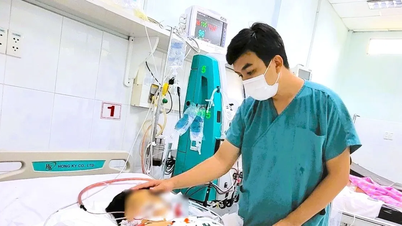
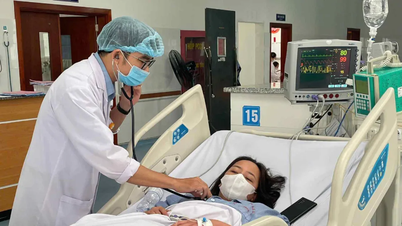
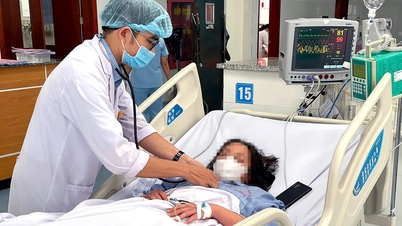
If a dengue fever patient exhibits warning signs such as high fever, abdominal pain in the liver area, vomiting or bleeding gums, prolonged menstruation, cold extremities, or low blood pressure, they should immediately go to a medical facility for examination and timely treatment. Under no circumstances should they attempt self-treatment at home; negligence can lead to severe illness and death.
Regarding dengue fever, doctors warn of several mistakes that can worsen the condition, such as neglecting to seek medical attention, self-medicating with antibiotics, and assuming that the fever subsides as a sign of recovery.
Currently, there is no specific treatment for dengue fever; treatment mainly focuses on managing symptoms and monitoring warning signs. Patients should be hospitalized if they experience any of the following signs: mucosal bleeding, bleeding from gums, nose, or digestive tract; abdominal pain in the liver area; excessive vomiting; rapidly decreasing platelet count and blood concentration; or decreased urine output.
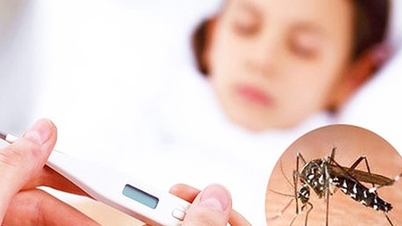
With dengue fever, there are treatment mistakes that can worsen the condition and that people need to avoid. Specifically, the symptoms of dengue fever are easily confused with those of a common viral fever, leading patients to be complacent and causing the disease to worsen, resulting in many complications and even life-threatening situations.
Dengue fever is classified into three levels: mild, with warning signs, and severe. Patients often underestimate the severity of the condition and self-treat instead of seeking medical attention.
In mild cases, patients may be advised to monitor their condition at home, but they still need to see a doctor for diagnosis, treatment, and close monitoring.
In severe cases, patients may experience dangerous complications such as internal bleeding, brain damage, liver and kidney damage, and even death if not detected in time.
Most patients mistakenly believe that the fever subsides because they feel better afterwards. However, in reality, the most dangerous phase is after the high fever stage.
At this stage, the patient needs close monitoring by a doctor and complete rest, limiting strenuous activity and excessive movement because after 2-7 days, platelet count can drop significantly and plasma leakage may occur, leading to symptoms such as subcutaneous bleeding and nosebleeds.
Depending on the severity and complications of the disease, it can lead to internal bleeding, pleural effusion, gastrointestinal bleeding, dengue shock, and even death.
Patients with dengue fever often experience persistently high fevers, so in an attempt to lower their fever quickly, they may take fever-reducing medication without adhering to the prescribed dosage.
Furthermore, there are many cases of misuse of fever-reducing medications, such as using aspirin and ibuprofen instead of paracetamol, leading to more severe bleeding in patients, potentially causing severe and life-threatening gastric bleeding.
Many people believe that mosquitoes that transmit dengue fever only live in stagnant public ponds, sewers, etc.
However, Aedes mosquitoes thrive in stagnant water sources such as fish tanks, flower vases, rock gardens, and rainwater collected in broken pieces of pottery in gardens, alleys, or on rooftops and construction sites. Therefore, it is necessary to remove these stagnant water containers that provide breeding grounds for Aedes mosquitoes.
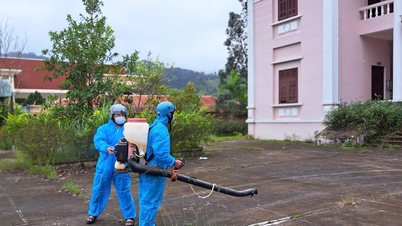
To avoid dengue fever transmitted by mosquitoes, many people believe that spraying mosquito repellent at any time is acceptable. However, the first step in mosquito control is to clean the house, turning over all mosquito breeding grounds to kill larvae, before proceeding with spraying to kill adult mosquitoes.
For effective mosquito control, spraying should be done in the morning. This is because dengue mosquitoes are active during the day, most actively in the early morning hours and before sunset. It's important to note that insecticides remain effective for up to six months after application.
Many people believe that once someone has had dengue fever, they won't get it again. This is not entirely true. Dengue fever is caused by the Dengue virus, which has four strains: DEN-1, DEN-2, DEN-3, and DEN-4. All four strains are capable of causing the disease.
Therefore, if a person has previously had dengue fever, their body may produce antibodies during the illness.
However, the immunity acquired is specific to each individual strain. A patient may not be reinfected with the old strain but can still be infected with a new strain, thus potentially contracting dengue fever again.
Many people believe that when suffering from dengue fever, only electrolyte replacement should be given, and coconut water should not be consumed because it is ineffective in rehydrating the body and makes it difficult to identify complications.
This is completely wrong. In dengue fever, a high fever lasting for several consecutive days will cause the patient to become dehydrated and lose fluids. The simplest way to replenish fluids is to give the patient Oresol.
However, many patients find it difficult to drink Oresol. This can be replaced with coconut water, orange juice, grapefruit juice, or lemon juice to replenish lost fluids. Furthermore, these fruits contain many minerals and vitamin C, which help boost immunity and strengthen blood vessel walls.
Many parents mishandle dengue fever in their children. Seeing bruised hemorrhagic spots, they believe that performing a ritual to remove the "toxic blood" will speed up recovery.
This can lead to uncontrollable bleeding. This provides an entry point for bacteria, which can cause dangerous blood clotting disorders that can be life-threatening for the child.






















![[Photo] Prime Minister Pham Minh Chinh holds a phone call with the CEO of Russia's Rosatom Corporation.](/_next/image?url=https%3A%2F%2Fvphoto.vietnam.vn%2Fthumb%2F1200x675%2Fvietnam%2Fresource%2FIMAGE%2F2025%2F12%2F11%2F1765464552365_dsc-5295-jpg.webp&w=3840&q=75)












































Comment (0)