

OCOP - A revolution in rural areas
In recent years, consumers have become increasingly familiar with products bearing the OCOP label – an abbreviation for the "One Commune One Product" program.
The OCOP program, launched in 2018, is part of a system of solutions to implement the Government's National Target Program for building new rural areas and to effectively implement the " Economy and production organization" criteria group in the National Criteria Set for new rural communes.
The OCOP program aims to develop the rural economy by focusing on internal strengths and increasing added value. The program's core focus is on developing agricultural , non-agricultural, and service products with advantages in each locality along the value chain, implemented by private sector (businesses, production households) and collective economic entities.
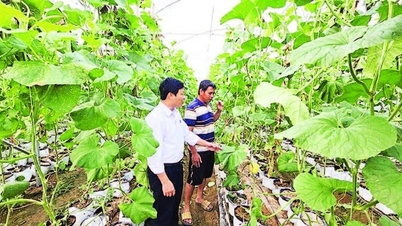
Having been implemented for just over four years, the One Commune One Product (OCOP) program is a revolutionary turning point that has qualitatively changed the new rural development movement, thereby transforming the way agricultural production is organized, the face of rural areas, and the lives of farmers. It helps farmers move towards producing goods on their own land, with readily available human resources and traditional crops and livestock.

In Nghe An province alone, hundreds of quality products have entered the market thanks to the OCOP program. By October 2023, the entire province had 422 OCOP products rated 3 stars or higher, including 380 products with 3 stars, 41 products with 4 stars, and 1 product with 5 stars.
These products are made from local agricultural produce, combining local culture with modern technology in many items, creating a unique, distinctive, and very attractive product that suits consumer tastes.
The products are refined from familiar agricultural products such as turmeric, ginger, peanuts, corn, potatoes, cassava, rice, from indigenous medicinal herbs, and from traditional local foods such as beef, pork, chicken, aquatic and seafood...

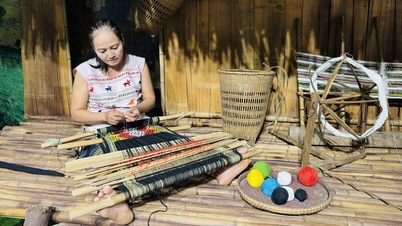
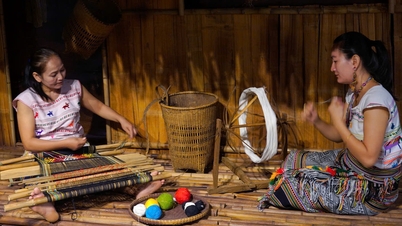
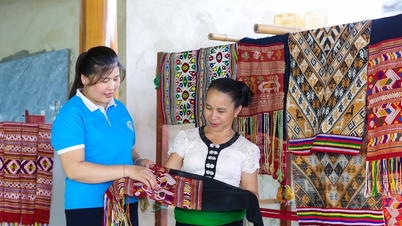
More importantly, the development of OCOP products has revived traditional crafts that were on the verge of disappearing, such as brocade weaving, basket weaving, and blacksmithing. OCOP has also stimulated efforts to preserve the traditional cultural heritage of many ethnic groups through community-based tourism products. OCOP has truly achieved what functional agencies at all levels have been concerned about for many years: promoting the restructuring of the agricultural sector, developing production towards concentrated commodity production, building brands, increasing product value, and improving the production and business skills of stakeholders.
The OCOP program also provides an opportunity for many struggling cooperatives to find a direction for development. Many small and medium-sized enterprises (SMEs) have emerged from farmers, linking their existence and development to OCOP products, agriculture, farmers, and rural areas. This collaboration between farmers, cooperatives, and SMEs has overcome the most significant challenge previously faced by agriculture and farmers: bringing agricultural products to market.

The entire province has 215 cooperatives with products participating in value chain production, and 79 cooperatives have products achieving OCOP 3-star or higher. These units have connected, supported, and acted as "facilitators" for many OCOP products.
Many cooperatives play a significant role, such as: Thien Nhan Lemon Cooperative, Tan Ky Clean Banana Cooperative, Thai Hoa Tien Brocade Handicraft Village Cooperative, Mon Son Handicraft Cooperative (Con Cuong), Phu Quy Medicinal Herb Cooperative, Nam Anh Cassava Starch Cooperative, Que Bac Lotus Cooperative, Tien Hoi Honey Cooperative, Huong Son Cooperative (Ky Son)...
Behind these cooperatives are countless farming households that have escaped poverty and become prosperous. For example, the Huong Son Cooperative annually purchases and sells 1,500 to 2,000 tons of fresh ginger from farmers in Ky Son, while also producing over 10 ginger-based products for domestic consumption and export to several countries around the world.
And the pedestrian street
The establishment of pedestrian zones on weekend evenings along Ho Tung Mau, Nguyen Van Cu, Nguyen Trung Ngan, and Nguyen Tai streets in Vinh City in recent years has been a very meaningful initiative for the spiritual life of the city's residents and surrounding areas. Coincidentally, this activity in the city center is closely related to OCOP products from the villages of Nghe An province.

The pedestrian street underwent a one-year trial period and was officially inaugurated and put into operation in May 2023. However, the most vibrant nights on the pedestrian street are when stalls display, introduce, and sell OCOP (One Commune One Product) products from businesses and cooperatives in networking and exchange programs organized by agencies such as the Provincial Investment Promotion Center, the Provincial Fatherland Front Committee, the People's Committee of Vinh City, Hanoi, etc.
On these occasions, the pedestrian street becomes more crowded and vibrant with enthusiastic sellers and buyers. Many consumers express regret that this exhibition and sale of OCOP products is rarely organized.

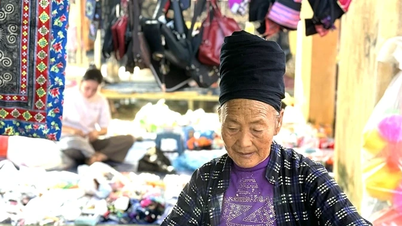
Recently, the Vietnam Fatherland Front of Nghe An province, in coordination with the Fatherland Fronts of the districts in the province, and local Party committees and authorities, organized the "Colorful Cultures of Ethnic Groups in Nghe An Province" street festival on the pedestrian street for two days (November 10th and 11th), attracting thousands of people to participate. Nghe An's OCOP (One Commune One Product) products were sold strongly, and producers and sellers were very pleased.
This event highlights the desire of cooperatives and businesses to regularly set up stalls on the pedestrian street, but this has not yet been possible. It is known that setting up stalls is quite expensive, costing between 6 and 12 million VND per stall, and they only operate for a few days before closing. Therefore, this activity is more about promotion than business effectiveness. Many consumers, as well as producers and the organizing agencies, hope that the province and city will plan and invest in permanent rows of stalls so that cooperatives and businesses can bring their products out to sell and introduce them every weekend.
The pedestrian street will therefore become richer, more vibrant, and more attractive, while also supporting OCOP businesses in selling a significant amount of goods and promoting OCOP products to tourists.
Source

![[Photo] Prime Minister Pham Minh Chinh holds a phone call with the CEO of Russia's Rosatom Corporation.](/_next/image?url=https%3A%2F%2Fvphoto.vietnam.vn%2Fthumb%2F1200x675%2Fvietnam%2Fresource%2FIMAGE%2F2025%2F12%2F11%2F1765464552365_dsc-5295-jpg.webp&w=3840&q=75)


![[Photo] Closing Ceremony of the 10th Session of the 15th National Assembly](/_next/image?url=https%3A%2F%2Fvphoto.vietnam.vn%2Fthumb%2F1200x675%2Fvietnam%2Fresource%2FIMAGE%2F2025%2F12%2F11%2F1765448959967_image-1437-jpg.webp&w=3840&q=75)







































![[OFFICIAL] MISA GROUP ANNOUNCES ITS PIONEERING BRAND POSITIONING IN BUILDING AGENTIC AI FOR BUSINESSES, HOUSEHOLDS, AND THE GOVERNMENT](https://vphoto.vietnam.vn/thumb/402x226/vietnam/resource/IMAGE/2025/12/11/1765444754256_agentic-ai_postfb-scaled.png)




























![[Infographic] Preventing students from making their own firecrackers: 7 things parents need to know](https://vphoto.vietnam.vn/thumb/402x226/vietnam/resource/IMAGE/2025/12/11/1765466656703_img_0320_20251211183542.jpeg)

















Comment (0)