

(NB&CL) 2024 marks the 30th anniversary of the official entry into force of the United Nations Convention on the Law of the Sea (UNCLOS). Over the past three decades, UNCLOS has increasingly demonstrated the strength of this "international constitution for the seas and oceans," a comprehensive legal document regulating all activities of states and establishing a comprehensive, fair, and peaceful legal order in the maritime domain.
Nine years for a Convention establishing a global maritime order.
On November 16, 1994, twelve years after its signing and ratification by all 60 member states, the UN Convention on the Law of the Sea (UNCLOS) officially came into effect. But that was not the end of the difficulties in obtaining this legal document.
Going back in time, the idea of having a sufficiently strong legal framework to "coordinate" all activities related to the seas and oceans has existed for a long time. The first international conference on the Law of the Sea was convened by the League of Nations in 1930 in The Hague (Netherlands) to discuss and develop international regulations on territorial waters, combating piracy, and principles for the use of natural resources of the sea, but it did not achieve any concrete results.
In 1958, the United Nations convened the First Conference on the Law of the Sea in Geneva (Switzerland) with 86 participating countries. This conference adopted four international conventions on the Law of the Sea, including: the Convention on the Territorial Sea and the Contiguous Zone; the Convention on Fishing and Conservation of Living Resources; the Convention on the Continental Shelf; and the Convention on the High Seas. However, some important issues remained unresolved, such as the width of the territorial sea, the right of passage through international straits, the limits of fishing zones, and the outer boundary of the continental shelf.
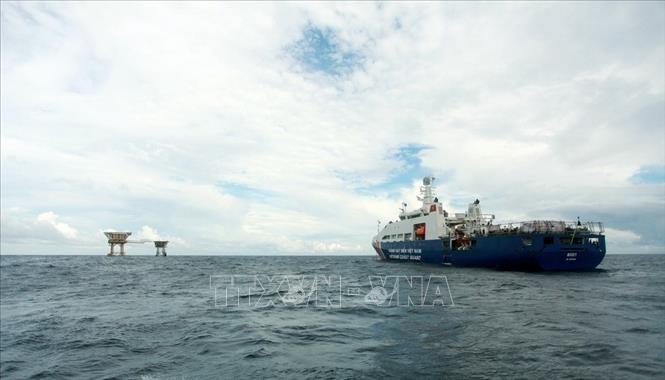
Vietnam actively participated in the drafting process of the 1982 United Nations Convention on the Law of the Sea (UNCLOS). In the photo: Coast Guard vessel 8001 (Coast Guard Region 3 Command) on duty in the area of the DK1/15 platform in the Phuc Nguyen cluster. Photo: Lam Khanh/VNA
On March 15, 1960, the United Nations convened the Second Conference on the Law of the Sea in Geneva (Switzerland). However, due to numerous disagreements, this conference again failed to achieve any significant results. Around the same time, Malta, a small coastal nation in Europe, specifically its Ambassador and jurist Arvid Pardo, initiated a proposal for the United Nations to sponsor an international conference to draft a Convention on the Law of the Sea. This proposal immediately received widespread support, and in 1973, the Third United Nations Conference on the Law of the Sea was therefore convened.
However, it took 5 years of preparation (1967-1972), 9 years of negotiations (1973-1982), and 11 sessions involving hundreds of countries and numerous international organizations, including non- governmental organizations, until April 30, 1982, for the Third United Nations Conference on the Law of the Sea to adopt the new Convention on the Law of the Sea with 130 votes in favor, 4 against, 17 abstentions, and 2 countries not participating in the vote.
On December 10, 1982, the United Nations Convention on the Law of the Sea (UNCLOS 1982), signed by 107 countries, including Vietnam, in Montego Bay, Jamaica, marked a significant milestone in international maritime law. It ended a long period of conflict, disputes, tensions, and even chaos in the world's oceans and seas, establishing UNCLOS as a binding dispute resolution mechanism.
To date, 168 countries have ratified the convention, including 164 members of the UN. UNCLOS is considered the international community's maritime constitution because it not only includes treaty provisions but also codifies customary regulations. UNCLOS encompasses all the most important aspects of international law and practice concerning the world's seas and oceans.
Since the adoption of UNCLOS 1982, the International Seabed Authority was established in 1994, tasked with organizing and controlling deep-sea activities beyond national jurisdiction, and managing the exploitation and conservation of marine resources. The International Tribunal for the Law of the Sea was also established in 1996 and has the authority to resolve maritime disputes arising from the interpretation and application of the Convention.
Vietnam - 30 years as a responsible member of UNCLOS
As a coastal nation with a coastline stretching over 3,260km, Vietnam possesses significant advantages linked to the sea, and therefore, the country is acutely aware of its importance. This is evidenced by the 2018 Vietnam Maritime Strategy, which identifies the marine economy and sustainable use of the sea as a major focus in the nation's development strategy.
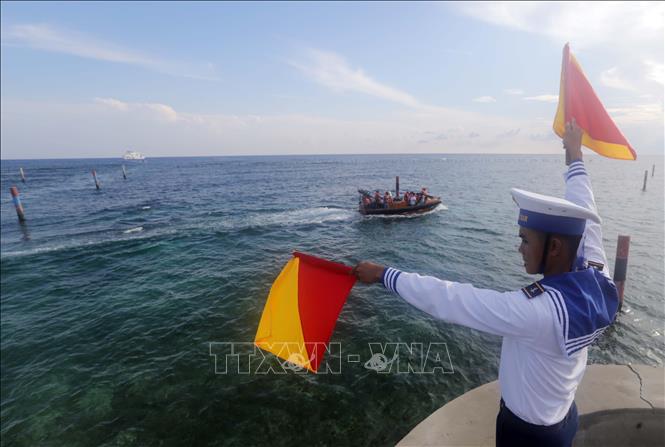
Vietnam has always strived to seriously fulfill its rights and obligations as a coastal state as stipulated in the Convention. In the photo: Guiding a boat carrying a delegation to Da Lat Island (Truong Sa). Photo: Tran Viet/VNA
For this reason, Vietnam has been very aware of the importance of legal documents such as UNCLOS for the peaceful, stable, and long-term development of Vietnam. Therefore, even before the 1982 UNCLOS came into existence, Vietnam actively applied relevant provisions of international law to develop legal documents on the sea; participated in the Third United Nations Conference on the Law of the Sea; and immediately after the adoption of UNCLOS, Vietnam was one of 107 countries that signed the Convention.
In particular, prior to the Convention's entry into force, on June 23, 1994, the Vietnamese National Assembly issued a Resolution approving this important legal document, stating: "By ratifying the 1982 United Nations Convention on the Law of the Sea, the Socialist Republic of Vietnam demonstrates its determination to work with the international community to build a just legal order, encouraging development and cooperation at sea." The ratification resolution affirmed the sovereignty of the Socialist Republic of Vietnam over its internal waters, territorial sea, sovereign rights and jurisdiction over the contiguous zone, exclusive economic zone, and continental shelf on the basis of the provisions of UNCLOS and the principles of international law; and demanded that other countries respect Vietnam's aforementioned rights.
The resolution of the Vietnamese National Assembly on June 23, 1994, once again affirmed Vietnam's sovereignty over the Hoang Sa and Truong Sa archipelagos and advocated for resolving territorial sovereignty disputes and other disagreements related to the East Sea issue through peaceful negotiations, in the spirit of equality, mutual understanding and respect, respect for international law, and respect for the sovereignty, sovereign rights, and jurisdiction of coastal states over their exclusive economic zones and continental shelves.
Furthermore, on June 21, 2012, Vietnam enacted the Law of the Sea to unify the management of the planning, use, exploration, exploitation, and preservation of Vietnam's maritime zones, continental shelf, and islands, as well as the resolution of maritime disputes between Vietnam and neighboring countries, in a single legally binding document.
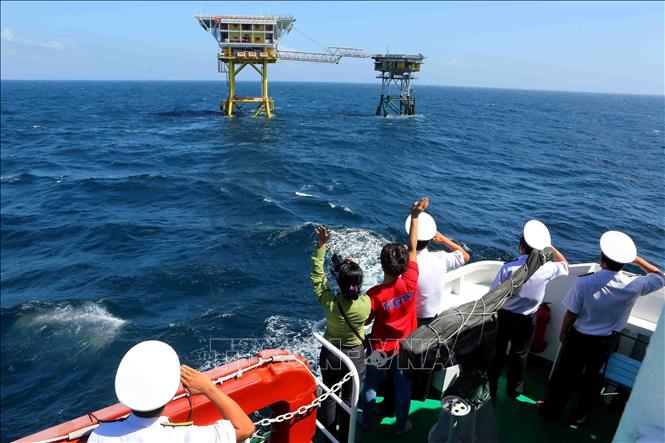
Naval officers and soldiers of the 2nd Naval Region, along with journalists and reporters aboard the ship Truong Sa 19, wave to officers and soldiers on the Dk1/15 (Phuc Nguyen) offshore platform. Photo: Thanh Dat/TTXVN
International media, such as the Singaporean website Fulcrum.sg in 2022, published articles affirming that Vietnam has always been a responsible member and has made significant efforts to adopt and implement the provisions of UNCLOS 1982. Furthermore, Vietnam has also called on other countries in Southeast Asia to respect and abide by UNCLOS 1982. Particularly during its chairmanship of the Association of Southeast Asian Nations (ASEAN) in 2020, Vietnam repeatedly emphasized the necessity of UNCLOS 1982 in maintaining regional peace and resolving maritime disputes.
In recent years, Vietnam has become increasingly proactive in pioneering the promotion of international law in general and UNCLOS in particular. In June 2021, Vietnam initiated the establishment of the UNCLOS Friends Group, creating a forum for countries to exchange and discuss experiences on the application and interpretation of UNCLOS in maritime management and use, to seek and encourage opportunities for cooperation, and to further promote commitments to implement UNCLOS within the UN. To date, the Group has nearly 120 countries from all geographical regions, including developed, developing, and small island states.
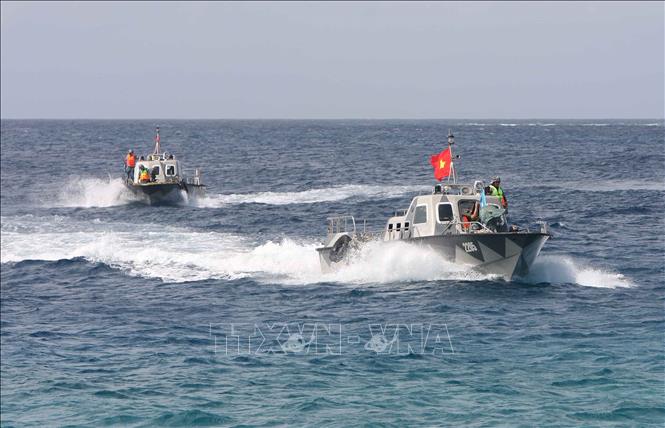
The naval forces protecting the Spratly Islands are equipped with modern patrol vessels, maintaining constant vigilance, conducting thorough patrols and monitoring the situation at sea, accurately predicting developments to plan and proactively respond to any events. Photo: Duong Giang/TTXVN
In October 2022, Vietnam, along with 15 other countries, introduced an initiative to seek an advisory opinion from the International Court of Justice to clarify the responsibilities and obligations of countries regarding climate change based on relevant international treaties, including UNCLOS. Given the increasingly evident and severe impacts of climate change on many countries, including Vietnam, promoting this initiative will be of significant importance, contributing to the international community's efforts to strengthen its response to climate change, including through the sustainable use and management of the seas and oceans.
Ha Anh
Source: https://www.congluan.vn/suc-manh-cua-ban-hien-phap-quoc-te-ve-bien-va-dai-duong-post318221.html







































































Comment (0)