

ANTD.VN - Leading tourist cities around the world such as Bangkok, Pattaya (Thailand), Beijing (China), London (England)... are clear evidence of the strong development of the night-time economy , accounting for 60-75% of the total revenue from the tourism industry.
The value of the "electric light economy" has steadily grown over the years. Meanwhile, in Vietnam, it remains an untapped "gold mine."
The "massive" figures of the night-time economy.
The concept of the "night-time economy" was first mentioned in the 1970s in the UK – a pioneering country in the development of the night-time economy, with a dedicated organization monitoring and developing this sector called the NTIA (Night Time Industries Association). According to the NTIA, the night-time economy in the UK is currently the fifth largest industry, accounting for 8% of jobs and generating £66 billion in revenue annually, equivalent to 6% of GDP.
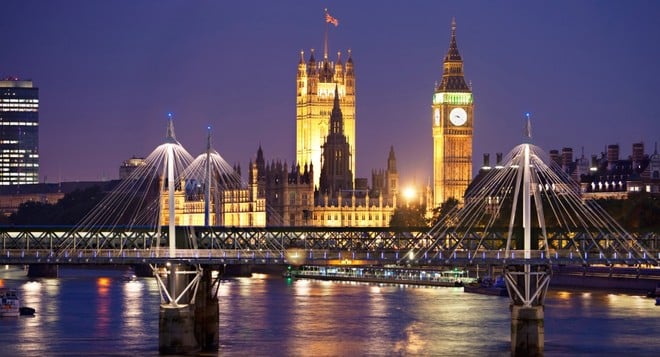 |
| He is enhancing nighttime services and activities, aiming to make London the world's leading 24-hour sleepless city (Illustrative image). |
London is the center of this economy, contributing 40% of national revenue and creating hundreds of thousands of jobs in sectors such as hospitality, arts, and entertainment. To boost the night-time economy, London has implemented policies such as appointing a "Night Czar" (Night Mayor), launching the "Night Tube" underground line, generating hundreds of millions of pounds annually, piloting a "Night Business District" in Walthamstow, and supporting businesses that stay open late.
Another example of nighttime economic development is China. In the early 1990s, the "nighttime economy" began to emerge in this country of over a billion people. By the end of 2020, the size of the nighttime economy market in China was estimated at $2.4 trillion. To stimulate the market, provinces and cities in China were willing to reduce electricity prices and open more shops and services.
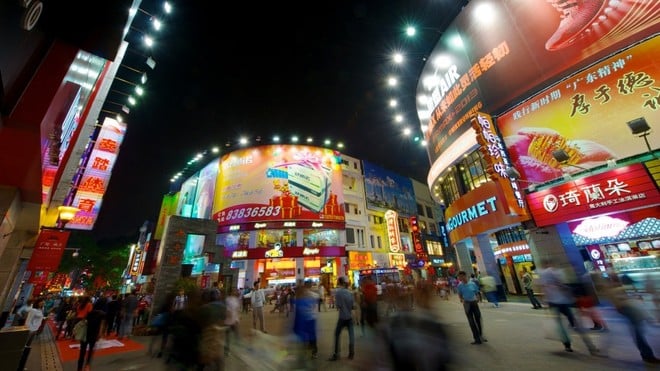 |
| In Beijing, streets that operate 12 hours a day will receive subsidies of over $700,000 for business development (Illustrative image). |
Beyond just pedestrian streets and food courts, China is also tapping into a "gold mine" of cultural development to boost its night-time economy. A prime example is the "Eight Wards and Thirteen Alleys," a key tourism, cultural, commercial, and entertainment complex in Linxia City (Gansu Province), which has welcomed over 12 million visitors since its opening. This model focuses on promoting the development of culture and the night-time economy by optimizing spatial planning, enriching service offerings, and incorporating lighting art into the architecture of the entire area. The shimmering lights create a magical ambiance, enhancing the beauty of temples, shrines, ancient houses, bridges, and streams, thereby attracting tourists to experience and shop there.
Meanwhile, Thailand, Vietnam's leading tourism rival, operates a highly effective tourism model based on event and party activities. According to the Tourism Authority of Thailand, tourism revenue increased by 44% in the last month of 2023 alone, reaching $1.6 billion after the country extended the opening hours of entertainment venues to 4 AM.
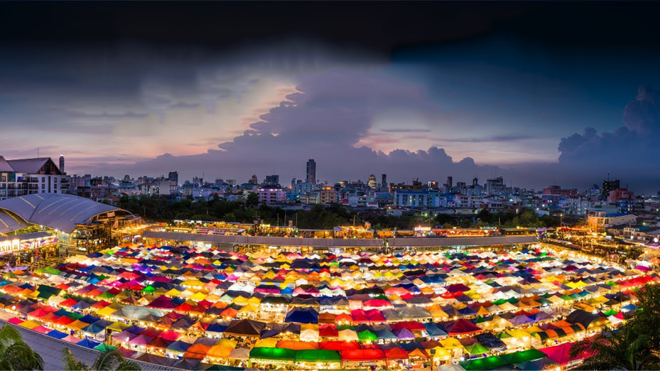 |
| Bangkok's vibrant nightlife attracts tourists (Illustrative image) |
In fact, the night-time economy has been a lifeline for Thailand's tourism industry since the SARS pandemic in 2003. In 2016, Bangkok surpassed London and New York to top Euromonitor's list of "Most Visitable Cities," with nearly 35 million visitors and revenue of $71.4 billion. According to Bloomberg, the average visitor stays in Bangkok for 4.8 days and spends $184 per day, far exceeding cities like New York and London.
Removing bottlenecks will create momentum for Vietnam's tourism industry.
Tourist spending is a crucial factor in measuring the impact of the tourism industry on the economy. Although Vietnam's tourism sector has shown impressive growth in the region and is ranked among the fastest-recovering countries after the pandemic, international tourist spending in Vietnam remains low. Specifically, over a 9-day period, tourists spent an average of $96 per day in Vietnam, compared to $163 in Thailand. One reason for this low tourist spending in Vietnam is the lack of a vibrant night-time economy.
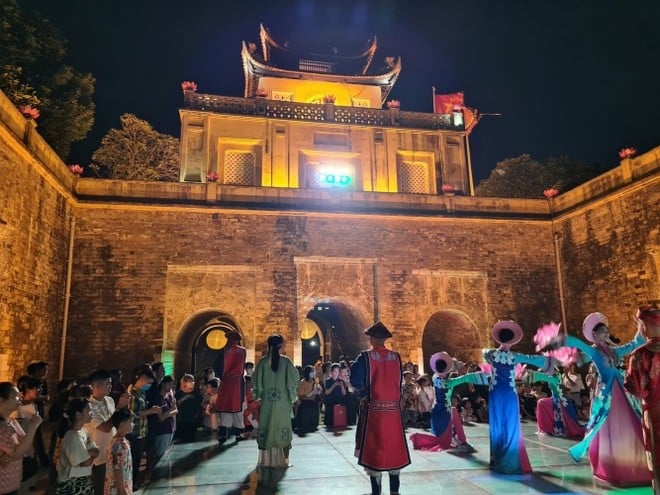 |
| Hanoi's nighttime tourism products are initially showing positive signs in promoting and developing the nighttime economy model (Illustrative image). |
The lack of services and infrastructure to support nighttime activities causes tourists to leave after their daytime tours. This not only reduces their length of stay but also significantly impacts their spending. Major cities like Hanoi, Ho Chi Minh City, Da Nang, and Nha Trang all possess the potential for developing a nighttime economy thanks to their rich culture, distinctive cuisine, and convenient transportation connections. However, nighttime economic activities in these cities are still not developed comprehensively and sustainably, and the revenue generated is not high, even though famous pedestrian streets like Hoan Kiem Lake (Hanoi) and Bui Vien Street (Ho Chi Minh City) attract a considerable number of tourists.
According to experts, Vietnam's night-time economy remains fragmented and lacks clear planning. If we consider the night-time economy as "business activities from 6 PM to 6 AM in the service sector," then currently, many night markets only sell trinkets, urban areas are often deserted after 10 PM, and public services such as buses and public restrooms also close early. Furthermore, the lack of systematic control and management mechanisms, the absence of designated areas, and the lack of a specialized organization to manage the night-time economy… prevent this activity from developing as expected.
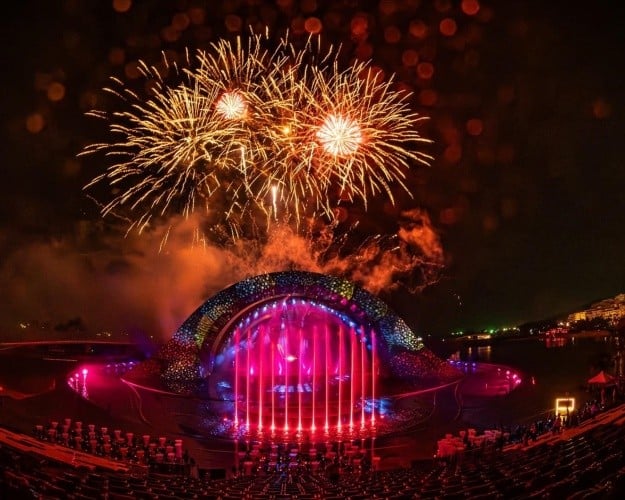 |
| Phu Quoc Island, a paradise for tourists, has attracted investment from many entities to develop its night-time economy, but several "bottlenecks" still hinder its strong development. |
While the world has generated billions of dollars from the night-time economy, in Vietnam, this model remains fragmented and has not received adequate attention. From a policy perspective, it wasn't until 2020 that the Government issued the "Scheme for the Development of the Night-Time Economy in Vietnam." Following that, in 2023, the Ministry of Culture, Sports and Tourism issued the "Scheme on Several Models for Developing Night-Time Tourism Products." However, implementation has faced many difficulties due to a lack of coordination among relevant agencies and a lack of a long-term development strategy.
"Illuminating" the night-time economy is not only an opportunity to boost the tourism industry but also a chance to enhance cultural values and build a national brand. To make the night-time economy flourish, Vietnam needs to strongly promote mechanisms, policies, and planning. This will create sustainable development for the tourism industry, contributing to increased budget revenue and improving the country's image in the eyes of the international community. The goal is to make tourism a truly leading economic sector, striving to welcome 35 million international tourists by 2030, with a growth rate of 13-15% per year, contributing directly 13-14% to GDP.
Source: https://www.anninhthudo.vn/suc-nong-kinh-te-dem-bai-hoc-tu-nhung-diem-den-soi-dong-nhat-the-gioi-post603200.antd

![[Photo] Prime Minister Pham Minh Chinh holds a phone call with the CEO of Russia's Rosatom Corporation.](/_next/image?url=https%3A%2F%2Fvphoto.vietnam.vn%2Fthumb%2F1200x675%2Fvietnam%2Fresource%2FIMAGE%2F2025%2F12%2F11%2F1765464552365_dsc-5295-jpg.webp&w=3840&q=75)

![[Photo] Closing Ceremony of the 10th Session of the 15th National Assembly](/_next/image?url=https%3A%2F%2Fvphoto.vietnam.vn%2Fthumb%2F1200x675%2Fvietnam%2Fresource%2FIMAGE%2F2025%2F12%2F11%2F1765448959967_image-1437-jpg.webp&w=3840&q=75)











































![[OFFICIAL] MISA GROUP ANNOUNCES ITS PIONEERING BRAND POSITIONING IN BUILDING AGENTIC AI FOR BUSINESSES, HOUSEHOLDS, AND THE GOVERNMENT](https://vphoto.vietnam.vn/thumb/402x226/vietnam/resource/IMAGE/2025/12/11/1765444754256_agentic-ai_postfb-scaled.png)










































Comment (0)