

Abundant resources, but their full potential has not been realized.
Over the years, Ha Tinh province has invested in a system of stadiums at the commune/ward level as an important component of the Cultural Infrastructure criterion in the New Rural Development and Civilized Urban Development Program.


When the two-tiered local government model was implemented, each commune had 2 to 3 stadiums, and in some places even up to 4. This new context created an urgent need to effectively utilize the sports facilities system, transforming the stadiums into dynamic community spaces that contribute to improving the spiritual life of the people.
According to Văn Hoá newspaper, many communes and wards in Hà Tĩnh province, after mergers, are currently managing 2 to 3 stadiums. Đồng Tiến commune is a typical example, simultaneously owning three large stadiums belonging to the three former communes of Thạch Trị, Thạch Hội, and Thạch Văn.
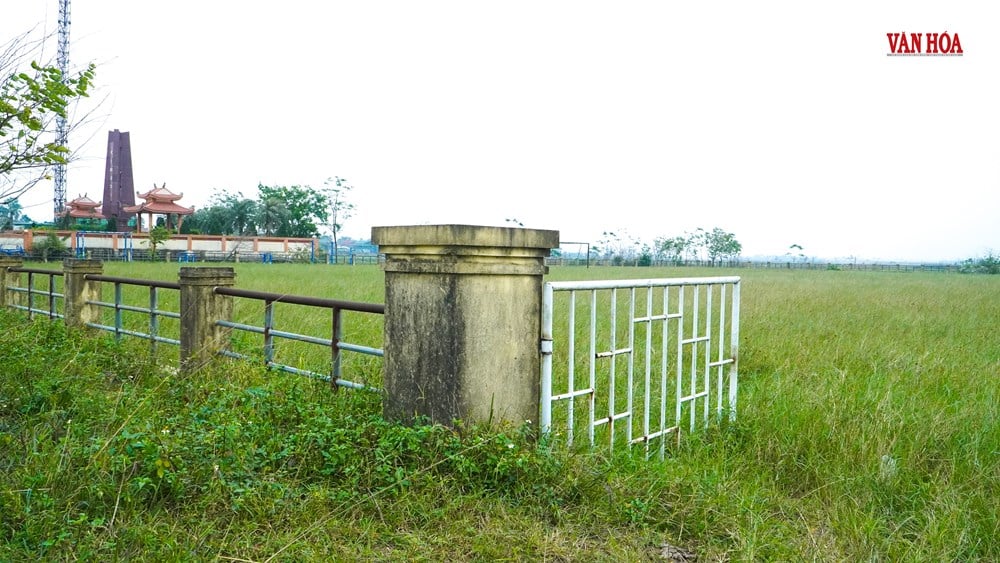
During the period 2015-2025, each stadium received substantial investment to improve its cultural infrastructure. However, since the transition to a two-tiered local government model, only the old Thach Tri stadium has been regularly used for political events and physical education classes at nearby schools; the other two stadiums have virtually no activity.
This situation is not unique; similar problems occur even in central wards like Thanh Sen, Thach Linh, and Tran Phu.

The objective reason is that young people are increasingly fond of artificial turf pitches, while community activities such as mobile film screenings or cultural performances have declined sharply. Combined with the changing pace of life, the less-used stadiums are beginning to deteriorate: weeds grow rampant, fences are damaged, the stands are stained, and in some places the pitch has become a garbage dump. Some households are utilizing the vacant land to grow vegetables or cut grass for animal feed.


This, in comparison to the billions of dong invested in each stadium, makes the issue of efficient use even more urgent. Specifically, the stadiums in Thach Tri commune were upgraded with over 1.07 billion dong in 2022, Thach Van commune with nearly 950 million dong in 2015, and Thach Hoi commune with over 1.1 billion dong in 2019. These stadiums all meet the standard of 13,000 m² in area, have solid fences, covered grandstands, and a flat playing surface.
Problems arising after the merger
According to Mr. Tran Viet Hieu, Deputy Head of the Sports Management Department of the Ha Tinh Department of Culture, Sports and Tourism, before the implementation of the two-tiered local government system, Ha Tinh province had 209 communes/wards with 173 stadiums meeting the requirements for building new rural areas and civilized urban areas. In addition, there were 1,600-1,700 smaller sports fields under the management of villages and residential areas.

After the merger, there are now 69 administrative units, but the number of stadiums remains the same, leading to each commune managing multiple stadiums simultaneously. This is the bottleneck that causes many facilities to fall into disuse, as localities are forced to consolidate activities into a central stadium for easier operation.
On the other hand, legal regulations regarding public assets do not allow for the liquidation or repurposing of buildings less than 20 years old. Therefore, even if there is a need to adjust the purpose of exploitation, communes/wards find it difficult to do so quickly.

However, according to Mr. Hieu, Ha Tinh has very well planned its land for cultural and sports facilities from an early stage, creating room for the development of mass sports movements in the new phase.
In this new phase of development, to prevent stadiums from lying idle, the Department of Culture, Sports and Tourism has put forward many feasible directions, linked to the actual needs of each locality. For example, surplus stadiums can be transferred to villages and residential areas for more efficient management and utilization. On a smaller scale, communities can organize football tournaments, sports events, cultural festivals, or mobilize social resources to renovate the stadiums. This is a solution to "revive" facilities that have been inactive for a long time.

Some locations are experimenting with social mobilization to convert existing fields into artificial turf, meeting training needs while also generating monthly maintenance funds. This model helps reduce budgetary pressure and creates a sustainable development direction.
“By 2025, the province requires 100% of communes/wards to organize Sports and Physical Education Congresses. Restoring the grassroots sports movement not only creates vitality but is also an important condition for stadiums to be used regularly, instead of only serving a few events a year,” Mr. Hieu said.
Currently, the education sector is also encouraged to coordinate with local authorities to utilize stadiums for extracurricular activities and create sports clubs for students. This is a two-way solution that provides schools with more space for training, while localities utilize existing infrastructure, avoiding wasted resources.

According to Mr. Ngo Dinh Long, Deputy Chief of the New Rural Development Coordination Office of Ha Tinh province, the draft set of criteria for the 2026-2030 period continues to emphasize the role of cultural infrastructure in improving the quality of life for the people. Transforming the function of stadiums is not only a practical requirement but also an inevitable development trend of the modern new rural model.
Ha Tinh is facing a great opportunity: with its extensive stadium system, if the need for training is activated, the mass sports movement is promoted, and community participation in management is encouraged, the stadiums will become true community centers; places for health training, building solidarity, and improving the cultural life of the people.
Source: https://baovanhoa.vn/the-thao/svd-can-duoc-danh-thuc-trong-giai-doan-toan-dan-ren-luyen-the-chat-187787.html


![[Photo] Prime Minister Pham Minh Chinh holds a phone call with the CEO of Russia's Rosatom Corporation.](/_next/image?url=https%3A%2F%2Fvphoto.vietnam.vn%2Fthumb%2F1200x675%2Fvietnam%2Fresource%2FIMAGE%2F2025%2F12%2F11%2F1765464552365_dsc-5295-jpg.webp&w=3840&q=75)
























































Comment (0)