

Realizing the "dream" of green agriculture.
On a crisp early winter morning, while the mist still lingered over the hills of Tho Dien, Vu Quang commune ( Ha Tinh province), Mr. Phan Dang Vuong (residing in Hamlet 3) drove his excavator up the hill to harvest the rows of Codonopsis pilosula plants after three years of cultivation. With each swing of the bucket, clusters of pale purple and white Codonopsis pilosula roots emerged from the soil, carrying with them the hope of the farmer.
This is the result of Mr. Vuong's long-term care, and from here, his dream of farming on barren hillside land is gradually becoming a reality.
"This year marks the first harvest of Codonopsis pilosula roots after three years of cultivation. I'm passionate about farming, and this is the first model I've implemented, so I'm very excited," Mr. Vuong shared.
Mr. Vuong is the youngest son in a large family, and life has been difficult for him. After graduating, he chose to work as a laborer in the South to help support his family. His years away from home gave him valuable experience, but every time he returns, seeing his family's hillside garden, where they only grow acacia trees for low income and which was sometimes even left abandoned, fills him with worry.
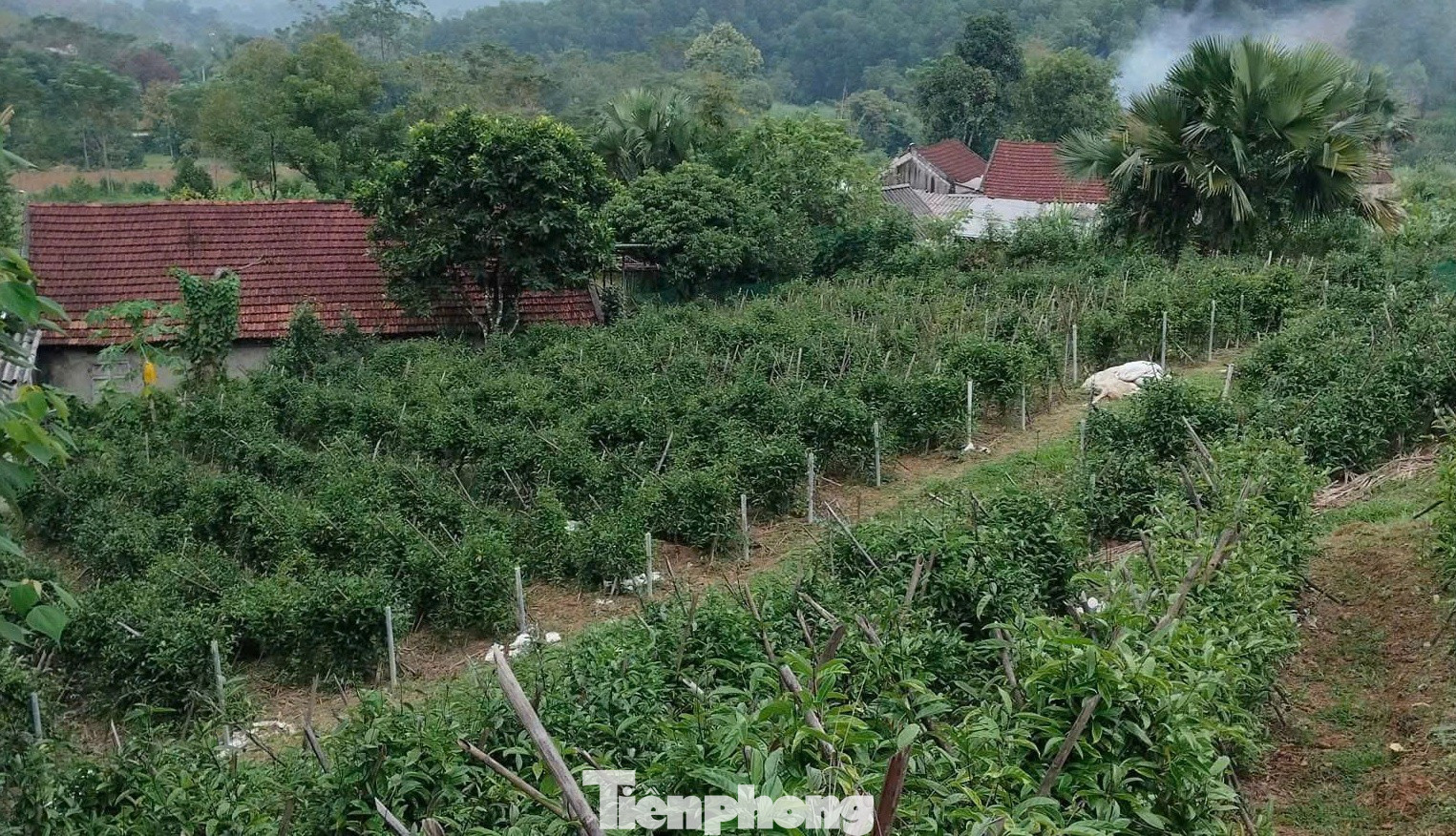
A desire to do something new and create more sustainable value gradually arose in the young man's heart. From these thoughts, the idea of finding a suitable crop to cultivate and efficiently utilize the hilly terrain took shape, becoming the driving force that led him to boldly embark on a path of agriculture that he had never considered before.
Without hesitation, he went online to research, learn, and visit green agricultural models. What particularly caught his attention was seeing healthy rows of purple ginseng plants growing at a friend's house. From then on, he delved deeper into this medicinal plant, examining its characteristics, whether it was suitable for the local climate and soil, and the market for the product.
Once he had enough information, he made a bold decision to plant purple ginseng. When he started implementing the model, many family members expressed concern because ginseng only grows in the forest and had not been widely cultivated in the area.
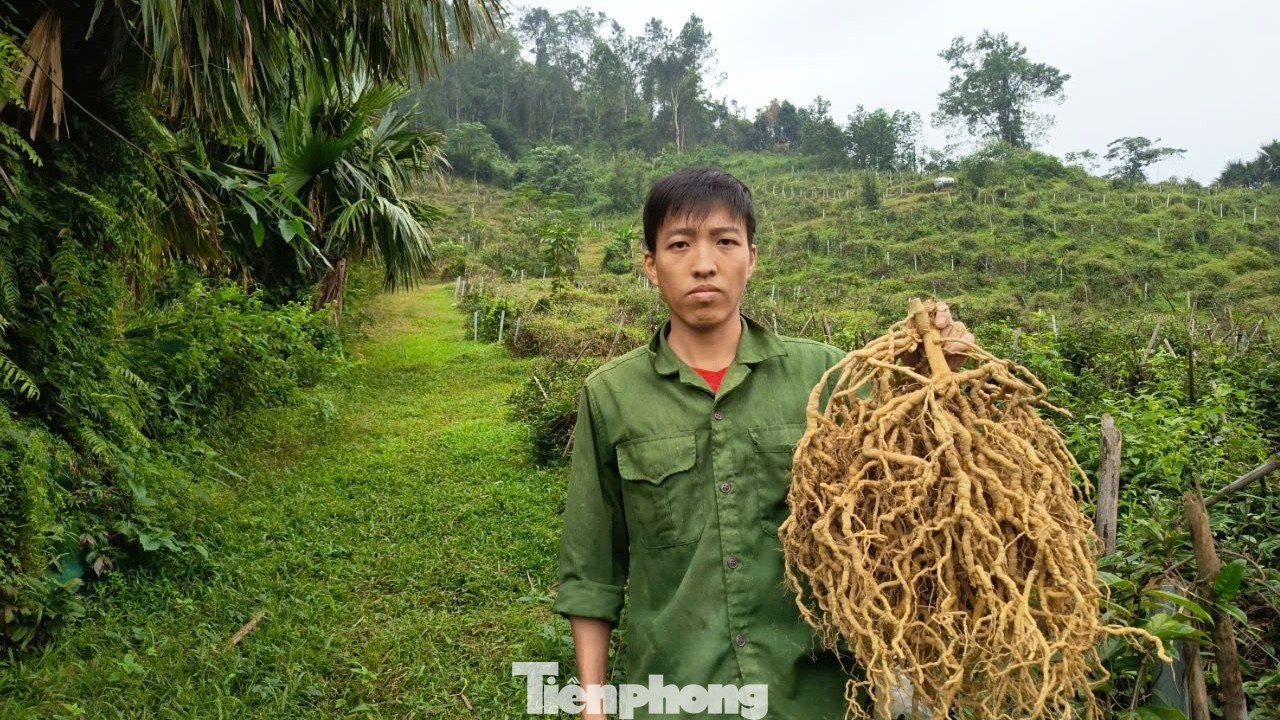
But it was precisely because of this mindset that the more difficult and limited the task, the more he wanted to try that he began implementing the model in 2022. To raise approximately 600 million VND in capital, he borrowed additional funds from relatives to start his business. He hired machinery to level the entire 2 hectares of abandoned hillside land behind his house and selected over 40,000 saplings to plant.
“At that time, everyone thought I was taking a risk, being reckless because the amount of capital was very large for me personally. Meanwhile, the model was only in the testing phase, not widely planted in the area, so we didn't know if it would be effective. Especially in this region, people mainly grow oranges and acacia trees, but I went against the grain. I chose to start a business with a new type of tree, so many family members were worried and concerned. But now, after 3 years, the trees are growing very well, and we're now harvesting them. The product is also well-received by many customers,” Mr. Vuong shared.
"Changing the fortunes" for a disadvantaged region.
Standing amidst the lush green hills of ginseng plants that were nearing harvest, Mr. Vuong observed each row of plants while slowly recounting the most difficult days when he started the model. Back then, he lacked experience, the area was vast, and everything was new, causing him considerable anxiety. Almost every day he went up the hill, monitoring the plants' development from the time the young stems began to grow longer until the purple rootlets started to appear.
Mr. Vuong said that the Codonopsis pilosula plants are grown naturally, without the use of pesticides. Although it's an easy plant to grow and care for, Mr. Vuong believes that meticulous attention to detail is necessary in every step of the process.
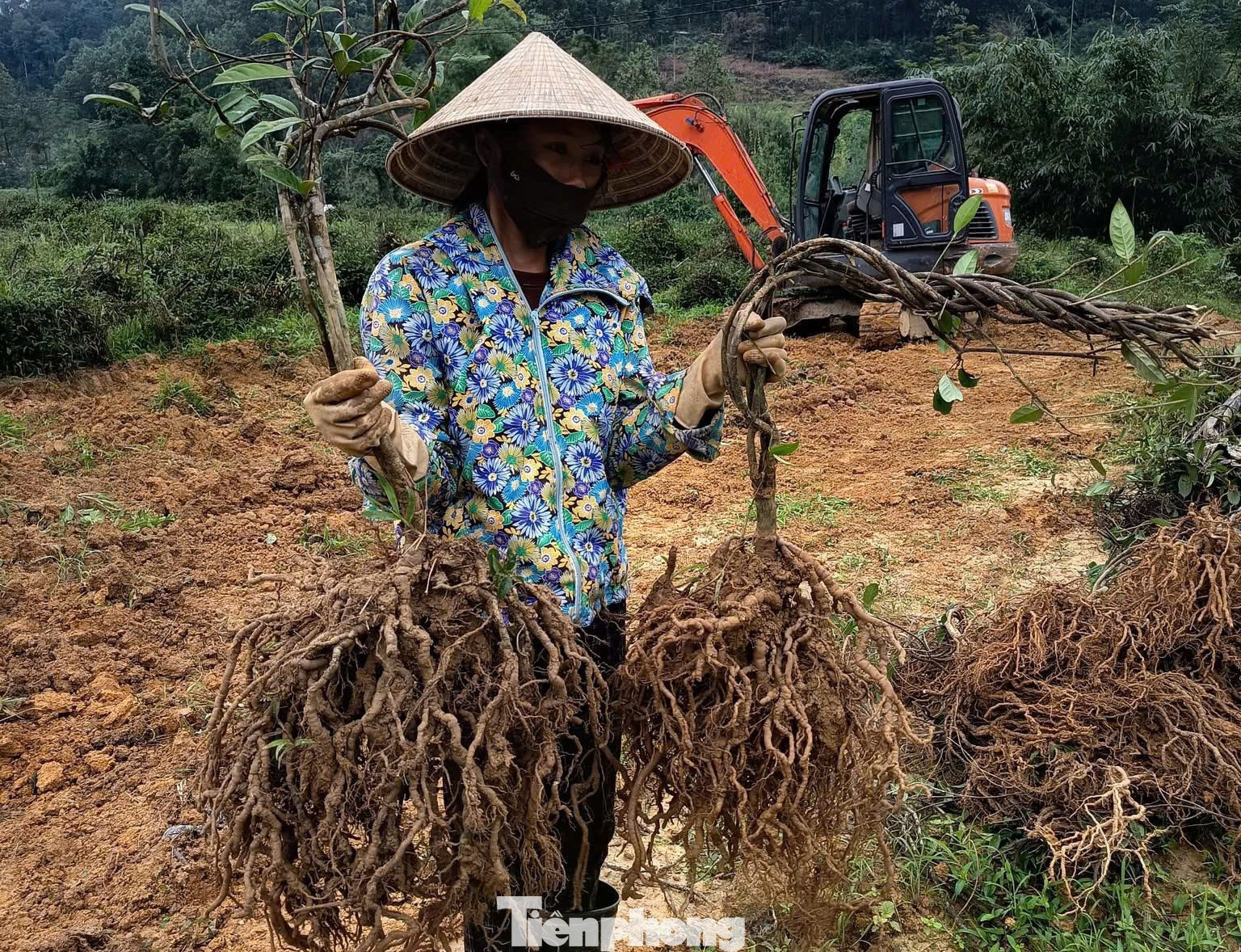
“Growing Codonopsis pilosula isn't difficult, but it requires careful attention from seed selection to care. Every step must be done according to proper techniques and with careful monitoring of each cycle. It's good news if the plants grow well, but the crucial factor determining the success of the model is observing the root system,” Mr. Vuong said.
According to Mr. Vuong, for the trees to grow well, right from the seed selection stage, it is necessary to choose seedlings that are free from pests and diseases, have full roots, and whose root balls are intact. Then, planting should be done meticulously, following the correct techniques for each row, adjusting moisture levels, and providing appropriate mulch at the right time.
Each year, he has to hire people to weed and till the soil 4-5 times, and importantly, he cannot use herbicides for this type of plant because it affects the growth of the plant and its roots. In addition, to ensure uniform plant growth, he mainly uses well-rotted manure, combined with a small amount of NPK fertilizer, focusing on fertilizing during the plant's growth stages.
Mr. Vuong also shared that, for gardening, being on the hill every day has almost become a habit. Every morning he takes a walk around, observing the soil moisture, leaf color, and stem growth, and in the afternoon he stops by again to check for signs of pests, diseases, or lack of water. The work is regular and repetitive, but he doesn't feel tired.
"I do this because I love the land and the plants, so I'm happy whenever I see them healthy. I patiently waited for the results, and now the rows of ginseng plants are ready for harvest. At this time, we have to use a tractor to pull them up because the roots are too tightly attached; we can't pull them out by hand," Mr. Vuong said with a smile.
According to Mr. Vuong's calculations, each purple ginseng plant yields a root weight of 1.5-2 kg, with some plants reaching up to 4 kg. With a density of 20,000 plants per hectare, ginseng can generate very high revenue, while the investment costs are mainly in the initial stages. If well cared for, ginseng can be harvested in the second year, but the longer it is left to grow, the more the roots develop and the greater their weight.
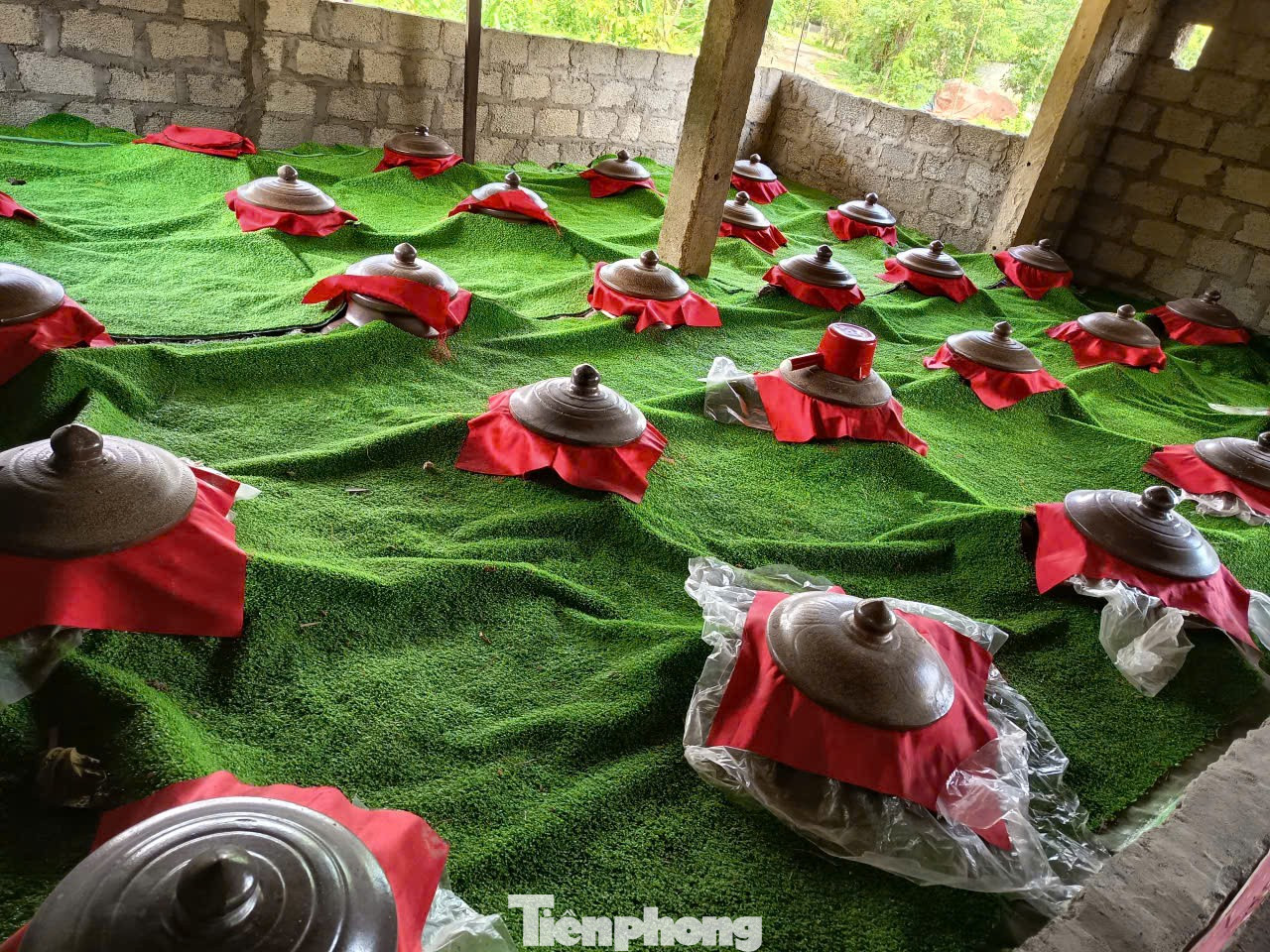
"If the orchard achieves the expected yield, the profit per harvest will be many times higher than planting acacia trees. Currently, I have also developed a model for processing the product into ginseng wine to serve the customer market," Mr. Vuong shared.
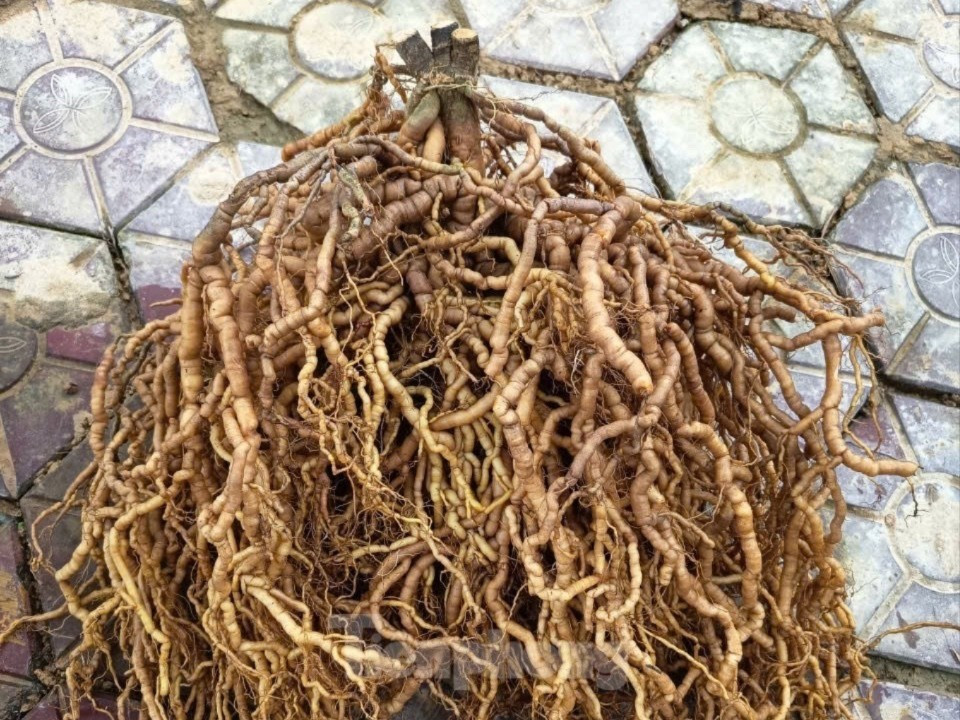
After three years of dedicated care, the Codonopsis pilosula plants have quietly taken root, offering hopeful signs for farmers on the once barren and abandoned hillside. Mr. Vuong's bold decision to cultivate Codonopsis pilosula opens up a new direction for economic development for the local people. In particular, this model also offers a sustainable path out of poverty for the local population. Many households in the commune have visited his nursery to learn from his experience or inquire about purchasing seedlings.
According to Ms. Tran Thi Hai from the Economic Department of Vu Quang commune (Ha Tinh province), the Codonopsis pilosula plant is well-suited to the natural conditions of the Vu Quang hilly region, especially the soil, humidity, and climate.
Ms. Hai also added that the model not only creates new livelihoods for the people but also contributes to the effective utilization of abandoned hillside land, aiming towards sustainable agricultural development. “In the coming time, we will continue to monitor, evaluate, and develop a plan to expand the model. If implemented comprehensively, the Codonopsis pilosula plant could completely become one of the crops that helps people increase their income and reduce poverty sustainably,” Ms. Hai said.
Source: https://tienphong.vn/doi-van-cho-vung-dat-doi-bo-hoang-tu-cay-ba-kich-post1803069.tpo


![[Photo] Prime Minister Pham Minh Chinh holds a phone call with the CEO of Russia's Rosatom Corporation.](/_next/image?url=https%3A%2F%2Fvphoto.vietnam.vn%2Fthumb%2F1200x675%2Fvietnam%2Fresource%2FIMAGE%2F2025%2F12%2F11%2F1765464552365_dsc-5295-jpg.webp&w=3840&q=75)


![[Photo] Closing Ceremony of the 10th Session of the 15th National Assembly](/_next/image?url=https%3A%2F%2Fvphoto.vietnam.vn%2Fthumb%2F1200x675%2Fvietnam%2Fresource%2FIMAGE%2F2025%2F12%2F11%2F1765448959967_image-1437-jpg.webp&w=3840&q=75)



































![[OFFICIAL] MISA GROUP ANNOUNCES ITS PIONEERING BRAND POSITIONING IN BUILDING AGENTIC AI FOR BUSINESSES, HOUSEHOLDS, AND THE GOVERNMENT](https://vphoto.vietnam.vn/thumb/402x226/vietnam/resource/IMAGE/2025/12/11/1765444754256_agentic-ai_postfb-scaled.png)








































Comment (0)