

- Dr. NGUYEN MINH NHUT, Deputy Head of the Culture - Social Committee , HCMC People's Council:
Platform for implementing Ho Chi Minh Cultural Space
In order for grassroots cultural institutions to truly become the foundation for implementing the Ho Chi Minh Cultural Space, the city needs to continue to improve its policy system. First of all, the planning of the cultural institution network must be directly linked to the urban development strategy and the plan to build the Ho Chi Minh Cultural Space. This helps avoid the situation of scattered investment or lack of synchronization between localities.
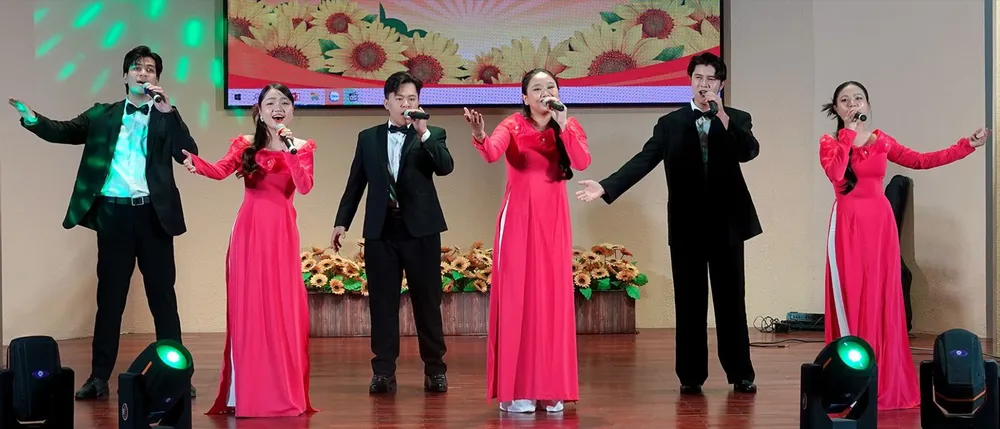
In addition, the city needs to issue a flexible financial mechanism, combining the state budget with social mobilization, encouraging businesses, organizations and individuals to participate in investing and managing cultural activities. One of the decisive factors is upgrading infrastructure. The city needs to prioritize renovating and upgrading degraded cultural houses and cultural centers, while expanding community living spaces in densely populated areas...
- Dr. Ly Dai Nghia, Director of Ho Chi Minh City Sports Training and Competition Center:
Public Investment - Private Management
The TTCU model helps increase competitiveness and move towards the industrialization of culture - sports economy , in line with the trend of socialization. However, if we compare TTCUs with each other, we will see a clear imbalance. For example, I have actually surveyed and worked in Ngai Giao commune, the system of modern sports - cultural facilities, the scale exceeds the economic, living and cultural needs of rural people, while the facilities of Cho Quan, Xuan Hoa and Sai Gon wards are too small compared to the sports needs of urban people.
In order for TTCUs to fully exploit their potential, the city needs to create a modern governance ecosystem following the “State - Community - Enterprise” model, in which the State plays the role of creating, ordering public services, guiding and supervising; the Community (federations, associations, clubs, people) participates in management, supervision and co-beneficiaries; Enterprises participate in investment, professional operation, bringing technology and capital. This is the “Public Investment - Private Governance” mindset, helping to mobilize social resources, reduce budget burden, and improve service efficiency. At the same time, it is necessary to promote digital transformation in management: digitizing databases, building digital maps of institutions, applying smart management - this is the condition for synchronizing and effectively controlling the entire system.
- Dr. LE THI THANH THUY, Ho Chi Minh City University of Culture:
Build a direct and comprehensive management point of contact
Regarding management and operation, the centers are under the jurisdiction of a ward or commune but must provide services to many other wards and communes, leading to the risk of overlap, overload, and difficulty in control. In addition, the large difference in the scale of facilities and resources between communes and wards can easily create a "comparison" mentality, which can make the "service provision" mechanism difficult to implement, when the People's Committees of neighboring wards and communes tend to choose to "hire services" from private enterprises instead of using the services of the Center.
In particular, the risk of a recurrence of the infeasible situation like the previous model of the Inter-Commune Cultural, Sports and Community Learning Clusters is real, when many units had to stop operating due to the lack of binding mechanisms and effective management. The initial survey also shows that some wards and communes are tending to propose establishing more TTCUs for their own localities. However, if all the requirements are met, with 168 wards and communes in Ho Chi Minh City, there will be 168 TTCUs, losing the original streamlined meaning. This shows that without a reasonable allocation mechanism and innovative management model, the current system will find it difficult to operate effectively and sustainably.
In my opinion, the current TTCU model needs to be innovated in the direction of reorganizing into a multi-functional, modern institutional cluster. These institutional clusters not only integrate cultural, sports, entertainment and recreation activities, but also link with promoting cultural industry, developing sports economy, stimulating investment and developing tourism. On that basis, Ho Chi Minh City can build a regional TTCU model under the direct and comprehensive management of the city's Department of Culture and Sports, and at the same time be subject to professional guidance from competent authorities. Each center will be in charge of a cluster of wards and communes according to the old administrative boundaries of districts and counties. However, for this model to be effective, Ho Chi Minh City needs to remove "bottlenecks" in mechanisms and policies, especially in investment under the public-private partnership (PPP) method in cultural and sports projects.
- Dr. PHAN ANH TU, University of Social Sciences and Humanities, Ho Chi Minh City:
Strengthening interregional governance
The system of cultural institutions is the foundation for maintaining identity, spreading human values and promoting sustainable development of urban areas. This is not only cultural and social infrastructure, but also "soft institutions" that contribute to shaping creative capacity and community cohesion. In the current context of Ho Chi Minh City, the need to build a unified and flexible inter-regional cultural governance mechanism has become urgent.
According to the Ho Chi Minh City Urban Area Plan to 2040, vision to 2060, this area is expected to have more than 25 million people, contributing over 22% of the country's GDP, with a network of more than 200 cultural centers, 30 museums, 400 relics and many community creative spaces. With such a scale, the application of digital technology will play a key role, including building a regional cultural database, digital map of institutions, a heritage - event information portal and a system of indicators to evaluate cultural activities. Along with that, promoting the public - private partnership model, regional cultural development fund and cultural volunteer network will increase community participation, helping institutions truly become creative spaces and preserve identity.
- Dr. NGUYEN HO PHONG, Ho Chi Minh City University of Culture:
Not "everyone can do culture and sports"
The survey shows that the system of grassroots cultural and sports institutions in Ho Chi Minh City currently has a relatively stable foundation in terms of the number of personnel and the rate of standardization of educational and professional qualifications. However, at the commune level and equivalent, the human resource system still has many shortcomings, especially in terms of professional quality, low specialized rate, and lack of consistency in management, training and use of staff. Part-time staff currently account for an overwhelming proportion (over 76%), while full-time staff are both small in number and have not received adequate investment in professional capacity, organizational skills and service style. This situation stems from two core causes: Insufficient awareness of the essential role of grassroots culture and sports in sustainable development; The common misconception that "anyone can do culture and sports", leading to inappropriate staff arrangement.
In the context of Ho Chi Minh City after the merger, the system of grassroots cultural and sports institutions needs to be restructured in the direction of: being recognized as a special public service institution, with the function of serving the community in the long term; being granted real power, appropriate decentralization; having fair access to resources, having creative space, and proactively applying technology to organizing cultural and sports activities. Recognizing the role of cultural and sports personnel at the grassroots level, putting team building at the heart of sustainable development strategies. Standardizing the professional competency framework for positions such as coaches, movement officers, support staff, performing artists, etc.
Source: https://www.sggp.org.vn/tai-cau-truc-thiet-che-van-hoa-the-thao-co-so-bai-4-nang-chat-hoan-thien-mo-hinh-post826641.html



![[Photo] Worshiping the Tuyet Son statue - a nearly 400-year-old treasure at Keo Pagoda](/_next/image?url=https%3A%2F%2Fvphoto.vietnam.vn%2Fthumb%2F1200x675%2Fvietnam%2Fresource%2FIMAGE%2F2025%2F12%2F02%2F1764679323086_ndo_br_tempimageomw0hi-4884-jpg.webp&w=3840&q=75)
![[Photo] Parade to celebrate the 50th anniversary of Laos' National Day](/_next/image?url=https%3A%2F%2Fvphoto.vietnam.vn%2Fthumb%2F1200x675%2Fvietnam%2Fresource%2FIMAGE%2F2025%2F12%2F02%2F1764691918289_ndo_br_0-jpg.webp&w=3840&q=75)












![[Video] Protecting World Heritage from Extreme Climate Change](https://vphoto.vietnam.vn/thumb/402x226/vietnam/resource/IMAGE/2025/12/03/1764721929017_dung00-57-35-42982still012-jpg.webp)



































Comment (0)