

The journey of a small, young man who built his career alone in the city and was passionate about scientific research has earned him the admiration of many.
Fruit peels, tea leaves, carrot pulp... none of them are useless.
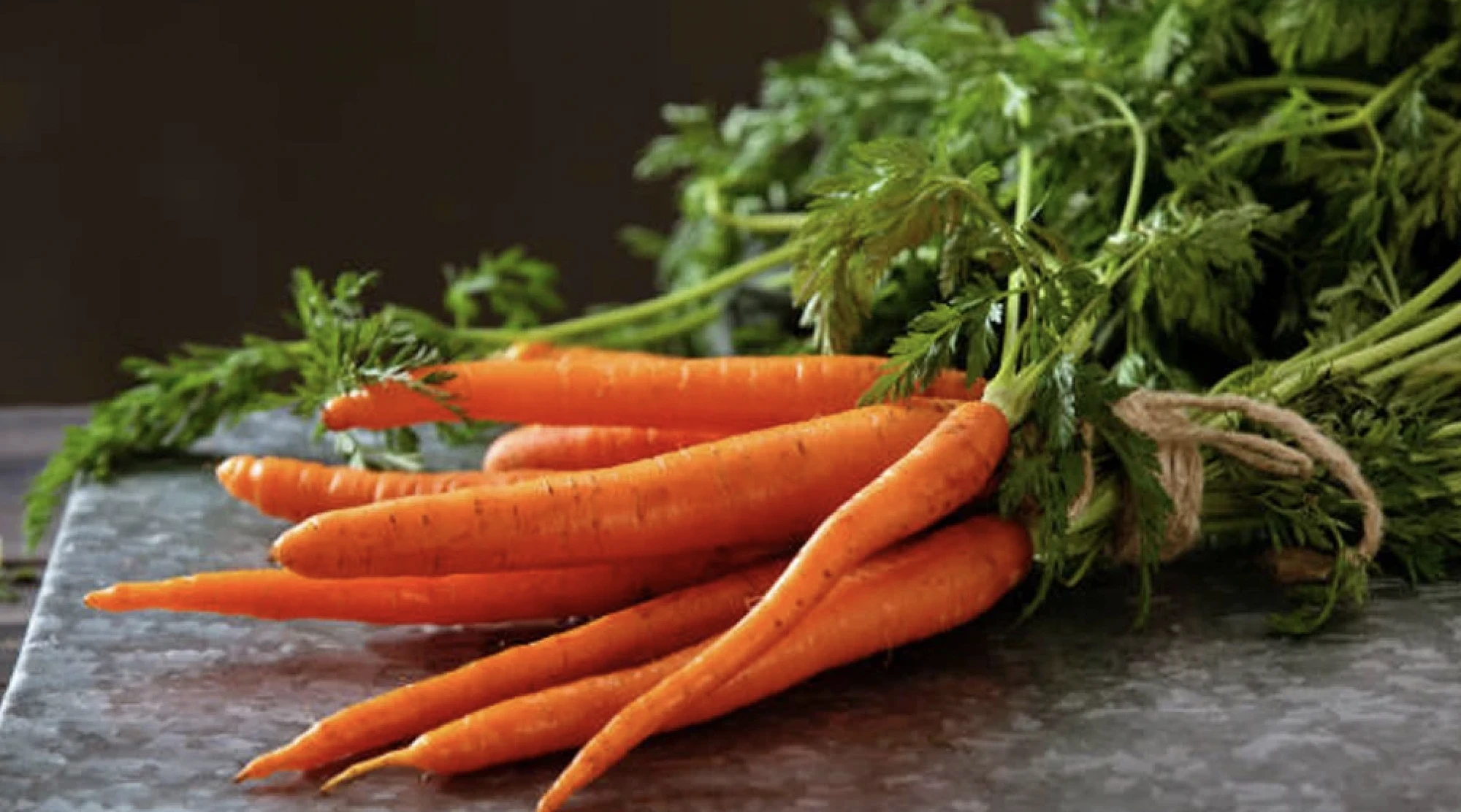
Carrots (or beetroots) are a common ingredient in Asian cuisine and beverages, and their pulp contains many important nutrients.
Vo Tan Phat, 28 years old, from Ben Tre province, graduated with a Master's degree in Food Engineering from Ho Chi Minh City University of Industry and Trade. He also earned a Master's degree in Food Engineering from Ho Chi Minh City University of Technology and is currently conducting research at the Biofuel and Biomass Laboratory, Ho Chi Minh City University of Technology.
Recently, Mr. Phat has published numerous scientific papers in the Q1 and Q2 categories of both the Web of Science (SCIE) and Scopus databases. Notably, these include research on discovering new methods and techniques for recovering substances with anti-aging, antioxidant, anti-inflammatory, and antibacterial properties from food by-products such as fruit peels, green tea residue, and carrot pulp.
Thanks to this, humans can recover many antioxidants from seemingly discarded by-products, thereby further optimizing the food industry and creating more healthy foods for consumers.
Extraction and preservation of carotenoids from carrot pulp using oleic acid.
This is one of the outstanding scientific studies published recently by Master Phát.
According to Master Phát, carrots (red beets) are a common food in Asian dishes and drinks. Carrot pulp is a byproduct of juice production and is usually discarded; however, carrot pulp contains many antioxidant compounds such as carotenoids. These compounds help reduce the harmful effects of free radicals, which are formed by environmental factors on the human body. Meanwhile, extraction is a process that uses solvents to dissolve substances in food. Carotenoids are often obtained through extraction using toxic organic solvents, which cannot be completely removed.
"Furthermore, in folk culture, people often use cooking oils to preserve chili peppers. Therefore, my research uses oleic acid, an omega-9 fatty acid, to recover carotenoid compounds from carrots. The study investigated the effects of ultrasonic extraction conditions such as temperature, ultrasonic power, time, and the amount of oleic acid used on the recovery efficiency of carotenoid compounds. Afterward, the carotenoids in oleic acid were preserved using microencapsulation. Microencapsulation is a method that uses proteins, emulsifiers, and polysaccharides to encapsulate bioactive substances," explained Master Phát.
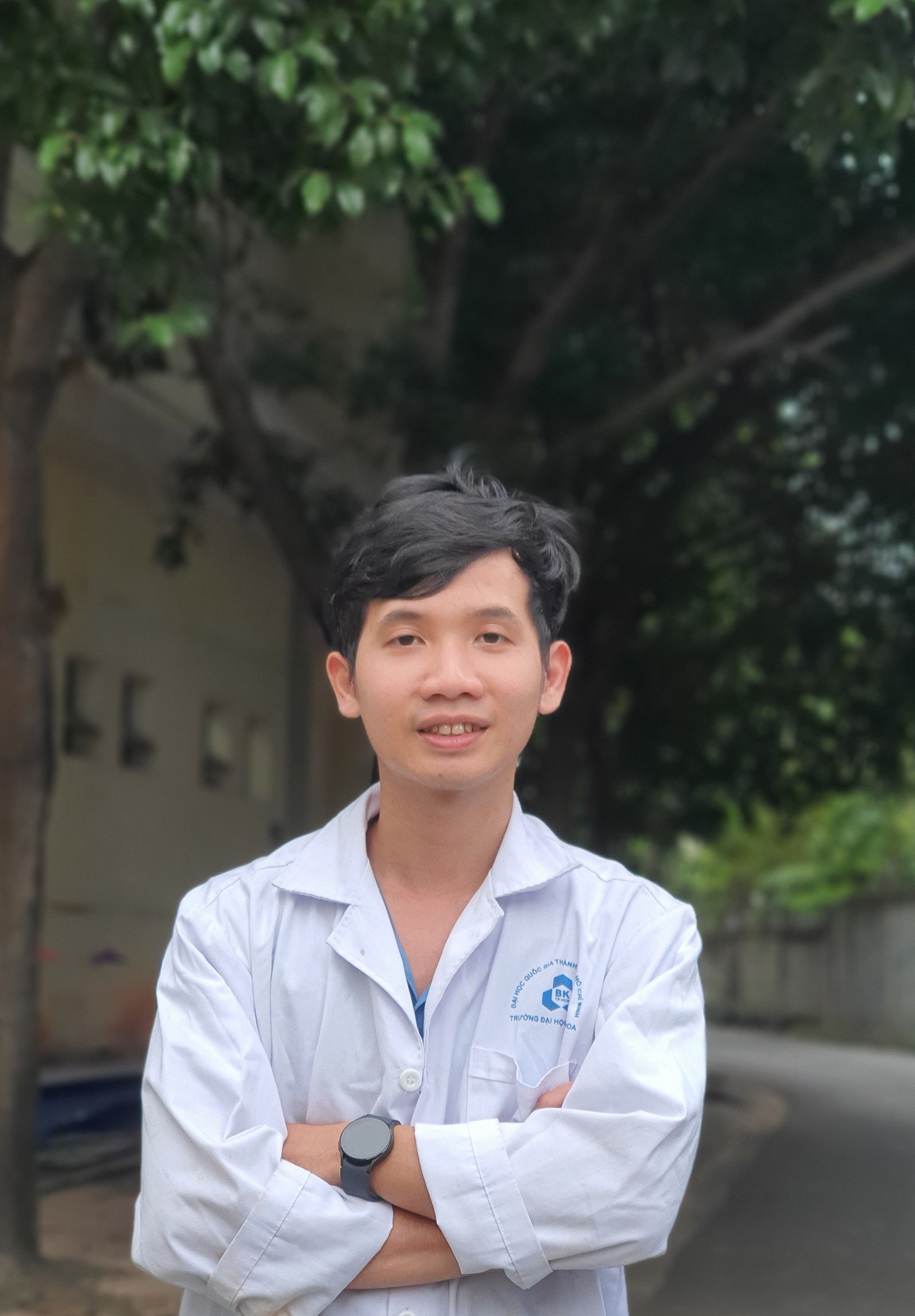
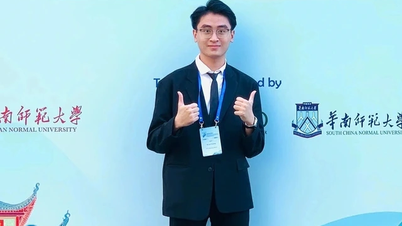
Master Vo Tan Phat
Furthermore, the young scientist stated that after being encapsulated, carotenoids are easily absorbed and less susceptible to oxidation by the environment. His research identified suitable microencapsulation methods: ultrasonic-assisted emulsification and spontaneous emulsification. These two methods help create nano-sized particles of the carotenoid-oleic acid system (approximately 30 nm).
Phát's research has helped create an environmentally friendly method for recovering carotenoids and extending their shelf life. The study was published in the scientific journal ACS Omega, published by the American Chemical Society.
Overcoming difficulties
Born into a family of farmers and small-scale traders in Ben Tre, Vo Tan Phat became independent early in his studies and career. In his mind, his hometown is a vast expanse of coconut and fruit trees, yet farmers still struggle when harvests are bountiful but prices plummet. The food processing industry is underdeveloped, and many families have for years been making coconut oil by hand and selling it to traders…
Having graduated with a master's degree at the end of 2020, he was once uncertain about his career path. He had previously worked in a quality control department at a company, but found no joy in the work and quit. A fortunate opportunity arose at the Biofuel and Biomass Laboratory, Ho Chi Minh City University of Technology. Master Phát says, "Here I found my own path." That path is to continue researching methods for recovering antioxidants and anti-aging substances from food by-products.
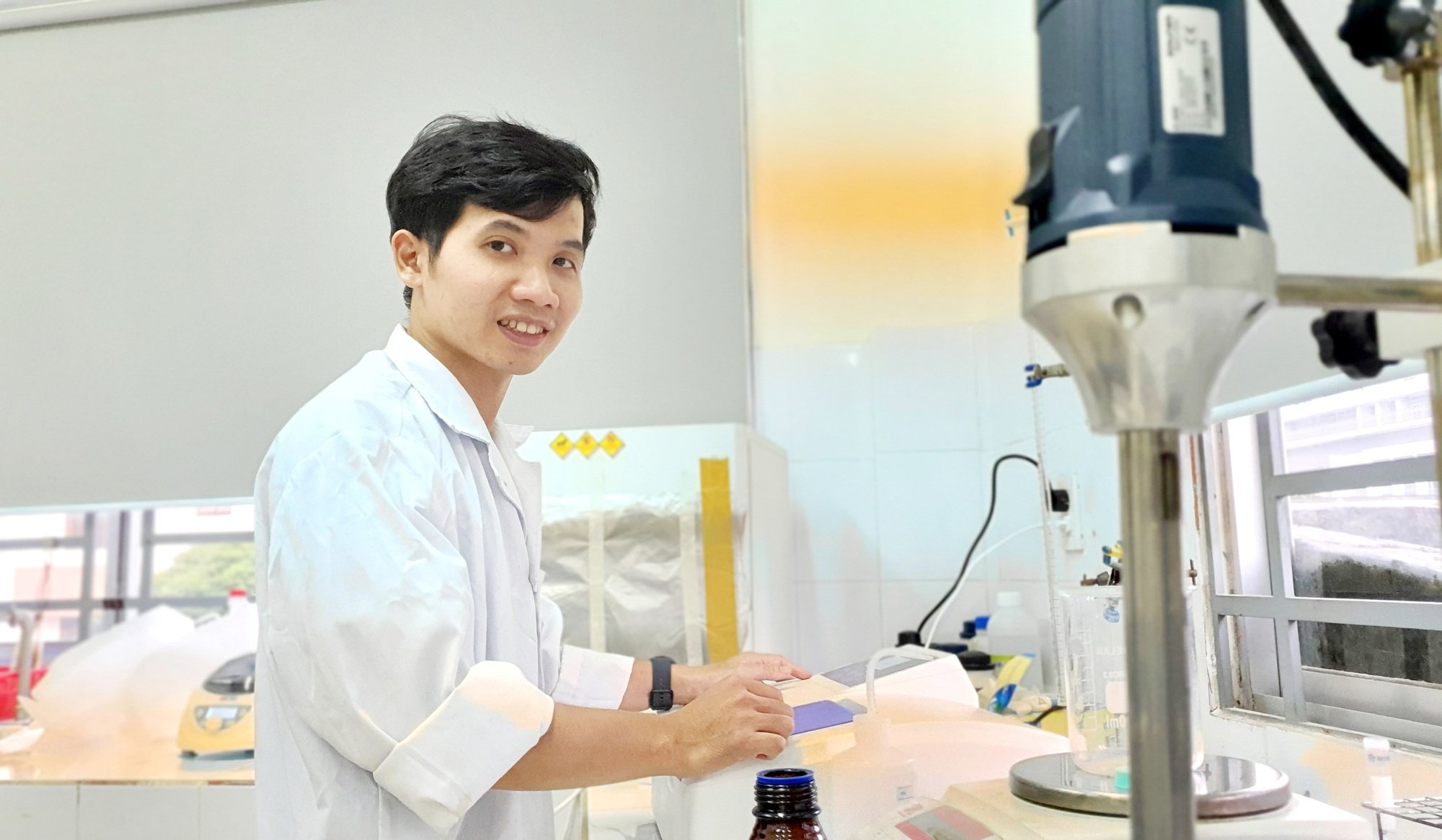
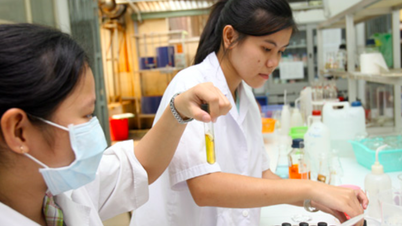
Master Vo Tan Phat in the laboratory
Associate Professor Dr. Nguyen Dinh Quan, specializing in production processes and equipment, Head of the Biofuel and Biomass Laboratory at Ho Chi Minh City University of Technology (Vietnam National University Ho Chi Minh City), assessed Vo Tan Phat as a role model of perseverance in pursuing a scientific research path. "Phat is a young man with exceptional scientific aptitude. He works very diligently with clear goals in his research. At the same time, he is very passionate, determined, and constantly learning. He dedicates a lot of time to reading scientific literature, and we always have engaging discussions together about our expertise and scientific issues in our field," said Associate Professor Dr. Nguyen Dinh Quan.
According to Associate Professor Dr. Nguyen Dinh Quan, Phat is currently a research collaborator at the Biofuel and Biomass Laboratory, Department of Chemical Engineering, Ho Chi Minh City University of Technology. Despite limited time and meager income from scientific research, with the encouragement and support of everyone, Phat has been working at the laboratory for over two years now.
Associate Professor Dr. Quan hopes that Master Phát will soon be officially recruited by the university, so that young scientists with competence, enthusiasm, and a genuine passion for science can be recognized and continue to contribute.
Other scientific papers published by Master Phát include: Optimization of ultrasound-assisted extraction process to obtain total phenolic and flavonoid compounds from watermelon rind (scientific name Citrullus lanatus); Ultrasound- and enzyme-assisted extraction to recover tannins, flavonoids, and terpenoids from used tea leaves using natural deep eutectic solvent; Optimization of ultrasound- and microwave-assisted extraction process to recover phenolic and flavonoid compounds from passion fruit peel... These substances all have antioxidant, anti-aging, and anti-inflammatory effects...
Furthermore, Master Phát is also the owner of a scientific research project on a method of making sponge cake from coconut jelly powder to increase fiber content, which has been registered for intellectual property rights. Specifically, with this method, the baker needs to use a type of fiber with a very small fiber structure, called nanocellulose. Nanocellulose is biosynthesized from bacteria, most commonly coconut jelly (the process of making coconut jelly involves fermenting mature coconut water). After grinding the coconut jelly, a fine powder (BCP powder) is formed. When mixing BCP with flour, eggs, milk, and other ingredients to make the cake, BCP swells and creates a unified structure with the cake base.
Source link















![[Photo] Prime Minister Pham Minh Chinh holds a phone call with the CEO of Russia's Rosatom Corporation.](/_next/image?url=https%3A%2F%2Fvphoto.vietnam.vn%2Fthumb%2F1200x675%2Fvietnam%2Fresource%2FIMAGE%2F2025%2F12%2F11%2F1765464552365_dsc-5295-jpg.webp&w=3840&q=75)









































Comment (0)