

The sounds of the vast forest from the stone xylophone.
At the Quang Ngai province booth during the "80 Years of Independence, Freedom, and Happiness" national achievement exhibition, the hands of Meritorious Artisan A Huynh (a Gia Rai ethnic minority, born in 1983 in Quang Ngai province) nimbly tapped on each stone slab. The sound of the stone xylophone resonated, sometimes deep and resonant, sometimes vibrant and powerful, evoking the sounds of the Central Highlands mountains and forests. The performance concluded with enthusiastic applause and cheers from the audience. Mr. A Huynh smiled contentedly and bowed to the audience. While tidying up his instruments, he enthusiastically told me about his journey with traditional ethnic musical instruments.
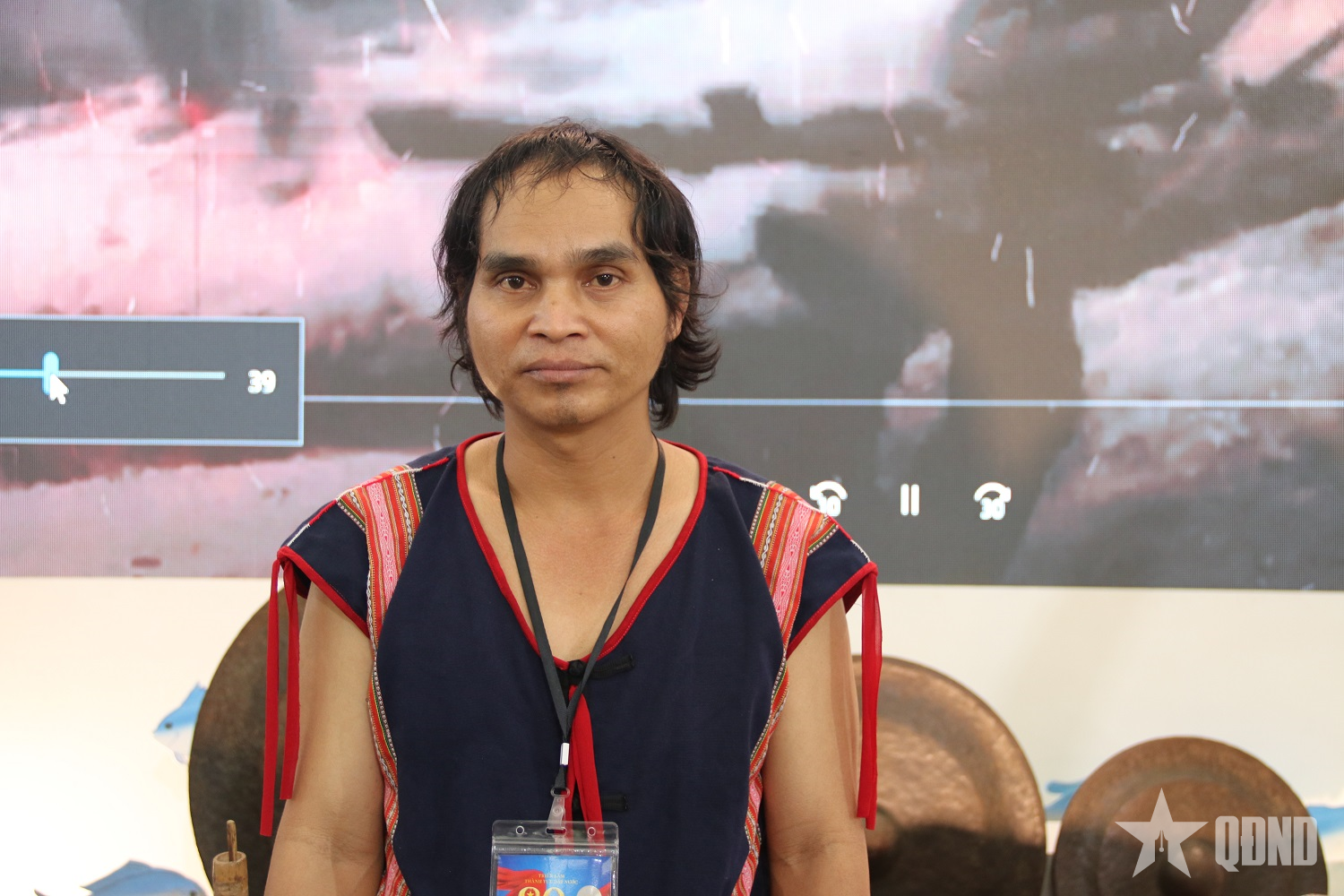 |
Distinguished Artisan A Huynh at the Quang Ngai province's booth amidst the vibrant atmosphere of the National Achievements Exhibition. |
Mr. A Huynh said that, like many children in the village, he was exposed to gongs and immersed in the community's cultural space from the age of 13. "The passion for the arts grew over the years, urging me to explore, craft, and skillfully play many traditional bamboo musical instruments such as the Ting ning, T'rưng, flute, etc. Among them, the most special is the meticulous crafting and playing of stone xylophones," he shared. To create a complete set of stone xylophones, according to Meritorious Artist A Huynh, one must first select suitable stones, then patiently carve and adjust the sound so that each stone harmonizes with the tone of the Gia Rai people's gongs. This process requires meticulousness, a keen ear for sound, and a love for traditional musical instruments.
"By using the sound of the gongs in my house as a reference, I was able to create a set of seven stone bars, each corresponding to a musical note. After that, I continued my research and increased the number of stone bars to create a richer and more diverse range of melodies," shared A Huynh.
Having successfully crafted the stone xylophone, he took this instrument to perform at local festivals. Each performance, the sound of the stone xylophone blended with folk songs—sometimes a gentle lullaby, sometimes a lively celebration of the new rice harvest, and sometimes a heartfelt declaration of love in the village—delighting the listeners. Gradually, the name A Huynh became familiar, associated with one of the oldest percussion instruments in Vietnam, bringing the sound of the stone xylophone beyond the village to many provinces and cities.
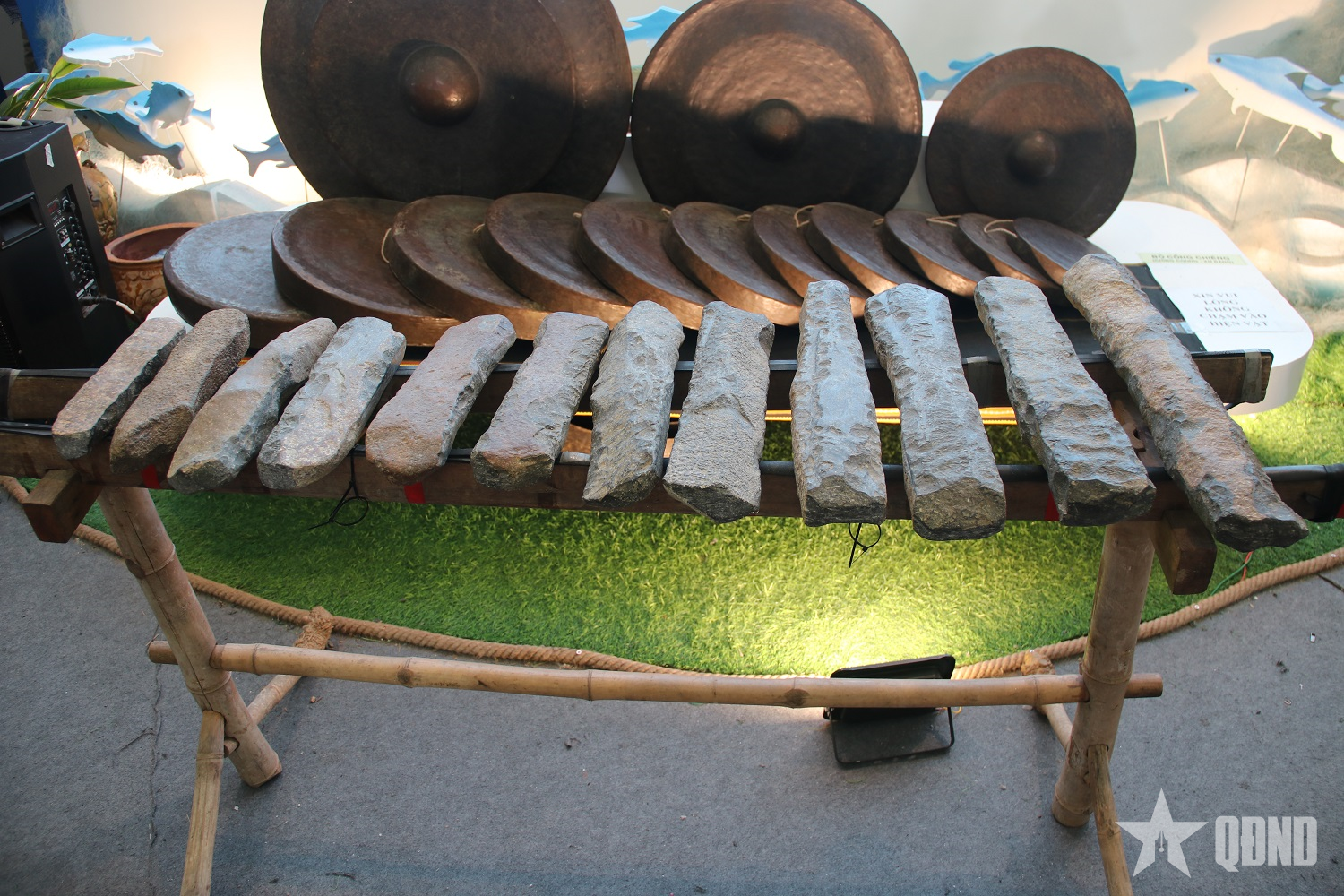 |
| The stone xylophone was brought by Mr. A Huynh to perform at the exhibition . |
At the National Achievements Exhibition, the sound of the stone xylophone resonated in the heart of the capital. The rustic yet powerful melody of the vast forest captivated numerous visitors, allowing them to appreciate the enduring beauty of the Central Highlands' heritage in the contemporary world.
Bui Minh Tuyen (born in 2005 in Hung Yen ) shared: “Before, I only knew about the stone xylophone through books and television. Today is the first time I've directly listened to the sound of this special musical instrument. The sound of the instrument is sometimes low, sometimes high, both rustic and captivating, making me feel like I'm standing in the middle of the Central Highlands mountains. I greatly admire the artisans who have preserved and brought this unique musical instrument to everyone.”
The youthful tones of the T'rưng language
At the Quang Ngai province's exhibition booth, while the sound of the stone xylophone conveyed the thoughts of an artisan with a long-standing connection to traditional musical instruments, the sound of the T'rưng played by Y Lien (a Bana ethnic girl, born in 2008 in Quang Ngai) was clear, innocent, and reflected the vibrant energy of youth.
“I started playing the T’rưng instrument in the 7th grade. The first time I saw it was at a relative's house, and I was curious to try playing a few notes. The clear, resonant sound, like the sound of the mountains and forests, moved me deeply and lingered in my heart. From that moment, I decided to pursue this traditional musical instrument,” Y Liên recounted.
The T'rưng instrument gradually became Y Liên's close companion. Thanks to her persistent practice, Y Liên quickly mastered the technique, felt the "soul" of the T'rưng sound, and confidently brought the traditional instrument to performance stages. Besides the T'rưng, Y Liên also tried her hand at the stone xylophone, piano, and some other modern instruments to enhance her musical sensibility.
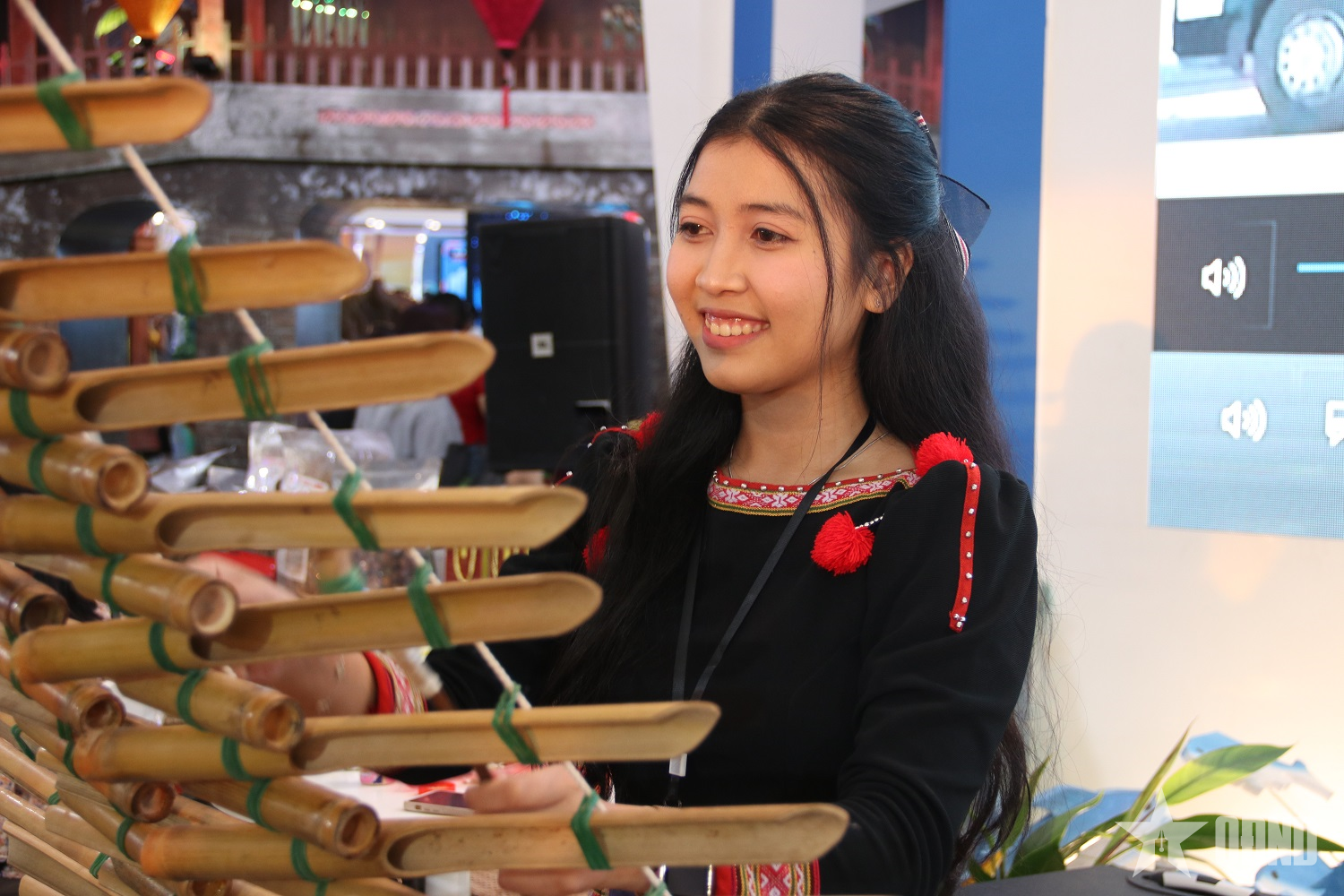 |
Y Lien is passionate about playing the T'rưng instrument. |
At 18, Y Lien balances her studies at school with performing and teaching the T'rưng instrument to young children. “I love the T'rưng instrument and want to spread its music to more people, especially young people. This is my final year of high school, and I always try to manage my time effectively to balance my studies with pursuing my passion,” Y Lien proudly stated.
Y Lien said that she felt very honored to be able to perform traditional musical instruments at the Exhibition celebrating 80 years of national achievements and had prepared thoroughly for the performance. “I jumped for joy in front of my parents when I received the news that I would be performing at the exhibition. I was proud that I could bring the sounds of our traditional instruments to a big city and introduce them to friends from all three regions of Vietnam,” Y Lien shared.
 |
Amidst the vibrant atmosphere of the National Achievements Exhibition, the Quang Ngai province booth became a meeting point for the sounds of the mountains and forests. |
During her performances in Hanoi, each of Y Lien's acts attracted a large audience. "There were days when I performed several times at the audience's request. The audience said it was the first time they'd heard this instrument; the sound was clear and unique, so they wanted to hear more. Even though I was tired, I was very happy knowing that traditional art was touching people's hearts," Y Lien shared.
Excited to watch Y Lien's confident performance, veteran Tran Van Binh (born in 1964, Thai Nguyen) couldn't hide his emotion. He shared: "Attending the exhibition and witnessing the changes and achievements of the country, I feel very proud and happy. Especially at the Quang Ngai exhibition booth, seeing the young people passionately pursuing art while preserving the cultural values of our roots, my heart is filled with hope. The sounds of the mountains and forests, of the stone xylophone and the T'rưng instrument remind us to cherish our national heritage."
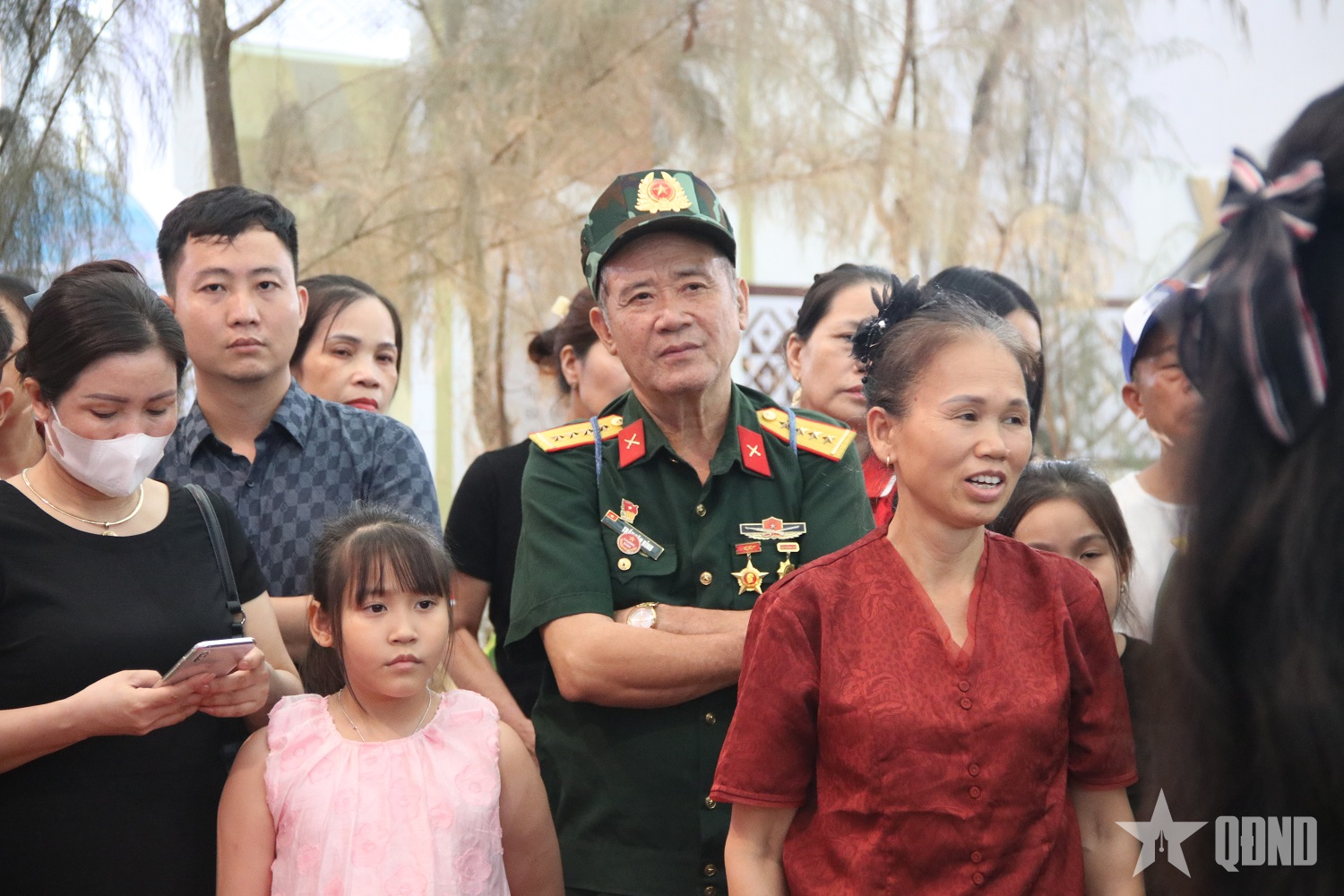 |
Veteran Tran Van Binh (born in 1964, Thai Nguyen) watches Y Lien's performance. |
Between the deep, resonant sound of A Huynh's stone xylophone and the clear, pure sound of Y Lien's T'rưng instrument, the audience felt transported to a symphony of the forest, where past and present intertwine. On one side is an artisan who has dedicated his life to working with mountain stones, diligently preserving the heritage; on the other is a young woman, full of aspirations, carrying the baggage of eighteen to continue the tradition. This encounter is the most beautiful image that the Quang Ngai exhibition conveys to the public: that ethnic art is being continued, resonating forever with the nation today.
Article and photos: TRAN HAI LY
Source: https://www.qdnd.vn/80-nam-trien-lam-thanh-tuu-dat-nuoc-hanh-trinh-doc-lap-tu-do-hanh-phuc/thanh-am-dai-ngan-noi-nhip-the-he-tai-trien-lam-thanh-tuu-dat-nuoc-846290
![[Photo] Prime Minister Pham Minh Chinh holds a phone call with the CEO of Russia's Rosatom Corporation.](/_next/image?url=https%3A%2F%2Fvphoto.vietnam.vn%2Fthumb%2F1200x675%2Fvietnam%2Fresource%2FIMAGE%2F2025%2F12%2F11%2F1765464552365_dsc-5295-jpg.webp&w=3840&q=75)


![[Photo] Closing Ceremony of the 10th Session of the 15th National Assembly](/_next/image?url=https%3A%2F%2Fvphoto.vietnam.vn%2Fthumb%2F1200x675%2Fvietnam%2Fresource%2FIMAGE%2F2025%2F12%2F11%2F1765448959967_image-1437-jpg.webp&w=3840&q=75)











































![[OFFICIAL] MISA GROUP ANNOUNCES ITS PIONEERING BRAND POSITIONING IN BUILDING AGENTIC AI FOR BUSINESSES, HOUSEHOLDS, AND THE GOVERNMENT](https://vphoto.vietnam.vn/thumb/402x226/vietnam/resource/IMAGE/2025/12/11/1765444754256_agentic-ai_postfb-scaled.png)


















































Comment (0)